What a Vertical Roller Does on a Conveyor
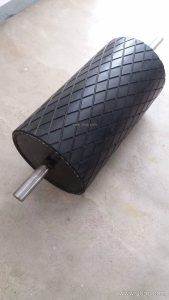
A vertical roller is a special-purpose roller assembly used where a conveyor belt changes direction or needs lateral support in a vertical plane. Instead of carrying the loaded belt from below like a troughing idler, this component is mounted to act on the belt edge or face in a vertical orientation. It is commonly seen at transfer points, loop take-ups, and curved sections in quarry, limestone, and copper ore handling lines, where the belt must be guided without twisting. Unlike a conveyor pulley, which drives or redirects the belt around a drum, the vertical roller is a small-diameter rotating element that contacts the belt directly and keeps it tracking.
Construction and Working Principle
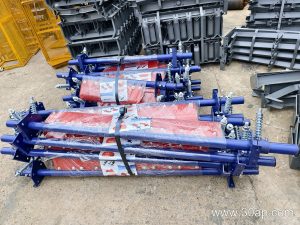
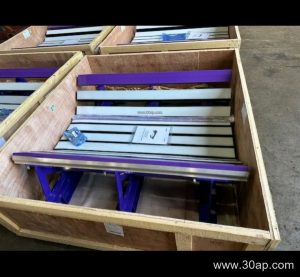
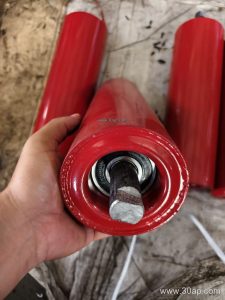
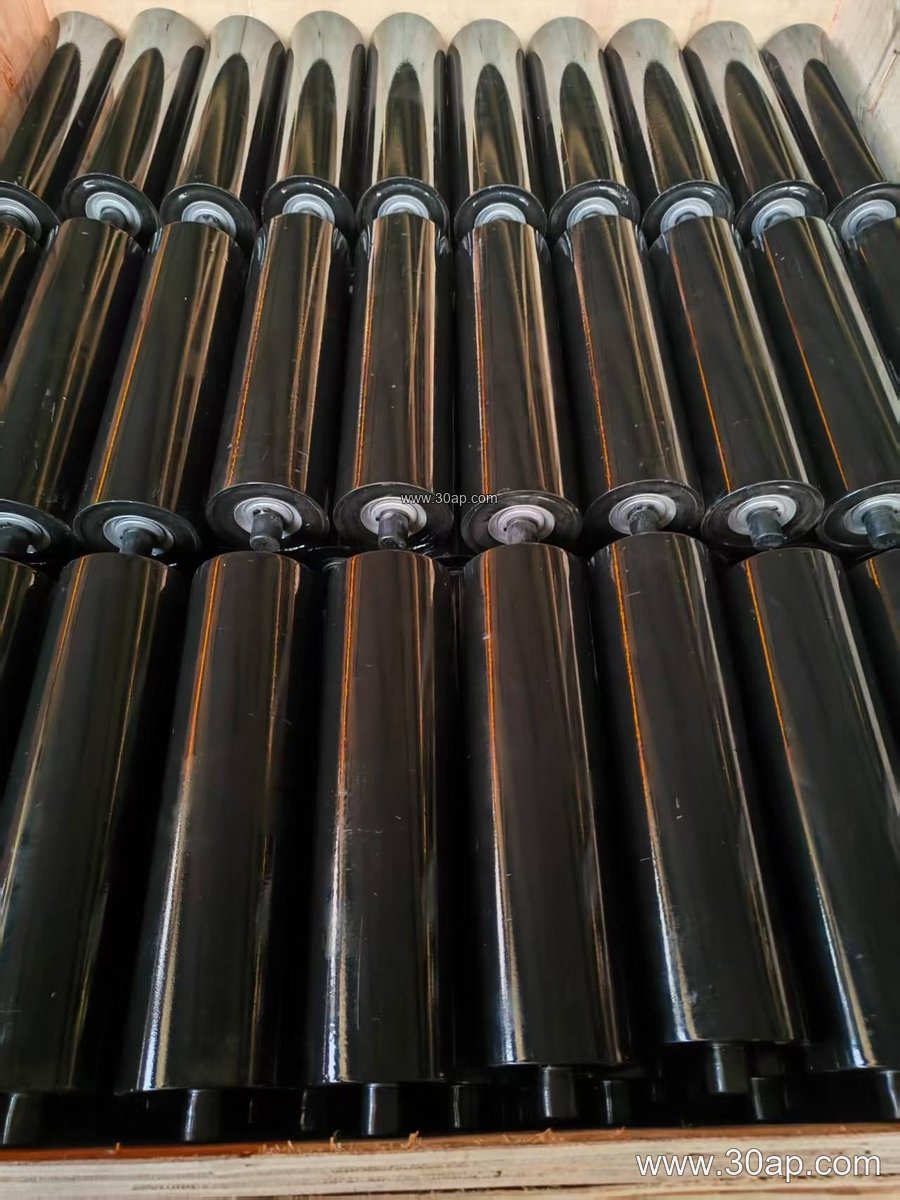
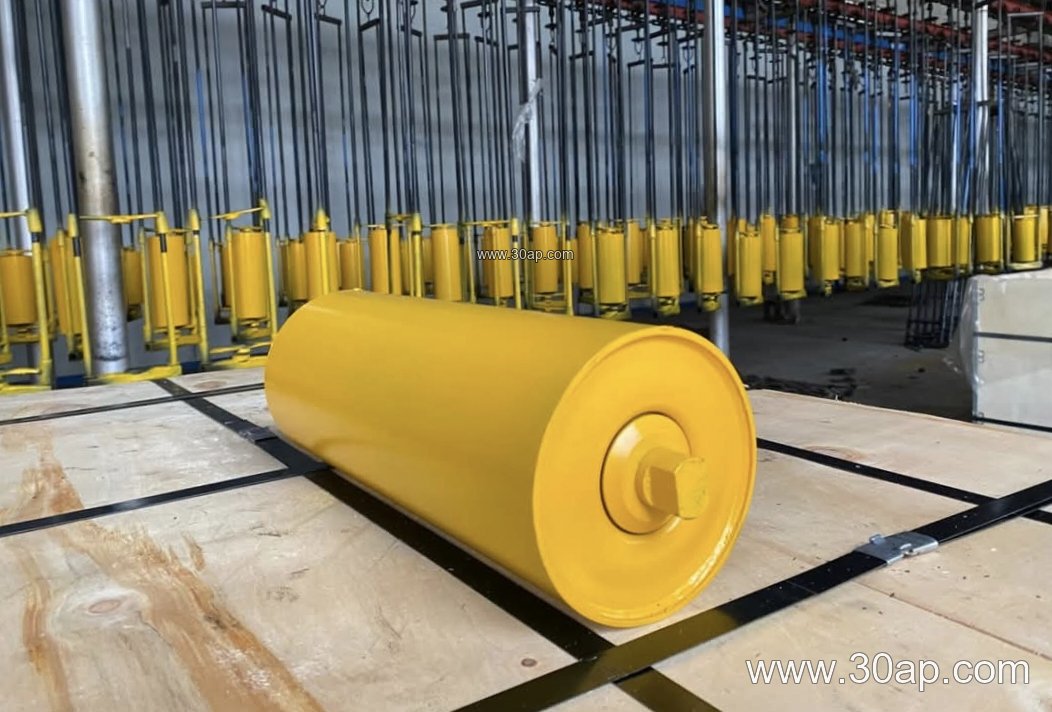
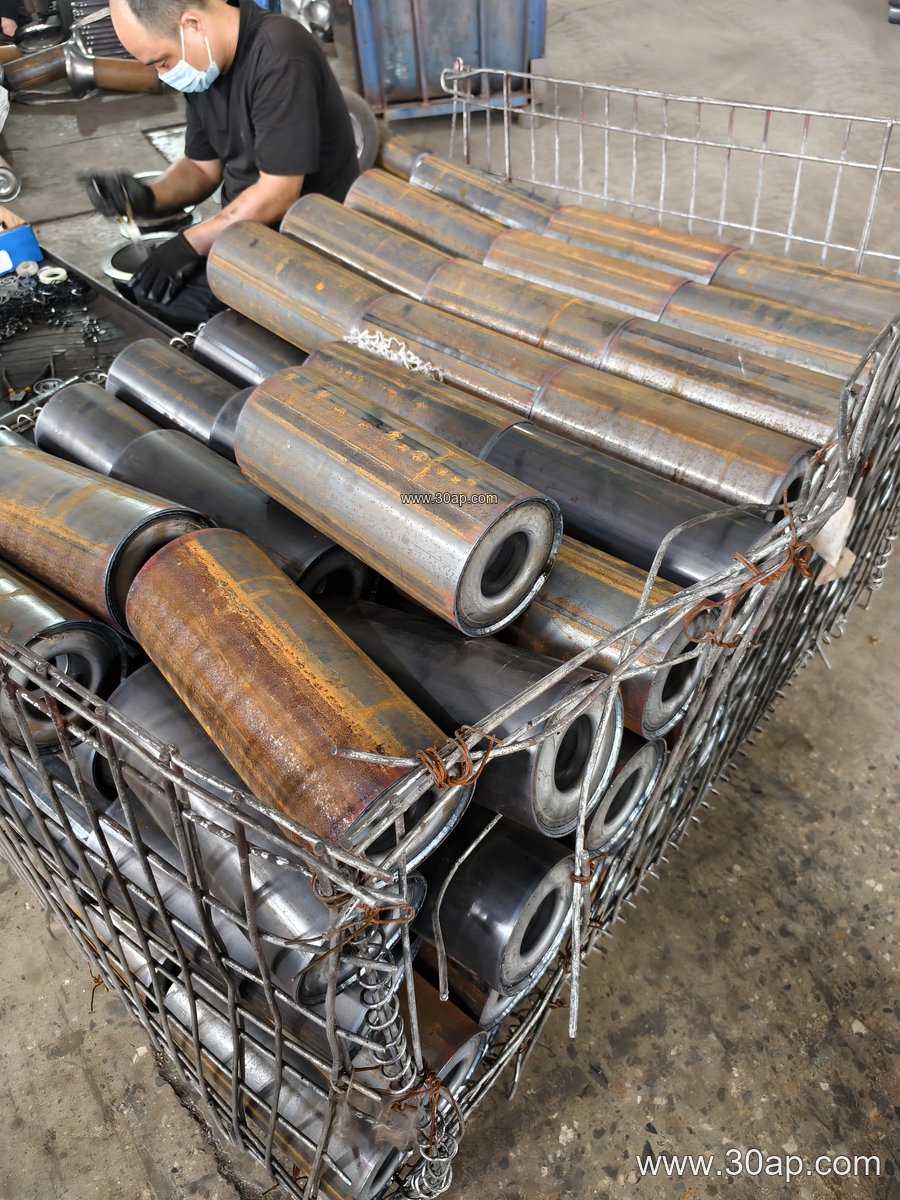
The body is typically a steel tube with a machined shaft, fitted with sealed bearings such as 6204, 6205, or 6305 depending on load. Roll diameters commonly range from Ø63 to Ø159 mm, and the face may be plain steel, nylon, or rubber-covered to protect the belt edge. The assembly is held in a bracket that allows adjustment in two directions, so maintenance crews can fine-tune contact pressure and angle. When the belt presses against the roller, friction converts sliding contact into rotation, which reduces wear on both the belt and the roller shell. Bearing seals are critical here, because dust from a crusher or aggregate line will shorten service life if it reaches the races.
Where It Fits in a Bulk Handling Line
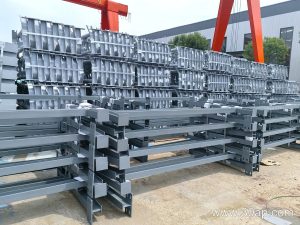
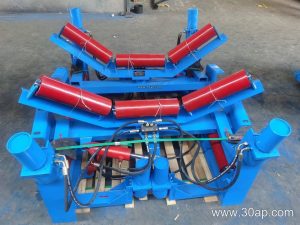
In a stone crushing plant, a vertical roller often sits at the head of a discharge chute to stabilize the belt as it leaves the last conveyor pulley. In a coal handling system feeding a power plant, the same component may be used on the return strand to stop the belt from riding up during a vertical curve. It is also found in ship loading and port conveyors, where long spans and side winds make belt tracking difficult. The roller works alongside the troughing idlers and the conveyor bracket frame, but it does not replace them; each element has a distinct role in keeping the belt centered and supported.
Selection Points Buyers Should Check
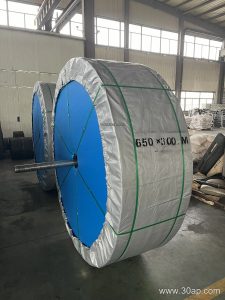
Specifying the right vertical roller starts with the belt width and the space available at the mounting point. A 650mm or 800mm belt needs a different roller face length than a 1200mm or 1400mm wide belt, and the bracket must match the frame hole pattern. The buyer should also confirm the belt speed, the load on the roller, and the ambient conditions. In a cement plant, heat and fine dust call for sealed bearings and a wear-resistant shell; in a cold-climate quarry, low-temperature grease and a rubber face may be preferable. The table below lists reference values for orientation only, not fixed supply rules.
| Parameter | Common Reference Range |
|---|---|
| Roll diameter | Ø63, Ø76, Ø89, Ø102, Ø108, Ø127, Ø133, Ø159 mm |
| Belt width | B500 to B2000 mm |
| Bearing | 6204, 6205, 6305, 6306, 6308 |
| Roll face | Steel tube, nylon, ceramic, rubber ring |
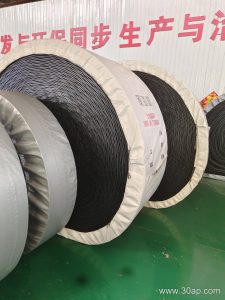
For heavy-duty mining conveyor belt duty, a larger shaft and heavier bearing may be needed, but that must be confirmed from the actual belt tension and load calculation. Do not assume that one belt width locks the roller to one diameter; several combinations are possible.
Maintenance and Belt Protection
Check the roller for free rotation during each shift inspection. A seized vertical roller will flat-spot the belt edge and can cause mistracking that leads to spillage. Replace worn rubber rings before they expose the steel shell, and re-grease sealed bearings only if the design includes a grease port. When the belt is a steel cord conveyor belt or a heavy abrasion resistant conveyor belt, edge damage from a stuck roller can be costly, so alignment and clearance matter as much as the roller itself. Keep the bracket bolts tight and verify that the roller axis is square to the belt path.
Matching the Roller to the Rest of the System
Use the vertical roller as one part of a tracking plan that includes training idlers, proper pulley alignment, and correct belt tension. In a sand and gravel line, a small misalignment at the vertical roller often shows up first as a polished stripe on the belt edge. At a fertilizer or grain terminal, a smooth nylon face is usually enough, while a sinter or coke conveyor may need a ceramic or rubber surface. Whatever the application, treat the catalogue sizes as a starting point and confirm dimensions against the actual frame drawing before ordering. The goal is a roller that turns freely, wears slowly, and keeps the belt running true.