What an Idler Bracket Does on a Conveyor
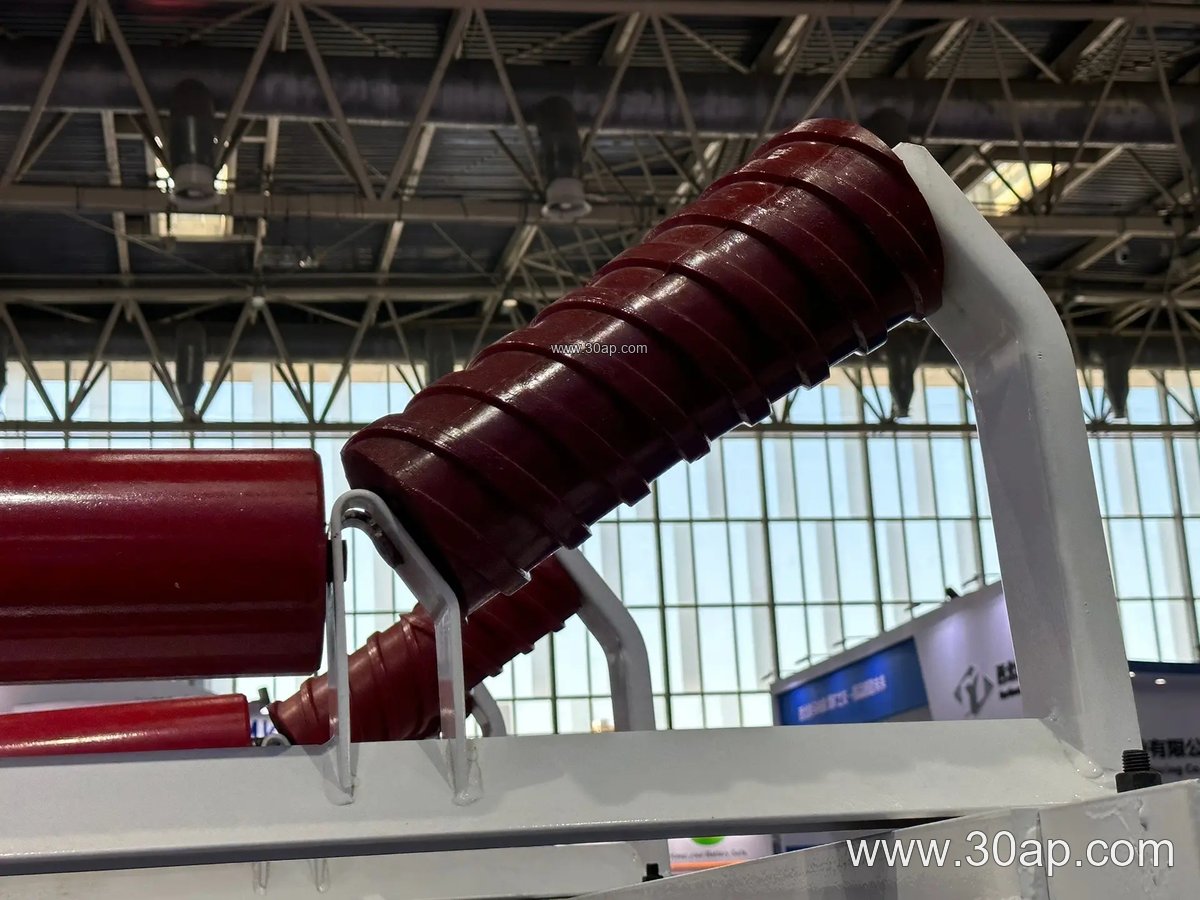
An idler bracket is the mounting component that holds a conveyor idler roller in position and sets its angle relative to the belt line. In a typical troughed carrying run, three rollers rest in a bracket assembly: one flat center roller and two inclined side rollers. The bracket ties them together, transfers the load into the conveyor frame, and fixes the troug h angle that shapes the belt. Without a properly sized bracket, rollers sit unevenly, the belt sags, and material spills at transfer points.
The part is sometimes called a conveyor bracket or an idler frame bracket. It is a structural item, not a wear part in the same sense as the roller shell, but it decides how well the rollers and the conveyor belt work together. In a quarry or a cement plant, a loose or misaligned bracket shows up quickly as belt wander, edge damage, or premature roller failure.
Construction and Common Materials
Most brackets are fabricated from angle steel, channel steel, or bent steel plate. The choice depends on load and frame style. Channel sections suit heavy carrying runs in iron ore or coal handling; bent plate gives a compact, stiff shape for lighter aggregate lines. Slots or multiple bolt holes allow the roller shafts to be positioned, and some designs add an adjustable arm so the trough angle can be changed on site.
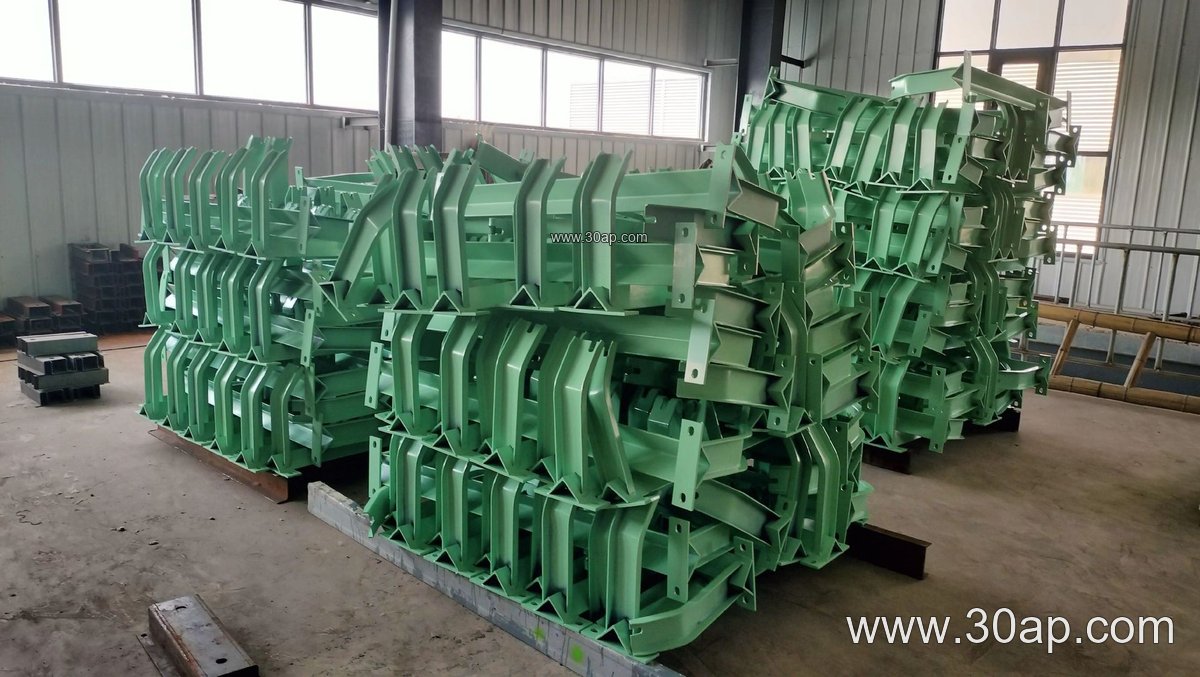
- Fixed bracket — welded or bolted at one trough angle, simple and rigid.
- Adjustable bracket — permits setting among common trough angles, useful when a line handles mixed materials.
- Self-aligning bracket — mounts on a pivot so the idler set can steer the belt back to center.
- Impact bracket — reinforced to carry impact rollers under a loading chute.
Surface treatment matters in wet or dusty service. A painted or galvanized finish slows corrosion in wash plants and port terminals, while galvanizing is often preferred where humidity is high.
Matching Bracket, Belt Width and Roller Diameter
Bracket length and mounting hole spacing follow the belt width and the trough angle, so they are set by design rather than chosen from a fixed list. The table below shows common reference combinations; actual dimensions should always be confirmed against the conveyor drawing.
| Belt width | Typical trough angle | Common roller diameter | Bracket note |
|---|---|---|---|
| B500 / B650 | 20° – 30° | Ø89 | Light carrying run |
| B800 / B1000 | 30° – 35° | Ø108 | General bulk handling |
| B1200 / B1400 | 35° – 45° | Ø133 | Heavier load, wider frame |
| B1600 / B1800 | 35° – 45° | Ø159 | Mining and port duty |
| B2000 / B2200 | 35° – 45° | Ø194 | High-capacity trunk lines |
These pairings are common practice, not mandatory rules. A wide belt can run a smaller roller if the load allows, and a narrow belt may use a larger roller for impact reasons. What matters is that the bracket, roller shaft, and frame holes align without shimming.
Where the Bracket Fits in the Line
Carrying-side brackets appear along the full length of the conveyor, spaced according to belt sag limits. Return-side brackets are flatter, often V-shaped, and support the empty belt. Transition brackets sit near the head and tail pulleys, where the belt changes from troughed to flat. Self-aligning brackets are usually placed at intervals on long runs and just ahead of the head pulley.
In a coal washing plant, a misaligned return bracket can let the belt rub the frame; in a limestone quarry, worn impact brackets under the crusher discharge cause roller breakage. Checking bracket condition is part of routine conveyor inspection alongside roller rotation and belt tracking.
Buyer Checklist
- Confirm belt width, trough angle, and roller diameter before ordering.
- State whether the bracket is fixed, adjustable, or self-aligning.
- Provide the frame hole pattern or a drawing; spacing is not universal.
- Match material thickness to the duty, especially under loading points.
- Specify finish for wet, dusty, or corrosive sites.
A bracket that fits correctly keeps idlers square, extends roller life, and helps the belt run true. Further details on compatible rollers and belt specifications are available at gxconveyorbelt.com, and our team can review frame drawings before you order.