What a Conveyor Parts Idler Does
A conveyor parts idler is the rotating roller assembly that supports the conveyor belt along its carrying and return runs. In everyday plant language it is simply called an idler roller, and it sits between the loading point and the discharge pulley, holding the belt in shape and reducing friction as material moves. Without a steady line of idlers, even a strong belt would sag, spill load and wear quickly. That is why maintenance teams in a quarry, a cement plant or a power plant coal yard treat idlers as consumables that deserve planned attention rather than random replacement.
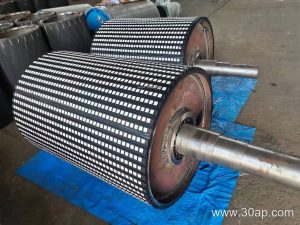
The idler is not a drive component. It does not pull the belt; the conveyor pulley does that job. The idler only carries, guides and protects.
How an Idler Roller Is Built
Most units share a simple architecture. A steel tube forms the roller shell, and a fixed shaft runs through the centre. Sealed bearings sit at each end, often inside a bearing housing that keeps dust and water away from the rotating parts. End caps close the tube, and the shaft ends locate in the frame or conveyor bracket.
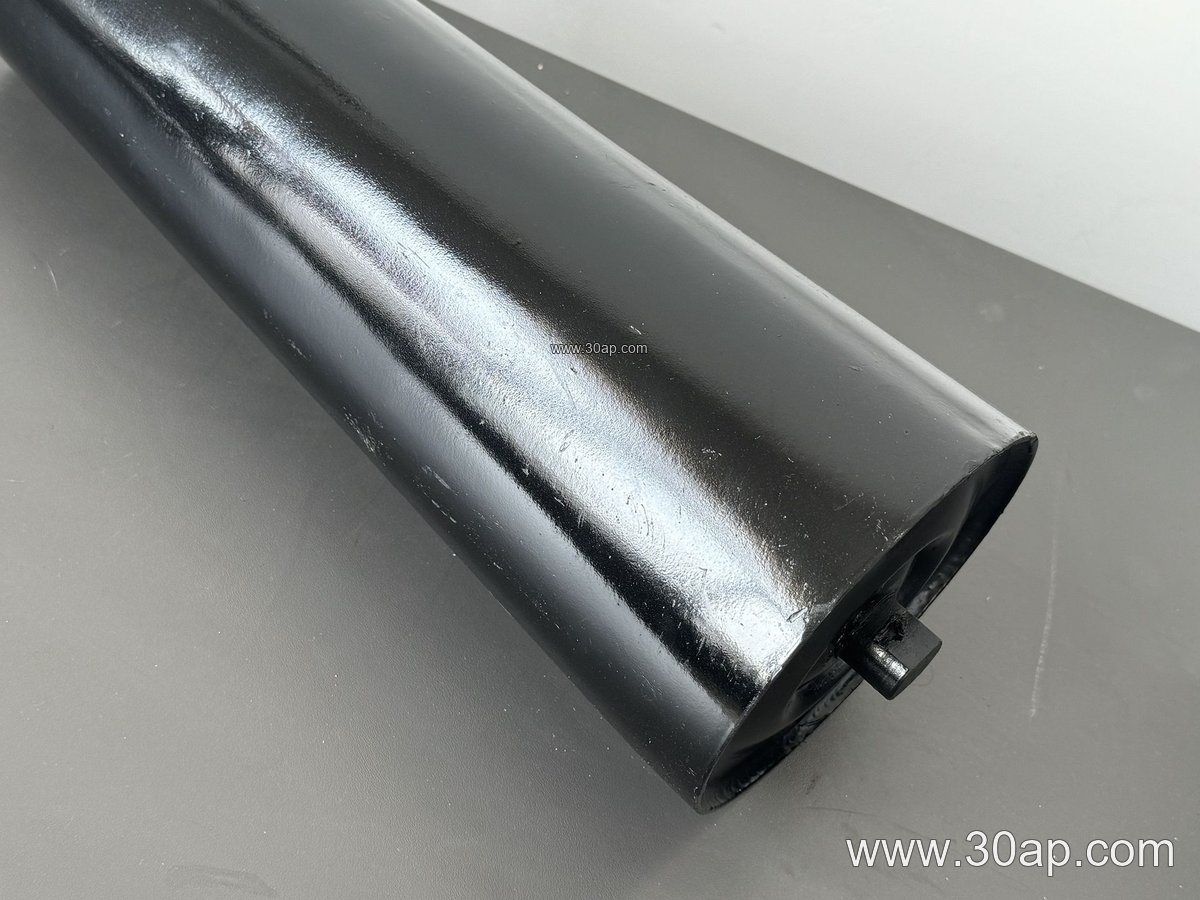
Shell material and surface treatment vary with duty. Plain steel suits general bulk handling. Rubber rings or rubber discs are added at transfer points to absorb impact. Nylon and ceramic covers appear where sticky material or heavy abrasion is a concern. Bearing selection is matched to load and speed; common sizes include 6204, 6205, 6305, 6306, 6308 and 6310, but no single bearing is tied to one roller diameter.
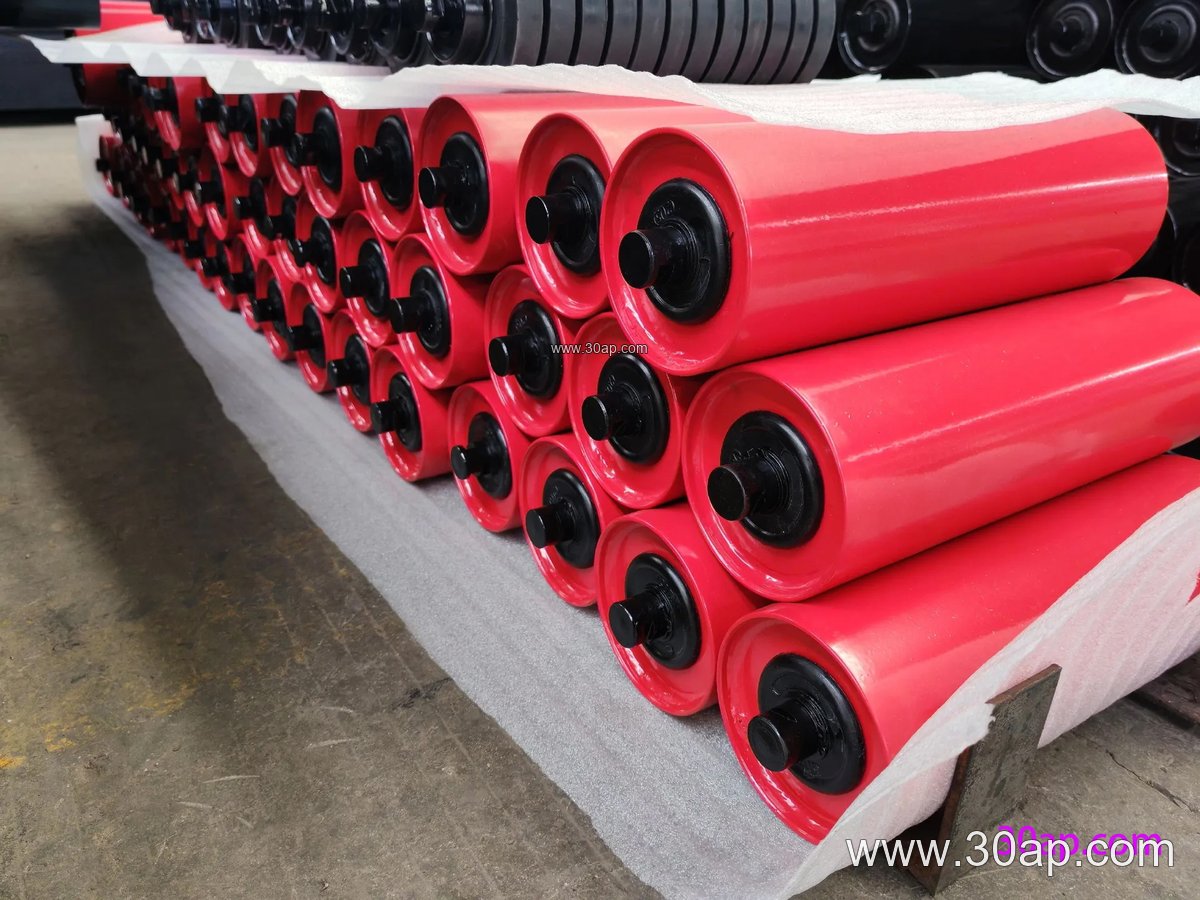
Common Idler Positions on a Belt Conveyor
Idlers are chosen by where they sit and what they must do.
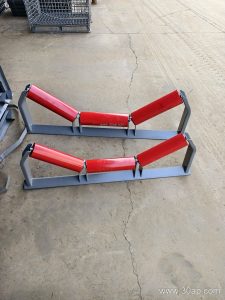
- Carrying idlers support the loaded belt. Three-roll troughing sets are the usual choice, with trough angles commonly 20, 30, 35 or 45 degrees.
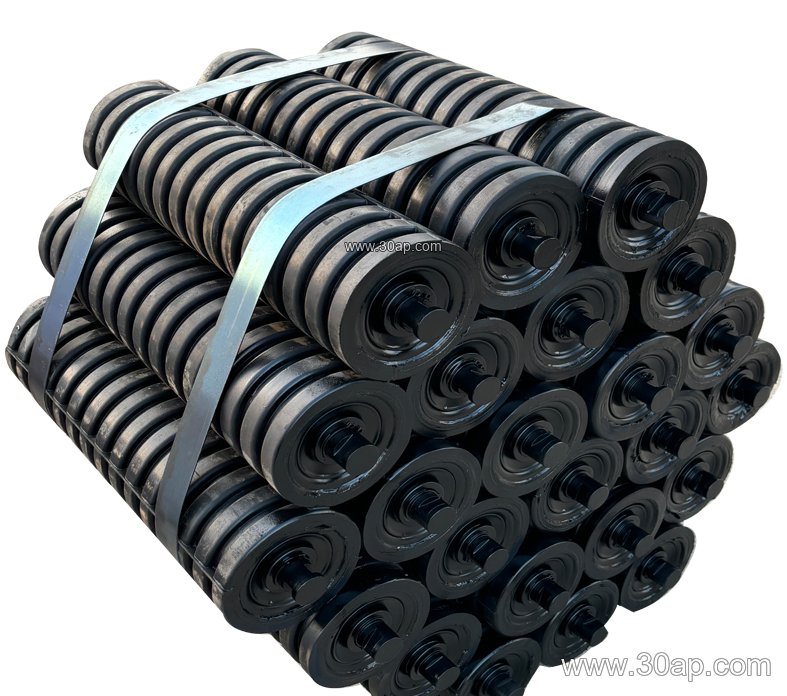
- Impact idlers with rubber rings sit under the loading chute, protecting the belt from falling lumps.
- Return idlers support the empty belt. Flat return rollers and V-shaped return sets are both common.
- Training idlers correct belt misalignment. Friction and tapered designs are used where tracking is difficult.
- Transition idlers ease the belt from flat to troughed shape near pulleys.
- Spiral idlers help shed sticky material on the return side.
Roller diameter is usually selected from a range such as Ø63, Ø76, Ø89, Ø102, Ø108, Ø127, Ø133, Ø159, Ø178, Ø194 or Ø219 mm, while belt widths run from B400 up to B2400. Roller length changes with belt width, trough angle and frame type. As a rough example, a three-roll troughing set might use about 200 mm rollers on B500, 315 mm on B800 and 465 mm on B1200, but side rollers and centre rollers can differ, so the drawing always governs.
Where Idlers Matter Most
In a limestone quarry or an aggregate line, dust and grit attack seals constantly, so idler life depends on bearing protection. In a coal handling system feeding a power plant, flame retardant and anti-static properties are usually specified for the belt, while the idlers must tolerate fine coal dust. Cement plants deal with abrasive clinker and sticky fines. Iron ore and copper ore terminals handle dense, sharp material that punishes both the belt cover and the roller shell.
Whatever the site, the idler works alongside the belt, the conveyor pulley and the frame. A heavy-duty mining conveyor belt may carry large lumps, but it still needs correctly spaced idlers to keep the trough shape and avoid edge damage.
Specification Reference
The table below shows typical reference values. Treat them as design guidance, not fixed combinations.
| Item | Common reference values |
|---|---|
| Roller diameter | Ø63, Ø76, Ø89, Ø102, Ø108, Ø127, Ø133, Ø159, Ø178, Ø194, Ø219 mm |
| Belt width | B400, B500, B650, B800, B1000, B1200, B1400, B1600, B1800, B2000, B2200, B2400 |
| Trough angle | 20°, 30°, 35°, 45° |
| Set form | single roll, two-roll, three-roll troughing |
| Shell surface | steel tube, nylon, ceramic, rubber ring |
| Bearing | 6204, 6205, 6305, 6306, 6308, 6310 |
What Buyers Should Check
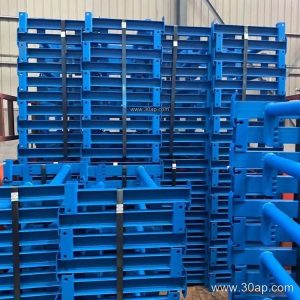
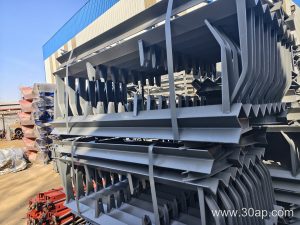
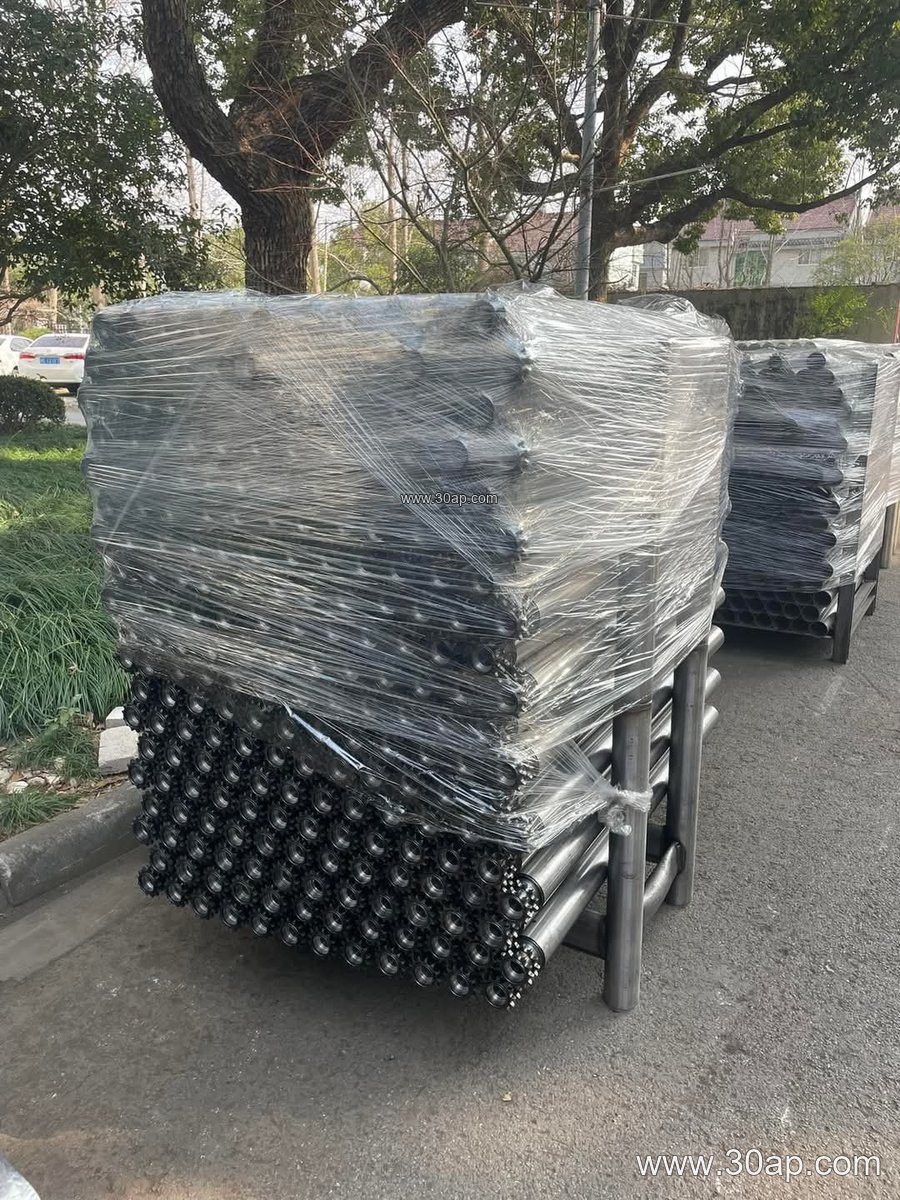
Start with the duty: material type, lump size, belt speed and loading conditions. Confirm the belt width and the frame dimensions, because a roller that fits one bracket may not fit another. Ask about sealing arrangement, since dust ingress is the most common cause of early failure. Check that the shaft ends match the existing conveyor bracket and that the roller length suits the trough angle.
For abrasive service, consider whether a rubber-covered or ceramic-faced shell is justified. For sticky material, spiral rollers may reduce carryback. For long overland systems, low rolling resistance pays back through energy savings.
Finally, keep spares organised by position. A plant that stocks the right carrying, impact and return idlers can replace a failed unit in minutes instead of stopping the line for hours. Spare idler rollers, brackets and a few pulley spares form a practical maintenance kit for any bulk handling site.