What a High Strength Conveyor Belt Is
A high strength conveyor belt is a heavy-duty rubber belt built to carry dense, abrasive, or sharp bulk material over long distances without excessive stretch. The strength comes mainly from the carcass, the load-bearing skeleton inside the rubber. In fabric constructions this usually means EP or NN fabric, while the highest tension classes use steel cord. The belt must also resist cutting, impact, and the local environment, whether that is a quarry, a cement plant, a power plant, or an underground coal mine.
The same product is often called a heavy-duty conveyor belt when the emphasis is on carcass strength and cover thickness rather than a specific tension rating. Both terms describe the same family of belt, and the correct choice depends on the conveyor layout, the material, and the duty cycle.
How the Belt Is Built
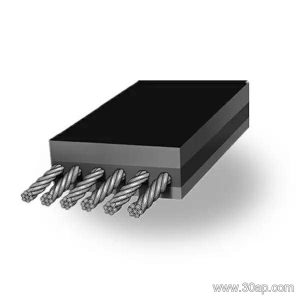
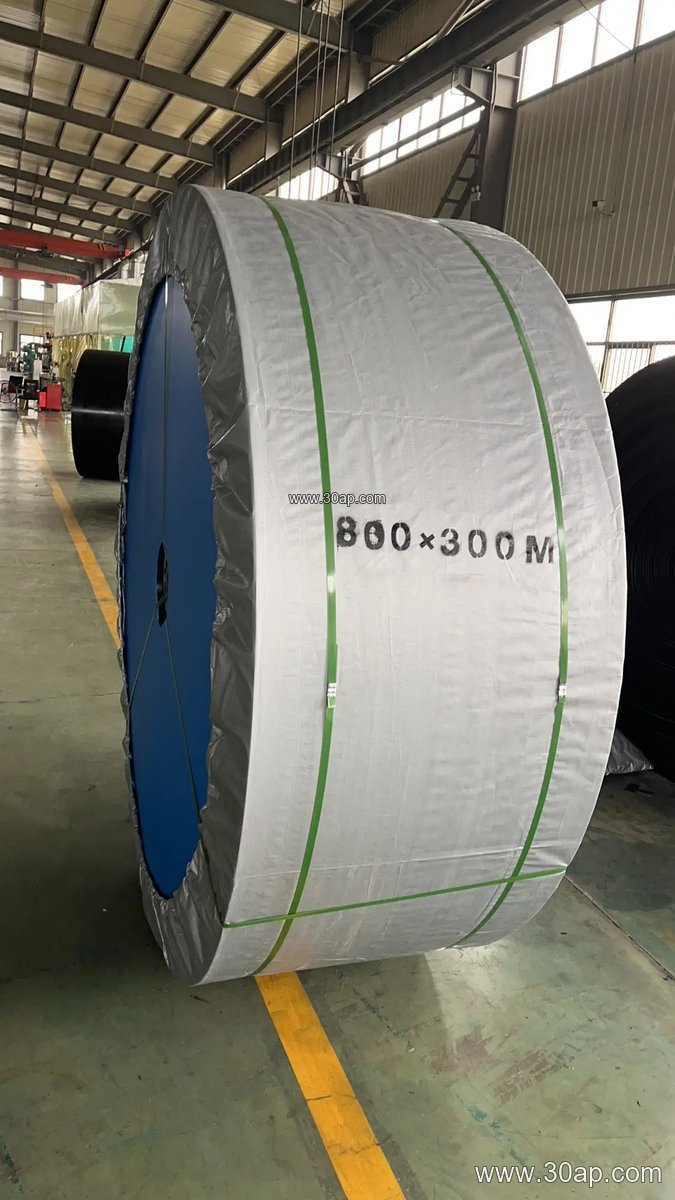
A typical construction combines a fabric or steel cord carcass with rubber covers on both faces. EP conveyor belt uses polyester warp and nylon weft, giving low elongation and good troughability. NN conveyor belt uses nylon in both directions for high flexibility and impact absorption. Steel cord conveyor belt replaces fabric plies with brass-plated cords for very high tension and long center distances.
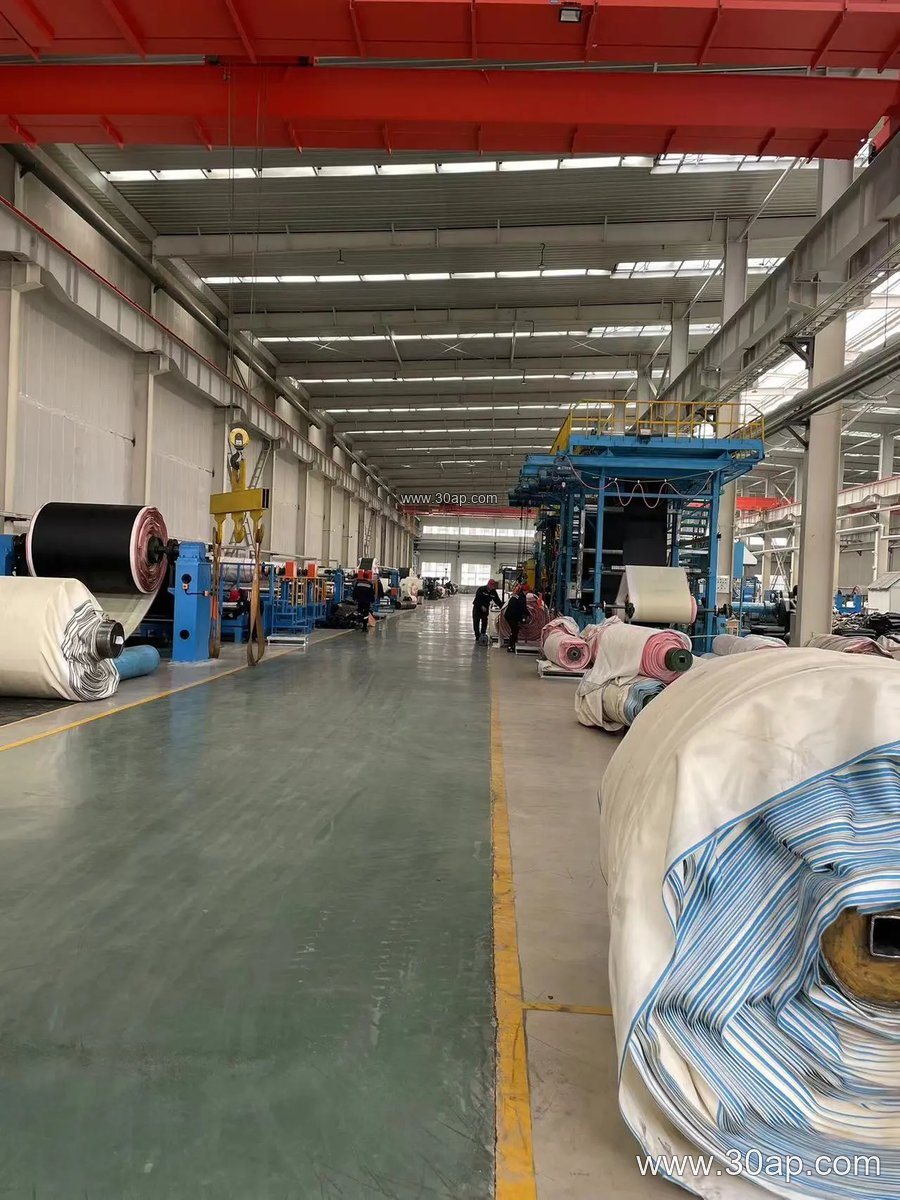
Covers are specified as top plus bottom thickness, for example 4+2 mm or 6+2 mm, with 3+1.5 mm common on lighter service and 8+3 mm on severe abrasion. Fabric carcasses usually run from 2 to 6 plies. The cover compound is selected for the environment: abrasion resistant, heat resistant, oil resistant, flame retardant, anti-static, cold resistant, or acid and chemical resistant grades are all available.
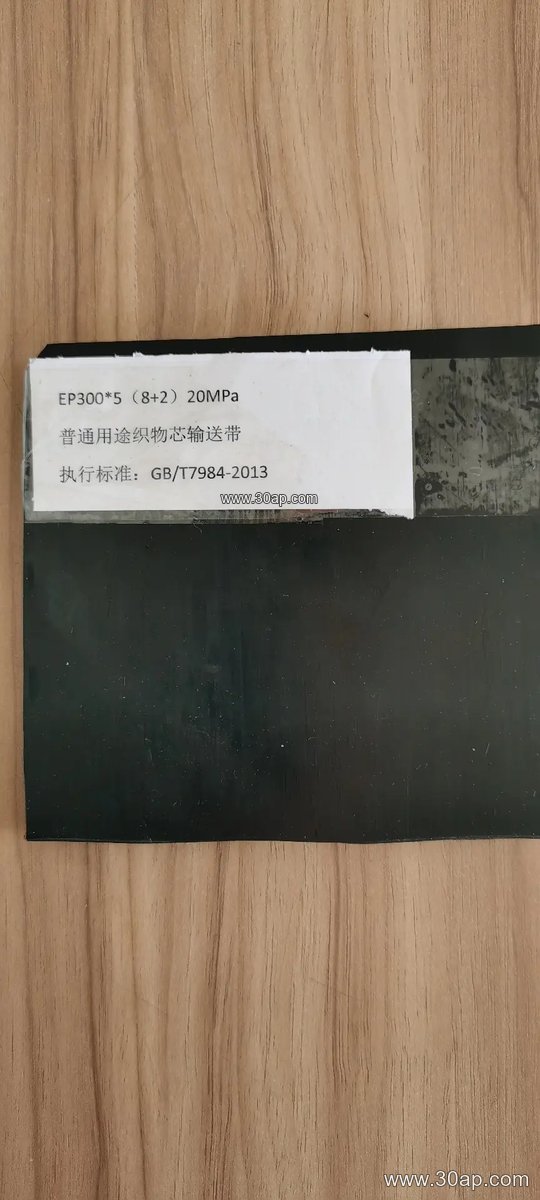
Common Strength Classes
Fabric belt ratings are usually expressed in newtons per millimeter of width. The table below lists typical reference values; actual supply should be confirmed with the manufacturer.
| Construction | Typical Strength Classes | Typical Use |
|---|---|---|
| EP conveyor belt | EP200, EP315, EP400, EP500, EP630, EP800, EP1000, EP1250, EP1600, EP2000 | General bulk handling, crushers, cement and aggregate lines |
| NN conveyor belt | NN100 to NN400 range | Flexible runs with impact loading |
| Steel cord conveyor belt | ST1000, ST1250, ST1600, ST2000, ST2500, ST3150 | Long overland and high-tension main lines |
| PVC / PVG | PVG800, PVG800S and similar | Underground coal mining where flame resistance is required |
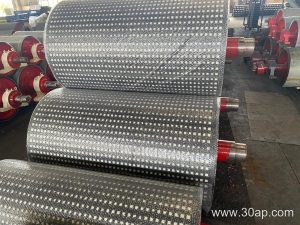
Widths commonly range from B500 and B650 up to B2000 and beyond, with B800, B1000, B1200, B1400, B1600, and B1800 among the most requested. A wide belt is not tied to one pulley size; the drive pulley, tail pulley, and bend pulley are sized by tension and wrap angle, not by belt width alone.
Where It Is Used
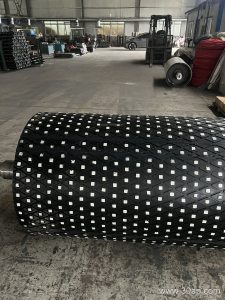
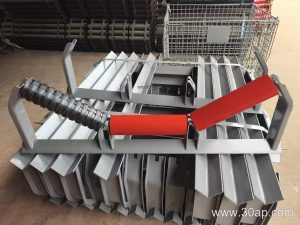
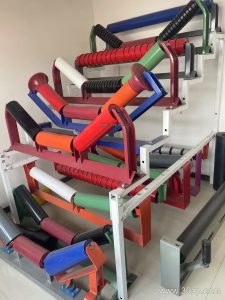
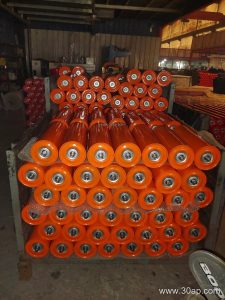
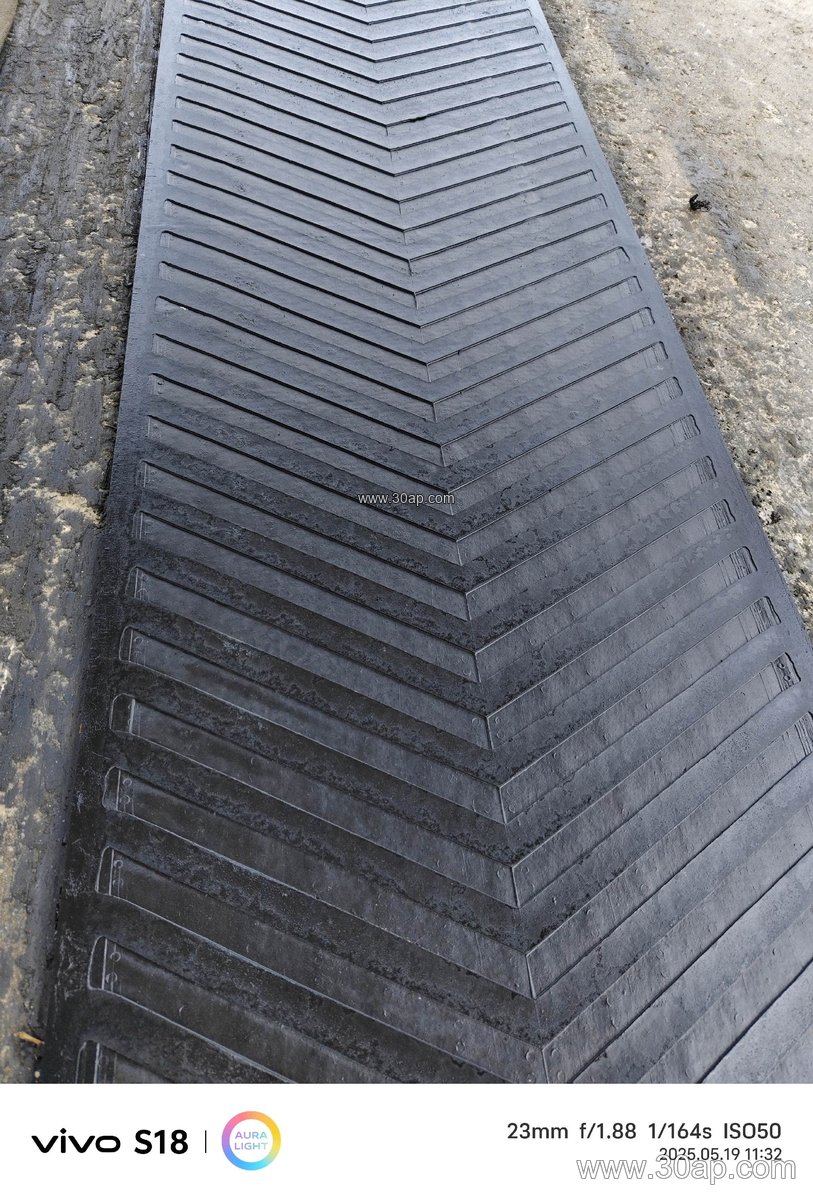
High-tension belts appear in iron ore and copper ore handling, gold mining plants, coal preparation, cement kilns and clinker lines, power plant coal yards, port ship loading, and stone crushing circuits. In these sites the belt works with idler rollers, conveyor pulleys, and conveyor brackets that must match the belt’s troughability and load. A chevron conveyor belt or corrugated sidewall belt may be chosen on steep inclines, but those are different designs and should not be substituted for a flat high strength belt on a standard troughed conveyor.
For underground coal mining, flame retardant and anti-static properties are usually mandatory, so PVG or PVC mining belt is preferred. In a quarry or aggregate plant, a high abrasion resistant cover extends service life where sharp rock is loaded.
Buyer Checklist
- Confirm the required tension class from the conveyor design, not from habit.
- Match cover grade to the material: abrasion, heat, oil, or flame resistance.
- Check belt width, ply count, and cover thickness against the pulley and idler layout.
- Ask about splice method and whether an endless conveyor belt is needed.
- Review storage and handling, since heavy rolls need proper lifting equipment.
For guidance on matching a high strength conveyor belt with rollers, pulleys, and frames, visit beltpulley.com and review the conveyor belt and conveyor pulley data before ordering.