What an EP400 Conveyor Belt Is
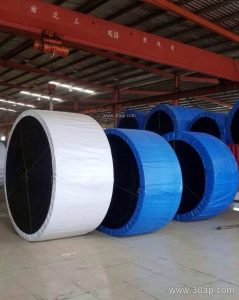
An EP400 Conveyor Belt is a fabric-core rubber belt built on polyester-polyamide (EP) plies. The number 400 refers to the nominal breaking strength of the carcass, commonly expressed in N/mm, so the belt sits in the mid-to-upper range of EP constructions. It is an EP Rubber Conveyor Belt rather than a steel cord design, which means it balances tensile strength with flexibility and tolerates the repeated flexing of troughing and return runs.
Because the load is carried by multiple fabric layers, this product is also correctly described as an EP Fabric Core Conveyor Belt or a Multi-Ply Fabric Core Conveyor Belt. Those names refer to the same belt and are useful when comparing it with an NN Conveyor Belt, which uses nylon plies, or with a Steel Cord Conveyor Belt for very long, high-tension lines.
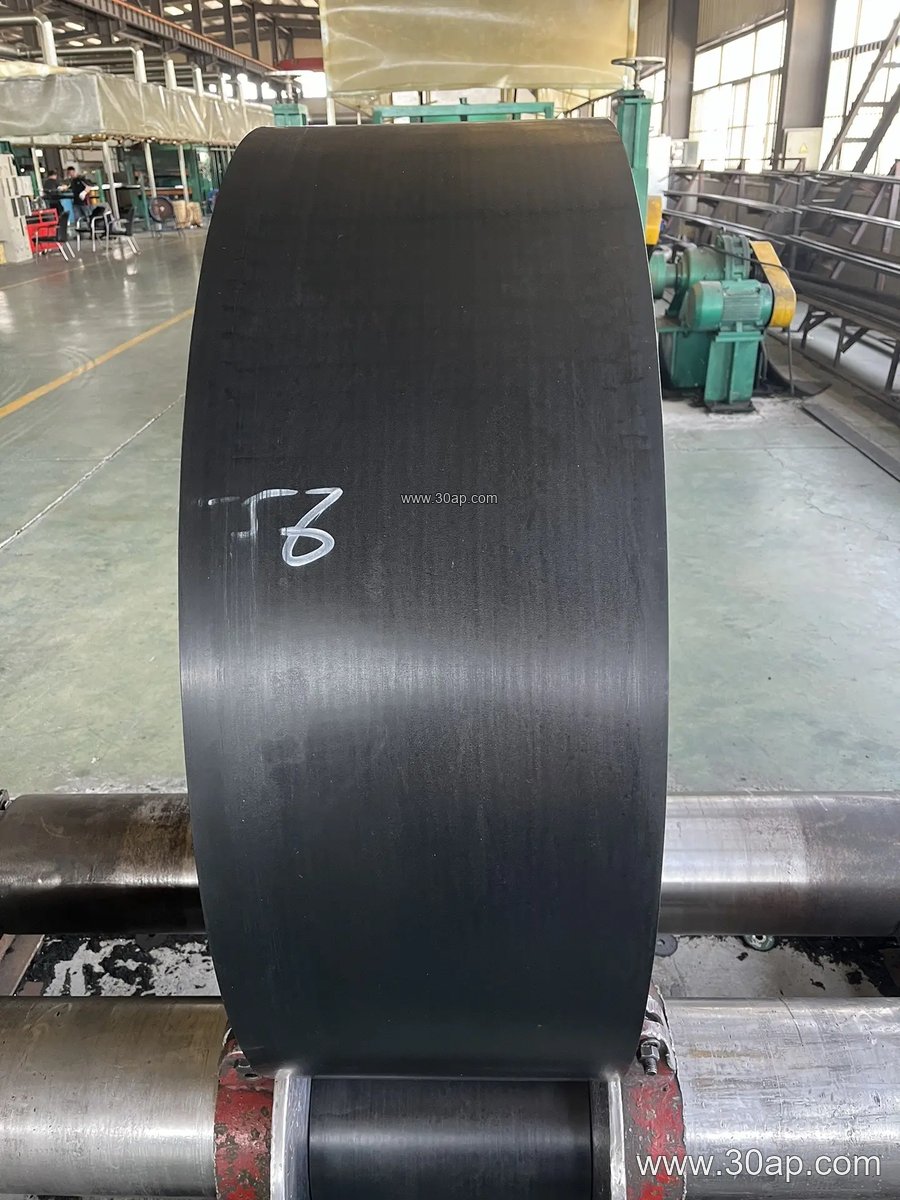
Construction and Common Specifications
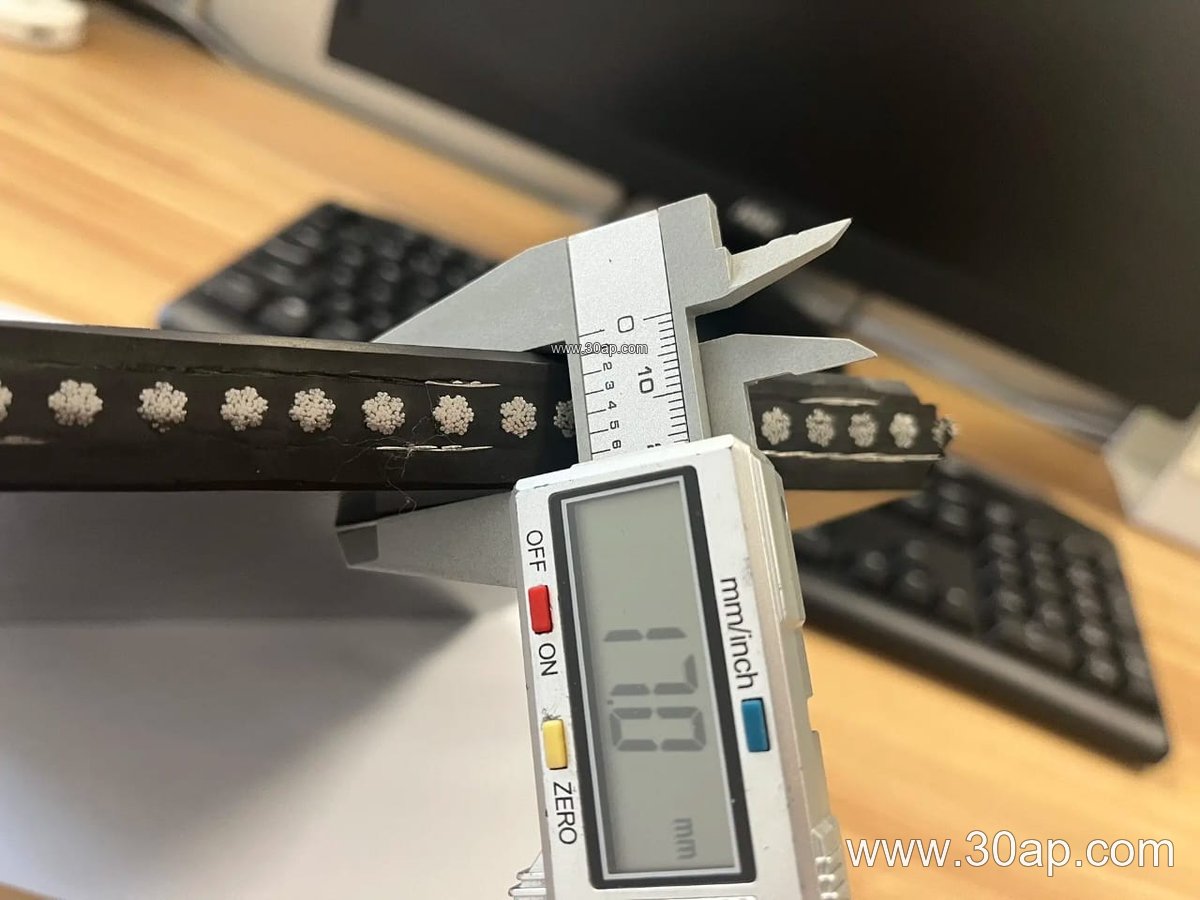
The carcass is usually 2 to 6 EP plies, bonded with skim rubber and protected by top and bottom cover compounds. Cover thickness is selected by duty; common combinations include 4+2 mm, 5+2 mm, 6+2 mm and 8+3 mm. Belt width follows the conveyor design, with B500, B650, B800, B1000, B1200, B1400, B1600, B1800 and B2000 among the usual options.
| Property | Typical Range |
|---|---|
| Strength grade | EP200, EP315, EP400, EP500, EP630, EP800, EP1000 |
| Belt width | B500 to B2000 mm, wider by design |
| Cover thickness | 3+1.5, 4+2, 5+2, 6+2, 8+3 mm |
| Ply count | 2 to 6 plies, depending on grade and width |
These values are reference data, not a fixed catalogue. A wider belt does not automatically require a larger pulley, and shaft diameter must be calculated from the actual tension and pulley load rather than inferred from belt width.
Where It Fits in the Plant
The EP400 grade is often chosen for medium-duty main haulage and transfer lines. In a quarry or sand making plant it can feed a crusher conveyor and carry screened aggregate; in a cement plant it may move clinker, limestone or raw meal; in a power plant it handles coal on yard and boiler-feed systems. Mining conveyors, port loading lines and recycling plants also use this grade where abrasion is steady but tension is below steel cord territory.
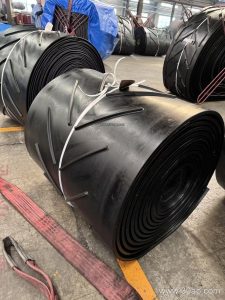
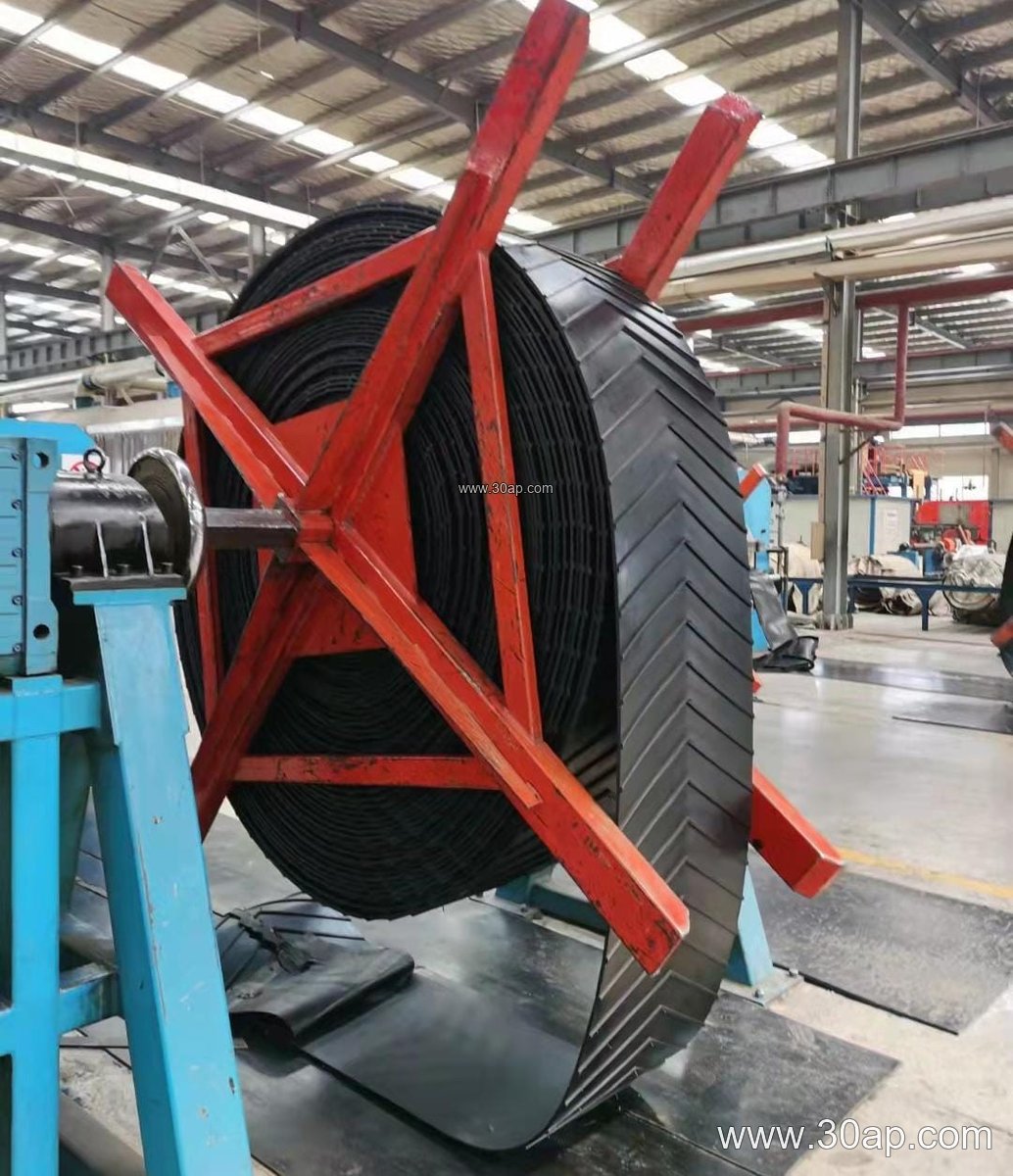
Compound choice matters as much as the carcass. An Abrasion Resistant Conveyor Belt suits sharp stone and ore, while a Heat Resistant Conveyor Belt is needed near dryers or sinter areas. For underground coal work, a Flame Retardant Conveyor Belt or Fire Resistant Conveyor Belt with anti-static properties is normally specified. Cold climates may call for a Cold Resistant Conveyor Belt, and oily scrap or food-adjacent streams may need an Oil Resistant Conveyor Belt or a Food Grade Conveyor Belt. Where material must be contained on steep inclines, a Chevron Conveyor Belt or Corrugated Sidewall Conveyor Belt is a different solution rather than a substitute for the flat EP400 belt.
Matching the Belt to Pulleys, Idlers and Brackets
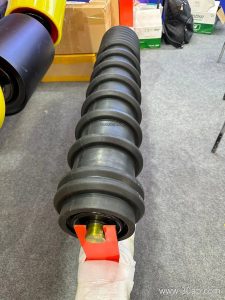
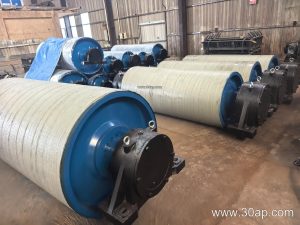
A belt only performs well when the whole conveyor is consistent. Drive pulleys, tail pulleys and bend pulleys each carry out different functions and are not interchangeable. The drive pulley transmits torque, the tail pulley sets the return point, and bend pulleys redirect the path. Their diameters and lagging should be selected from the calculated belt tension and wrap angle, not copied from a belt width table.
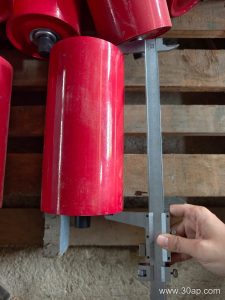
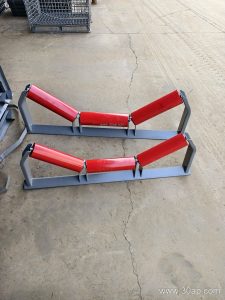
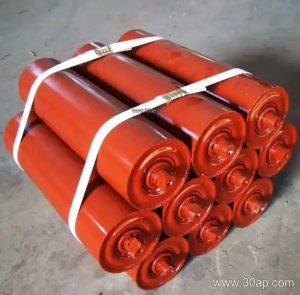
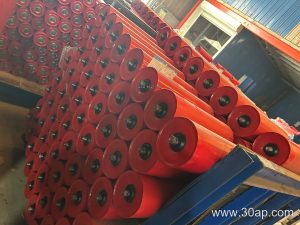
Troughing and return idler rollers should match the belt width and load, and every conveyor bracket should hold its roller at the correct height and angle. Misaligned frames or worn idlers cause edge damage that no carcass grade can resist. On a typical EP400 installation, check pulley lagging, roller rotation and belt tracking together during commissioning.
Buyer Checklist
- Confirm the required strength grade against the actual working tension, with a sensible safety factor.
- State belt width, ply count and cover thickness, and give the material type, lump size and temperature.
- Specify any flame retardant, anti-static, oil, heat or cold requirement in writing.
- Provide pulley diameters and conveyor layout so the supplier can advise on flexibility and splice type.
- Decide between open-end delivery and an Endless Conveyor Belt for shorter, fixed centres.
- Plan spare idler rollers and one spare pulley so a stoppage does not idle the whole line.
For a bulk material conveyor belt in mining, cement, power or aggregate service, the EP400 Conveyor Belt is a practical middle ground when the duty is heavy but the route is not long enough to justify steel cord. Confirm the full specification with the manufacturer before ordering, since cover compounds and ply arrangements vary between suppliers.