What an Intermediate Bend Pulley Does
An intermediate bend pulley is a non-drive, non-tail pulley installed between the head and tail of a conveyor to change belt direction, redirect the belt path, or increase wrap angle on another pulley. Often referred to as a deflection pulley or angle pulley, it sits in the intermediate section of the conveyor and works with the conveyor belt to guide its return or carry run. Unlike a drive pulley that transmits power or a tail pulley that sets belt tension at the loading end, the intermediate bend pulley simply routes the belt along the desired profile, making it a true direction-changing component.
Construction and Typical Features
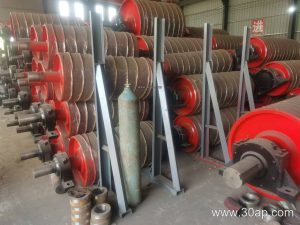
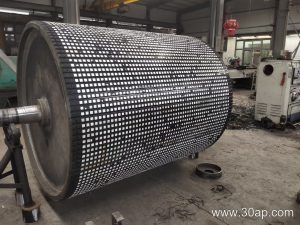
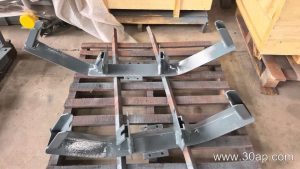
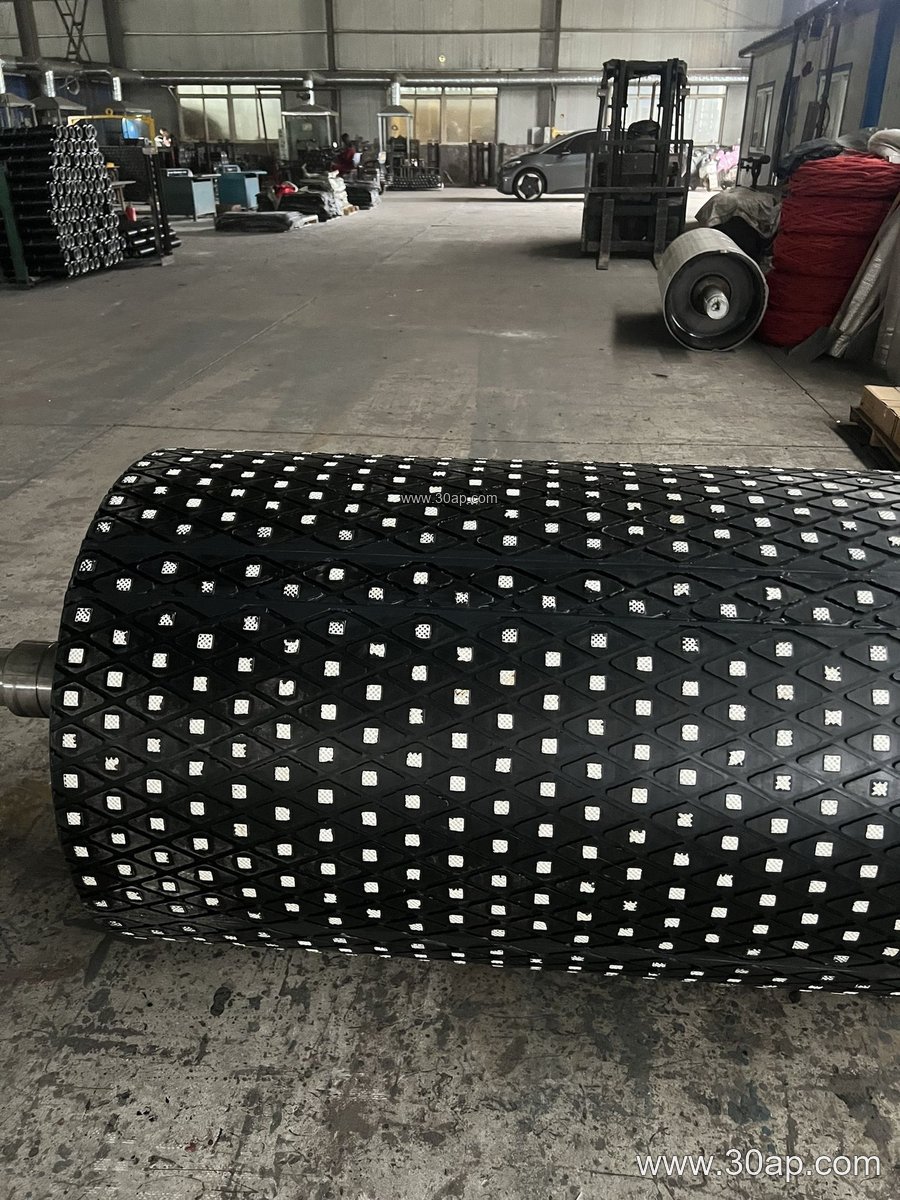
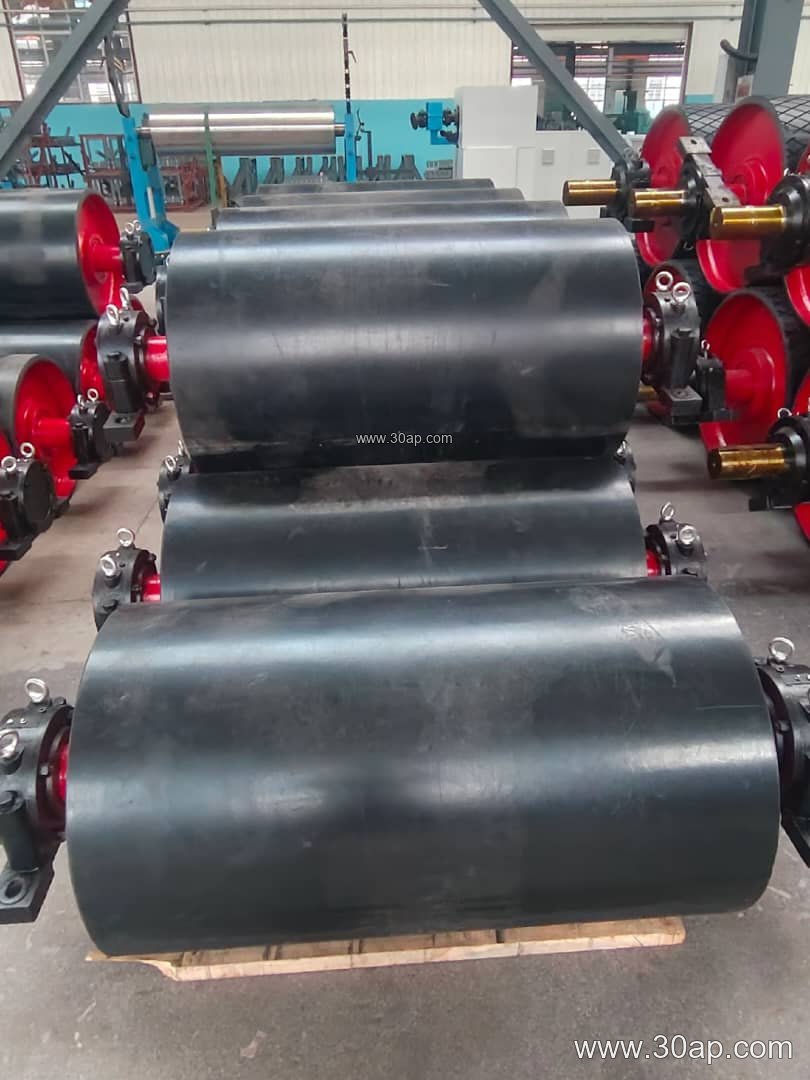
A bend pulley is built around a cylindrical shell mounted on a shaft with bearing housings at both ends. The shell may be smooth, lagged with rubber, or covered with ceramic tiles for grip and wear protection. Common surface forms include plain finish, cold-bonded rubber, hot-vulcanized rubber, diamond grooving, and ceramic lagging. Lagging thickness often ranges from 8 to 20 mm depending on the application. The pulley body is supported by a conveyor bracket or frame, and the shaft diameter is sized by torque and load rather than by belt width alone. Typical shaft diameters include Ø50, Ø80, Ø120, and Ø160 mm, while shell diameters for intermediate bend pulleys commonly fall between Ø250 and Ø1000 mm. The face width usually exceeds the belt width to ensure full support.
Where It Fits in Bulk Handling
Intermediate bend pulleys appear in a wide range of conveyor layouts. In a limestone quarry or aggregate plant, they help route the belt around structural obstacles and maintain proper transition between incline and horizontal sections. In a coal preparation plant or power station coal yard, they are used to increase wrap angle on the drive pulley or to guide the return belt. Cement plants use them in clinker and raw meal conveying lines, while port bulk terminals rely on them to redirect long overland belts. In each case, the bend pulley works alongside the conveyor belt, idler rollers, and supporting brackets to keep the belt tracking smoothly.
Matching the Pulley to the Belt and Duty
Selecting an intermediate bend pulley starts with the belt width and the required diameter for the belt path. There is no fixed rule that one belt width matches only one pulley diameter; a B800 belt may run with a Ø400 mm bend pulley in one layout and a Ø500 mm pulley in another, depending on wrap angle and space. The table below lists common reference combinations, not mandatory pairings.
| Belt width | Typical pulley face width | Example shell diameter |
|---|---|---|
| B500 | ≈600 mm | Ø250 – Ø315 mm |
| B650 | ≈750 mm | Ø315 – Ø400 mm |
| B800 | ≈950 mm | Ø400 – Ø500 mm |
| B1000 | ≈1150 mm | Ø500 – Ø630 mm |
| B1200 | ≈1400 mm | Ø630 – Ø800 mm |
| B1400 | ≈1600 mm | Ø800 – Ø1000 mm |
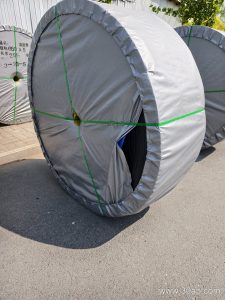
Belt construction also matters. A heavy-duty mining conveyor belt or steel cord conveyor belt may require a larger shaft and bearing size than a lighter EP conveyor belt or NN conveyor belt. For abrasive materials such as iron ore or copper ore, a lagged bend pulley with abrasion-resistant rubber can extend service life. In coal mining, flame retardant conveyor belt and anti-static conveyor belt properties are often specified for the belt, and the pulley lagging should be compatible with those safety requirements. Food grade conveyor belt lines may call for a smooth, cleanable pulley surface.
Buyer Checklist
- Confirm the belt width and belt type, such as EP conveyor belt, fabric core conveyor belt, or steel cord conveyor belt.
- Specify the mounting position and required belt wrap angle.
- Choose lagging type and thickness based on material abrasion and slip risk.
- Provide shaft load and torque data so the shaft diameter can be calculated.
- Check that the pulley face width and conveyor bracket dimensions fit the existing frame.
- For underground coal mining conveyor belt systems, verify flame retardant and anti-static requirements for all components.
An intermediate bend pulley is a simple but critical part of the belt path. Getting the diameter, lagging, and shaft size right helps the conveyor belt run true, reduces wear on idler rollers, and keeps the whole system productive in quarry, cement, power, and mining operations.