What a Q235 Conveyor Bracket Does on a Belt Conveyor
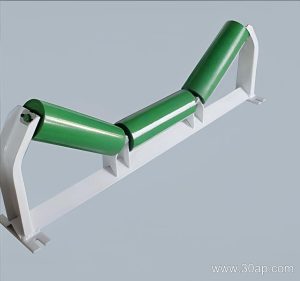
The Q235 conveyor bracket is the steel support that holds idler rollers in the correct position under and over the conveyor belt. Made from Q235 mild steel, this bracket is the quiet workhorse of a conveyor line: it carries the load of the belt, the material and the rollers, and it keeps the whole trough aligned so the belt tracks smoothly. In a quarry, a coal handling plant or a cement kiln line, the Q235 conveyor bracket is usually the part that ties the idler roller assembly to the conveyor frame. When engineers ask for a conveyor bracket, they often mean this same steel support, and the Q235 grade is chosen for its good weldability, reasonable strength and cost balance. For a broader look at matching frame parts with belting, see www.example.com/conveyor-bracket and the related roller guidance at www.example.com/idler-roller.
How the Bracket Is Built
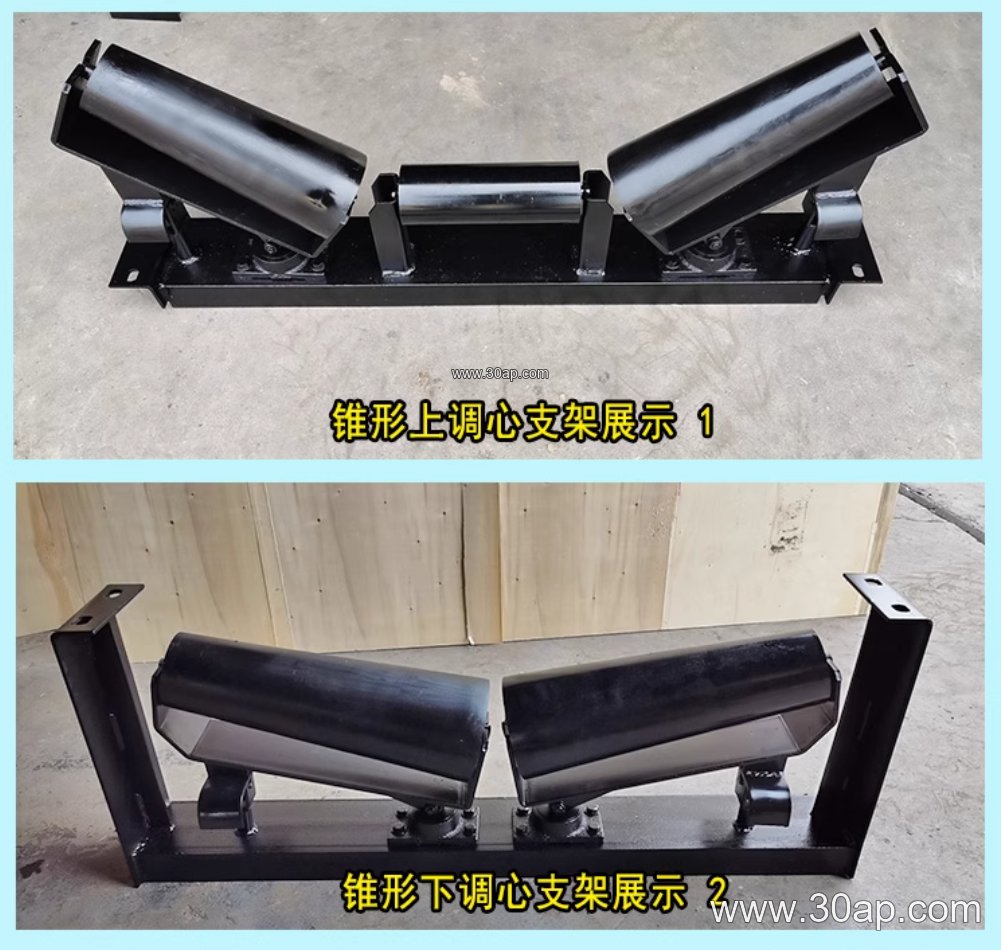
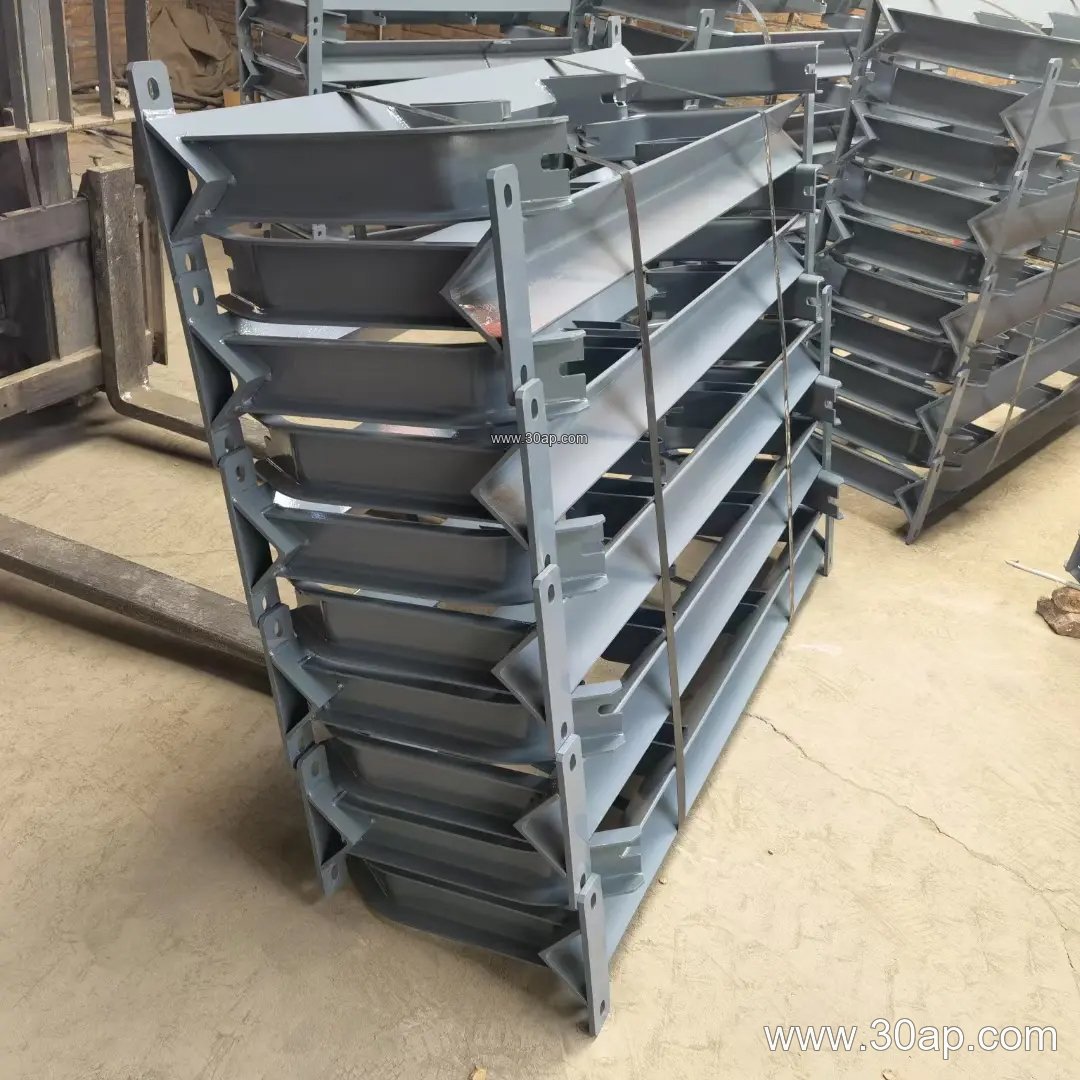
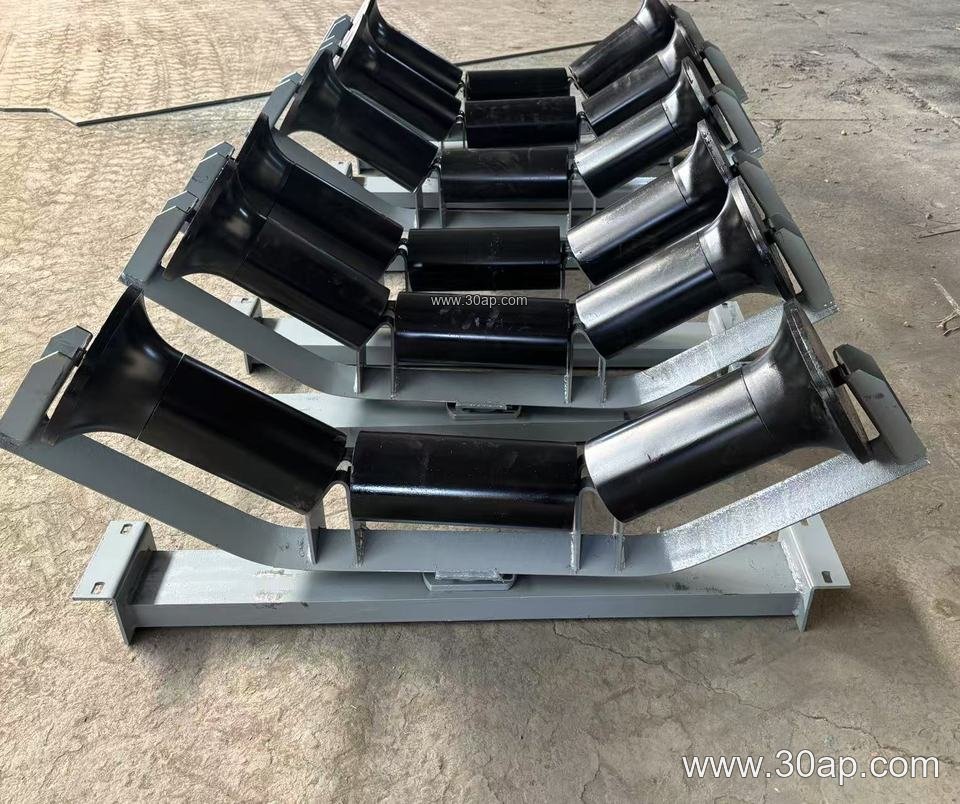
Most Q235 conveyor brackets are fabricated from angle steel, channel steel or folded steel plate. The fabrication route is straightforward: cutting, punching or drilling mounting holes, bending, and welding the roller seats. A typical trough bracket carries three idler rollers at a fixed trough angle, while a return bracket supports the belt on the return side. Because Q235 is easy to weld, fabricators can produce both fixed and adjustable versions without special procedures. Surface treatment is usually painting or galvanizing, and buyers should confirm the coating with the supplier rather than assume it.
Common Bracket Types and Reference Dimensions
The table below lists typical bracket forms and reference values. These are common ranges, not fixed supply promises; hole spacing and beam length change with belt width and trough angle.
| Bracket Type | Typical Function | Reference Belt Width | Common Trough Angle | Typical Roller Diameter |
|---|---|---|---|---|
| Trough bracket (upper) | Supports the carrying side | B500 to B2000 | 20, 30, 35, 45 degrees | Ø89, Ø108, Ø133 |
| Transition bracket | Gradual change near pulleys | B650 to B1400 | 20 to 35 degrees | Ø89, Ø108, Ø133 |
| Return bracket (lower flat) | Supports the return belt | B500 to B1800 | Flat | Ø89, Ø108, Ø133 |
| V-return bracket | Self-cleaning return support | B650 to B1600 | V form | Ø108, Ø133, Ø159 |
| Impact bracket | Absorbs load at transfer points | B800 to B1800 | 20 to 35 degrees | Ø108, Ø133, Ø159 |
| Self-aligning bracket | Corrects belt mistracking | B500 to B1600 | 20 to 35 degrees | Ø89, Ø108, Ø133 |
| Adjustable bracket | Field-set trough angle | B650 to B1400 | 20 to 45 degrees | Ø89, Ø108, Ø133 |
Typical combinations such as B800 with 35 degrees and Ø108, or B1200 with 45 degrees and Ø133, appear in many designs, but no single belt width is tied to one trough angle or one roller diameter. A forward-leaning bracket is often set around 1.5 to 2 degrees to help belt tracking.
Where It Is Used
You will find the Q235 conveyor bracket in crushing and screening lines, coal washing plants and power station coal yards. In a limestone quarry, trough brackets hold the idler roller sets that carry heavy rock, and the bracket must cope with dust and shock loads. In a cement plant, the same steel support sits under belts moving clinker and raw meal. For high-abrasion duties, an abrasion resistant conveyor belt paired with a sturdy bracket reduces downtime. In a coal yard, a flame retardant conveyor belt is common, and the bracket still does its basic job of keeping the rollers square to the frame. The bracket also appears on pipe conveyor belt lines and on skirted conveyor belt installations where the belt must be held firmly.
Choosing and Maintaining the Bracket
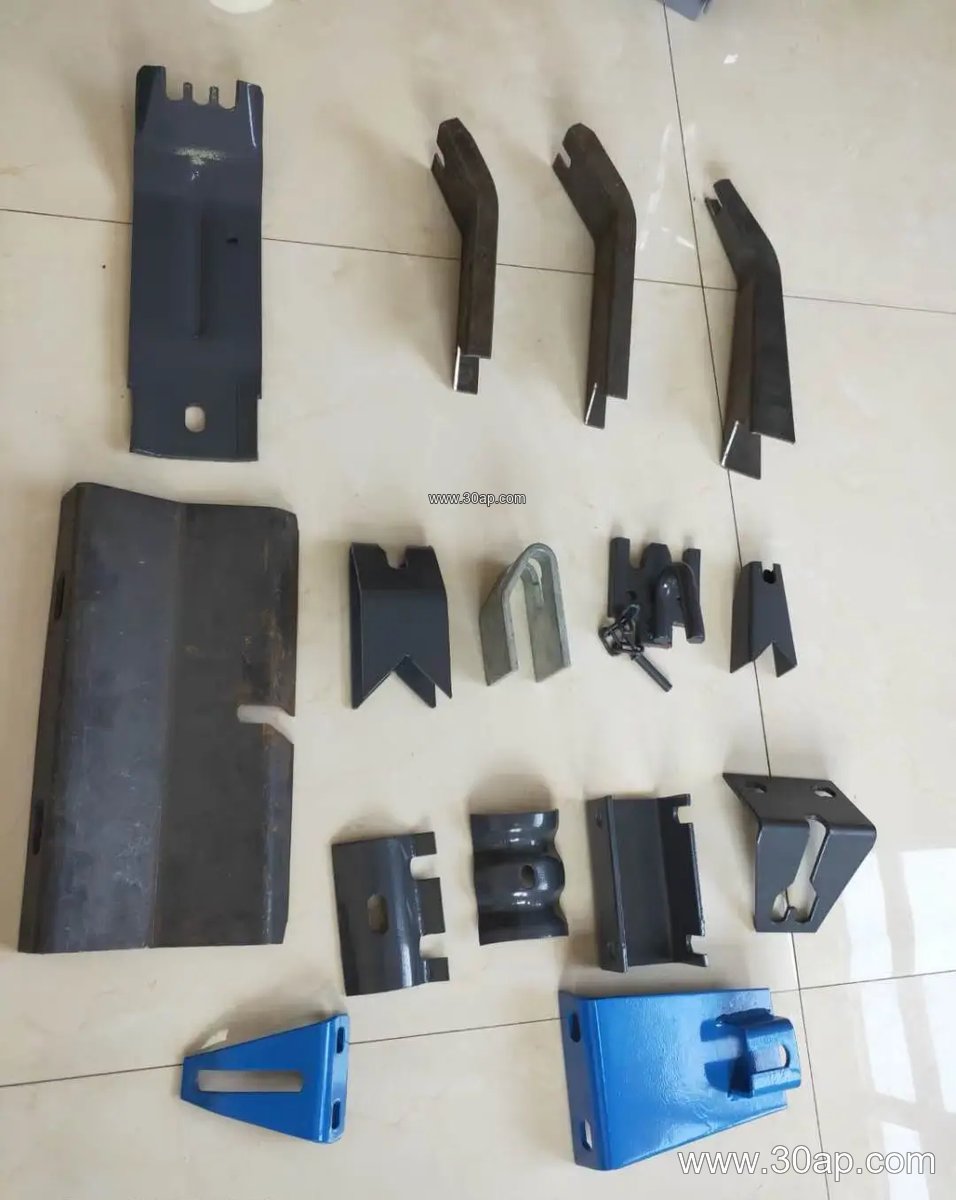
Selection starts with the belt width, the trough angle and the roller diameter, then moves to the mounting dimensions and the load. Buyers should ask for a drawing that shows hole spacing and beam length, because these vary with design. A fixed bracket is simple and rigid; an adjustable bracket lets maintenance staff correct the trough angle in the field. During service, check for loose bolts, bent seats and corrosion at the welds, especially in wet or coastal sites. Keeping the bracket aligned protects the idler roller and extends belt life. For more on matching brackets with belting, visit www.example.com/conveyor-bracket or review roller options at www.example.com/idler-roller.
Buyer Checklist
- Confirm belt width, trough angle and roller diameter before ordering.
- Ask for a dimension drawing, since hole spacing and beam length are design-dependent.
- Specify fixed or adjustable form and the required surface treatment.
- Match bracket strength to the load and the material being conveyed.
- Plan periodic inspection of bolts, welds and coating.
The Q235 conveyor bracket is a simple part, but choosing it correctly keeps the belt centered, the rollers turning and the line running.