What the Conveyor Tail Pulley Does
The conveyor tail pulley sits at the return end of a belt conveyor, opposite the drive. Its main job is to guide the conveyor belt back into the carrying run while maintaining a steady wrap angle and belt alignment. Because it turns freely on its shaft and is often mounted on a tensioning carriage, the tail pulley also plays a part in keeping belt sag under control. In a quarry or a cement plant, this component works quietly but continuously, and its condition directly affects belt tracking and uptime.
It is important to distinguish the tail pulley from other drum positions. A drive pulley transmits torque, a bend pulley changes belt direction, and a head pulley discharges material. These are not interchangeable, even if they look similar. The tail pulley is defined by location and duty, not by a generic drum shape.
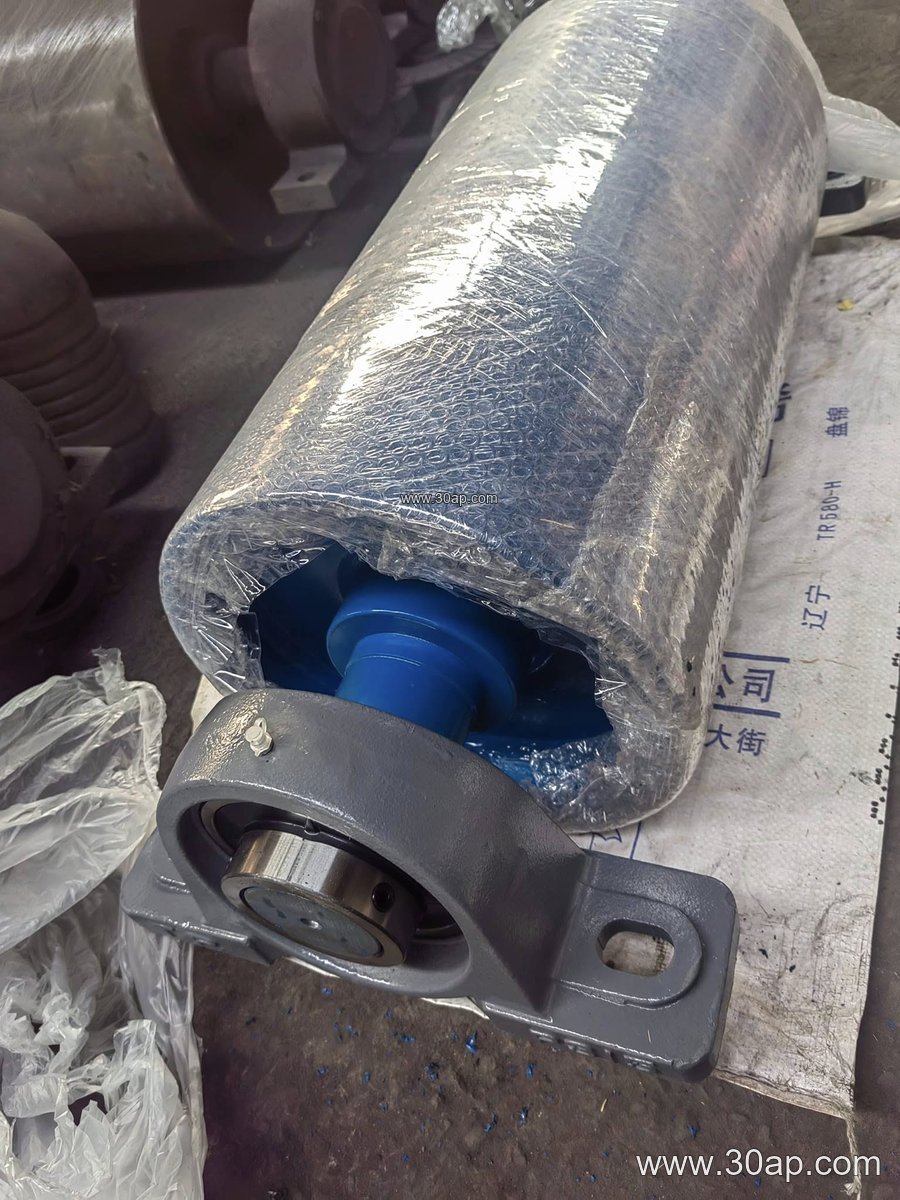
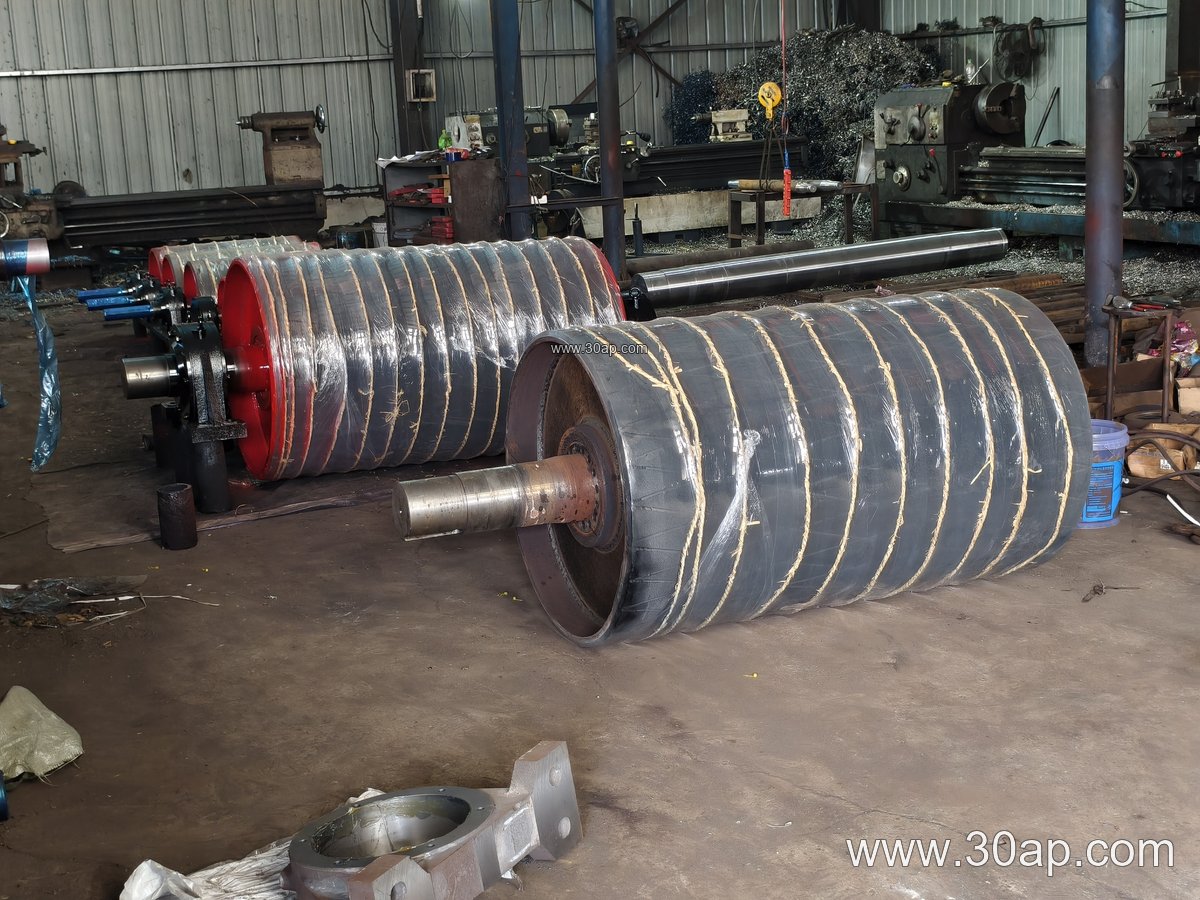
Construction and Surface Options
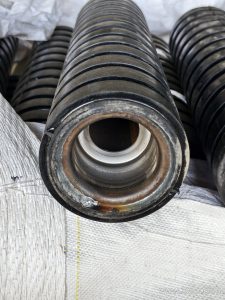
A typical tail pulley is built from a steel drum shell, end discs, a shaft, and bearing housings. The shell may be plain or covered with rubber lagging. Lagging helps protect the shell from abrasive fines and improves grip where the belt wraps the drum. Common surface forms include plain, cast rubber, cold-bonded rubber, hot-vulcanized rubber, diamond pattern, and ceramic lagging. Lagging thickness is often selected from 8, 10, 12, 15, or 20 mm depending on the duty.
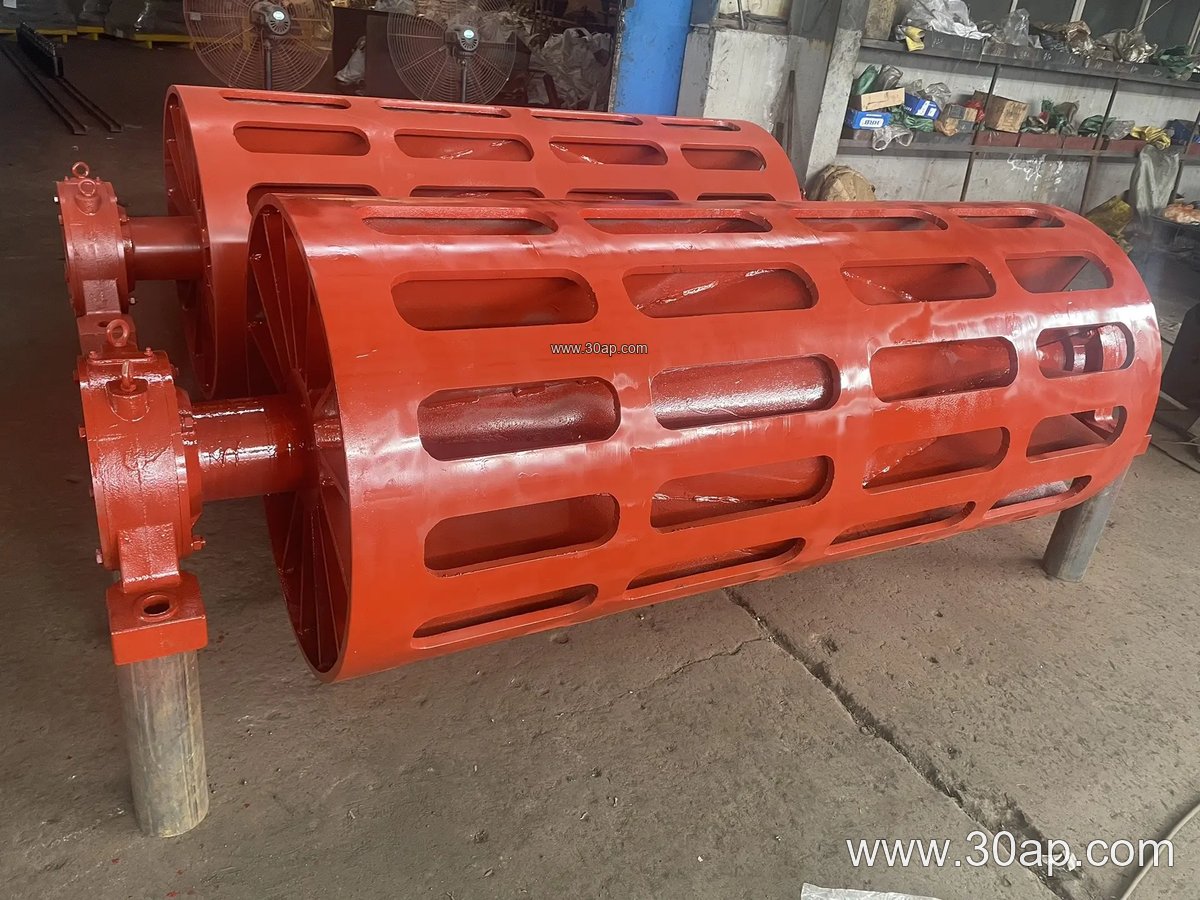
Width and diameter are chosen together with the conveyor design. Shell face width is usually a little wider than the belt. For example, a B800 belt often pairs with a shell around 950 mm, while a B1200 belt may use about 1400 mm. Diameters such as Ø320, Ø400, Ø500, Ø630, or Ø800 are common in bulk handling, but no single diameter is fixed to one belt width. Shaft diameter is determined by torque and load, with common values from Ø50 to Ø200.
| Reference item | Typical range |
|---|---|
| Belt width | B400 to B2400 |
| Pulley diameter | Ø200 to Ø1800 |
| Lagging thickness | 8 to 20 mm |
| Shaft diameter | Ø50 to Ø200 |
Where It Fits in the Plant
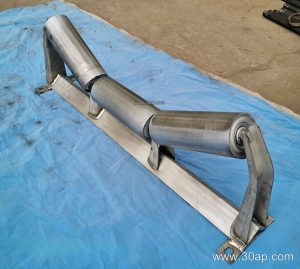
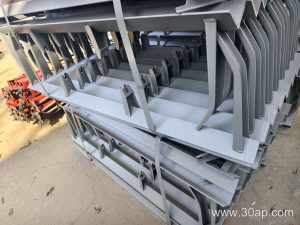
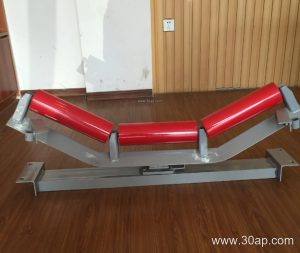
You will find the tail pulley in almost every bulk material line. In a limestone mine or aggregate crushing circuit, it returns the belt after the discharge point and works alongside conveyor idler rollers and sturdy conveyor brackets. In a coal washing plant or power station coal yard, flame retardant and anti-static belt grades are often used, so the pulley surface and grounding path deserve attention. The same component appears in ship loading systems and fertilizer warehouses, where dust and moisture vary widely.
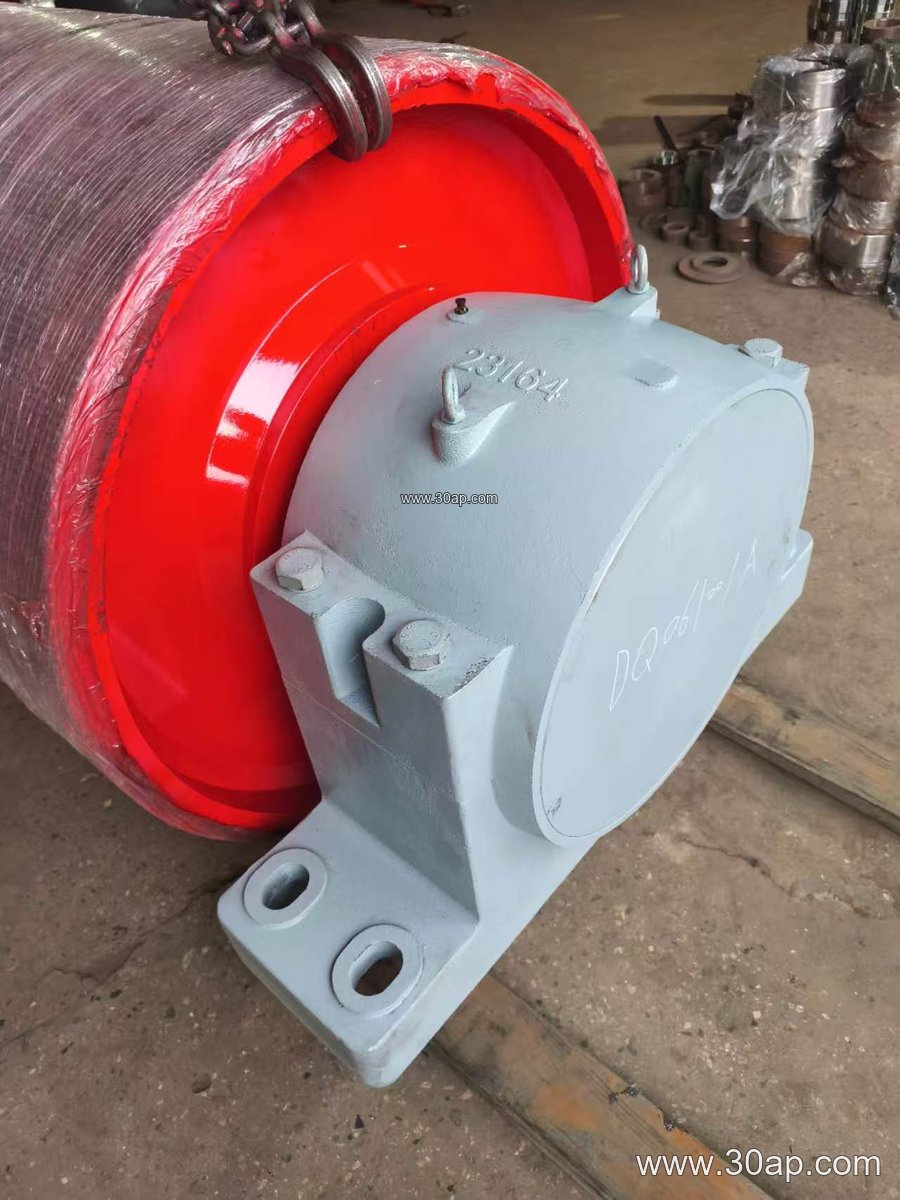
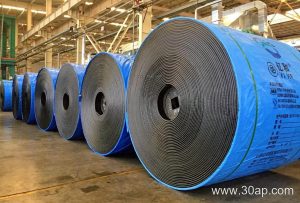
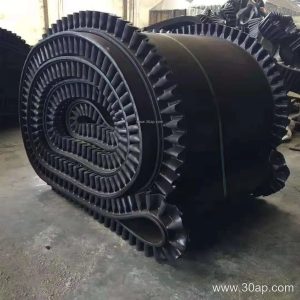
Because the tail pulley is often near the loading point, it may see spillage and fine abrasive material. This makes abrasion resistant belt grades and well-sealed bearings a practical pairing. A rubber conveyor belt or an EP conveyor belt running over a lagged tail drum can benefit from a clean, square contact face.
Buyer Checklist
- Confirm position and duty. State clearly that the item is a tail pulley, not a drive or bend pulley, and note whether it is fixed or mounted on a take-up frame.
- Match belt and shell width. Give the belt width, such as B650, B1000, or B1400, and let the supplier propose a suitable shell face.
- Choose lagging for the environment. Plain steel may suit light duty, while diamond or ceramic lagging can help in wet or abrasive conditions.
- Check bearing and shaft details. Shaft size follows load calculations, so avoid assuming a shaft diameter from belt width alone.
- Plan maintenance access. The tail pulley should be reachable for inspection of lagging wear, bearing temperature, and belt tracking.
For a primary crusher discharge or a long overland run, the tail pulley must cooperate with the belt, the conveyor pulley set, and the supporting frame. A well-specified drum reduces misalignment and premature belt edge wear. Whether the plant handles iron ore, clinker, or sand, the tail pulley remains a small but critical link in the material flow.