What an Adjustable Conveyor Bracket Does
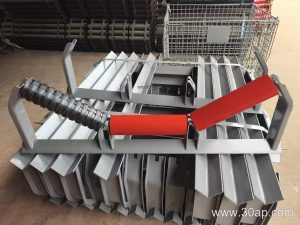
An adjustable conveyor bracket is a support component that lets maintenance teams change the trough angle of carrying idlers without replacing the whole frame. Instead of welding a fixed bracket to the stringer, the adjustable version uses slotted holes, pivoting arms or bolted angle plates so the idler position can be shifted on site. In a quarry or a limestone mine, this flexibility matters when a belt line is reassigned from one material to another and the ideal trough profile changes.
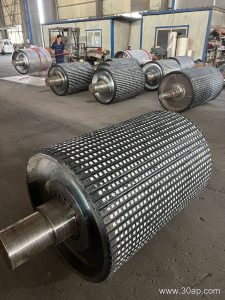
The same component is often called an adjustable idler bracket or a variable-angle bracket. It is a support accessory, not a pulley: drive pulleys, tail pulleys and bend pulleys are separate parts with their own mounting arrangements, and none of them should be confused with this bracket.
Construction and Mounting
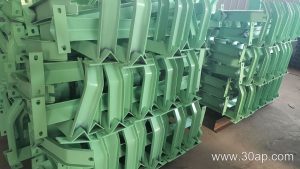
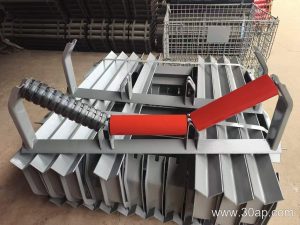
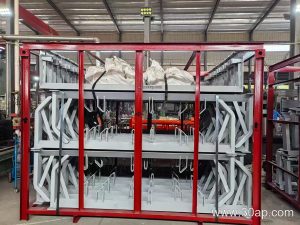
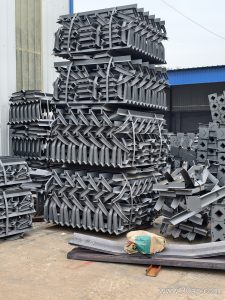
Most units are fabricated from angle steel, channel steel or folded steel plate, then drilled or slotted for bolting. A typical adjustable bracket has a base plate that fixes to the conveyor stringer, a hinged or sliding arm that carries the idler, and one or more locking bolts that hold the chosen angle. Some designs add a fine adjustment screw for small corrections after the belt is running.
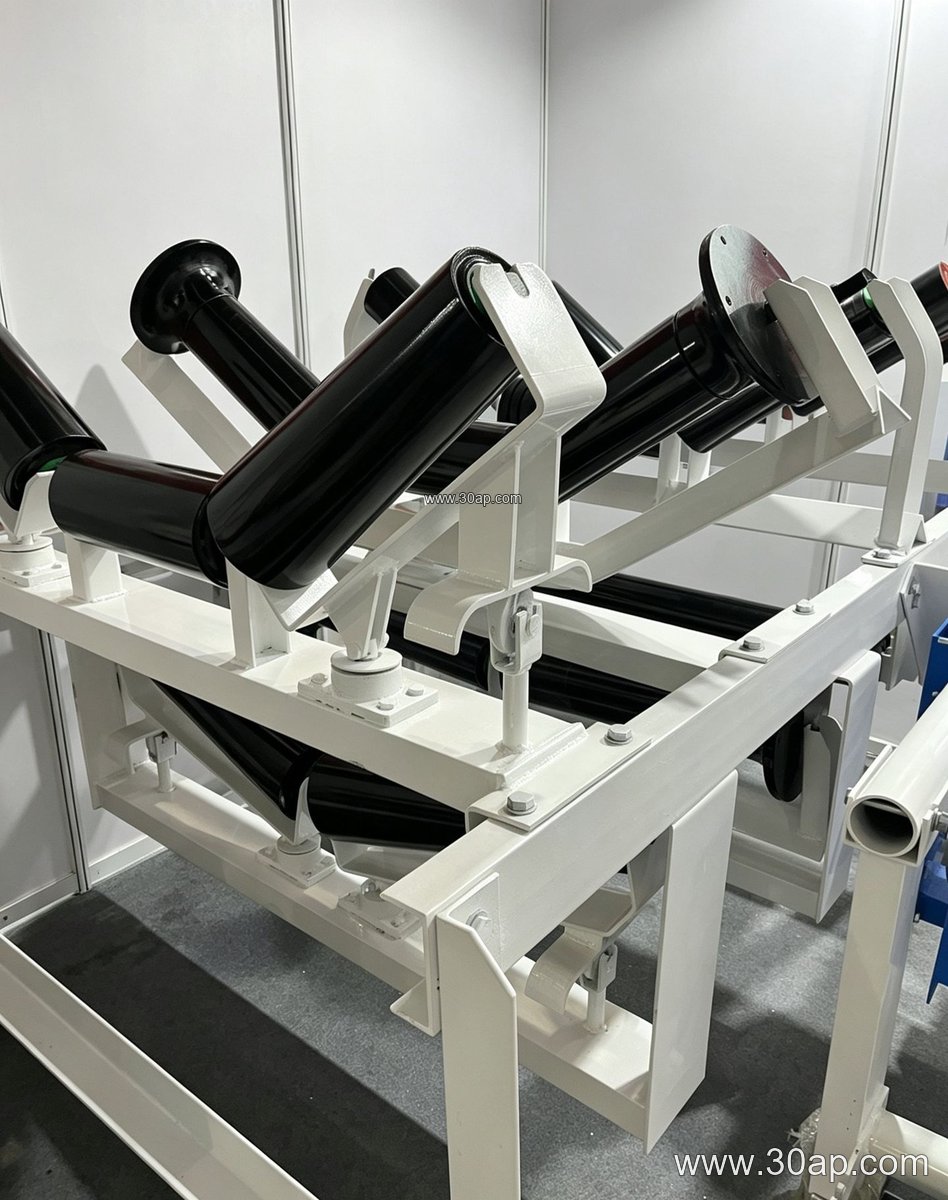
Installation position follows the same logic as a fixed bracket. Upper trough brackets sit on the carrying side, return brackets support the belt on its way back, and transition brackets are placed near pulleys where the belt changes shape. An adjustable conveyor bracket is often used at transition zones and at points where alignment problems appear, because a small angle change can reduce edge loading and belt wander.
Common Reference Data
The values below are reference ranges for discussion, not universal specifications. Actual hole spacing and crossbeam length depend on belt width and trough angle, so they should be confirmed by design.
- Belt width: B500, B650, B800, B1000, B1200, B1400, B1600, B1800, B2000, B2200
- Trough angle: 20 degrees, 30 degrees, 35 degrees, 45 degrees
- Idler diameter: Ø89, Ø108, Ø133, Ø159, Ø194
- Material: angle steel, channel steel, folded steel plate
Useful combinations are written as B800 with 35 degrees and Ø108, or B1200 with 45 degrees and Ø133, or B650 with 30 degrees and Ø89. These are examples only. A given belt width does not force one trough angle or one idler diameter, and the shaft diameter should never be assumed from belt width alone.
Where It Fits in a Conveying System
Adjustable brackets appear in cement plants, power plant coal handling, iron ore and copper ore lines, crushing and screening circuits, and port loading systems. In a coal preparation plant they can help keep a flame retardant conveyor belt centered through a transfer house. In a sand and gravel line they may be paired with an abrasion resistant conveyor belt that sees constant grit. Around a crusher, an impact resistant conveyor belt benefits from a stable trough that does not spill material at the edges.
On longer overland routes, a steel cord conveyor belt or an EP conveyor belt may run over many idler stations, and a few adjustable brackets at critical points can simplify alignment work without changing the rest of the frame. Food and fertilizer plants sometimes use the same principle with a food grade conveyor belt or a chemical resistant conveyor belt, where gentle trough adjustment helps prevent material migration.
Adjustable Versus Fixed Brackets
A fixed bracket is simpler and usually cheaper, and it is fine where the belt width, material and trough angle never change. An adjustable bracket costs more and has more bolts to check, but it allows correction after installation and makes reconfiguration possible when a line is upgraded. For a heavy-duty mining conveyor belt running at high tonnage, the adjustable version is often chosen at transition and loading points where geometry is hardest to predict.
Buyer Checklist
- Confirm belt width, required trough angle range and idler diameter before ordering.
- Check that the slot range covers the angles you may need later, not only today’s setting.
- Match the bracket material and finish to the environment, especially in wash plants and coastal ports.
- Ask how the bracket locks the angle and whether it can be adjusted with the belt loaded.
- Verify bolt grade and hole spacing against the actual stringer and idler frame.
After installation, inspect locking bolts during routine walks and recheck trough angle after the first weeks of running. A small amount of attention to a conveyor bracket keeps the idler roller, the belt and the whole line working together.