What a Guide Idler Bracket Does on a Conveyor
A guide idler bracket is the mounting component that holds a guide idler in a fixed, correct position relative to the conveyor belt. In many conveying systems it is also called a guide roller bracket, and the two names describe the same part. Its job is not to carry the main material load, but to keep the belt tracking steadily, limit sideways wander, and protect the belt edges from rubbing against the frame. On a long overland line, a badly positioned guide bracket can cause edge damage within weeks, so the part deserves as much attention as the carrying idlers themselves.
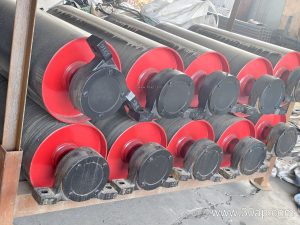
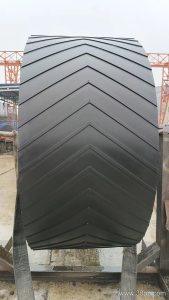
This bracket usually sits near transition zones, curve sections, loading points, and the tail area, where belt misalignment is most likely. It works together with the conveyor belt, idler roller, and conveyor pulley to keep the whole run stable. If the belt is a heavy-duty mining conveyor belt or an abrasion resistant conveyor belt carrying sharp rock, the guide bracket must be rigid enough to resist vibration and occasional impact without loosening.
Construction and Materials
Most guide idler brackets are fabricated from angle steel, channel steel, or folded steel plate. The material choice depends on frame design and load expectation rather than on belt width alone. A simple welded bracket may use a single piece of angle iron with a drilled mounting plate, while a heavier design uses channel sections and gussets to stiffen the arm. Surface treatment is normally painting or galvanizing, and buyers should confirm which finish matches the rest of the conveyor frame.
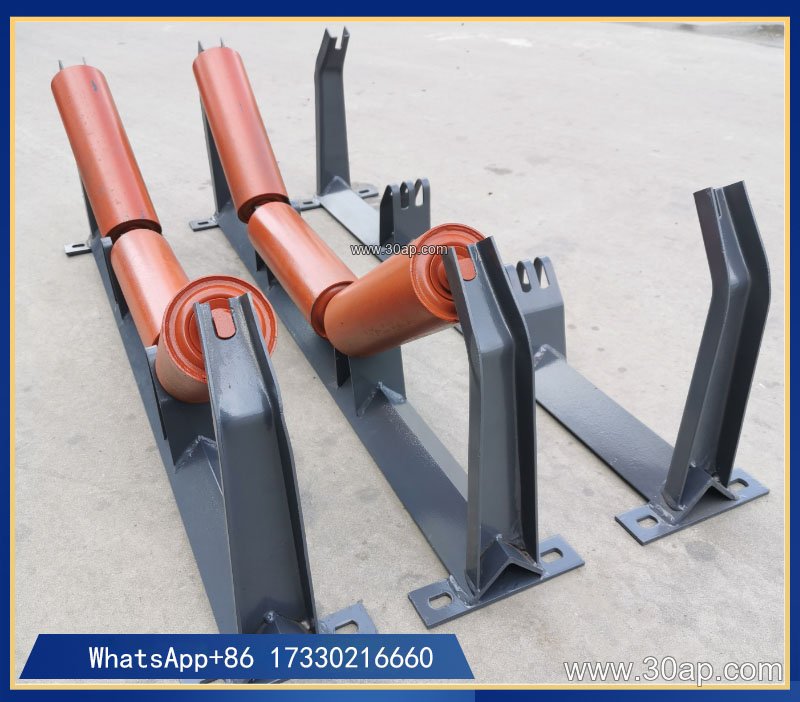
- Angle steel brackets: light, economical, common on smaller frames
- Channel steel brackets: stiffer, better for long spans and vibrating duty
- Folded plate brackets: compact shape, often used where space is tight
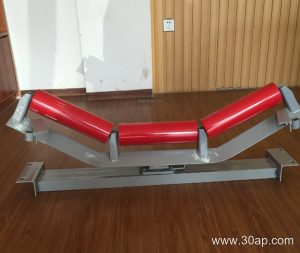
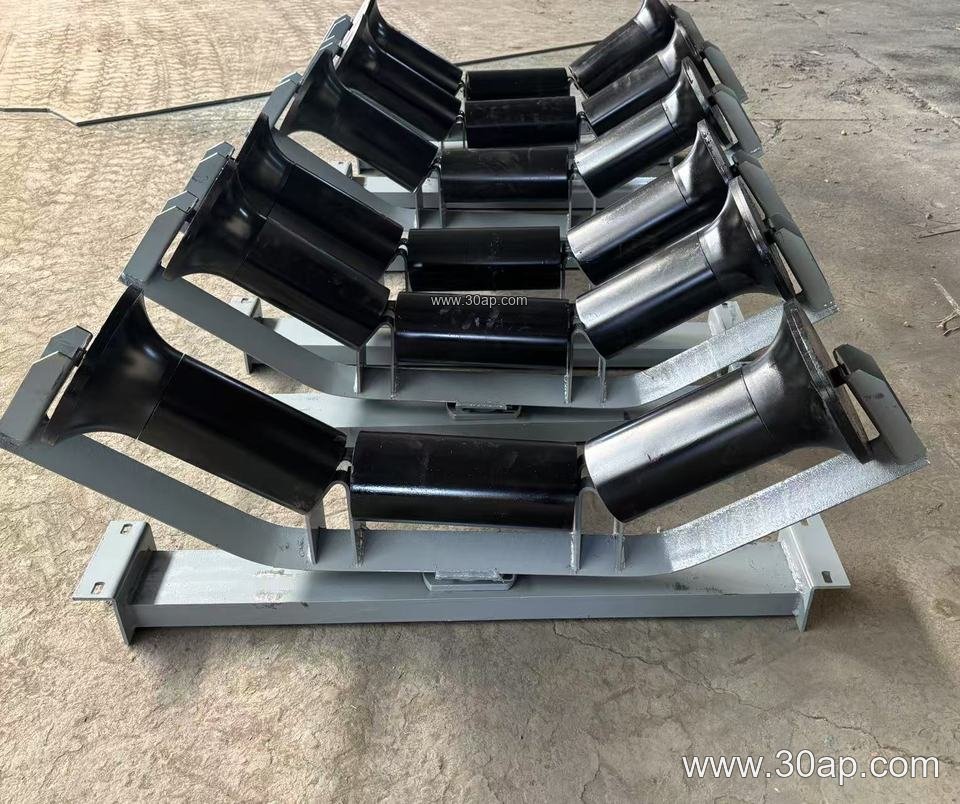
Mounting hole spacing and crossbeam length are determined by belt width, trough angle, and frame design. They should not be treated as universal fixed values. The bracket must align with the idler shaft diameter, so a Ø108 roller needs a different seat from a Ø133 or Ø159 roller.
Where It Fits in the Conveying Line
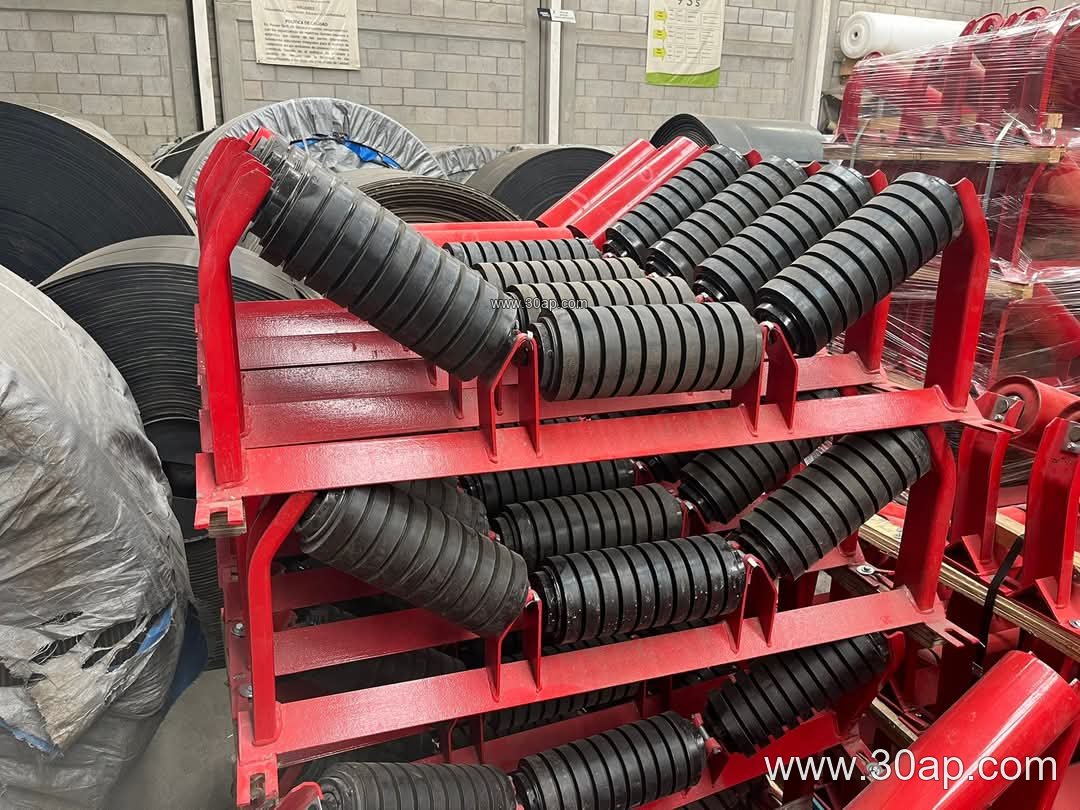
In a quarry or aggregate plant, guide brackets are often installed on the return side and near the discharge to stop the belt from climbing the frame. In a coal preparation plant or power plant coal yard, flame retardant conveyor belt and anti-static conveyor belt grades are common, and the bracket must be positioned so it does not create a spark risk through metal-to-metal rubbing. In a cement plant, dust build-up around the bracket is a real concern, so a design that sheds material easily is preferable.
The bracket also appears in tunnel spoil lines and port ship loading systems, where the belt may be an EP conveyor belt or a steel cord conveyor belt running at high tension. In these cases the guide bracket is a small but critical link between the idler roller and the structural frame.
Common Reference Sizes
The table below shows typical reference combinations. These are examples only, not mandatory pairings, and final dimensions follow the conveyor design.
| Belt Width | Trough Angle | Roller Diameter | Typical Bracket Use |
|---|---|---|---|
| B500 | 20 degrees | Ø89 | Small aggregate or sand line |
| B650 | 30 degrees | Ø89 | Light bulk material duty |
| B800 | 35 degrees | Ø108 | General quarry and cement duty |
| B1000 | 35 degrees | Ø133 | Coal yard and power plant lines |
| B1200 | 45 degrees | Ø133 | High-capacity mining conveyor |
| B1400 | 45 degrees | Ø159 | Heavy ore and port duty |
| B1600 | 35 degrees | Ø159 | Large bulk handling systems |
| B1800 | 45 degrees | Ø194 | Very heavy mining and port lines |
Adjustable brackets allow the trough angle to be changed among common settings such as 20, 30, 35, and 45 degrees. Forward-leaning designs usually sit around 1.5 to 2 degrees. A fixed bracket is simpler and cheaper, while an adjustable type helps during commissioning and belt training.
Buyer Checklist
Before ordering, confirm the belt width, roller diameter, shaft end shape, mounting hole pattern, and frame material. Ask whether the bracket is fixed or adjustable, and check that the finish suits the environment. For a coal mining conveyor belt application, flame retardant and anti-static properties matter on the belt, but the bracket itself should also avoid sharp edges that could cut the belt edge.
Buyers comparing suppliers should look at weld quality, hole alignment, and plate thickness rather than price alone. A guide idler bracket that fits loosely will let the guide roller drift, and the belt will still mistrack. Matching the bracket to the actual conveyor bracket system on site is the most reliable way to avoid rework. For related components, many plants source the conveyor belt, idler roller, and conveyor pulley from the same technical standard so that tolerances stay consistent across the line.