What a Custom Conveyor Bracket Does
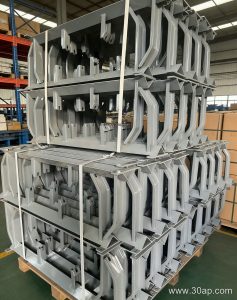
A custom conveyor bracket is a fabricated support component made to hold conveyor idlers, rollers, or related hardware at a defined position and angle along the conveyor frame. Instead of forcing a standard catalogue part into an awkward installation, engineers specify a bracket that matches the actual belt width, trough angle, roller diameter, and mounting hole pattern of the line. The bracket is a structural element, not a wear part, but it strongly influences belt tracking, load distribution, and how easily maintenance can be carried out.
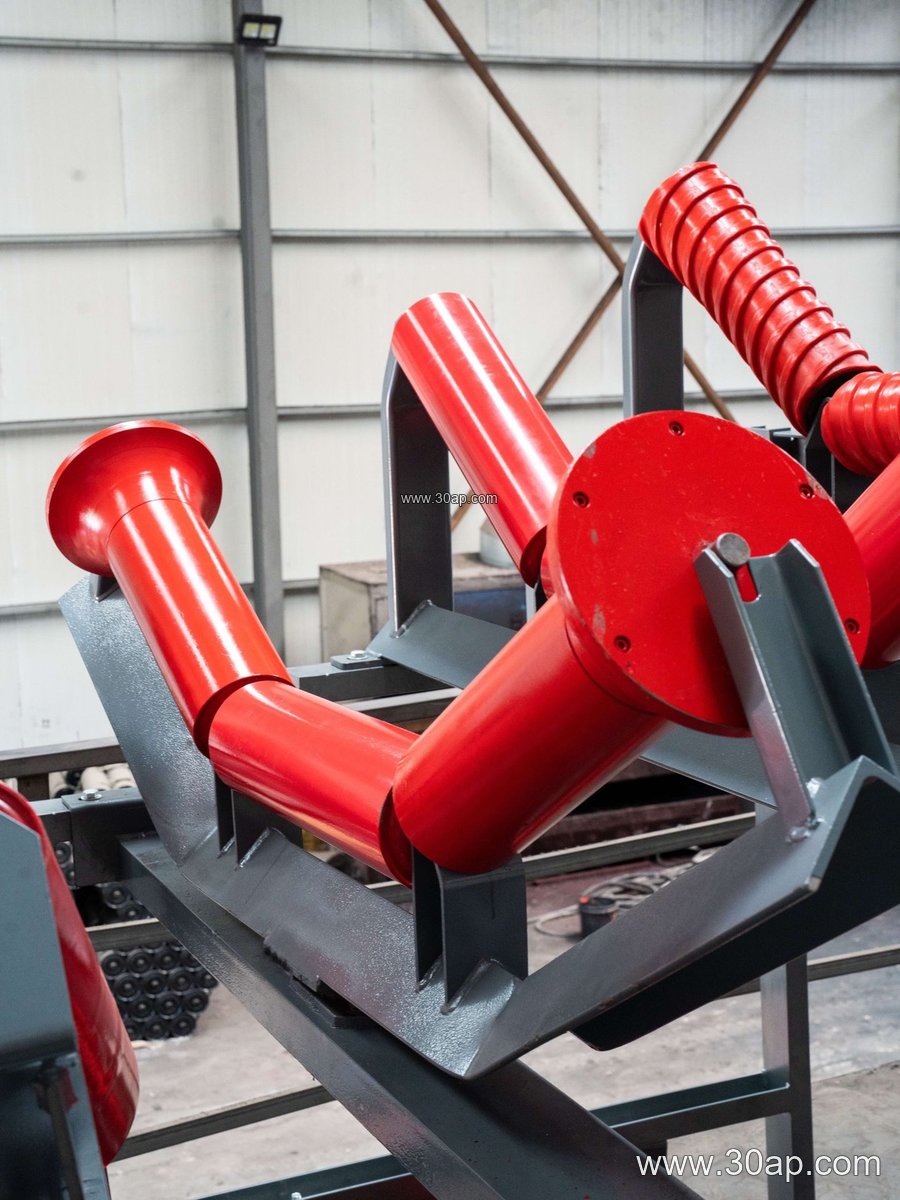
In practice, the same term covers a family of supports: troughing brackets for carrying idlers, return brackets beneath the belt, transition brackets near pulleys, impact brackets under loading points, and adjustable frames that allow the trough angle to be changed in service. Because these functions differ, a bracket should be described by its position and purpose rather than treated as a generic accessory.
Construction and Common Materials
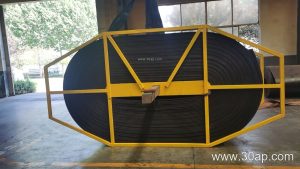
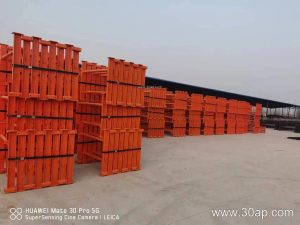
Most brackets are built from angle steel, channel steel, or folded steel plate, joined by welding or bolted assemblies. The material choice follows the duty: a bracket under a heavy abrasion resistant conveyor belt carrying ore at a transfer point needs more stiffness than one supporting an empty return run. Surface treatment such as painting or galvanizing is usually specified for outdoor installations at ports or quarries.
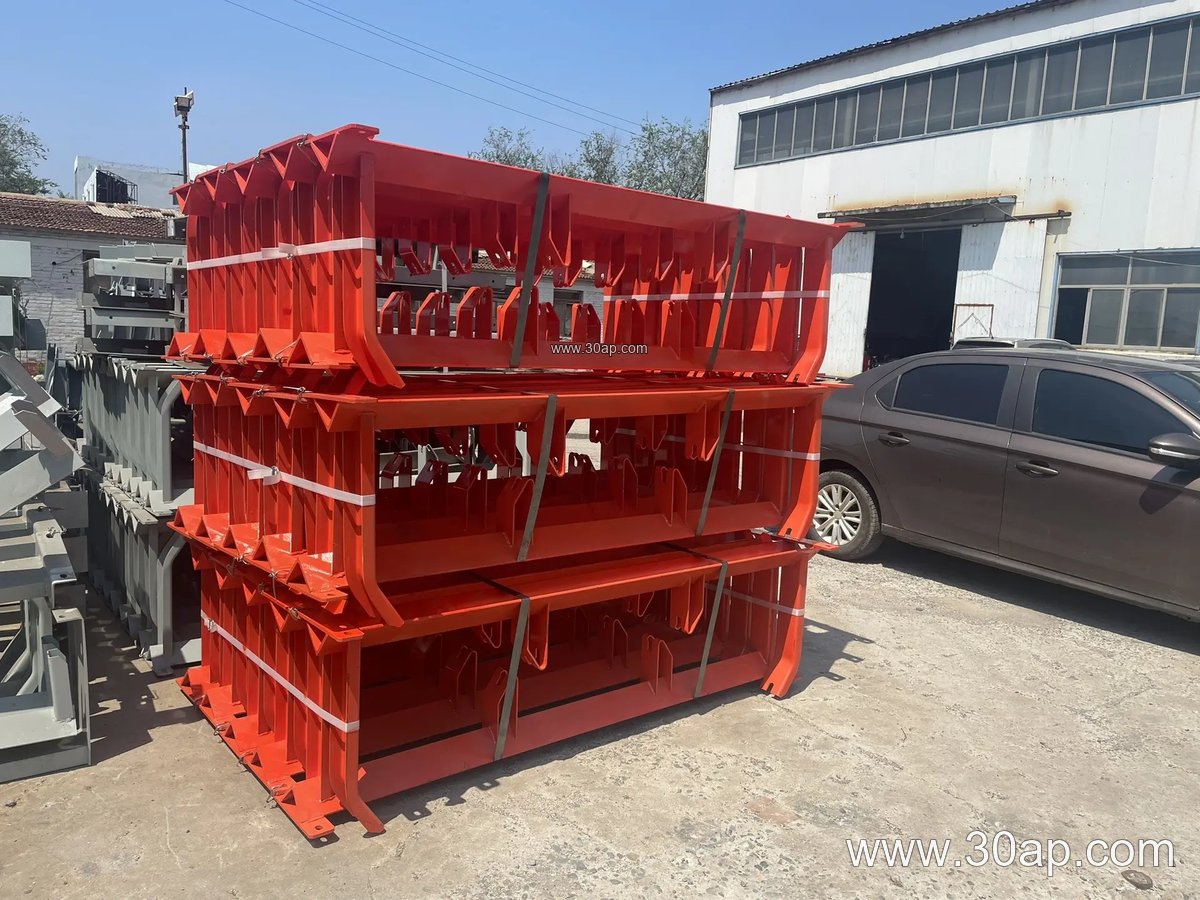
Key dimensions are driven by the belt and roller combination rather than fixed by the bracket alone. The table below lists typical reference ranges; final values come from the conveyor design.
- Belt width references: B500, B650, B800, B1000, B1200, B1400, B1600, B1800, B2000, B2200
- Trough angles: 20°, 30°, 35°, 45°, with adjustable designs covering a range
- Roller diameters: Ø89, Ø108, Ø133, Ø159, Ø194
- Forward tilt on training brackets: commonly about 1.5° to 2°
Mounting hole spacing and crossbeam length change with belt width and trough angle, so a bracket drawing should always be confirmed against the frame layout before fabrication.
Where These Brackets Are Used
Custom brackets appear wherever the conveyor geometry is non-standard or the environment is demanding. Two typical settings illustrate the range.
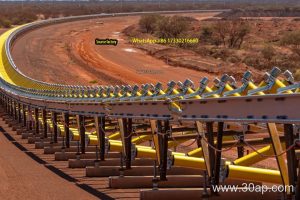
In a limestone quarry or sand and gravel line, troughing brackets carry idlers beneath a quarry conveyor belt that moves crushed rock from the crusher to the screening deck. Impact brackets are often added below the loading chute, where a heavy-duty mining conveyor belt receives falling material and the support must absorb shock without deforming.
In a coal-fired power plant, return brackets and V-return brackets guide the belt on its empty side, while flame retardant conveyor belt grades are selected for safety. Here, easy access for idler replacement matters as much as strength, so bolted bracket designs are common.
Matching Brackets to Belts, Idlers, and Pulleys
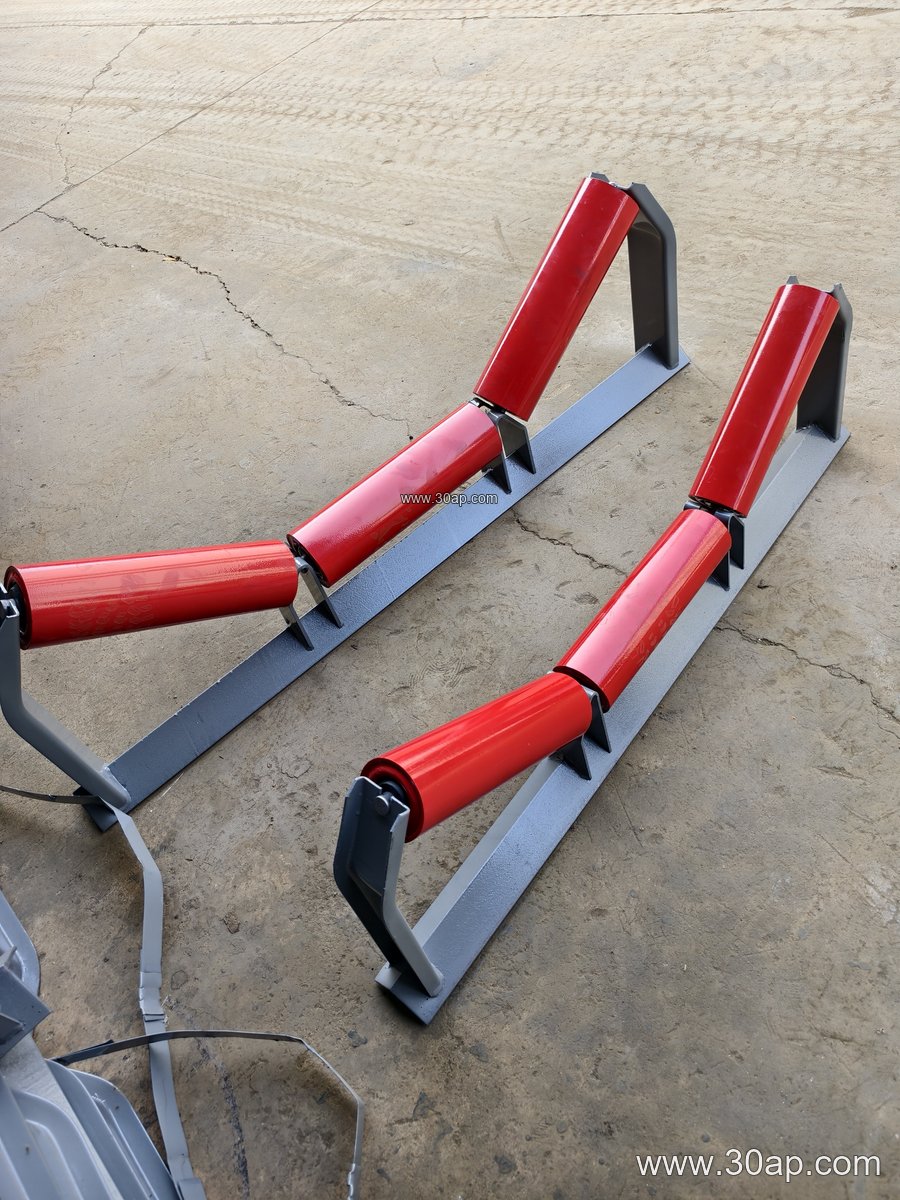
A bracket cannot be chosen in isolation. The idler roller diameter sets the cradle height, the belt width sets the span, and the trough angle sets the profile. A B800 line running at 35° with Ø108 idlers is a familiar combination, and a B1200 line at 45° with Ø133 idlers is equally common, but neither pairing is a rule. Belt construction also matters: a stiff steel cord conveyor belt may need a gentler transition, while a flexible multi-ply fabric core conveyor belt can follow a tighter trough.
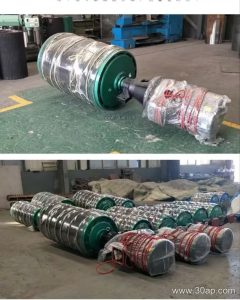
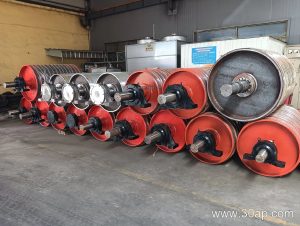
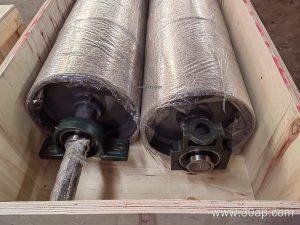
It is worth noting that drive, tail, and bend pulleys are separate components with their own support structures; brackets for idlers should not be confused with pulley bearing housings. Where a transition bracket sits close to a conveyor pulley, the design must respect the pulley diameter and the belt path rather than simply copying an intermediate bracket.
Adjustable Versus Fixed Designs
Fixed brackets are simple, rigid, and cost-effective on lines where the trough angle will never change. Adjustable brackets allow the idler position to be tuned between angles such as 20° and 45°, which helps when a belt is upgraded or when tracking problems need correction. Training brackets with a slight forward tilt are a third option, used to encourage self-alignment of the belt. Choosing between them depends on how often the conveyor configuration is likely to change and how much adjustment access the site can provide.
Buyer Checklist
- Confirm belt width, trough angle, and idler diameter from the actual conveyor drawing.
- State the mounting hole pattern and crossbeam length, since these vary by design.
- Describe the duty: loading point, return run, or transition zone.
- Specify material and surface treatment for the site conditions.
- Ask whether the bracket is fixed or adjustable, and confirm the adjustment range.
- Check compatibility with the idler roller type and with nearby conveyor pulleys.
Ordering a custom conveyor bracket from a clear drawing avoids the most common problem: a support that fits the frame but sits at the wrong height or angle for the belt and idlers around it.