What a Conveyor Support Leg Does
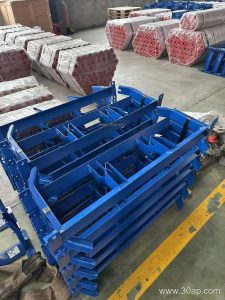
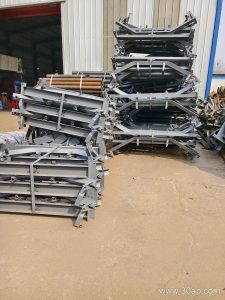
A conveyor support leg is the vertical structural member that carries the weight of a belt conveyor’s idler frames and the material load down to the floor or foundation. Often called a conveyor stand leg or belt conveyor support leg, it is the interface between the conveyor stringer or cross beam and the ground. In a typical troughing section, the leg holds the conveyor bracket that in turn supports the idler roller, keeping the conveyor belt at the correct height and profile. Without properly designed legs, the entire conveyor line would be unstable, misaligned, and prone to premature wear.
These legs are used in many industries, from a quarry conveyor belt line to a cement plant’s clinker transport, and from a power plant coal handling system to a port’s ship loading conveyor. They are equally at home in a sand and gravel plant, a steel mill, or a fertilizer granulation line. The leg is a simple but critical component that ensures the conveyor belt runs true and the idler rollers stay in contact with the belt.
Construction and Materials
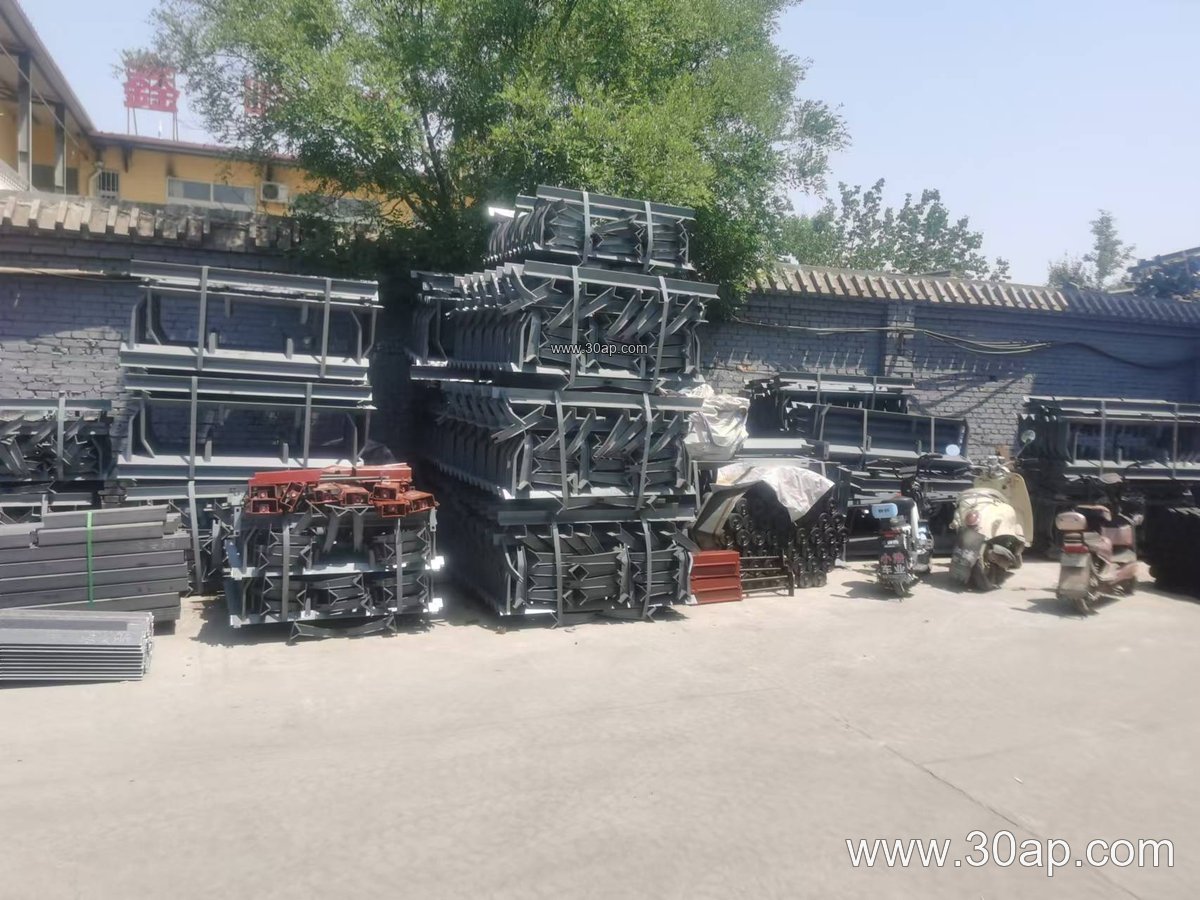
Most conveyor support legs are fabricated from structural steel. Common materials include angle steel, channel steel, and folded steel plate. The choice depends on the load, the required stiffness, and the environment. For heavy-duty mining conveyor belts carrying iron ore or coal, channel steel legs with welded base plates are typical. In lighter applications, such as a food grade conveyor belt line, folded plate legs may be sufficient. The legs are usually bolted to the conveyor stringer or cross beam and anchored to the floor with anchor bolts. Height is often adjustable to accommodate slight floor variations or to set the desired belt line profile.
Surface treatment matters, especially in corrosive or wet conditions. Hot-dip galvanizing or painting with a suitable primer and topcoat helps extend service life. In underground coal mining conveyor belt systems, flame retardant and anti-static properties may be required for components, and the support leg should be specified accordingly.
Types and Configurations
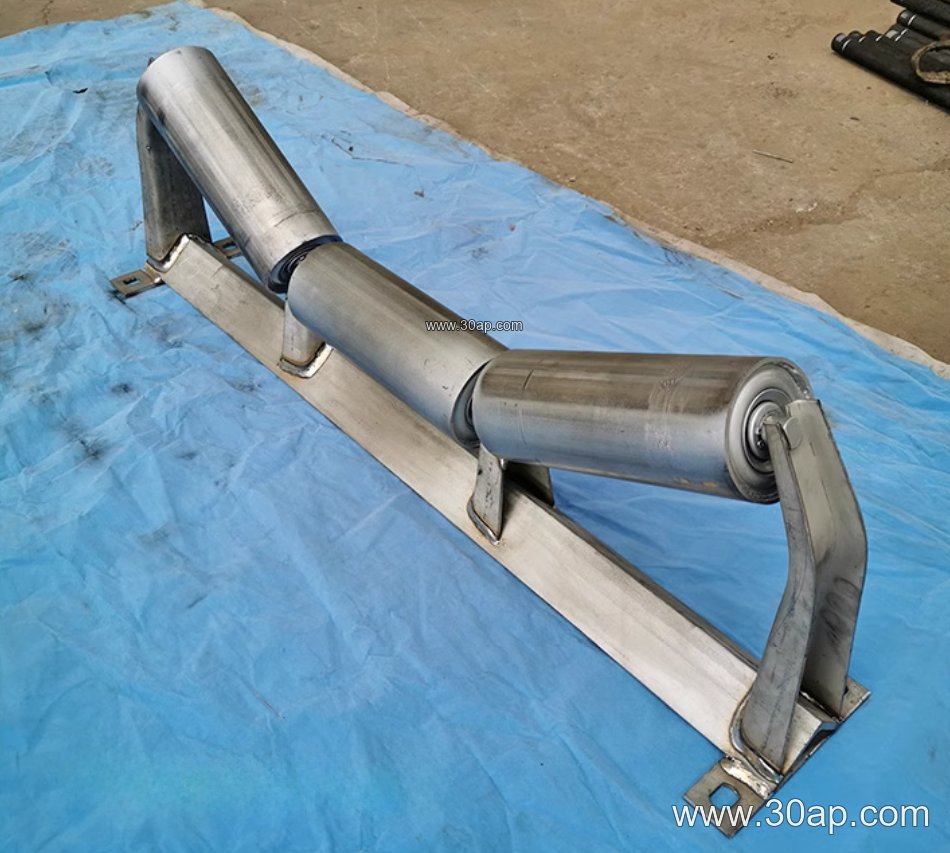
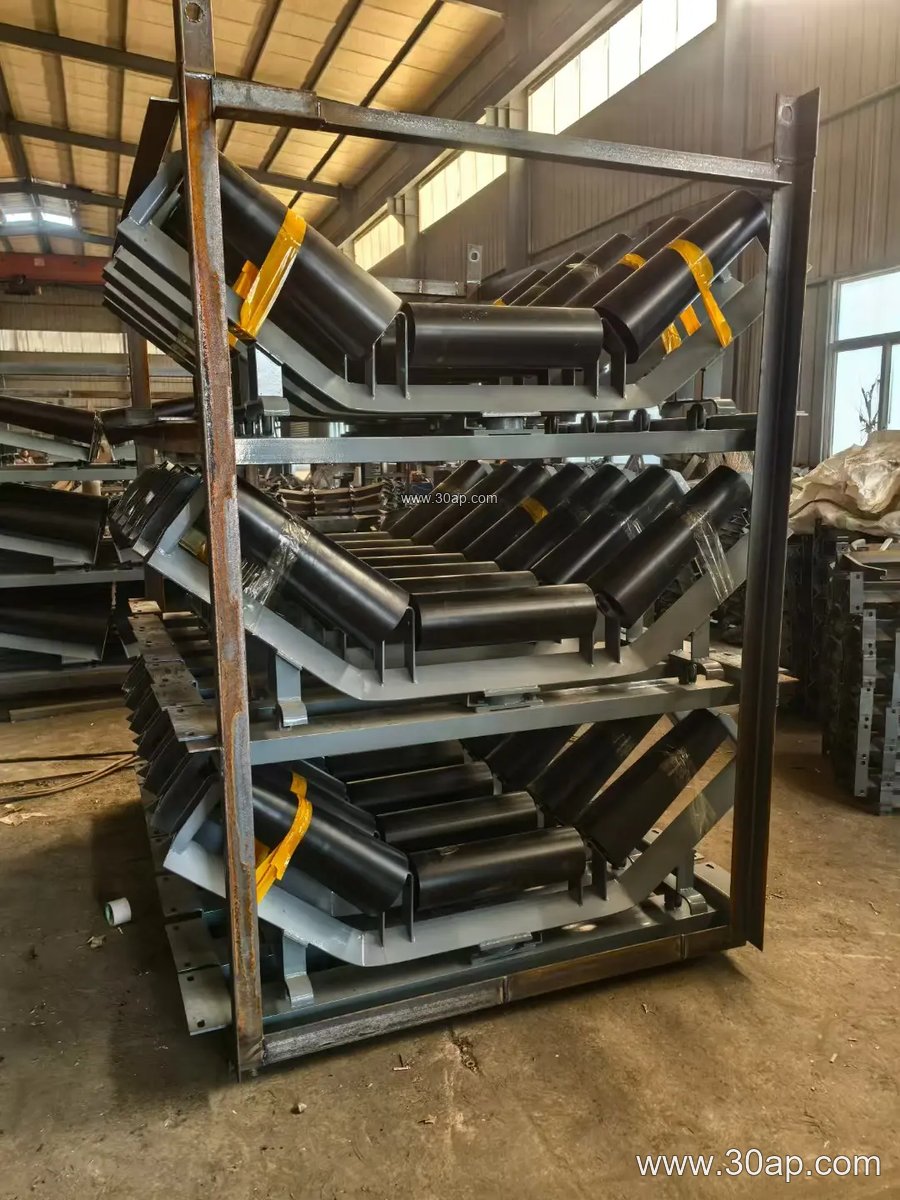
Conveyor support legs come in several configurations to match the conveyor’s idler arrangement. Fixed legs are the simplest and are used where the belt line height is constant. Adjustable legs allow fine-tuning of height during installation or to compensate for settlement. For troughing idlers, the leg supports a conveyor bracket that sets the trough angle. For return idlers, a lower, simpler leg may be used. In some designs, the leg is integrated with the bracket as a single welded assembly.
The table below lists common reference dimensions for support legs matched to belt width and idler diameter. These are typical ranges, not fixed rules; actual dimensions are determined by the conveyor design.
| Belt Width (mm) | Common Idler Diameter (mm) | Typical Trough Angle (degrees) | Leg Material Example |
|---|---|---|---|
| B500 | Ø89 | 20, 30, 35 | Angle steel |
| B650 | Ø89, Ø108 | 20, 30, 35 | Angle steel, folded plate |
| B800 | Ø108, Ø133 | 30, 35, 45 | Channel steel |
| B1000 | Ø108, Ø133, Ø159 | 30, 35, 45 | Channel steel |
| B1200 | Ø133, Ø159 | 30, 35, 45 | Channel steel, folded plate |
| B1400 | Ø133, Ø159, Ø194 | 30, 35, 45 | Channel steel |
| B1600 | Ø159, Ø194 | 30, 35, 45 | Channel steel |
| B1800 | Ø159, Ø194 | 30, 35, 45 | Channel steel |
| B2000 | Ø194 | 30, 35, 45 | Channel steel |
Note that the same belt width can be paired with different idler diameters and trough angles depending on the load and belt speed. Installation hole spacing and cross beam length vary with belt width and trough angle and should be confirmed with the conveyor designer.
Selection and Application Notes
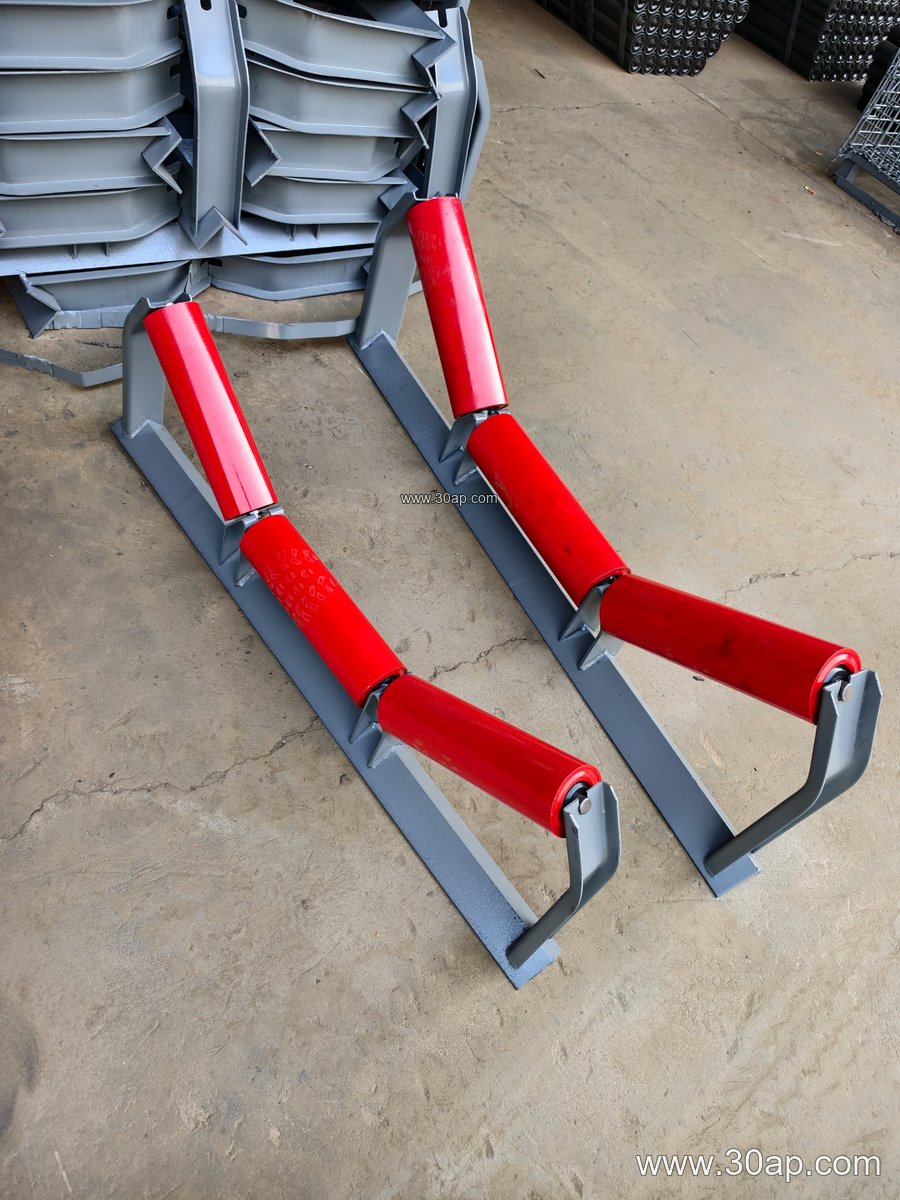
When selecting a conveyor support leg, consider the load it must carry, the belt width, the idler diameter, and the trough angle. The leg must be tall enough to position the idler roller correctly and strong enough to resist the belt tension and material impact. For transition zones where the belt changes from flat to troughed, transition support legs may be used to gradually bend the belt. In areas with high impact, such as a crusher conveyor belt discharge point, impact-resistant idler brackets and robust legs are advisable.
Alignment is critical. Legs should be installed plumb and at the correct elevation to prevent the conveyor belt from drifting. Adjustable legs simplify this task. In a wash plant or a cold climate, consider materials and coatings that resist corrosion and low temperatures. For a flame retardant conveyor belt system in a coal mine, the support leg should be compatible with the overall fire safety approach.
Maintenance is straightforward: check for loose bolts, corrosion, and deformation, especially after heavy material surges. Re-tighten anchor bolts and replace damaged legs promptly to avoid belt misalignment and idler damage.
For more information on conveyor components, visit our site at www.example.com/conveyor-support-leg or explore our range of conveyor brackets and idler rollers.