What a Mining Equipment Idler Does
A mining equipment idler is the rotating support that carries the conveyor belt along its path in a bulk material handling system. In practice, plant operators often call this component an idler roller, and it can be found on both the carrying side and the return side of the conveyor. Its main job is to reduce friction between the belt and the structure while keeping the belt profile stable under load. In a quarry, limestone mine, or iron ore operation, the idler must cope with dust, grit, and continuous impact from lump material. The design also has to suit the conveyor bracket and frame layout so that alignment stays consistent over long runs.
Construction and Common Subtypes
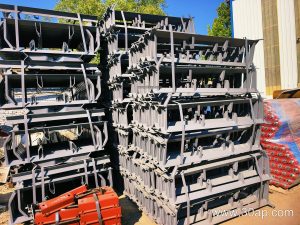
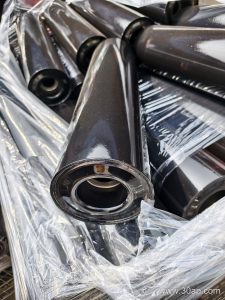
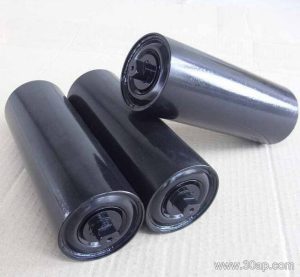
Most idlers use a steel tube shell fitted with bearing housings at each end. The shaft is usually fixed, and the shell rotates on bearings that are protected by seals. Common bearing sizes include 6204, 6205, 6305, 6306, 6308, and 6310, but the bearing choice should match the load and speed rather than a single tube diameter. Roller diameters are often selected from a range such as Ø63, Ø76, Ø89, Ø102, Ø108, Ø127, Ø133, Ø159, Ø178, Ø194, and Ø219 mm. Surface options include plain steel, nylon, ceramic, and rubber rings. The rubber ring version is useful where impact is high, for example under a crusher discharge or at a transfer point in a sand and gravel line.
Subtypes are selected by position and duty:
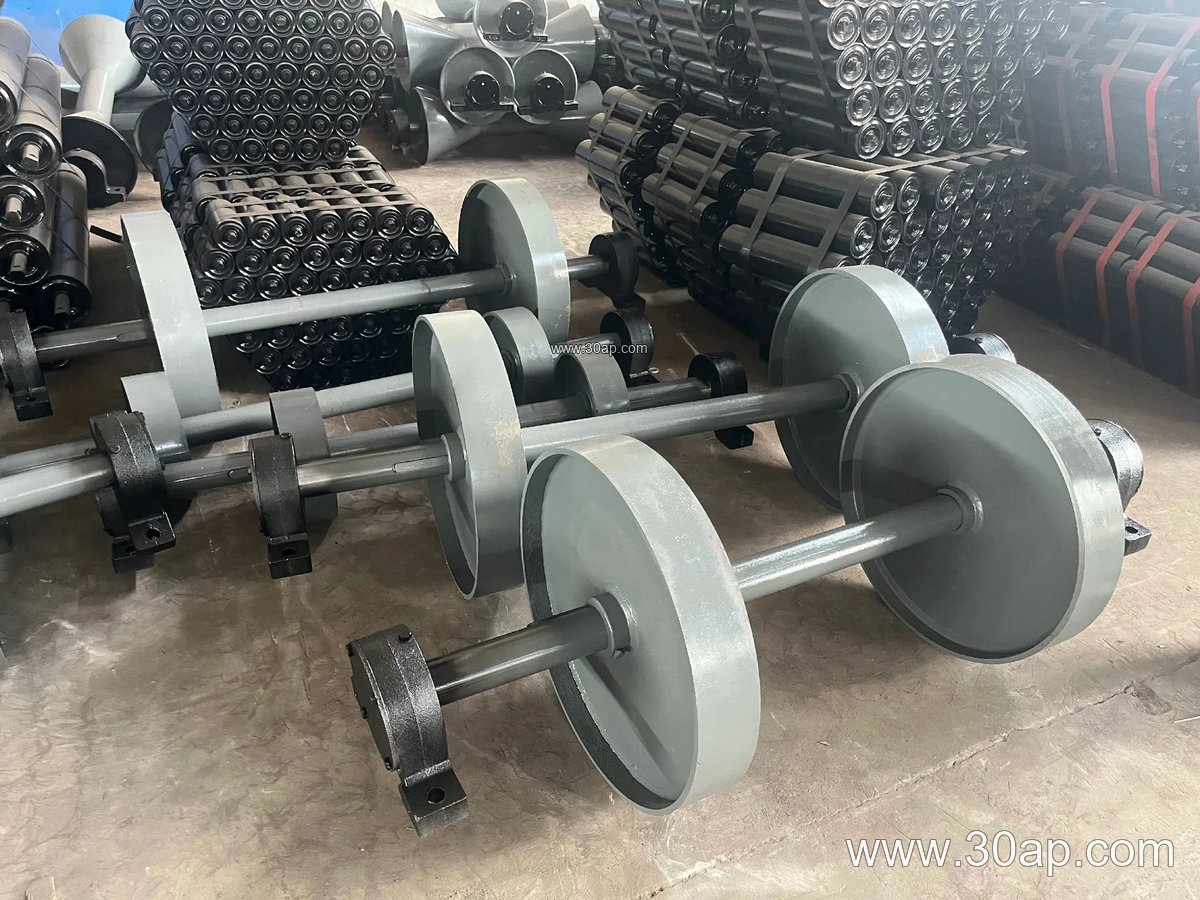
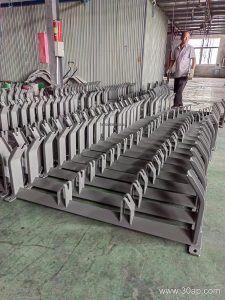
- Troughing idlers, often in two or three roll arrangements, support the loaded belt and help form a trough. Common trough angles are 20, 30, 35, and 45 degrees.
- Transition idlers are placed near pulleys to ease the belt from a flat to a troughed profile.
- Return idlers, including flat and V-shaped types, support the empty belt on its way back.
- Impact idlers and rubber ring impact idlers absorb shock at loading points.
- Self-aligning idlers, such as friction and tapered types, help correct belt misalignment on long conveyors.
For a three-roll troughing set, the roll length changes with belt width and trough angle. As a common example, a B500 belt may use rolls around 200 mm long, while B800 may use about 315 mm, B1000 around 380 mm, B1200 around 465 mm, and B1400 around 530 mm. These are reference examples only; side rolls and center rolls can differ, and final dimensions are determined by the conveyor design. A 1.5 to 2 degree forward tilt is sometimes used on troughing rolls to assist self-training, but it is not a universal requirement.
Where Mining Equipment Idlers Are Used
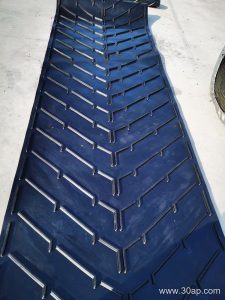
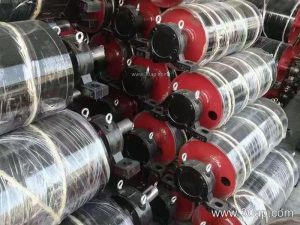
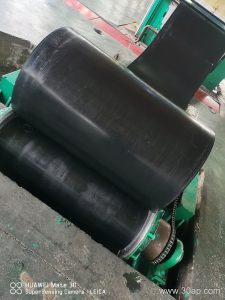
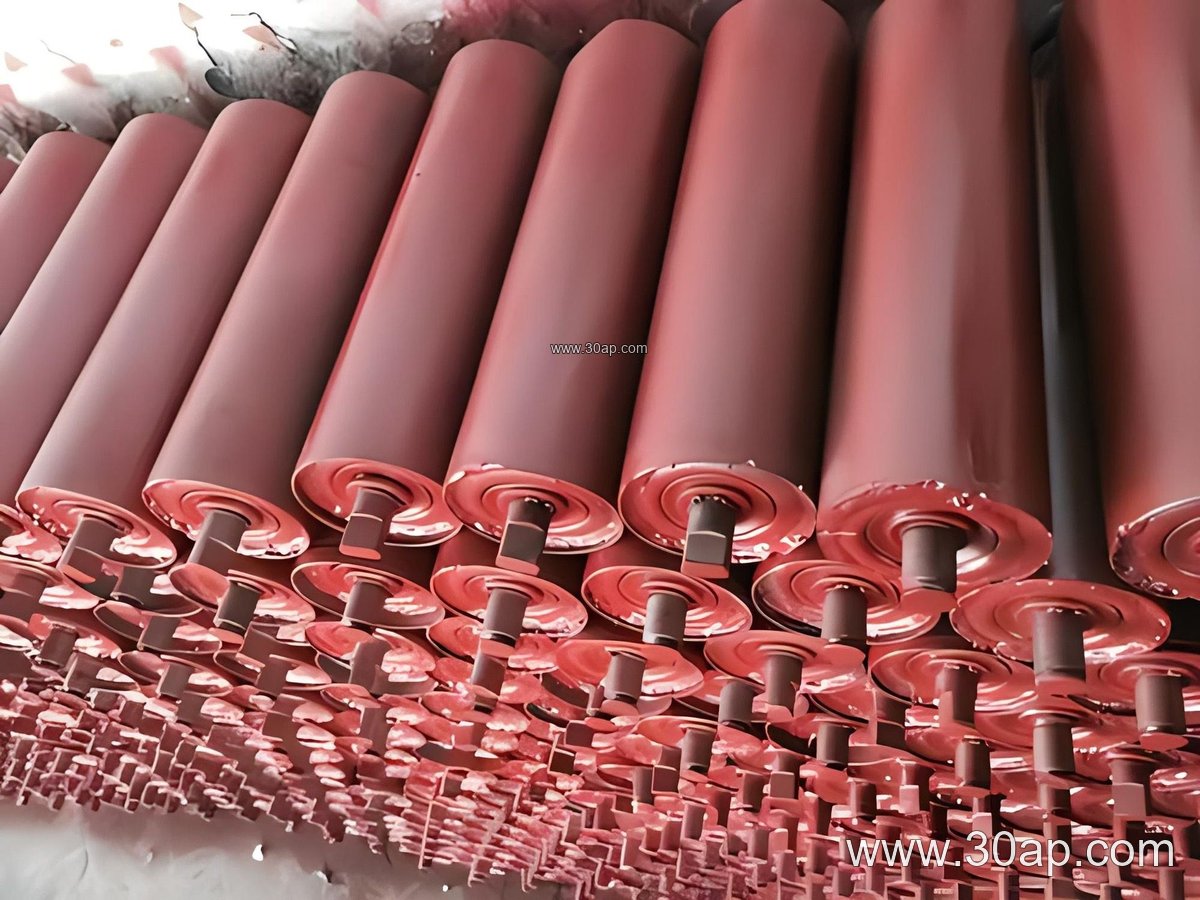
These idlers appear in coal preparation plants, cement plants, power station coal handling, steel plant sinter lines, and tunnel spoil removal. They also work in aggregate crushing and screening circuits, where a crusher conveyor belt needs steady support through a dusty environment. In a copper or gold mining operation, the idler may be part of an ore conveyor that handles abrasive rock. The same component can be found on a pipe conveyor belt or a corrugated sidewall conveyor belt, although the idler arrangement differs from a standard troughed conveyor. A heavy-duty mining conveyor belt and a high abrasion resistant conveyor belt often run on reinforced idlers, but the belt specification and the idler specification are separate decisions.
Buyer Checklist
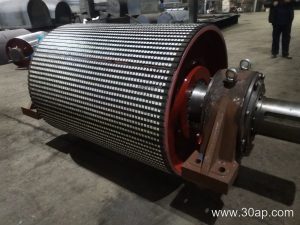
Before ordering, confirm the belt width, the trough angle, and the roll length required by the conveyor bracket. Check the shaft end type and the fixing dimensions so the idler fits the existing frame. Consider the environment: a coal mining conveyor belt in an underground coal mining conveyor belt system may need flame retardant conveyor belt compatibility, while a cement plant may face heat and fine dust. The idler itself should have suitable sealing for the site conditions. Ask for the bearing size, shell thickness, and surface form. Do not assume that one belt width matches only one pulley diameter; the conveyor pulley, drive pulley, tail pulley, and bend pulley each have their own design rules. A practical spare parts plan should include troughing, return, and impact idlers in the sizes used on site, with a small buffer stock of the most frequently replaced positions.
Maintenance Notes
Inspect idlers for seized bearings, worn shells, and buildup of sticky material. Misaligned idlers can damage the conveyor belt edge and increase power draw. Replace damaged rolls before they wear through the belt cover. Keep the conveyor bracket and frame clean so that the idler can rotate freely. On a quarry conveyor belt or an aggregate conveyor belt, dust ingress is a common cause of early bearing failure, so seal condition deserves regular attention. A simple walk-by inspection with temperature and sound checks can catch most problems before they stop production.