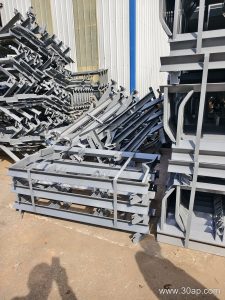
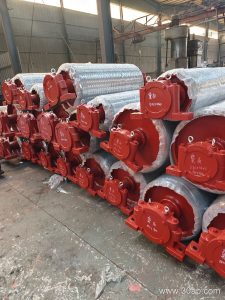
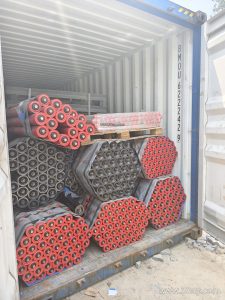
What a Long-Distance Conveyor Idler Does on a Long Run
A long-distance conveyor idler is the rotating support that carries the conveyor belt and its load over kilometres of route, from the head end to the tail end. On a short transfer, one or two idler stations are enough. On a long overland or plant-to-plant run, hundreds or thousands of idlers work together, and each one has to keep the belt tracking, limit sag between supports, and roll with low resistance. The idler roller is a small component, but on a long route it decides how much energy the drive needs and how often maintenance crews have to walk the line.
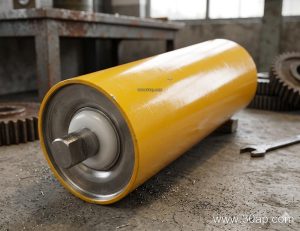
The same product is often called a long-haul conveyor idler or a long-distance belt conveyor roller. All three names describe the same item: a shell, a shaft, bearings, and a sealing arrangement mounted in a frame or bracket.
How the Idler Is Built
Most long-distance conveyor idlers use a steel tube shell, though nylon, ceramic, and rubber-ring surfaces are also available when the duty calls for them. The shaft runs through the shell on bearings, usually deep-groove ball bearings such as 6204, 6205, 6305, 6306, 6308, or 6310. The bearing number is chosen from load and speed, not from belt width alone, so a given roller diameter can carry more than one bearing size.
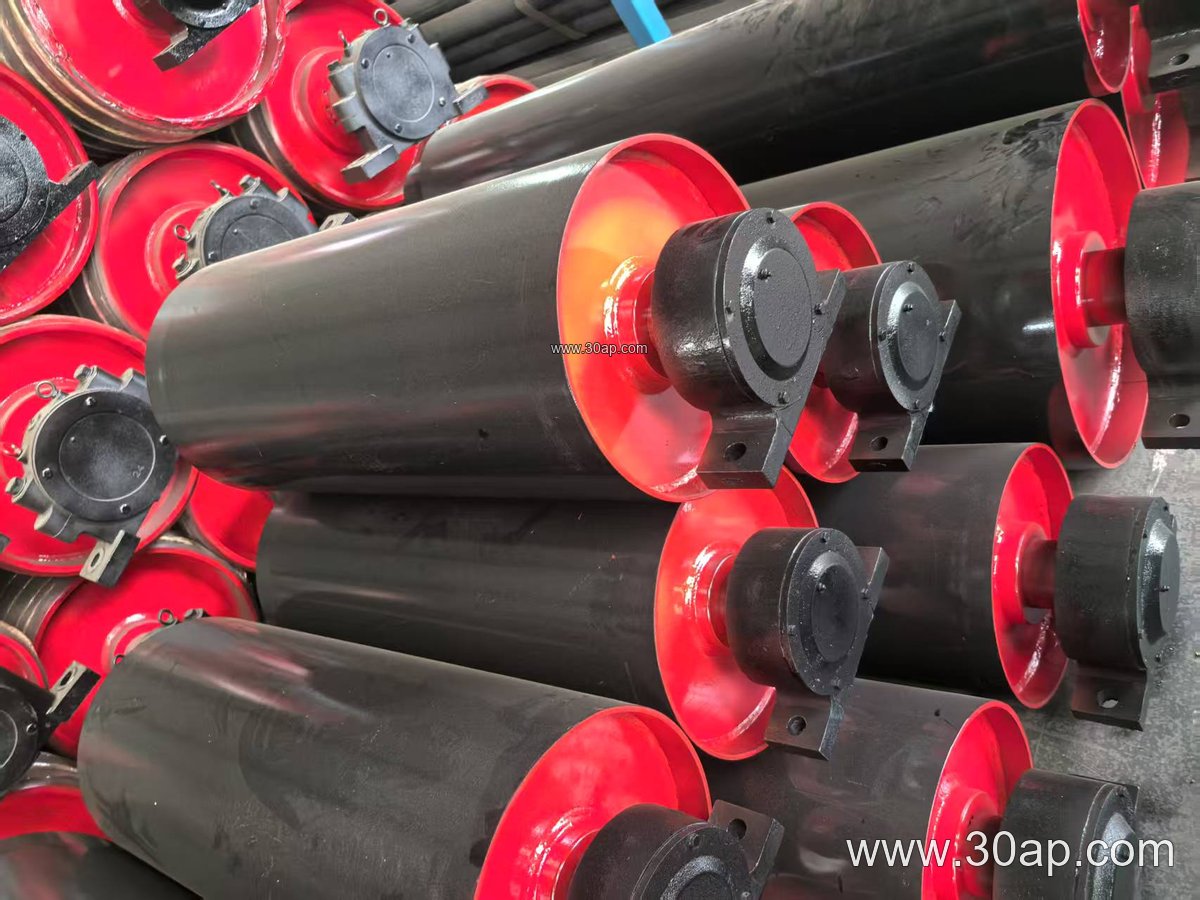
Sealing matters more on long routes than on short ones, because a failed seal lets dust into the bearing and the idler seizes. Labyrinth seals, contact seals, and sealed-for-life designs are common. The shell surface may be plain steel, or it may carry a rubber ring for impact absorption at transfer points.
Common Sizes and Frame Forms
Roller diameter and belt width are the first two numbers a buyer usually exchanges. The table below shows common reference values; actual selection depends on load, speed, and spacing.
| Item | Common reference values |
|---|---|
| Roller diameter | Ø63, Ø76, Ø89, Ø102, Ø108, Ø127, Ø133, Ø159, Ø178, Ø194, Ø219 mm |
| Belt width | B400, B500, B650, B800, B1000, B1200, B1400, B1600, B1800, B2000, B2200, B2400 |
| Trough angle | 20°, 30°, 35°, 45° |
| Idler set form | single roll, two-roll, three-roll troughing |
| Bearing | 6204, 6205, 6305, 6306, 6308, 6310 |
Roll length follows belt width, trough angle, and set form. As a rough example, a three-roll troughing set might use about 200 mm rolls at B500, 315 mm at B800, 465 mm at B1200, and 600 mm at B1600. Side rolls and centre rolls can differ, so these are examples rather than fixed pairings.
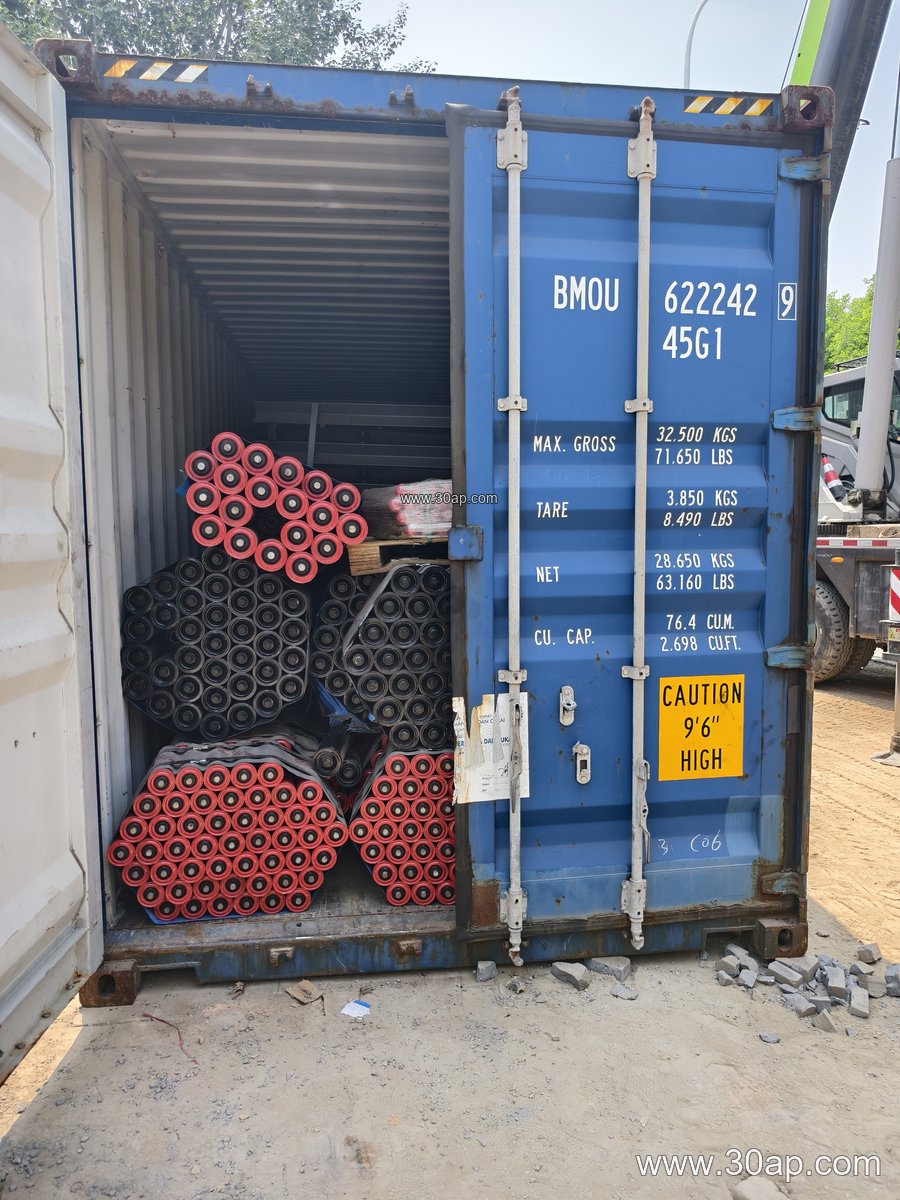
Where Long Runs Put Idlers to Work
Long-distance idlers appear in iron ore and copper ore transport, in limestone quarries feeding a cement plant, and in power plant coal handling where the belt runs from the stockyard to the boiler house. A port ship-loading line and a tunnel spoil removal line also rely on them. In each case the belt may be a steel cord conveyor belt for high tension, or an EP conveyor belt or NN conveyor belt where the route is shorter or the load lighter. Abrasion resistant conveyor belt and flame retardant conveyor belt grades are chosen to match the material and the site rules.
On a long incline, troughing idlers hold the belt in a 30° or 35° profile so the load stays centred. Return idlers support the empty strand, and V-return or spiral rolls help shed sticky material. Training idlers are added at curves and at the tail, while impact idlers sit under the loading chute.
What Buyers Should Check Before Ordering
- Confirm the belt width and the trough angle together, since the same frame cannot serve every profile.
- Ask for the bearing size and seal type, not just the roller diameter.
- Check the shaft end fitting against the conveyor bracket on site.
- Match the roller surface to the duty: rubber rings at impact points, ceramic or nylon where build-up is a problem.
- For very long routes, ask about roll runout and balance, because small errors multiply over thousands of rotations.
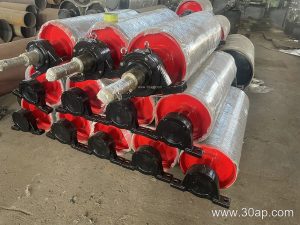
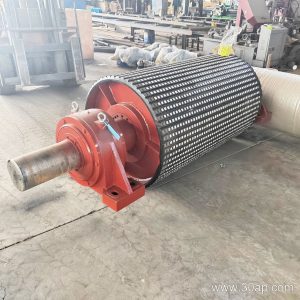
Drive pulleys, tail pulleys, and bend pulleys are separate items and are not interchangeable with idlers; they transmit tension rather than support the belt. A buyer comparing quotations should keep that distinction clear, and should treat published sizes as reference data to be confirmed against the actual conveyor design.