What a Pipe Conveyor Belt Does
A pipe conveyor belt is a conveyor belt that forms a closed tube around the material as it travels. The belt starts flat at the tail pulley, rolls into a pipe shape through a series of idler roller arrangements, carries the load in that enclosed form, and opens again at the discharge end. This tubular profile is the defining feature of the product, and it is why the belt is often chosen where spillage, dust, or route flexibility matters.
Because the belt closes on itself, the material is protected from wind and rain, and the surroundings are protected from dust. A pipe conveyor belt can also follow curves that a conventional troughing conveyor cannot easily handle, which helps in congested plants and uneven terrain.
Construction and Belt Build
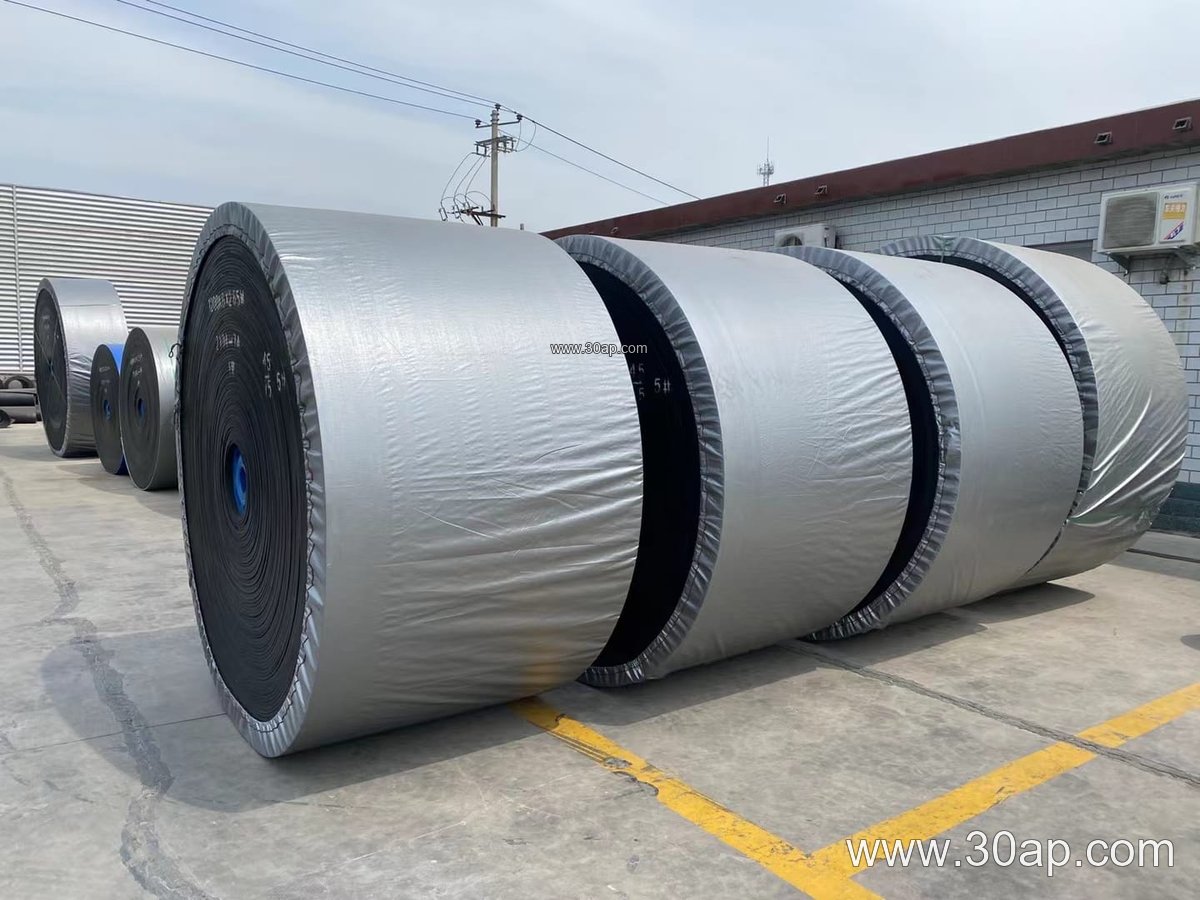
The belt itself is a fabric or steel reinforced rubber belt, but it is designed with the flexibility and edge stability needed to overlap and form a stable tube. The carcass may be an EP Conveyor Belt construction, an NN Conveyor Belt, or a Steel Cord Conveyor Belt where very high tension is required. Multi-Ply Fabric Core Conveyor Belt builds are common for moderate duty, while heavier duties may call for a High Strength Conveyor Belt.
Cover compounds are selected for the material being carried. An Abrasion Resistant Conveyor Belt suits crushed rock and ore, a Heat Resistant Conveyor Belt suits cement clinker or hot ash, and a Flame Retardant Conveyor Belt or Fire Resistant Conveyor Belt is often specified for coal handling. Oil Resistant Conveyor Belt and Cold Resistant Conveyor Belt versions are available for specific environments.
Typical Reference Data
The values below are common reference ranges, not fixed matches. Actual design depends on the conveyor layout, the material, and the manufacturer.
- Fabric grades often referenced: EP200, EP315, EP400, EP500, EP630, EP800, EP1000
- Steel cord grades sometimes referenced: ST1000, ST1250, ST1600, ST2000
- Belt widths commonly discussed: B500, B650, B800, B1000, B1200, B1400, B1600, B1800
- Cover thickness examples: 3+1.5 mm, 4+2 mm, 5+2 mm, 6+2 mm, 8+3 mm
- Carcass plies usually range from 2 to 6 layers in fabric builds
These figures are reference points only. A belt width does not dictate a single pulley diameter, and shaft sizes must be calculated from the actual loads.
Where It Fits in Bulk Handling
Pipe conveyor belts appear in mines, coal preparation plants, cement works, power stations, steel plants, ports, and aggregate operations. In a quarry or sand making plant, a pipe conveyor belt can carry crushed stone from a crusher conveyor belt discharge to stockpiles without scattering dust. In cement plants, the enclosed run keeps fine powder contained. In port and ship loading work, the tubular path reduces wind loss of bulk material.
Underground Mining Conveyor Belt and Underground Coal Mining Conveyor Belt installations may use the pipe design where space is tight and dust control is important. The same reasoning applies to a Bulk Material Conveyor Belt route that must pass near public roads or sensitive areas.
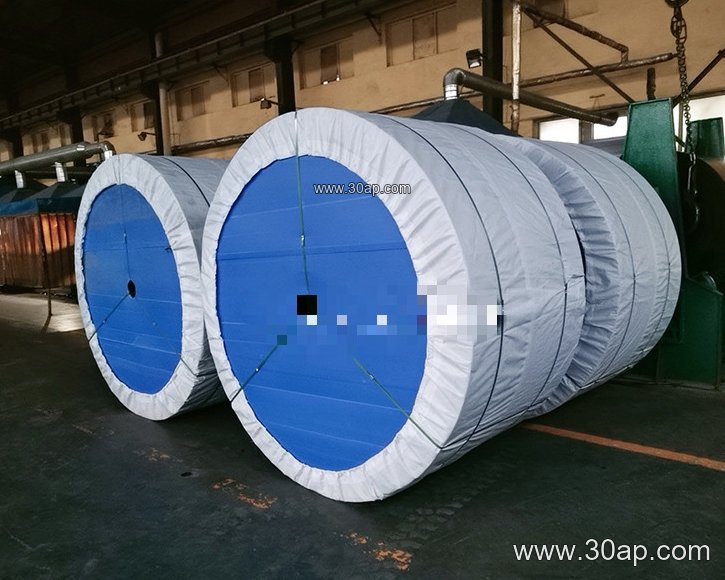
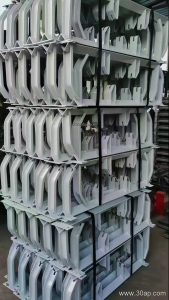
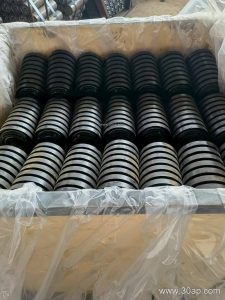
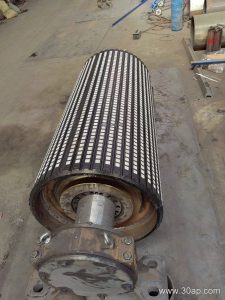
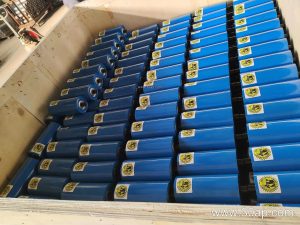
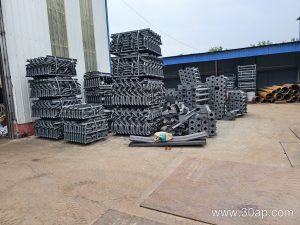
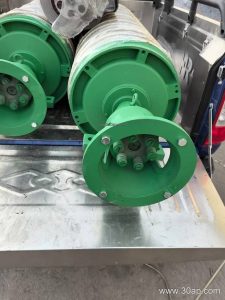
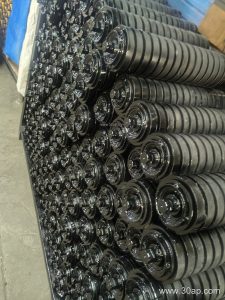
Supporting hardware matters as much as the belt. The transition idlers, carrying idlers, and return idlers hold the tube shape; the drive pulley, tail pulley, and bend pulleys handle tension and direction changes. Conveyor pulley condition, idler roller alignment, and conveyor bracket rigidity all affect whether the belt keeps a clean overlap.
Selection and Maintenance Notes
Buyers should share the material type, lump size, capacity, route including curves, and the expected operating environment. A belt for iron ore or copper ore may need a different cover than one for grain or fertilizer. Where static buildup is a concern, an Anti-Static Conveyor Belt compound is worth discussing. For food or clean applications, a Food Grade Conveyor Belt may be relevant, though pipe conveyors are more often found in heavy industry.
Maintenance focuses on overlap quality, idler rotation, and pulley alignment. A worn idler roller or a misaligned conveyor pulley can twist the tube and cause edge damage. Keep transition zones in good order and check that the belt returns to a flat shape smoothly at the tail.
For buyers comparing options, a Pipe Conveyor Belt is not a replacement for a Chevron Conveyor Belt on steep inclines, nor for a Corrugated Sidewall Conveyor Belt where a tall cleated profile is needed. It is a distinct enclosed-transport solution, and its value comes from dust containment, route flexibility, and material protection.