What a Trough Idler Bracket Set Does
A trough idler bracket set is the steel framework that holds the three-roller trough assembly in place along the carrying side of a conveyor. In everyday plant language it is often shortened to trough bracket set or troughing bracket set, and it is the part that fixes the trough angle, keeps the idler roller spacing consistent, and ties the whole carrying run to the conveyor stringer. Without a properly aligned bracket set, even a well-made idler roller cannot hold the belt in a stable trough, and spillage along a transfer point quickly becomes a maintenance problem.
These bracket sets turn up wherever bulk material moves on a conveyor belt: a quarry feeding a primary crusher, a coal mining conveyor hauling out of a drift, a cement plant moving clinker, a power plant coal yard, a port ship loader, or a sand and gravel line. The same basic hardware appears in each, sized to the belt and the duty.
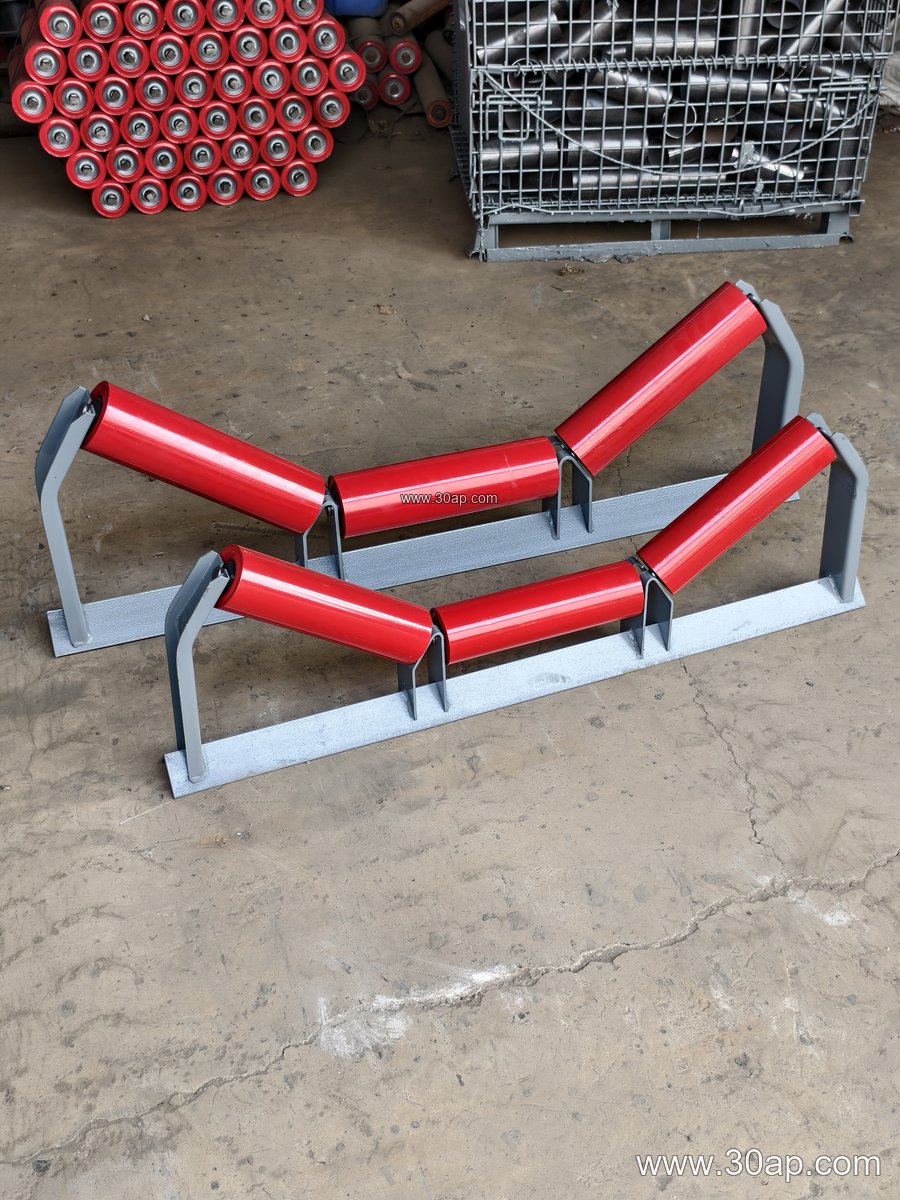
How the Bracket Set Is Built
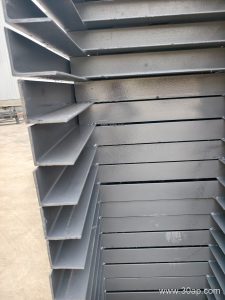
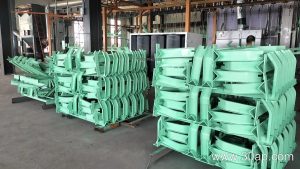
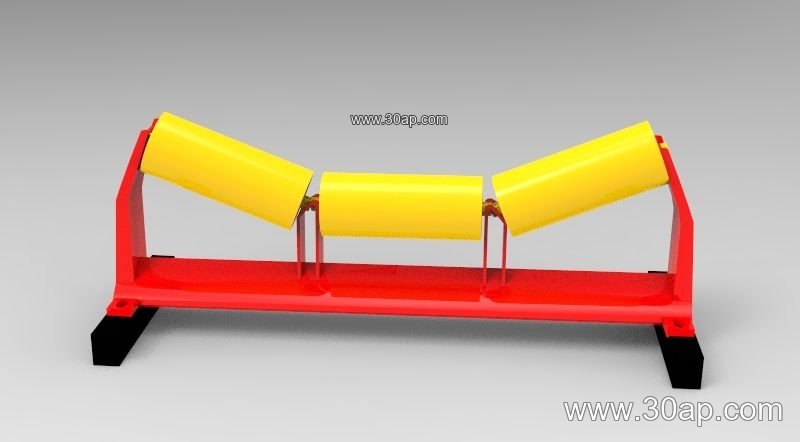
Most sets are fabricated from angle steel, channel steel, or folded steel plate, then drilled or punched for the idler shaft ends. A typical three-roller set has two inclined arms at the trough angle and a centre section for the middle roller. The arms may be fixed or hinged, depending on whether the design allows adjustment.
- Fixed trough brackets: welded or bolted at one angle, simple and rigid.
- Adjustable brackets: slotted or pivoted arms that can be set between common trough angles.
- Transition brackets: placed near the tail or head to ease the belt from flat to troughed.
- Impact bracket sets: heavier construction used under loading points, often paired with impact idlers.
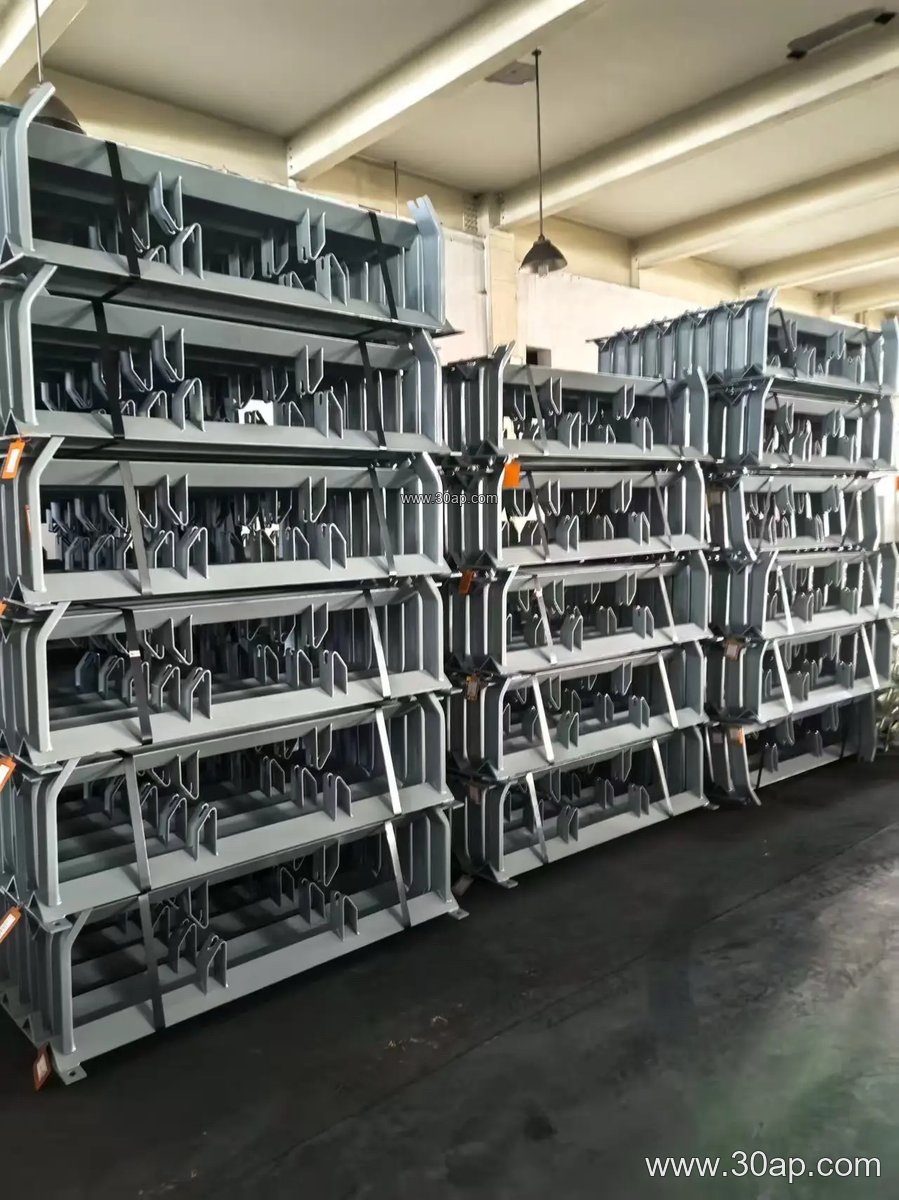
Surface finish matters in wet or corrosive service. Galvanised or painted sets are common in port and fertilizer handling, while plain painted steel is usual in dry quarry and cement duty. Bolt holes, weld quality, and the flatness of the mounting faces are the details that decide whether the set sits square on the stringer.
Matching Trough Angle, Belt Width, and Roller Diameter
The bracket set is chosen together with the belt width, the required trough angle, and the idler roller diameter. Common belt widths run from B500 and B650 for small plant conveyors up to B1800, B2000, and B2200 for high-capacity mainlines. Trough angles of 20, 30, 35, and 45 degrees are widely used, and adjustable brackets can be reset among these values. Roller diameters such as Ø89, Ø108, Ø133, Ø159, and Ø194 are typical, with the larger sizes appearing on wider, heavier belts.
A few representative combinations, given as examples only, are B800 with 35 degrees and Ø108, B1200 with 45 degrees and Ø133, or B650 with 30 degrees and Ø89. These are not fixed pairings; a wider belt may run at a lower angle, and the same width can carry different roller sizes depending on load and speed. Installation hole spacing and crossbeam length are determined by the belt width and trough angle, so they should be confirmed against the conveyor drawing rather than assumed.
| Parameter | Common Range | Notes |
|---|---|---|
| Belt width | B500 to B2200 | Match to stringer and idler frame |
| Trough angle | 20°, 30°, 35°, 45° | Adjustable types cover several angles |
| Roller diameter | Ø89 to Ø194 | Selected with load and belt speed |
| Forward tilt | about 1.5° to 2° | Used on tilting idler sets for belt training |
| Material | Angle, channel, folded plate | Finish depends on environment |
Where the Set Fits in the Conveyor
On the carrying side, trough bracket sets are spaced along the stringers at intervals set by the belt sag and load. Near the tail pulley, transition brackets gradually increase the trough angle so the belt is not over-stressed at the joint. At loading points, impact bracket sets support the belt under the chute. Return side brackets are a separate family and are not interchangeable with the trough set. Likewise, drive pulleys, tail pulleys, and bend pulleys serve different roles and should not be confused with the bracket hardware that supports the idlers.
The belt itself also shapes the choice. A heavy-duty mining conveyor belt or a steel cord conveyor belt on a long overland run needs stiff, well-aligned brackets, while a fabric core conveyor belt on a shorter aggregate conveyor may use lighter sets. Heat resistant conveyor belt and flame retardant conveyor belt installations in power plants and underground coal mining conveyors often call for brackets that will not distort under thermal cycling or washdown.
Buyer Checklist
- Confirm belt width, trough angle, and roller diameter against the conveyor drawing.
- Decide between fixed and adjustable brackets based on whether the trough angle may change.
- Check mounting hole spacing and crossbeam length, which vary with width and angle.
- Specify material and finish for the site: dusty quarry, wet port, or corrosive fertilizer store.
- Ask for bracket sets as a matched group so the three idler positions align correctly.
For buyers sourcing through guangzhou conveyor components suppliers, it helps to state the conveyor duty, belt type, and site conditions in one brief. A trough idler bracket set is a small line item, but it controls belt shape, spillage, and idler life, so the specification deserves the same attention as the conveyor belt and the conveyor pulley at each end of the run.