What a Conveyor Trough Idler Does
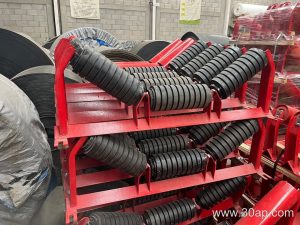
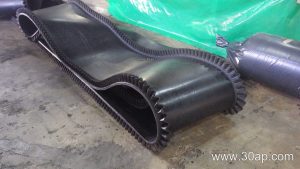
A conveyor trough idler is the assembly of rolls that supports the carrying run of a conveyor belt and shapes it into a trough. The angled side rolls lift the belt edges, so loose material sits in a pocket instead of spilling over the edges. This is the everyday workhorse of a bulk handling line, whether the belt is moving limestone in a quarry, coal at a wash plant, clinker feed at a cement works, or ore at a copper concentrator.
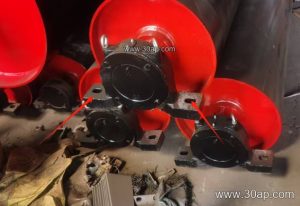
The trough idler is not a pulley. A conveyor pulley drives, returns, or bends the belt at the ends of the line, while troughing idlers sit between them on the carrying side, spaced along the frame. The two do different jobs and are not interchangeable.
How the Assembly Is Built
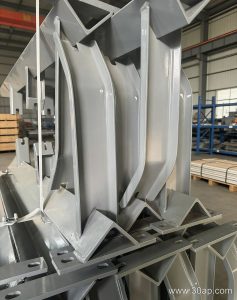
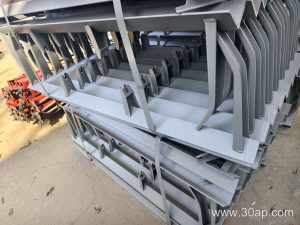
A typical station has two or three rolls mounted in a frame that fixes the trough angle. Each roll is a steel tube shell fitted over a shaft with bearings at both ends, sealed against dust and water. The frame sits on a conveyor bracket attached to the stringer, so the whole set can be lifted out for replacement.
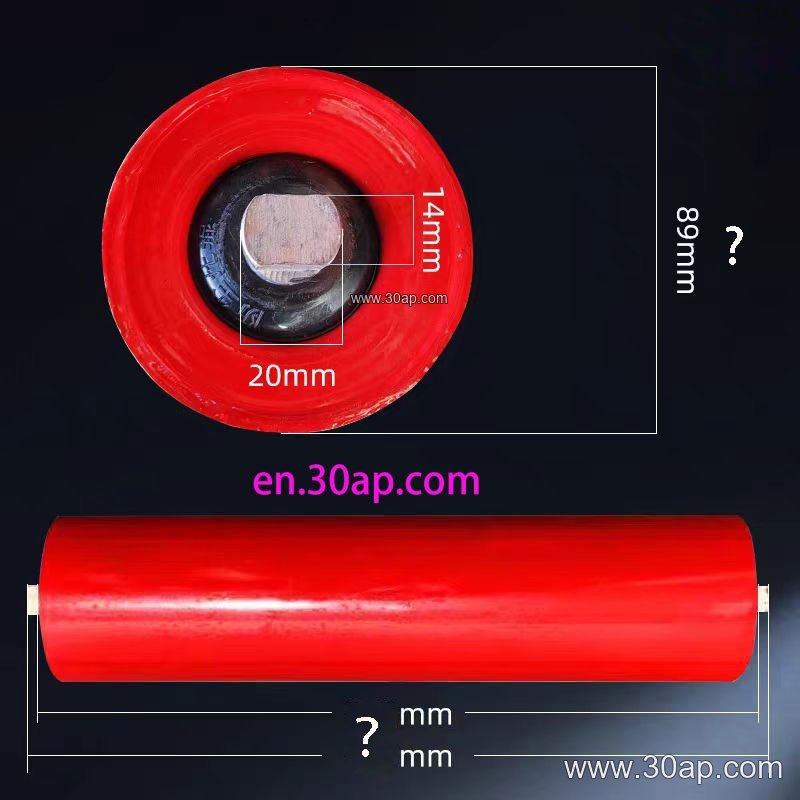
Common roll diameters include Ø89, Ø108, Ø127, Ø133, Ø159, and Ø178 mm. Belt widths range from B500 and B650 up to B1800 and B2000, and the roll length follows the belt width, trough angle, and station form. As an example, a three-roll station at B800 often uses rolls around 315 mm long, while B1200 may use roughly 465 mm. These are planning references, not fixed pairings, and the side rolls can differ from the centre roll.
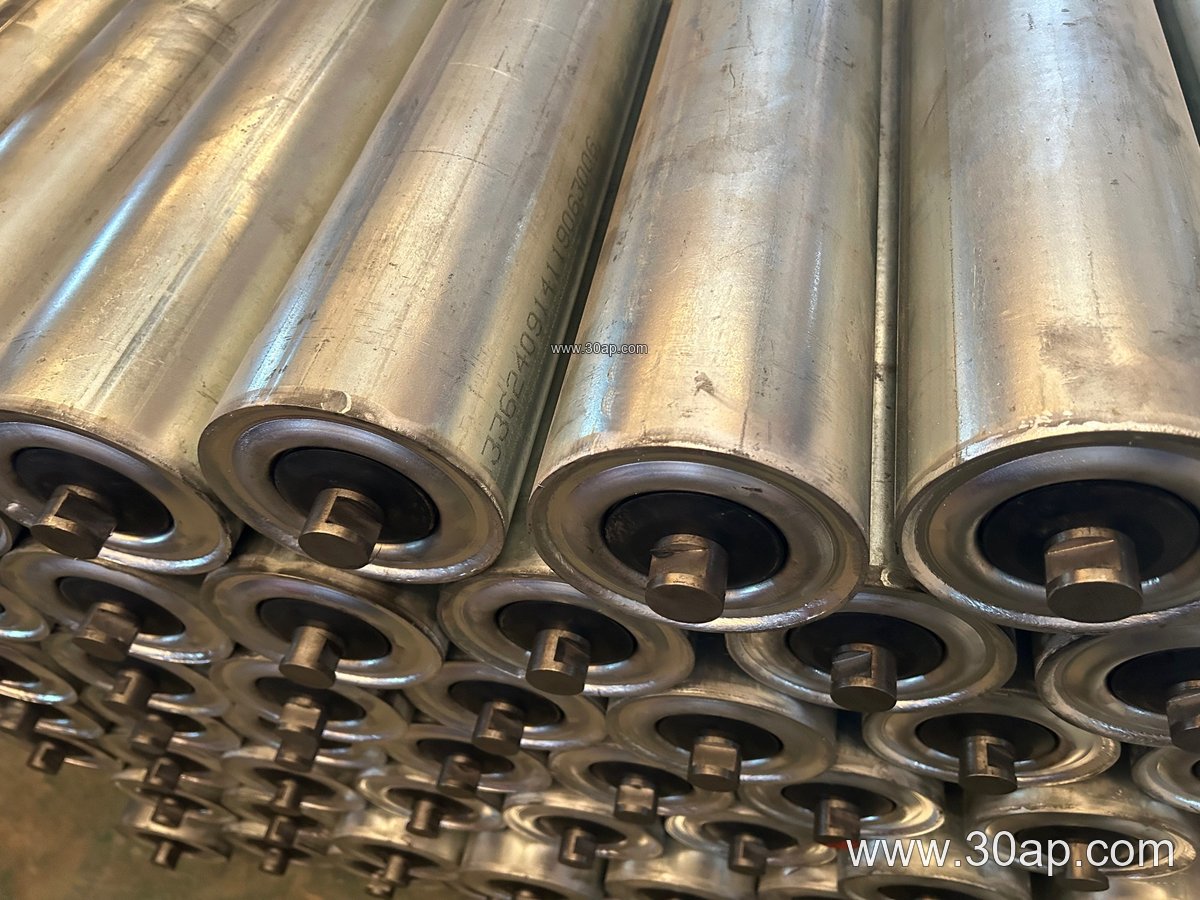
Common Forms and Where They Fit
Three-roll troughing sets are the standard choice on the main carrying run. Two-roll sets suit narrower belts or tighter spaces, and single-roll stations appear in light duties. Transition idlers are placed near the head and tail to ease the belt from flat to troughed without stressing the edges.
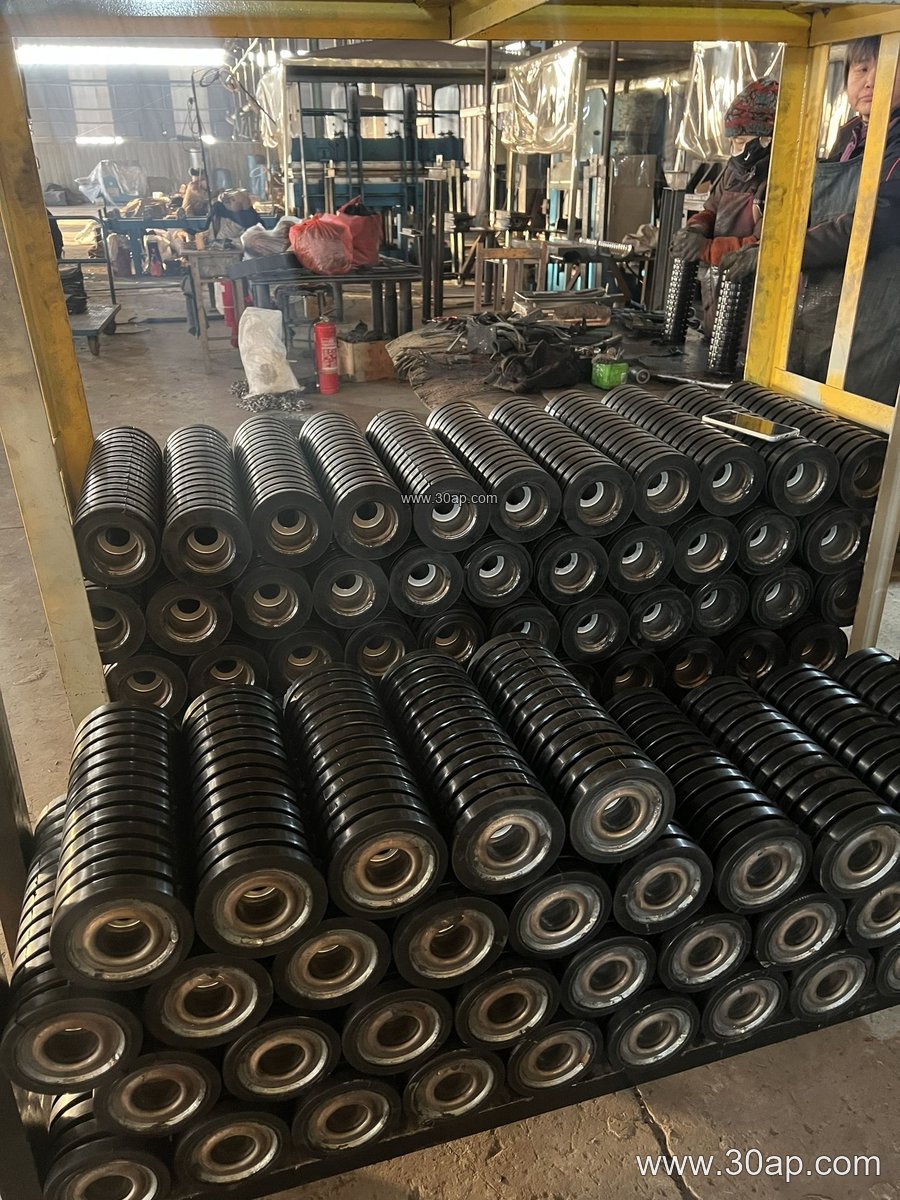
On the return side, a plain flat return idler or a V-shaped return set carries the empty belt. Impact idlers with rubber rings absorb the drop at a transfer point, and self-aligning idlers with tapered rolls correct a belt that wanders. Spiral or garland designs are used where sticky material builds up on plain shells.
- Trough angle: commonly 20, 30, 35, or 45 degrees; a steeper angle holds more material but raises edge tension.
- Roll surface: steel tube, nylon, ceramic, or rubber rings, chosen for wear and build-up behaviour.
- Bearings: sizes such as 6205, 6305, 6308, and 6310 appear across the range; match them to load and speed, not to one roll diameter.
Matching the Idler to the Belt and the Duty
The belt itself sets many of the limits. A heavy-duty mining conveyor belt carrying coarse rock needs a sturdier frame and larger roll diameter than a light aggregate belt. Abrasion resistant conveyor belt grades tolerate gritty stone, while a heat resistant conveyor belt on a cement kiln feed line calls for bearings and seals that cope with warm surroundings. In a coal mine, a flame retardant conveyor belt is usually specified, and the idler set should be selected for the same dusty, damp conditions.
Spacing is a design decision based on belt sag, material weight, and lump size. Loaded strands are usually supported more closely than the return strand. Where a crusher conveyor belt receives large lumps, impact idlers under the chute protect both belt and frame. On a long overland run, the number of stations multiplies quickly, so roll quality and seal performance matter as much as initial cost.
Buyer Checklist
Before ordering, confirm belt width, trough angle, station type, roll diameter, roll length, shaft ends, and frame fixing centres. Ask how the bearing housing is sealed and what shell thickness is offered. Check that the bracket pattern matches the existing stringer, since a good idler that will not bolt up is no help. For replacement work, measure a sample station rather than relying on the belt width alone.
Routine checks pay off: listen for noisy rolls, watch for a belt that runs off centre, and clear spilled material from under the return strand. Replacing a seized roll early protects the belt cover and avoids a shutdown at the wrong moment.