What a Conveyor Frame Does on the Line
A conveyor frame is the structural backbone that holds every rotating part of a belt conveyor in the right position. It carries the idler roller sets, keeps the conveyor pulley aligned at the drive and tail ends, and gives the conveyor belt a stable path from loading point to discharge. In a quarry, a coal preparation plant, or a cement kiln feed line, the frame is the part that turns a group of components into a working conveyor. When the frame is square and rigid, the belt tracks well and wear stays even. When it is not, belt training problems and edge damage follow quickly.
How the Frame Is Built
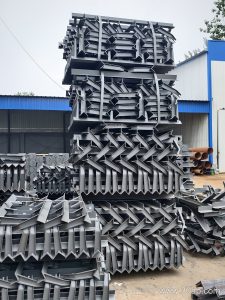
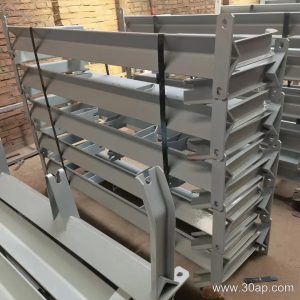
Most frames are fabricated from angle steel, channel steel, or folded steel plate. Stringers run along the conveyor axis, cross members tie them together, and mounting plates carry the brackets that hold each idler station. The frame also provides the anchor points for the conveyor bracket that supports the troughing set, the return set, and the transition zone near the pulleys. On longer conveyors the frame is split into modules so it can be transported and assembled on site, and legs are matched to the ground conditions, whether that is a concrete plinth in a power plant coal yard or a steel structure at a port loading berth.
Frame Types and Where They Sit
The frame family covers several positions along the belt path. Each position has its own task, and they are not interchangeable.
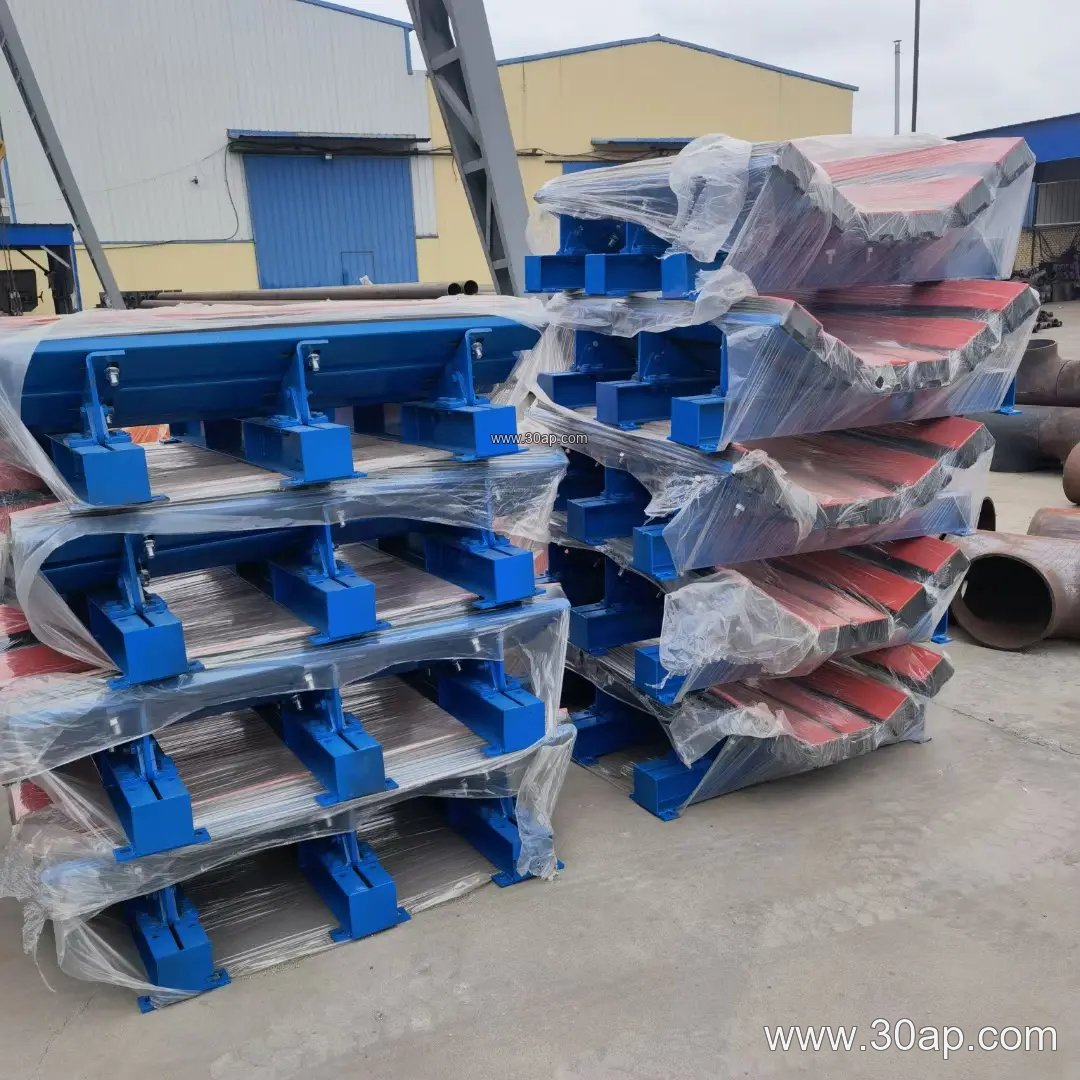
- Troughing frame at the carrying side, usually built to a 20, 30, 35, or 45 degree trough angle.
- Transition frame between the last troughing station and the pulley, where the belt changes from troughed to flat.
- Return frame on the lower strand, including V-return and flat return arrangements.
- Impact frame under the loading chute, fitted with cushion brackets to absorb material drop.
- Self-aligning and forward-leaning frames that help keep the belt centered.
- Suspended and adjustable frames for lines where the trough angle or height must be trimmed during commissioning.
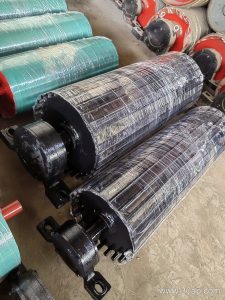
A drive pulley and a tail pulley are separate components with different duties, and neither is a substitute for a bend pulley used to change belt direction. The frame simply provides their correct positions and tension alignment.
Matching Frame to Belt and Idler
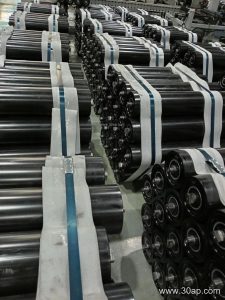
Frame selection starts with belt width and the load the conveyor must carry. Common frame widths follow the belt, for example B500, B650, B800, B1000, B1200, B1400, B1600, B1800, B2000, and B2200. The idler roller diameter is chosen from load and speed, with common sizes such as Ø89, Ø108, Ø133, Ø159, and Ø194. These values are design references, not fixed pairings. A B800 frame at 35 degrees with Ø108 rollers is a typical mid-duty arrangement, while B1200 at 45 degrees with Ø133 rollers suits heavier bulk material. Installation hole spacing and cross beam length change with belt width and trough angle, so they are always confirmed against the drawing.
Reference combinations often seen in design work
| Belt width | Trough angle | Idler diameter | Typical duty |
|---|---|---|---|
| B650 | 30 degrees | Ø89 | Light aggregate, sand |
| B800 | 35 degrees | Ø108 | General bulk handling |
| B1000 | 35 degrees | Ø133 | Cement, coal, ore |
| B1200 | 45 degrees | Ø133 | Heavy mining duty |
| B1400 | 35 degrees | Ø159 | High capacity transfer |
| B1600 | 45 degrees | Ø159 | Port and power plant lines |
Forward-leaning frames usually set the idler at about 1.5 to 2 degrees ahead of the belt direction to assist tracking. Adjustable frames allow the trough angle to be changed within the same unit, which helps when a line is commissioned and the belt needs fine tuning.
Applications Across Industries
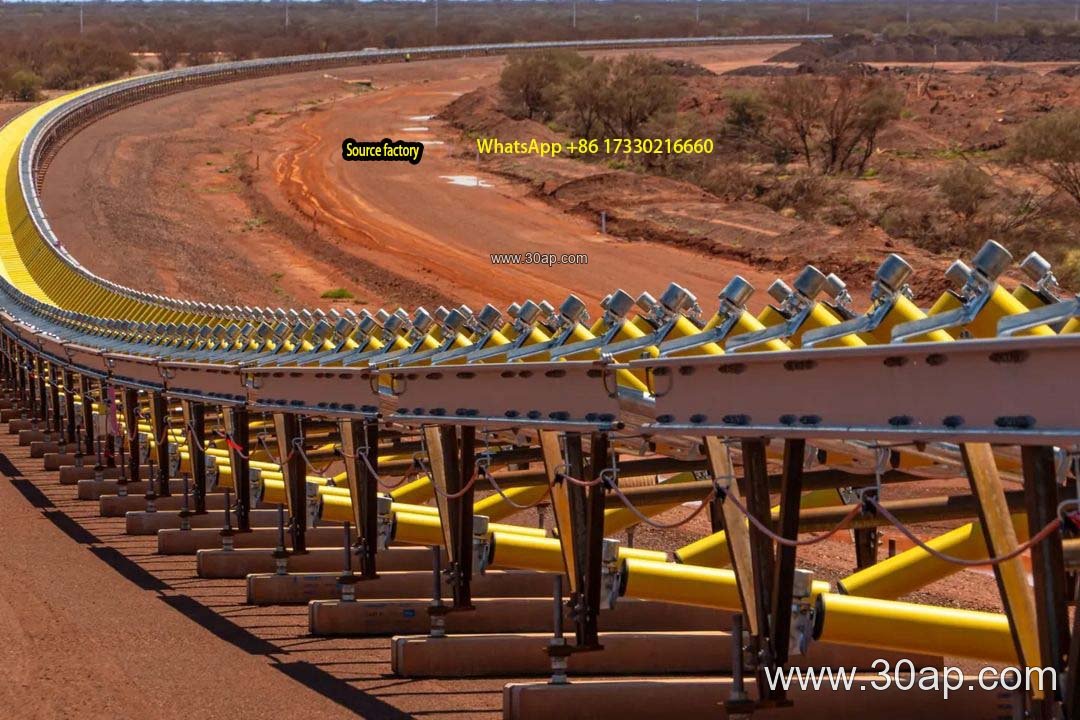
In an iron ore terminal, a heavy frame carries a steel cord conveyor belt at high tension. In a limestone quarry, a lighter troughing frame supports an abrasion resistant conveyor belt moving crushed rock. At a power plant coal yard, flame retardant and anti-static belt grades run on frames that must resist dust buildup and stay easy to inspect. Sand and gravel lines often use EP conveyor belt or NN conveyor belt constructions on standard frames, while fertilizer and grain silo conveyors may call for a food grade belt on a clean, painted frame. The frame itself must suit the environment, so galvanizing or heavy paint is common in wet washing plants.
What Buyers Should Check
Before ordering, confirm the belt width, trough angle, idler diameter, and the number of stations. Ask for the frame drawing with hole spacing and overall height, because these are not universal. Check the material thickness of the stringers and cross members, and confirm whether the frame is fixed or adjustable. Verify that the mounting pattern matches the conveyor bracket and the pulley bearing housings. For impact zones, specify cushion frames rather than standard troughing frames. Finally, plan the maintenance route: a frame that allows quick idler replacement without lifting the belt saves hours in a crusher circuit or a ship loading line.
More details on frame layouts, bracket patterns, and matching conveyor components can be reviewed at cxmconveyor.com.