What an Iron Ore Conveyor Belt Is
An iron ore conveyor belt is a heavy-duty rubber belt designed to transport crushed iron ore, pellets, and sinter across mining, steel plant, and port operations. Unlike general-purpose belts, it must withstand sharp lump ore, high impact at transfer points, abrasive dust, and often moisture or fine particles that accelerate wear. The belt is typically a multi-layer construction with a fabric or steel cord carcass and thick rubber covers.
Common synonyms include iron ore conveyor belting or ore conveyor belt. These terms all refer to the same product category, and the choice between them does not change the core design requirements.
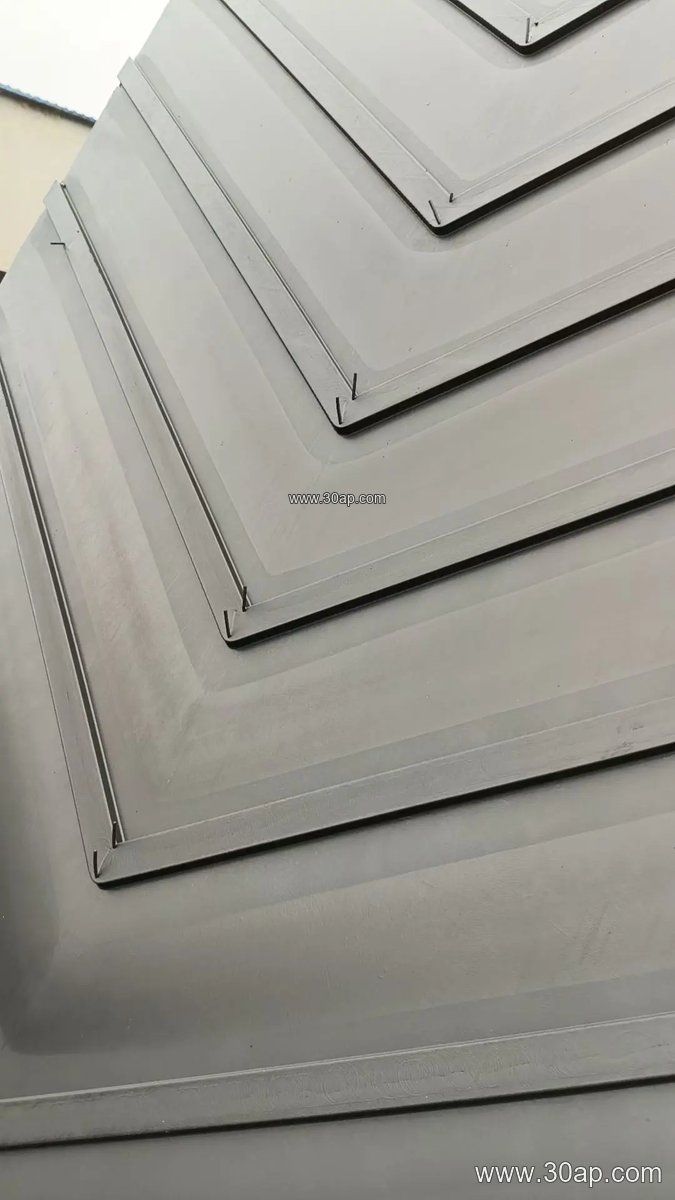
Construction and Key Components
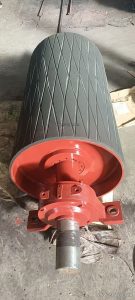
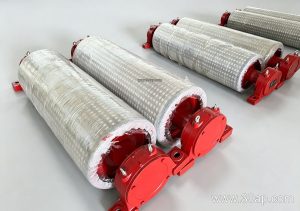
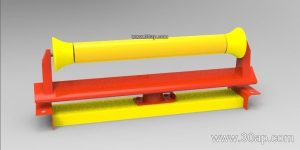
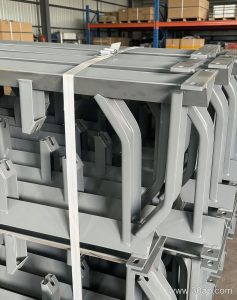
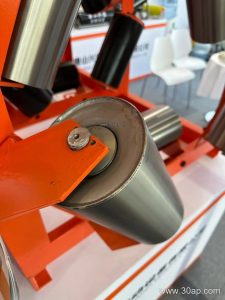
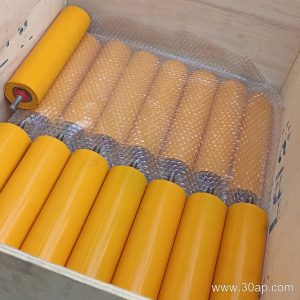
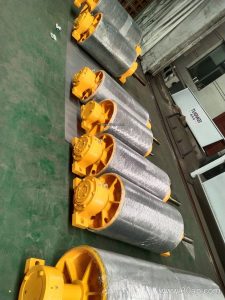
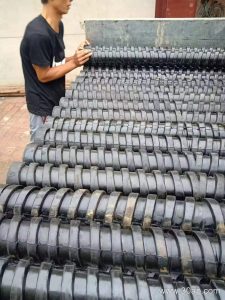
An iron ore conveyor belt is built around a tension-bearing carcass. The carcass may be EP (polyester-nylon) fabric, NN (nylon-nylon) fabric, or steel cord, depending on the required strength and load support. Rubber covers protect the carcass from abrasion, impact, and moisture. The belt runs over conveyor pulleys, idler rollers, and conveyor brackets that form the conveyor frame.
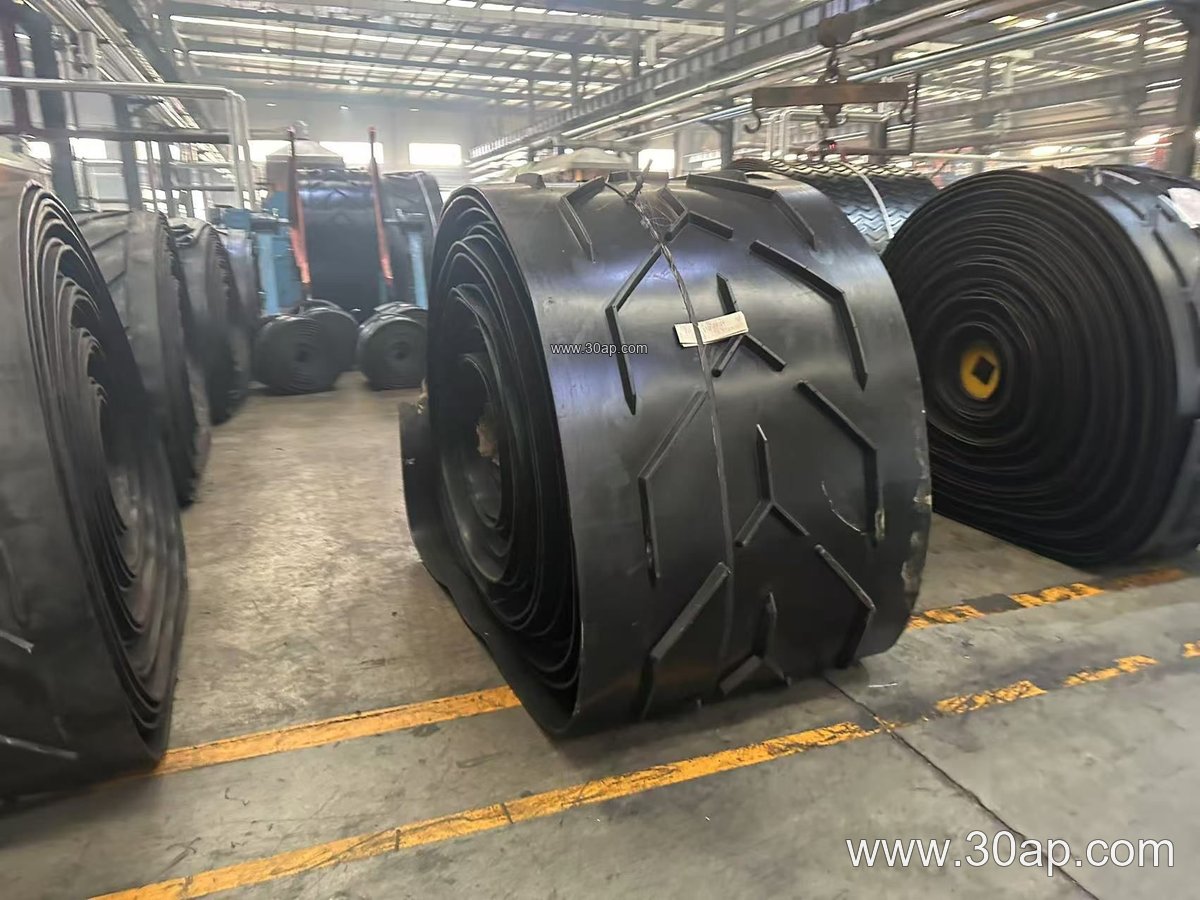
For iron ore, the top cover is usually an abrasion resistant conveyor belt compound, often 6+2 mm or 8+3 mm thick, to resist cutting and gouging. The bottom cover may be thinner, typically 2 mm or 3 mm, to run smoothly on idlers. Edge construction and splice type also matter: hot vulcanized splices are common for permanent installations, while mechanical fasteners may be used for temporary repairs.
Typical Belt Types for Iron Ore
- EP conveyor belt – widely used for medium to long conveyors; available in strengths such as EP200, EP400, EP630, EP800, EP1000, and EP1250.
- NN conveyor belt – nylon fabric carcass with good flexibility and impact resistance; strengths like NN200, NN300, and NN400.
- Steel cord conveyor belt – for high-tonnage mainlines; common strength grades include ST1000, ST1600, ST2000, and ST2500.
- Heat resistant conveyor belt – where sinter or hot pellets are handled.
- Flame retardant conveyor belt – required in underground mining and some enclosed transfer houses.
- Chevron conveyor belt – for inclined sections where material rollback is a risk.
Other subtypes such as corrugated sidewall or pipe conveyor belt may be considered for special routes, but they are not direct replacements for a standard iron ore conveyor belt on a straight troughing conveyor.
Where It Is Used
Iron ore conveyor belts appear in open-pit mines, underground mining operations, crushing plants, screening stations, stockyards, and ship loading terminals. In steel plants, they feed sinter plants and blast furnaces. In ports, they move ore from wagon tipplers to storage or shiploaders. The same belt family is also used in copper ore, gold mining, and other heavy-duty mining conveyor belt applications where abrasion and impact are severe.
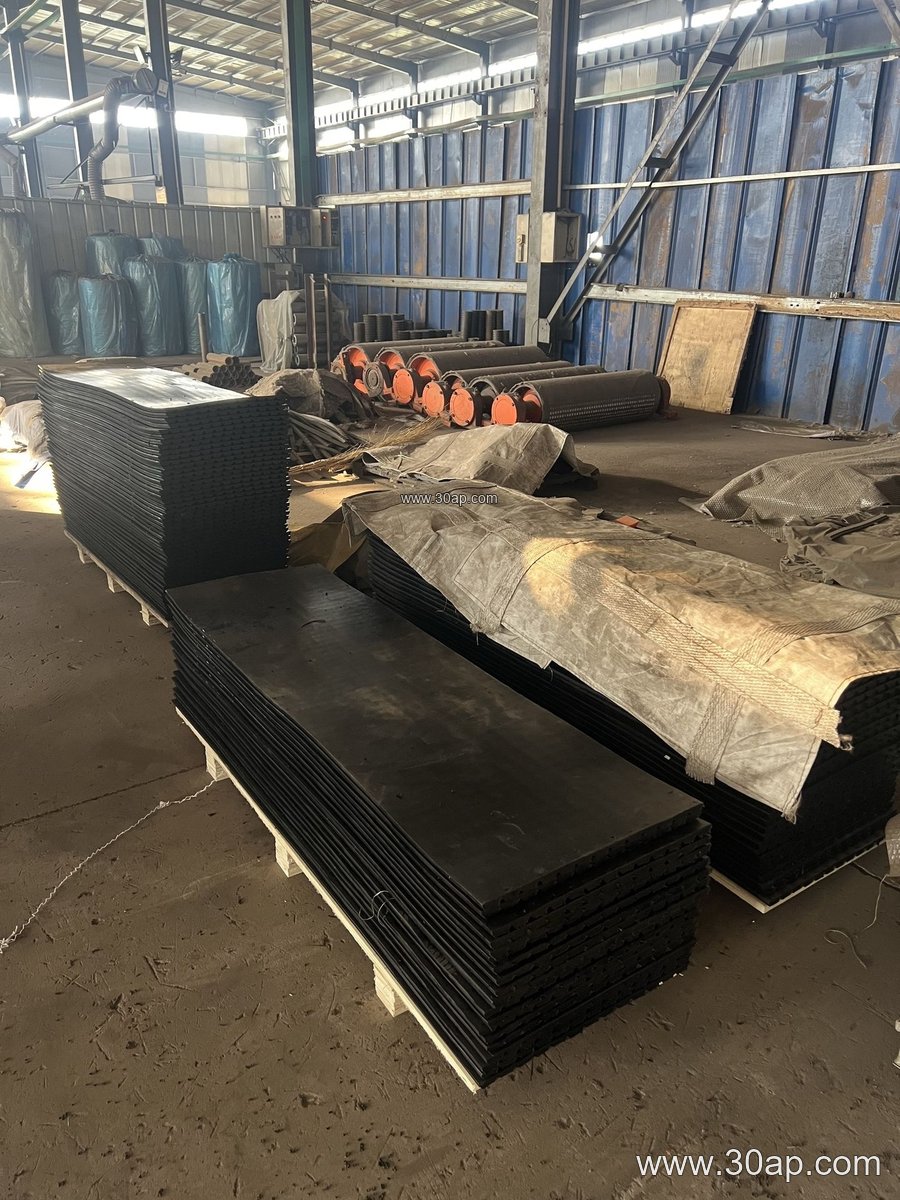
Because iron ore is dense and sharp, transfer points need impact idler rollers and adequate chute design. The belt must be supported by properly spaced idler rollers and aligned conveyor pulleys to avoid edge damage and mistracking.
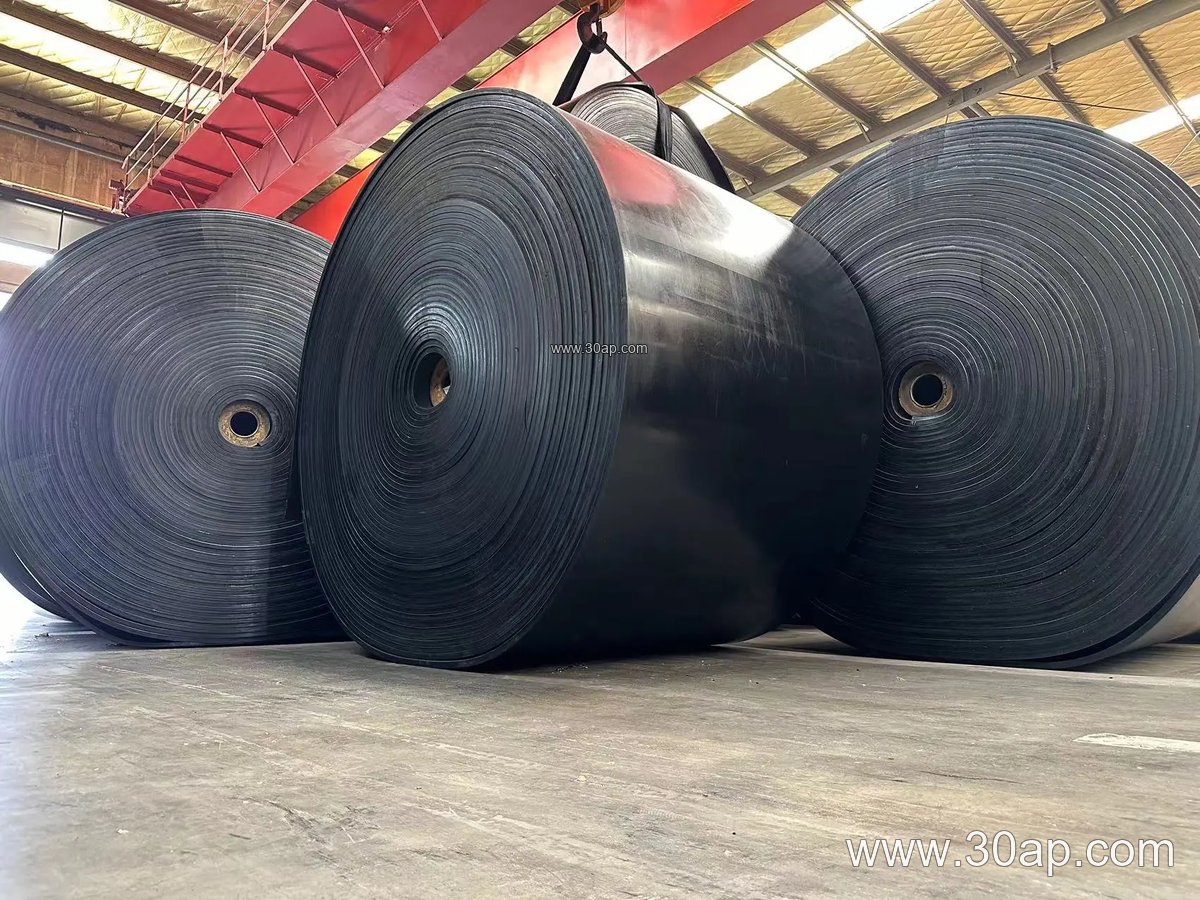
Specifications and Sizing
Belt width is selected to match the conveyor capacity and lump size. Common widths for iron ore conveyors include 800 mm, 1000 mm, 1200 mm, 1400 mm, and 1600 mm. Wider belts such as 1800 mm or 2000 mm may be used on high-capacity mainlines. The table below gives reference values; actual supply should be confirmed with the belt manufacturer.
| Parameter | Common Reference Range |
|---|---|
| Belt width | 800, 1000, 1200, 1400, 1600, 1800, 2000 mm |
| Fabric strength (EP) | EP200 to EP1250 (e.g., EP400, EP630, EP800, EP1000) |
| Steel cord strength | ST1000 to ST2500 |
| Cover thickness | 6+2 mm, 8+3 mm (top+bottom) |
| Carcass layers | 2 to 6 plies for fabric belts |
These values are not universal. A 1200 mm wide belt does not automatically dictate a specific pulley diameter; pulley size is determined by belt tension, carcass flexibility, and conveyor design. Similarly, shaft diameter must be calculated from torque and load, not from belt width alone.
Buyer Checklist
- Confirm the actual iron ore characteristics: lump size, moisture, temperature, and abrasiveness.
- Specify the required tensile strength and cover grade, for example abrasion resistant conveyor belt or heat resistant conveyor belt.
- Check compatibility with existing conveyor pulleys, idler rollers, and conveyor brackets.
- Decide on splice method and whether an endless conveyor belt is preferred for long-term operation.
- Ask for a belt data sheet showing carcass type, number of plies, cover thickness, and recommended operating tension.
For inquiries about iron ore conveyor belts and related components such as conveyor idlers and pulleys, visit our site at https://www.example.com/iron-ore-conveyor-belt or contact our engineering team.