What a Rubber Impact Idler Does at the Loading Point
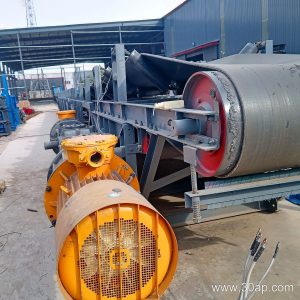
A rubber impact idler is a buffer roller installed on the carrying side of a conveyor, directly beneath the point where material drops onto the belt. Its job is not to carry the full load along the whole line, but to absorb the energy of falling lumps so that the belt, the frame and the ordinary carrying idlers behind it are protected. In a quarry, a limestone mine, a coal washing plant or a crushing and screening line, the drop height at the transfer chute can be considerable, and this is where a rubber impact idler earns its place.
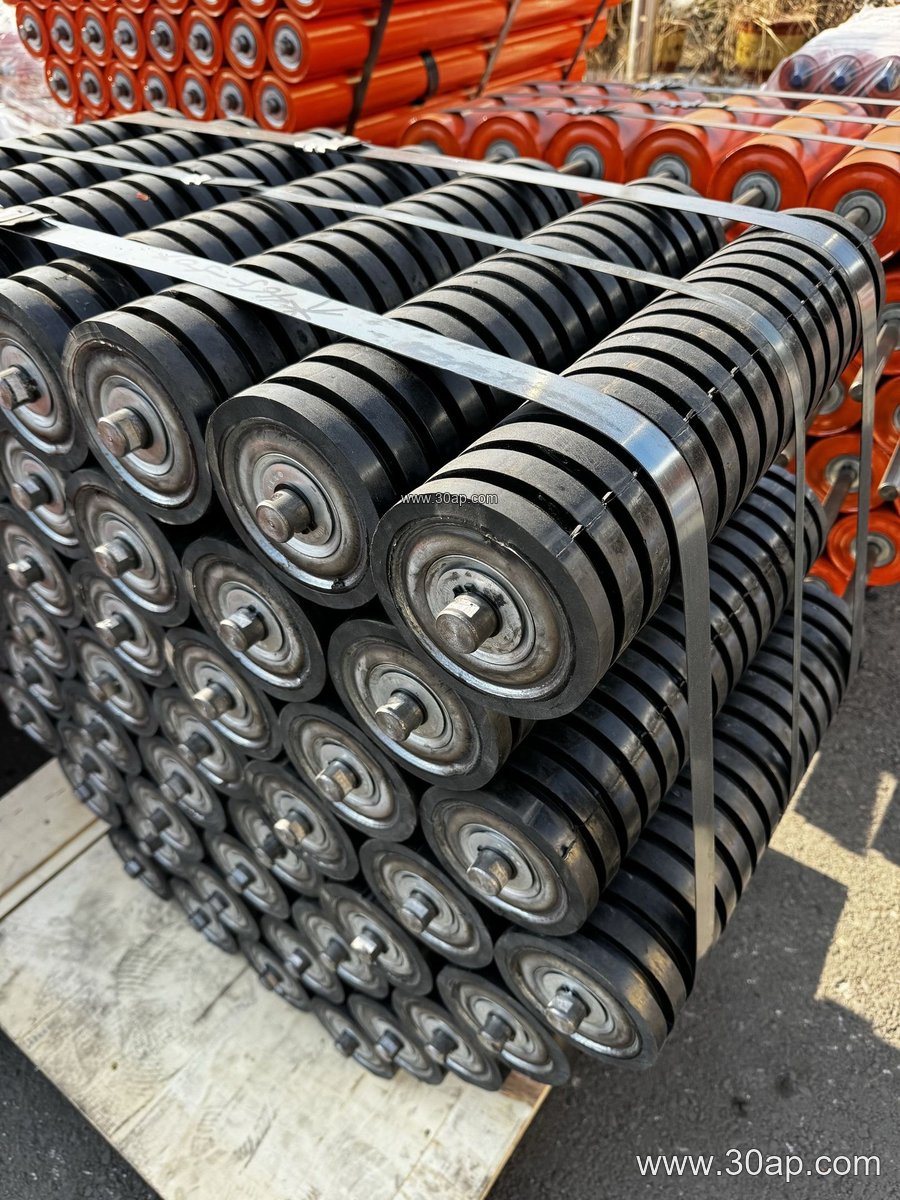
The same product is also known as a rubber ring impact roller or rubber-disc buffer roller. These are accurate equivalent names for the same item, and they describe the rubber rings or rubber discs that form the contact surface.
How the Roller Is Built
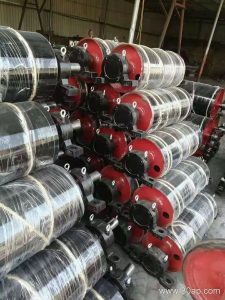
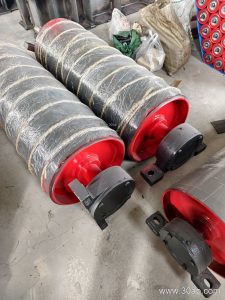
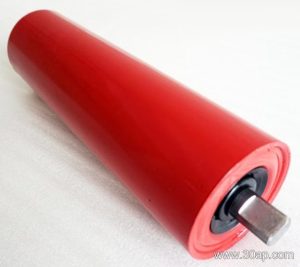
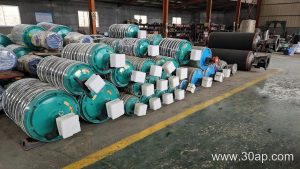
Underneath the rubber, the structure is a steel tube with welded bearing housings at each end, fitted with sealed ball bearings. The distinguishing feature is the rubber covering: a series of thick rubber rings, discs or a continuous rubber sleeve mounted on the shell. The rubber deforms under impact and then recovers, which spreads the shock over a longer time and reduces peak force on the belt.
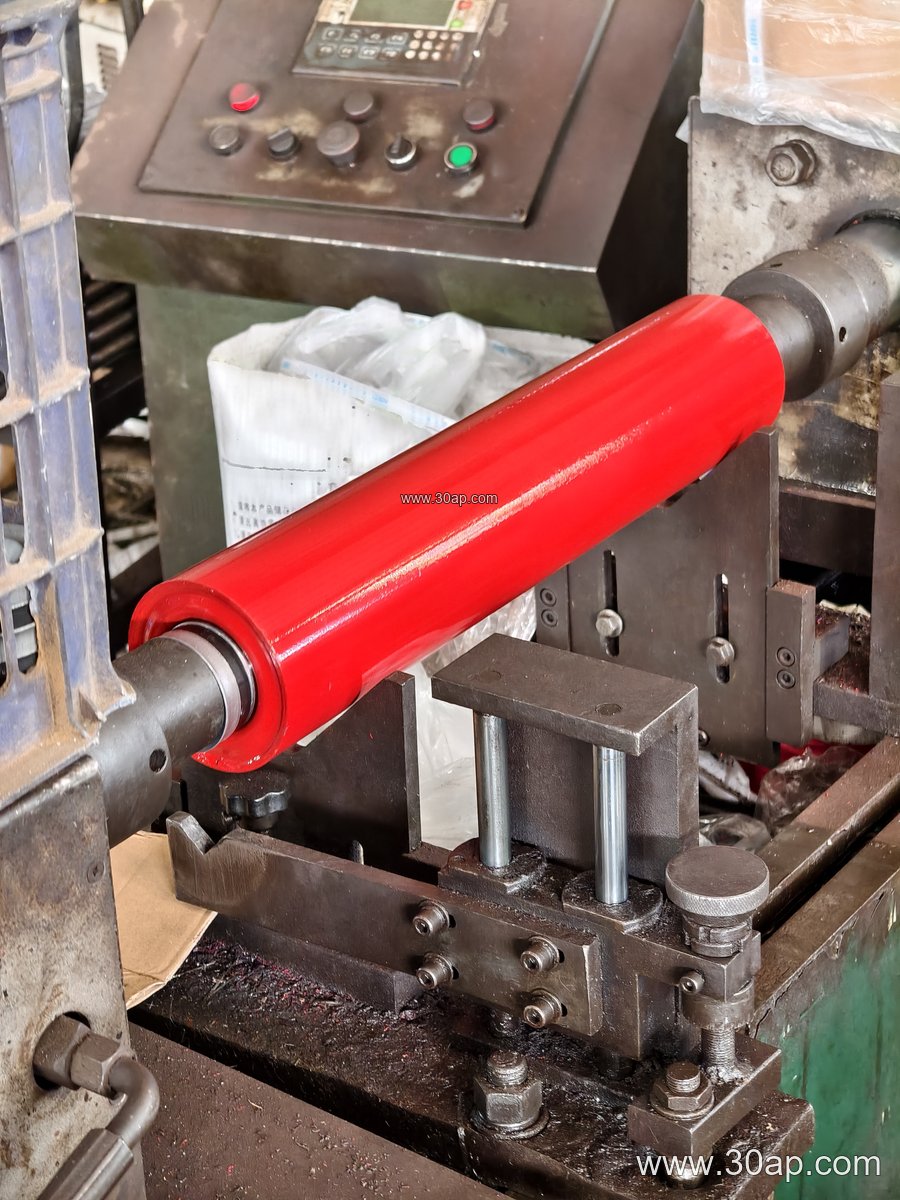
- Steel shell with machined end faces
- Sealed bearings, commonly 6204, 6205, 6305, 6306 or 6308 depending on roller diameter and load
- Rubber rings or discs, often with a hardness selected for the duty
- Shaft ends sized to suit the conveyor bracket and frame
Bearing size is not fixed by belt width alone. A wider belt usually means a larger roller diameter and a heavier bearing, but the final choice belongs to the conveyor designer, who considers load, speed and service life.
Where It Fits on the Conveyor
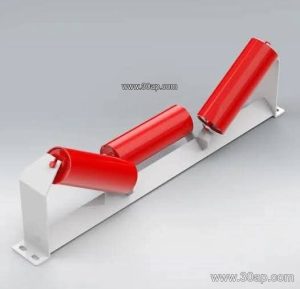
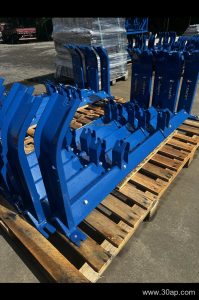
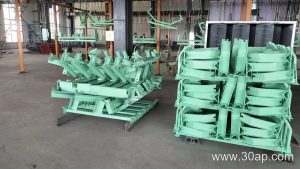
Impact rollers are normally arranged in a group of two or three units immediately under the chute, sometimes with a slight trough formed by the frame. Behind that group, standard troughing idlers take over. The transition from impact to carrying idlers should be gradual, because a sudden change in support height can stress the belt edge.
The belt itself matters here. A heavy-duty mining conveyor belt or a high abrasion resistant conveyor belt can tolerate more impact than a thin general-purpose belt, but even a steel cord conveyor belt benefits from cushioning at a high-drop transfer. In coal mining and underground mining conveyor systems, flame retardant conveyor belt grades are common, and the impact idler should be selected to match the belt width and the frame dimensions used underground.
Common Sizes and Configurations
The table below gives typical reference values only. Actual roller length depends on belt width, trough angle and the number of rollers in the group, and side rollers may differ from the centre roller.
| Reference item | Common range |
|---|---|
| Roller diameter | Ø89, Ø102, Ø108, Ø127, Ø133, Ø159, Ø178 mm |
| Belt width | B500, B650, B800, B1000, B1200, B1400, B1600 mm |
| Trough angle | 20, 30, 35, 45 degrees |
| Group form | single roller, two-roller, three-roller trough |
| Roller surface | rubber rings, rubber discs, rubber sleeve |
For example, a three-roller trough on a B800 belt often uses a centre roller around 315 mm long, while a B1200 arrangement may use roughly 465 mm. These are illustrative figures, not fixed pairings. The conveyor bracket, frame gauge and shaft diameter are set by the conveyor manufacturer.
Selection Points for Buyers
Start with the drop height and the largest lump size. A transfer with large, sharp rock calls for thicker rubber and a larger diameter, while a modest drop on a 650mm or 800mm belt may be served by a smaller unit. Check the belt speed and the material temperature, because hot material such as clinker or sinter needs a heat resistant conveyor belt and a roller compound that will not soften. In a cement plant or power plant coal handling system, dust and fine particles are a constant presence, so bearing sealing quality deserves attention.
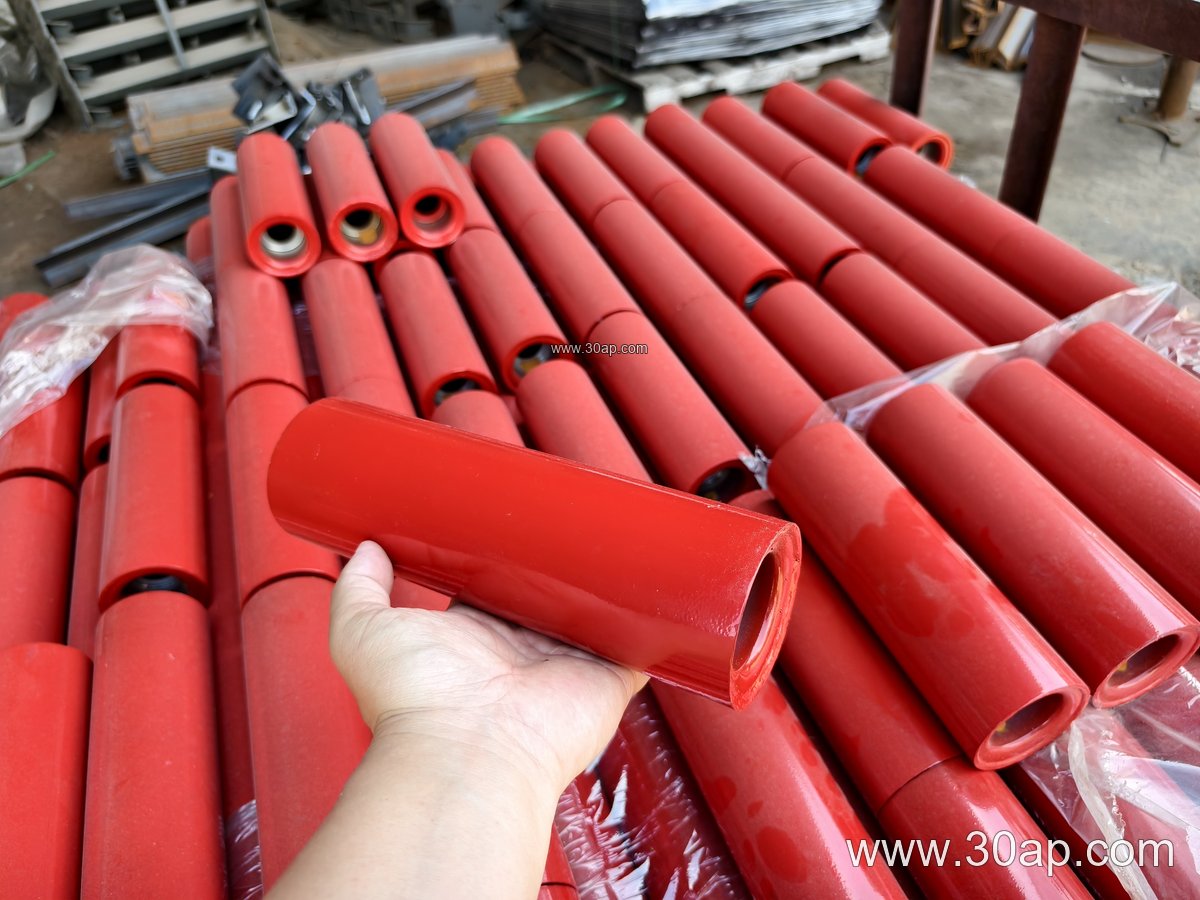
Also confirm the mounting dimensions: shaft ends, bracket spacing and the distance from the pulley. A roller that fits the frame but sits too high will lift the belt and cause tracking problems. Buyers comparing suppliers should ask for the rubber hardness, the bearing brand or grade, and the drawing of the shaft end.
Installation and Maintenance Notes
Keep the impact group aligned with the adjacent carrying idlers so the belt runs on a smooth support line. Inspect the rubber surface periodically for cuts, chunking or hardening; worn rubber transfers shock back to the belt and the bearings. Seized bearings are usually visible as a stopped roller or a polished, hot shell end. Replace the whole roller rather than the rubber alone when the shell or bearing housing is damaged.
Spare parts planning is simpler when the plant keeps a small stock of the most used diameters and lengths. Record the model, roller length and bearing number for each position, and note whether the frame uses a standard conveyor bracket or a custom one. For more information on matching rollers with conveyor belt specifications, visit beltconveyorsystem.com or check idler product pages at conveyoridlerhub.com.