What a Heavy-Duty Welded Pulley Is
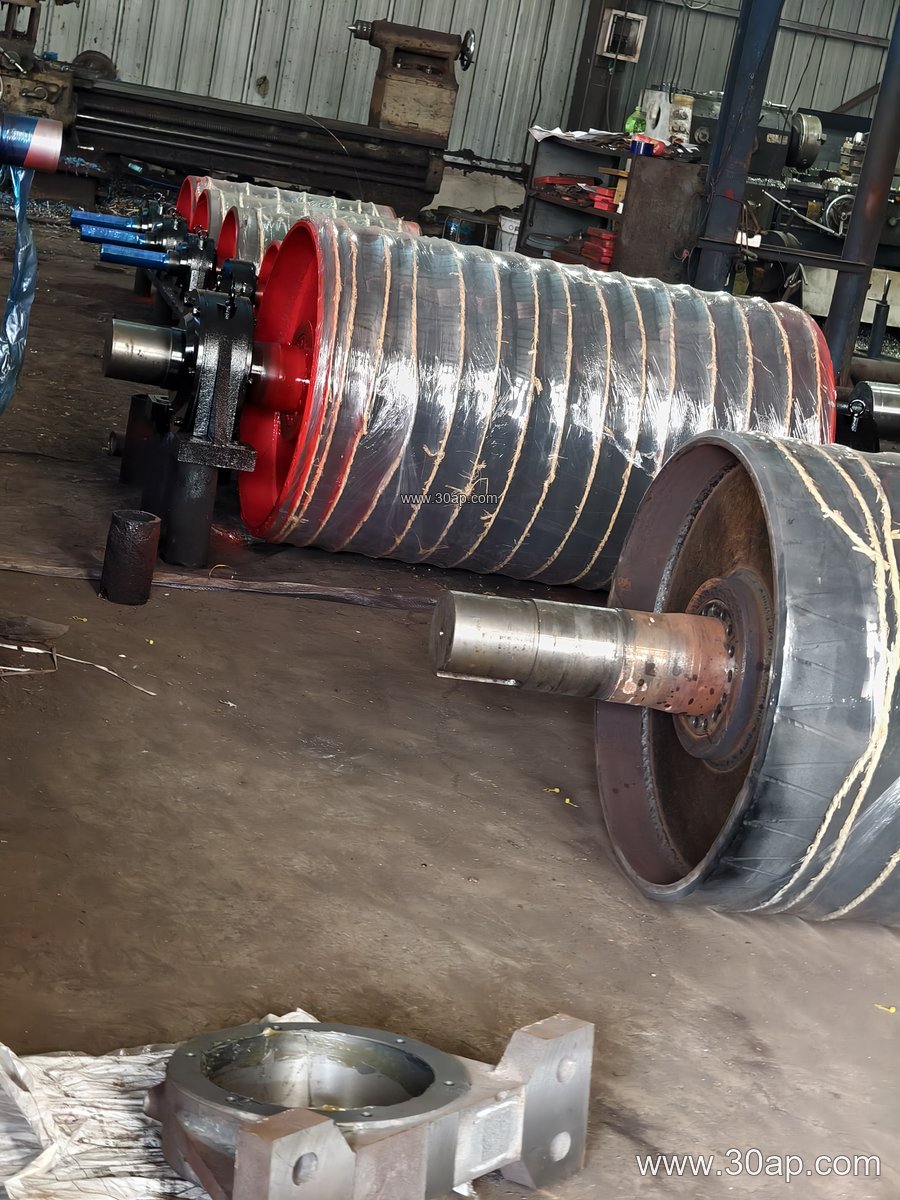
A heavy-duty welded pulley is a conveyor pulley whose shell, end discs and hub assembly are joined by continuous welding rather than by a segmented or bolted construction. In aggregate plants, cement works, power station coal yards and ore handling circuits, this welded drum carries the belt, transmits torque and keeps the conveyor line tracking under constant load. The same product is also called a welded steel conveyor pulley, and that equivalent name describes the fabrication method clearly. Drive, tail and bend pulleys remain distinct positions in a conveyor; the welded construction is the subject here, not a substitute for those position names.
How the Welded Drum Is Built
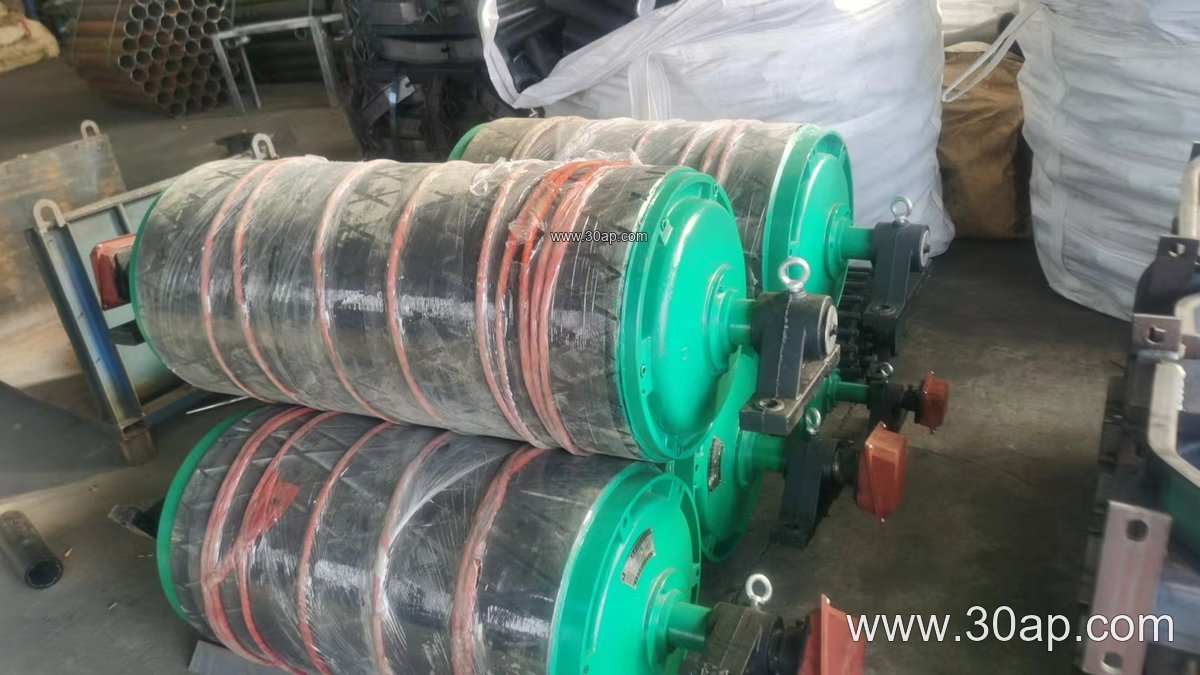
A typical heavy-duty welded pulley starts with a rolled steel shell, machined end discs and a shaft that is pressed or keyed into the hubs. Full-penetration welds around the disc-to-shell joint give the drum its stiffness, which matters when the belt tension is high and the load is uneven. After welding, the shell is machined so the crown or flat face runs true, and the shaft ends are finished for bearing housings and conveyor brackets.
- Shell: rolled plate, machined after welding
- End discs: welded to shell and hub
- Shaft: sized by torque and bearing load, not by belt width alone
- Surface: plain, rubber lagged or ceramic lagged depending on grip needs
Lagging is often applied to the drive position to raise friction. Common cover thicknesses are 8, 10, 12, 15 and 20 mm, and the pattern may be plain, diamond or herringbone. A welded drum used as a tail or bend pulley may stay plain, because its job is guidance rather than torque transfer.
Where the Welded Pulley Fits
In a quarry or sand and gravel line, a heavy-duty welded pulley usually sits at the head of a long incline where a fabric core belt such as an EP conveyor belt or NN conveyor belt runs at high tension. In a coal preparation plant, the same drum may work with a flame retardant conveyor belt on a transfer conveyor. Cement plants use welded pulleys on clinker and raw meal belts, while power plants rely on them in coal handling galleries.
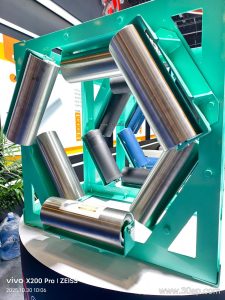
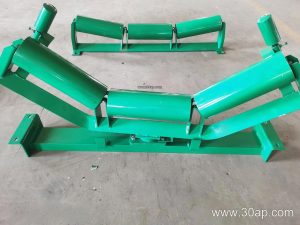
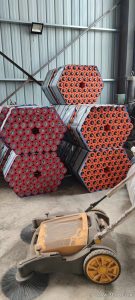
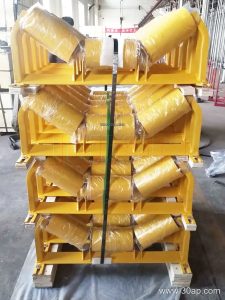
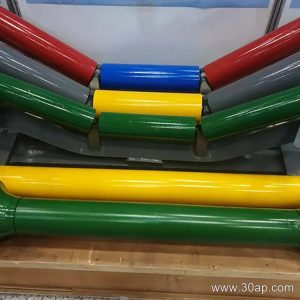
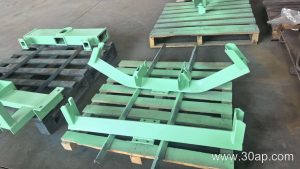
The pulley does not work alone. It runs with conveyor idler rollers that support the belt between stations, and with conveyor brackets that locate the bearing housings. A well-matched combination of drum, rollers and belt reduces belt edge stress and extends cover life. Where the belt is a heavy-duty mining conveyor belt or a steel cord conveyor belt, the pulley shell and shaft must be sized for the higher tension that such belts carry.
Sizes and Common Combinations
Pulley dimensions follow the conveyor design rather than a fixed table. Belt widths from B400 to B2400 appear in bulk handling, and pulley face width is normally a little wider than the belt. The figures below are reference examples, not universal pairings.
| Belt width | Typical pulley face width | Example diameter |
|---|---|---|
| B500 | about 600 mm | Ø400 |
| B800 | about 950 mm | Ø500 |
| B1000 | about 1150 mm | Ø630 |
| B1200 | about 1400 mm | Ø1000 |
| B1400 | about 1600 mm | Ø800 |
| B1600 | about 1800 mm | Ø1250 |
Shaft diameters commonly range from Ø50 to Ø200, but the final value depends on torque, bearing span and load. A B1200 belt does not automatically mean one shaft size, and a single belt width can be matched with different pulley diameters depending on wrap angle and belt speed.
Buyer Checklist
- Confirm the pulley position: drive, tail, bend or take-up, since each has different duty.
- State belt type and tension, for example an abrasion resistant conveyor belt or a heat resistant conveyor belt in a cement kiln area.
- Specify lagging pattern and thickness if extra grip is needed.
- Check weld quality, machining tolerance and balance before installation.
- Plan periodic inspection of lagging wear, weld seams and bearing condition.
For a reliable match, share the belt width, belt type, expected tension and shaft load with the pulley supplier. A heavy-duty welded pulley built to those inputs will outlast a generic drum in quarry, coal or ore service, and it will work better with the surrounding conveyor pulley, idler roller and bracket set.