What a Mining Belt Conveyor Pulley Does
In a quarry, limestone mine, or ore dressing line, the conveyor pulley is the component that turns the belt loop and keeps material moving from the crusher to the stockpile. As the drive pulley, it transfers torque from the gearbox to the conveyor belt; as the tail pulley, it maintains belt tension and alignment at the loading end. A mining belt conveyor pulley is therefore not a single part but a family of drum assemblies sized around the belt width, the load, and the duty cycle of the plant.
Because the pulley works together with the conveyor belt, idler roller, and conveyor bracket, small mismatches in diameter, face width, or lagging can show up as belt mistracking, slippage, or premature cover wear. Getting the specification right at the buying stage is usually cheaper than correcting it during a shutdown.
How the Pulley Is Built
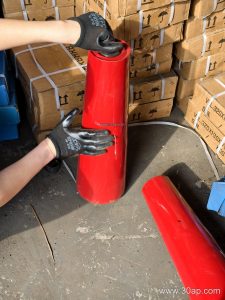
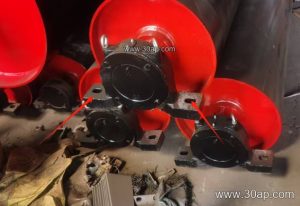
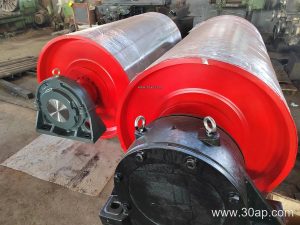
A typical drum consists of a cylindrical shell, two end discs, a shaft, and hub assemblies. The shell is usually rolled from steel plate and welded to the discs; the shaft is keyed or shrink-fitted into the hubs. Larger units may use a turbine-style end disc to reduce stress concentration under high tension.
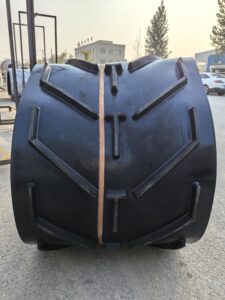
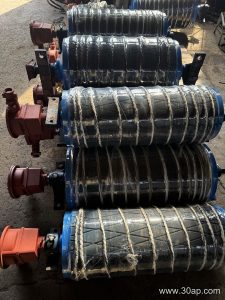
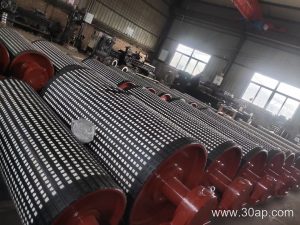
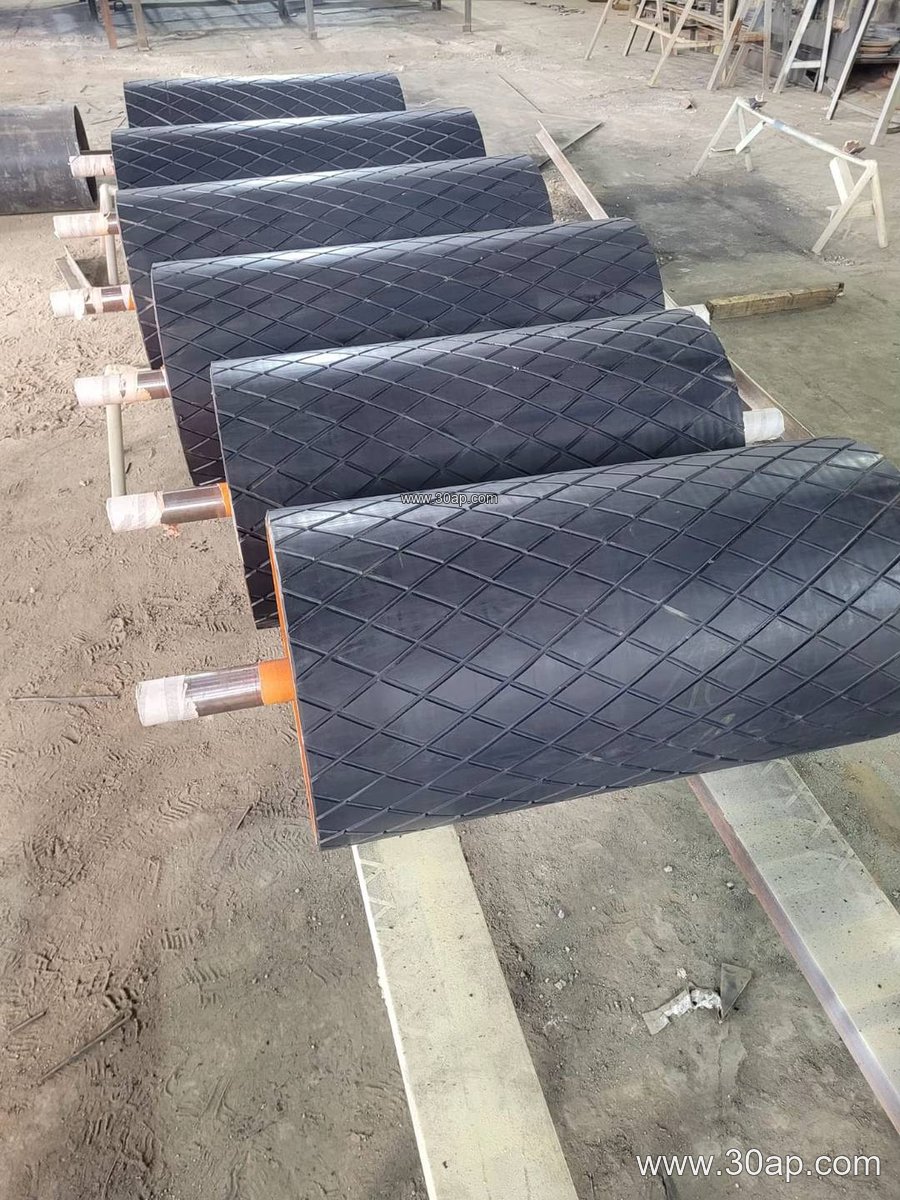
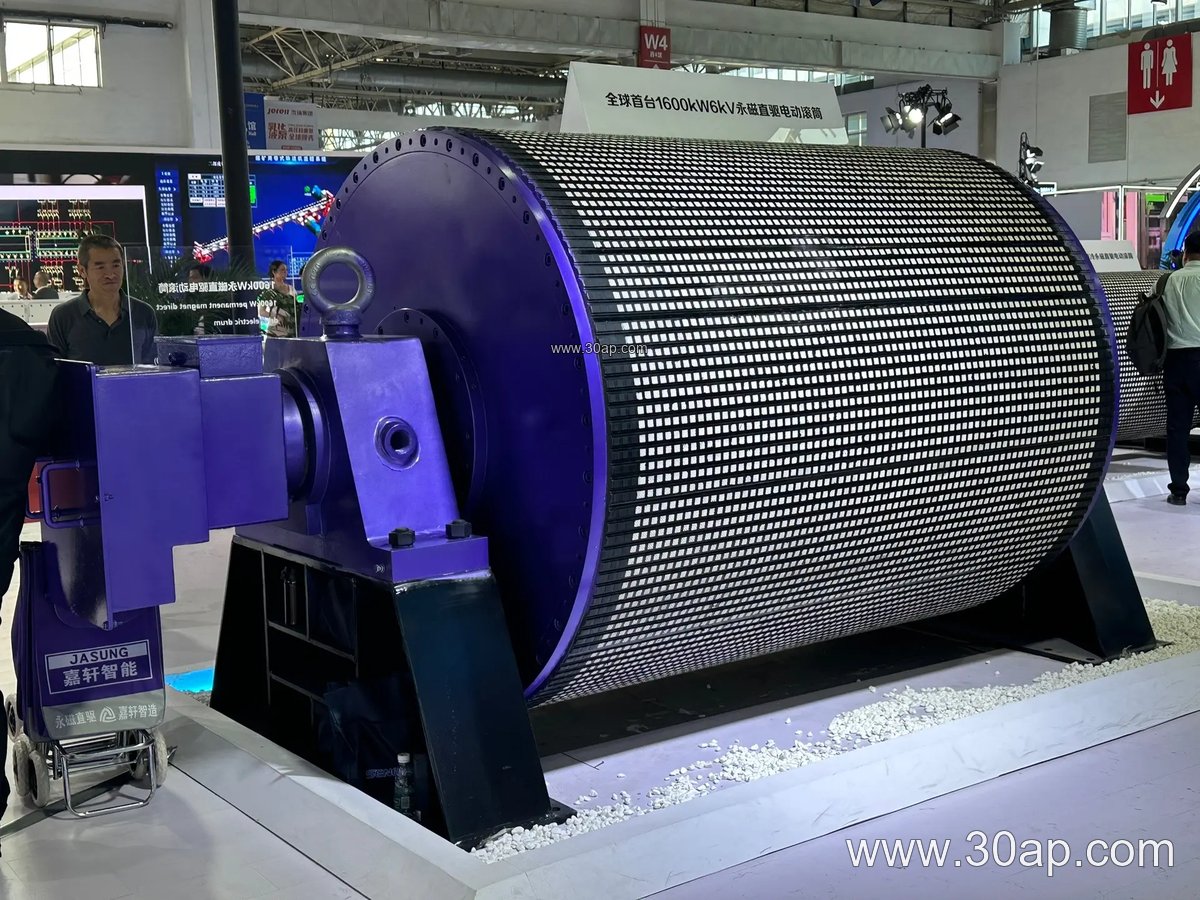
Surface treatment is where many specification decisions are made. Plain shells are common on light-duty return positions, while lagged shells improve grip on the drive side. Common lagging options include hot-vulcanized rubber, cold-bonded rubber, diamond grooved rubber, herringbone pattern, and ceramic tiles. Lagging thickness is frequently 8, 10, 12, 15, or 20 mm depending on the torque and the abrasiveness of the material. In coal preparation plants and underground coal mining conveyor systems, flame retardant and anti-static properties of the rubber lagging are often specified alongside the belt itself.
Drive, Tail, and Bend Positions
Position determines function, and the three main positions are not interchangeable. The drive pulley, often called the head pulley when it sits at the discharge end, delivers power and usually carries the heaviest lagging. The tail pulley returns the belt and may be fitted with a self-cleaning or wing design in sticky duties. Bend pulleys, also known as snub or deflector pulleys, change belt direction around tensioning systems and carry lower loads. A tension pulley in a take-up tower is a separate duty again. Mixing these roles in a purchase list leads to the wrong shell thickness, bearing size, or lagging pattern.
On a typical aggregates line, a B800 × Ø500 drive pulley with diamond lagging might sit at the head, while a B800 tail pulley with a plain or lightly lagged shell handles the return. On a longer overland conveyor in an iron ore mine, a B1400 × Ø800 head pulley with 15 mm rubber lagging is a more realistic starting point, but final sizing depends on belt tension and shaft torque, not on belt width alone.
Common Size Reference
The table below shows typical combinations seen in specifications. These are reference values, not fixed pairings; a given belt width can be matched with more than one drum diameter.
- B400 belt, pulley face about 500 mm, common diameters Ø200 to Ø400
- B500 belt, pulley face about 600 mm, common diameters Ø250 to Ø500
- B650 belt, pulley face about 750 mm, common diameters Ø315 to Ø630
- B800 belt, pulley face about 950 mm, common diameters Ø400 to Ø800
- B1000 belt, pulley face about 1150 mm, common diameters Ø500 to Ø1000
- B1200 belt, pulley face about 1400 mm, common diameters Ø630 to Ø1250
- B1400 belt, pulley face about 1600 mm, common diameters Ø800 to Ø1400
- B1600 belt, pulley face about 1800 mm, common diameters Ø1000 to Ø1600
- B1800 belt, pulley face about 2000 mm, common diameters Ø1250 to Ø1800
Shaft diameters typically range from Ø50 to Ø200 mm and are determined by torque and bearing load, not by belt width alone. A B1200 conveyor may use a Ø120 shaft in one installation and a larger shaft in another with higher tension.
Where These Pulleys Are Used
You will find them in limestone quarries feeding a primary crusher, in coal washing plants moving washed product to loadout, in cement plants handling clinker and raw meal, and in power station coal yards. Sand and gravel operations use them on field conveyors, while port bulk terminals rely on large head pulleys for ship loading. In each case the pulley must suit the abrasion level of the material and the belt type, whether that is an EP conveyor belt, a steel cord conveyor belt, or a flame retardant conveyor belt in underground service.
Heavy-duty mining conveyor belt systems with high tension usually call for larger drum diameters to reduce bending stress in the belt carcass. Where space is tight, a smaller diameter with a higher-performance lagging may be preferred, but the belt manufacturer’s minimum pulley diameter should always be checked.
Buyer Checklist
- Confirm the position: drive, tail, bend, take-up, or snub.
- State belt width and belt type, including whether it is a fabric core or steel cord construction.
- Provide the calculated belt tension and shaft torque so the shaft and bearings can be sized correctly.
- Choose lagging by duty: plain for light return, rubber for general drive, ceramic for high abrasion and slip resistance.
- Check face width against belt width, allowing for wander and edge clearance.
- Confirm bearing type, sealing, and lubrication access for the planned maintenance interval.
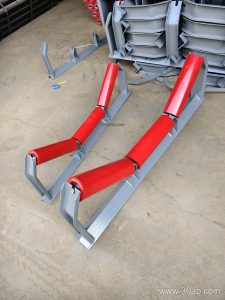
Well-matched pulleys, together with correctly aligned idler rollers and sturdy conveyor brackets, keep a bulk handling line running through long shifts in dusty, wet, or hot conditions.