What the head-end drum actually does
On any troughed conveyor, the belt conveyor drive pulley is the drum that receives torque from the gearbox and turns it into forward belt motion. It usually sits at the discharge end, which is why operators also call it the head pulley or head drum. Its job is simple to describe and demanding in practice: grip the belt without slipping, keep it centred, and survive years of dust, grit and load. In a quarry or a cement plant, that drum is often the hardest-working single component on the conveyor, and it is the one most likely to be pulled for re-lagging when grip falls away.
Construction from shell to shaft
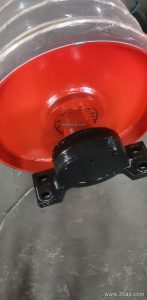
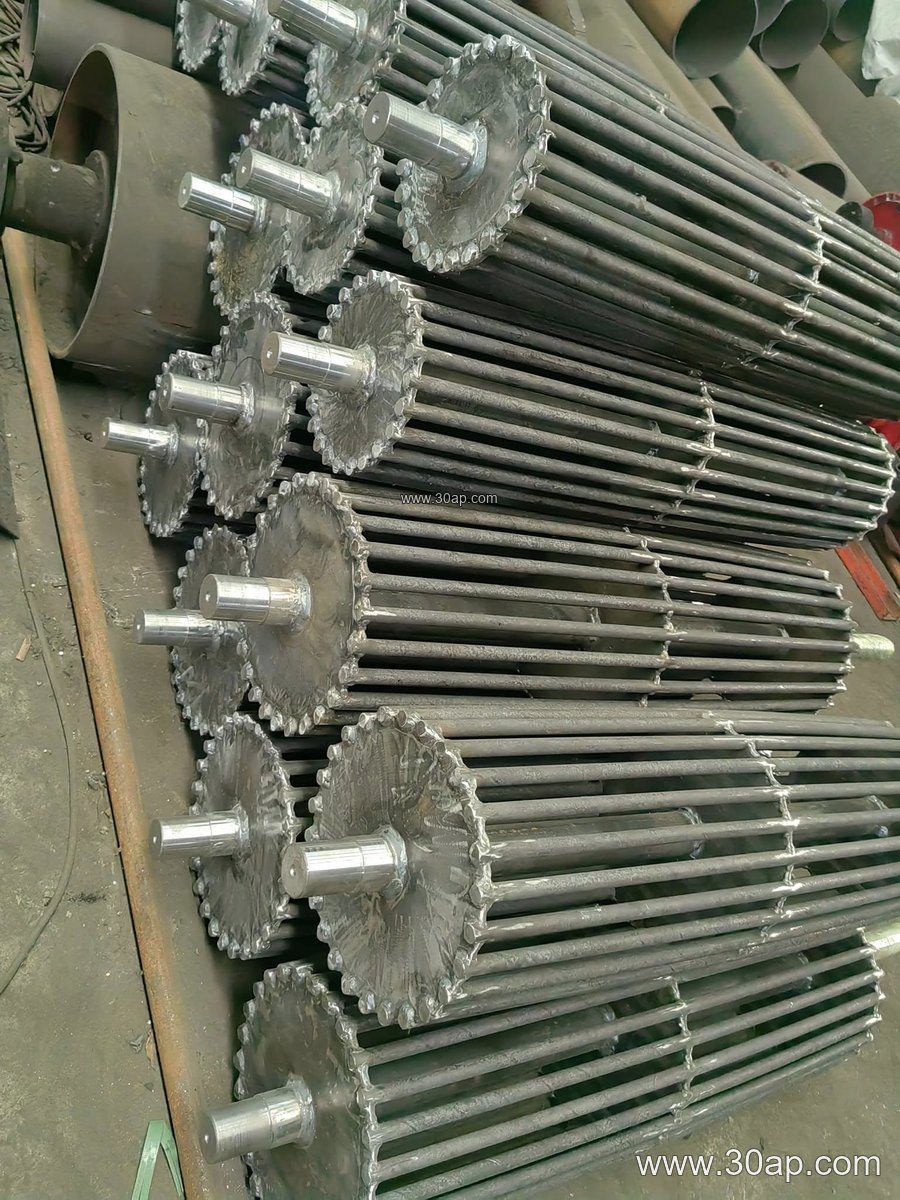
The drum is built around a rolled steel shell welded to end discs, with a shaft pressed or keyed through the centre. The shaft carries the bearings, which sit in bearing housings mounted on a conveyor bracket fixed to the conveyor frame. Most industrial units are welded rather than cast, and the shell is machined so the lagging sits true. Surface finish matters: on a loaded belt conveyor drive pulley, a few millimetres of runout will show up as belt tracking problems and vibration at the take-up.
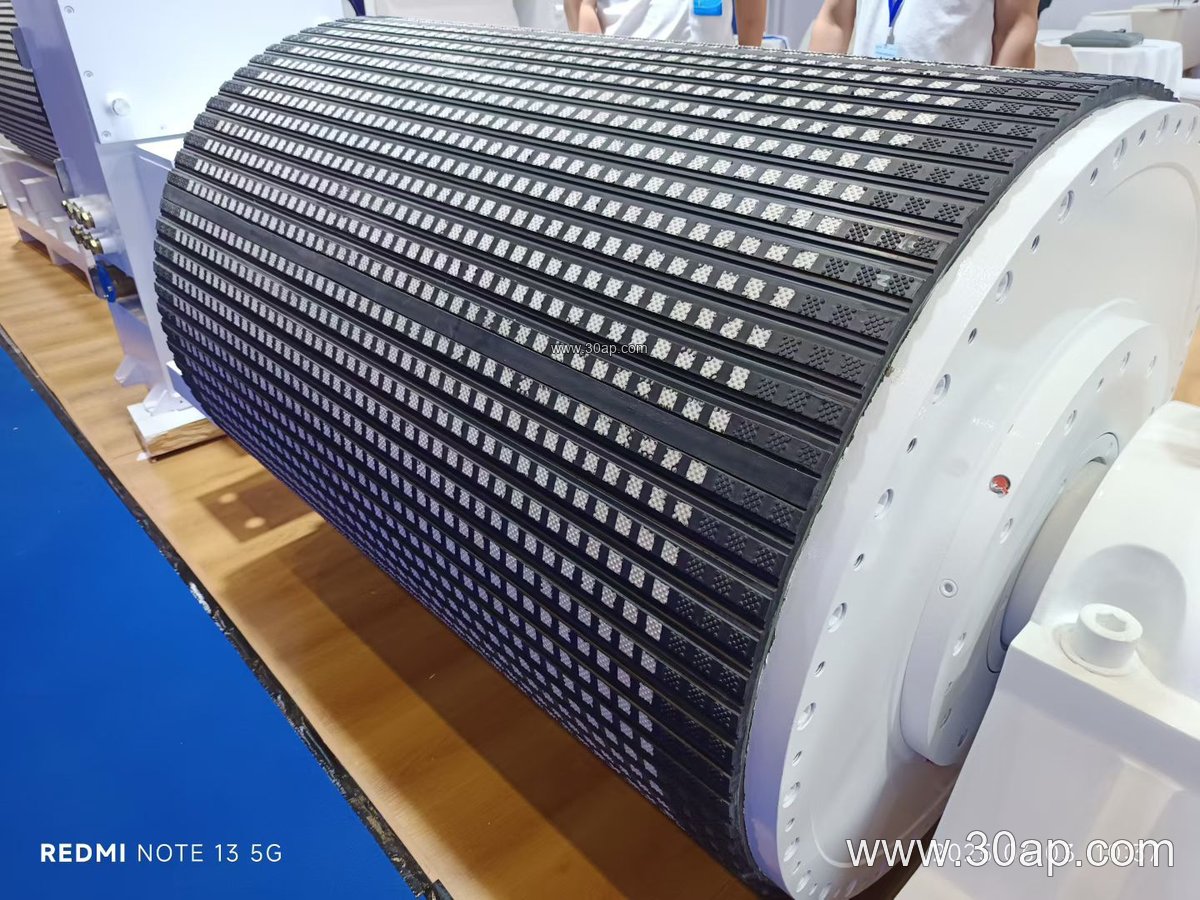
Lagging is the friction layer. Common forms include plain rubber, diamond grooved rubber, herringbone rubber and ceramic tiles bonded to a rubber base. Vulcanised lagging is bonded under heat and pressure and is the usual choice where slip must be avoided on a fully loaded start; cold-bonded rubber is easier to replace on site. Lagging thickness is commonly 8, 10, 12, 15 or 20 mm, chosen by torque and belt tension rather than by belt width alone.
Sizes and how they pair with the belt
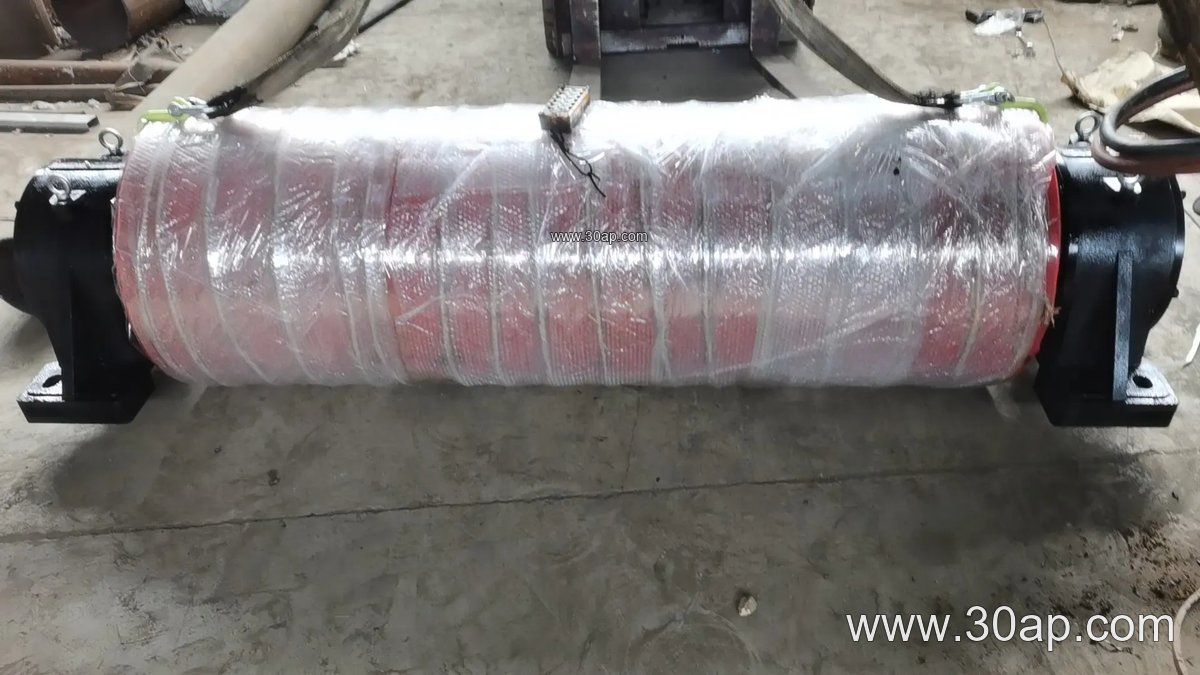
Diameters commonly run from Ø200 up to Ø1800 on heavy bulk systems, and face width is normally a little wider than the belt so the belt cannot run off the shell edge. A B800 belt typically rides on a drum with roughly 950 mm face width; a B1200 on about 1400 mm; a B1400 on about 1600 mm. These are reference figures, not a fixed rule, and the diameter for a given belt width is set by wrap angle, belt tension and the belt’s own minimum pulley diameter. A B1200 × Ø1000 drum and a B800 × Ø500 drum can both be correct on different conveyors.
| Belt width | Typical drum face width | Common diameter range |
|---|---|---|
| B500 | about 600 mm | Ø250 – Ø400 |
| B650 | about 750 mm | Ø315 – Ø500 |
| B800 | about 950 mm | Ø400 – Ø630 |
| B1000 | about 1150 mm | Ø500 – Ø800 |
| B1200 | about 1400 mm | Ø630 – Ø1000 |
| B1400 | about 1600 mm | Ø800 – Ø1250 |
| B1600 | about 1800 mm | Ø1000 – Ø1400 |
Shaft diameter is a separate calculation based on torque and bearing load, and common sizes across the range include Ø80, Ø100, Ø120, Ø140, Ø160 and Ø200. Nobody should pick a shaft size from belt width alone. More details on matching drums to belts are available at yonghangconveyor.com/belt-conveyor-drive-pulley.
Where it sits on the conveyor layout
The drive drum is not the only drum on a line, and the names are not interchangeable. The tail pulley turns at the loading end and sets belt return; a bend pulley redirects the belt around a corner or into the take-up; a snub pulley increases wrap angle on the drive drum. A tail pulley cannot do the drive pulley’s job because it has no torque input and usually no heavy lagging. When a cement plant or power plant reports belt slip at start-up, the answer is often more wrap on the drive drum or a fresh diamond lagging, not a change at the tail.
Applications across bulk industries
- Crushed stone and aggregate lines feeding screens and crushers
- Coal handling in power stations and wash plants, where flame retardant conveyor belt grades are specified
- Clinker and raw meal transport in cement works
- Iron ore and copper ore duty in concentrators, often with steel cord conveyor belt on the longest flights
- Port stockyard and ship loading conveyors handling high tonnage
Heavy-duty mining conveyor belt and abrasion resistant conveyor belt constructions put more tension into the drum, so lagging hardness and shell thickness are raised accordingly. In dusty or wet conditions, ceramic lagging holds grip better than plain rubber; in food or clean handling, a smooth rubber face is preferred.
What buyers should check before ordering
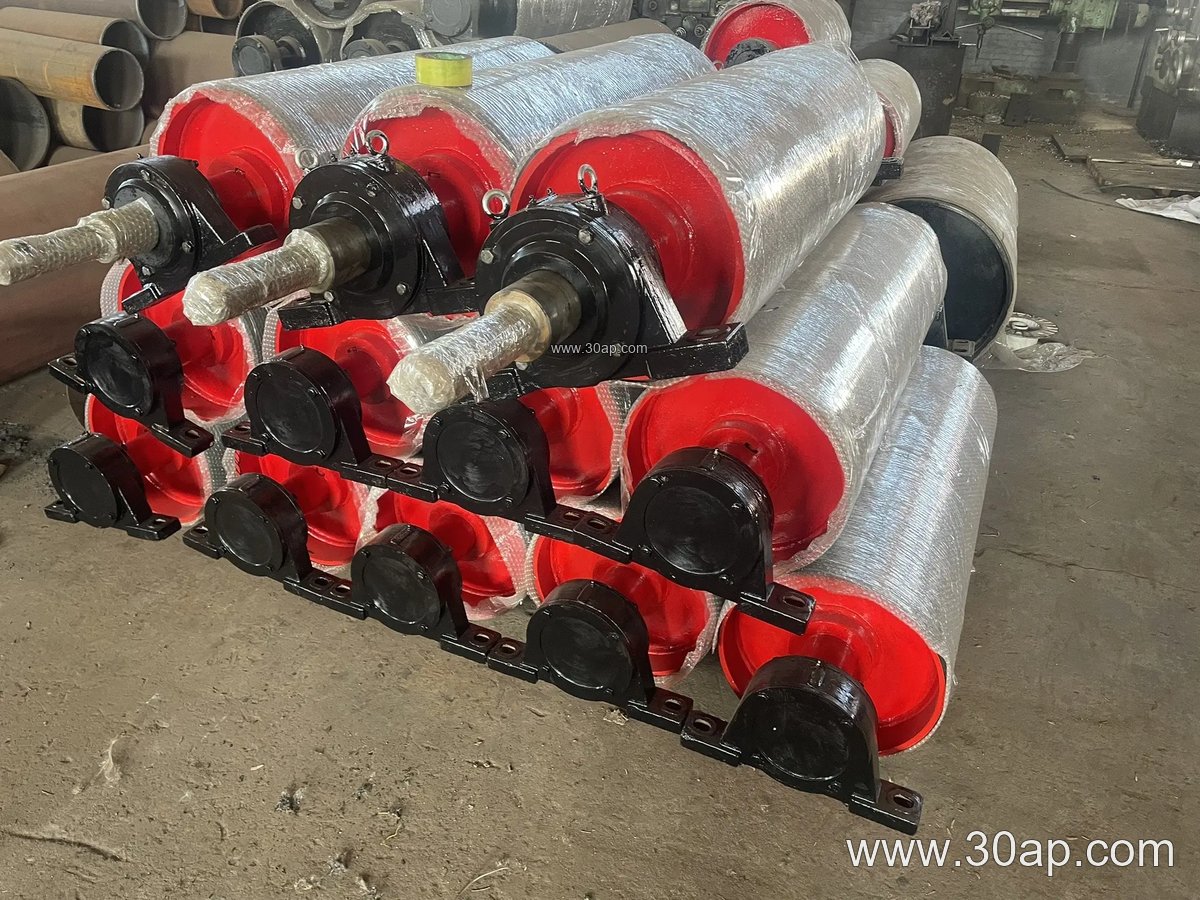
Give the supplier the belt width, belt type and maximum tension, the motor power and starting method, the wrap angle, and the ambient conditions. Ask for the lagging pattern and thickness, the shaft material, the bearing type and the balancing grade. Confirm that the drum face width and the conveyor bracket bolt pattern match the existing frame if this is a replacement. For a second opinion on drum options and belt matching, see yonghangconveyor.com/conveyor-pulley.
Maintenance is mostly inspection. Check lagging wear at the edges, listen for bearing noise, and verify that the belt remains centred. Re-lag before the wear pattern reaches the shell, because a slipping drive drum polishes the belt cover and shortens the life of the whole conveyor.