What a Drive Pulley Does
The drive pulley, also called the head pulley, is the powered drum that transfers motion to the conveyor belt. Its lagged surface grips the belt and pulls the loaded strand forward, making it the central traction component in a belt conveyor. In a typical arrangement, the drive pulley sits at the discharge end, while the tail pulley handles belt return and a bend pulley may redirect the belt path. You will find this setup in limestone quarries, coal washing plants, cement clinker lines, power station coal yards, and aggregate crushing circuits.
Because the drive pulley must transmit torque without slipping, its design balances diameter, shaft size, lagging type, and belt wrap angle. It is not simply a roller; it is a engineered assembly that works together with the conveyor belt and the supporting idler rollers to keep material moving efficiently.
Construction and Key Components
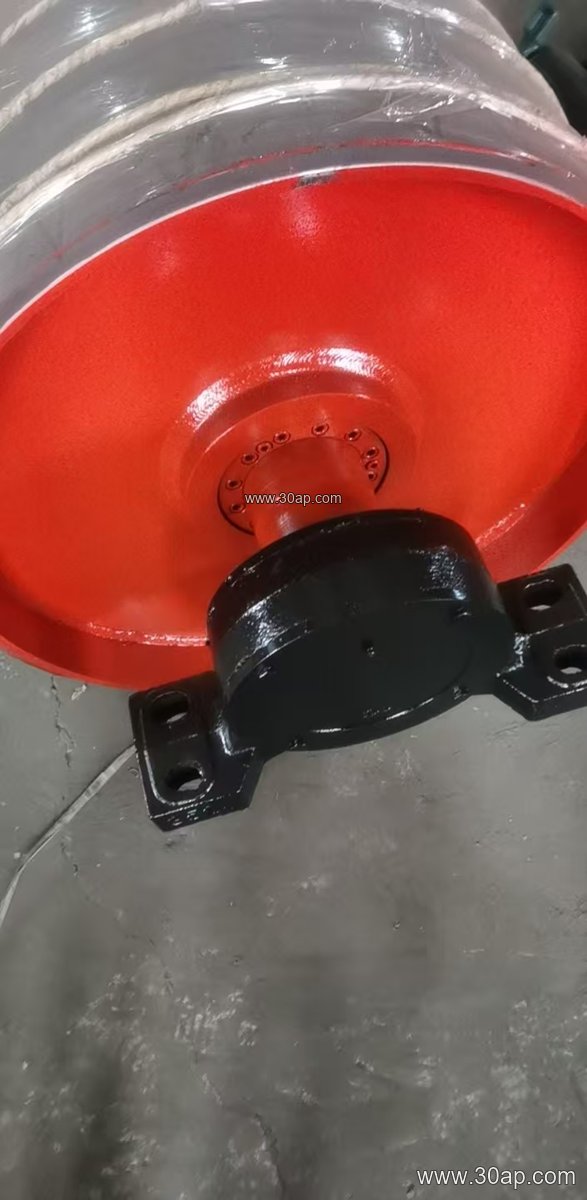
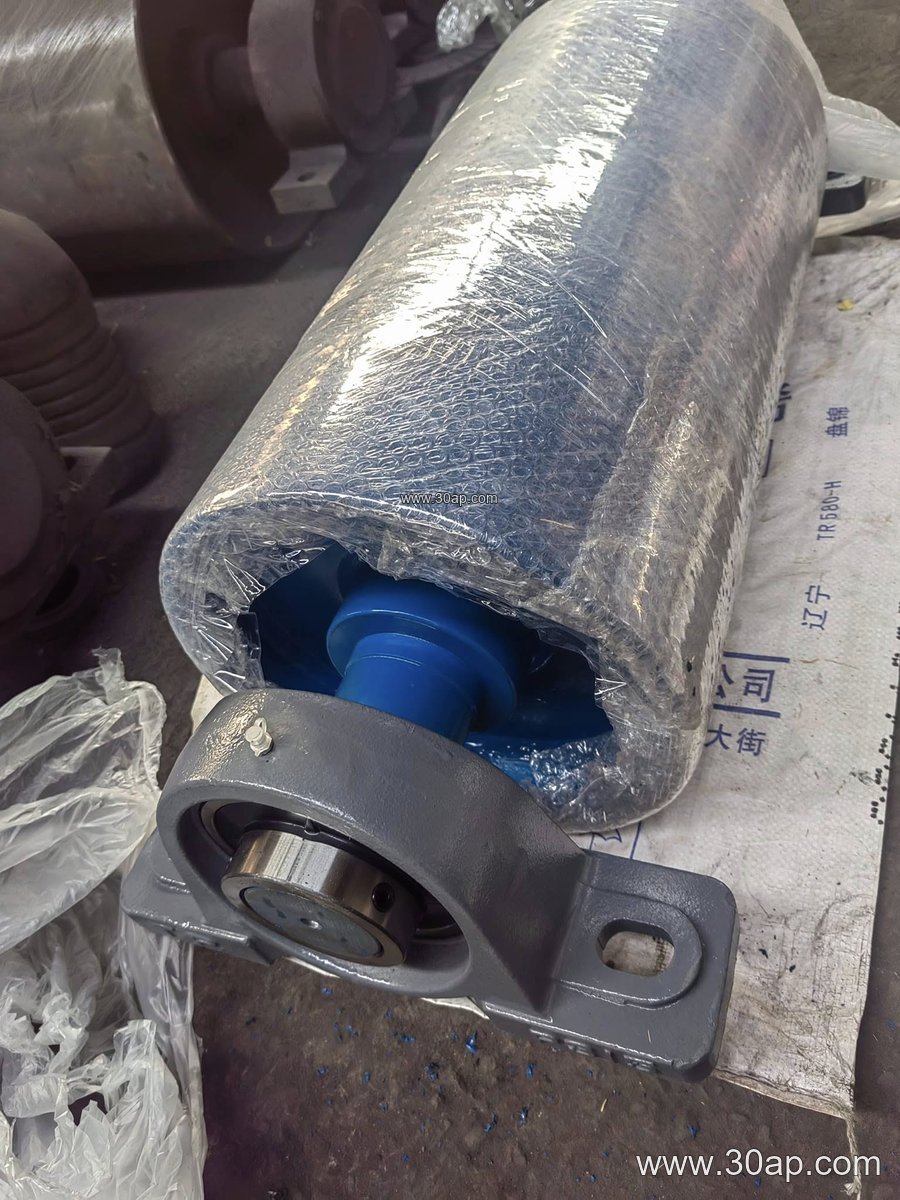
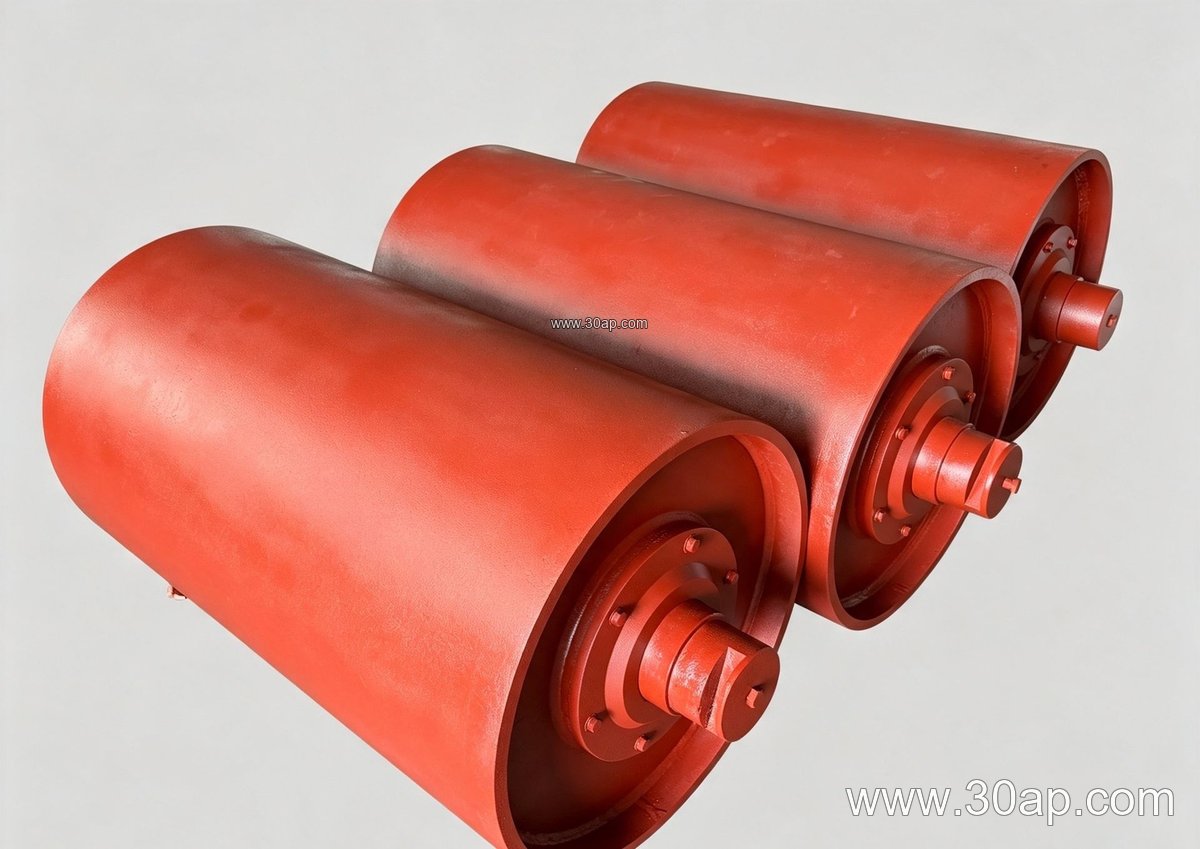
A standard drive pulley consists of a cylindrical shell, two end discs, a shaft, and bearing housings. The shell is usually made from rolled steel plate, machined for balance, and then covered with a lagging material to increase friction. The shaft is sized according to the torque and radial load, not directly by belt width, so a B800 conveyor might use a Ø100 shaft in one design and a larger shaft in a heavier-duty version.
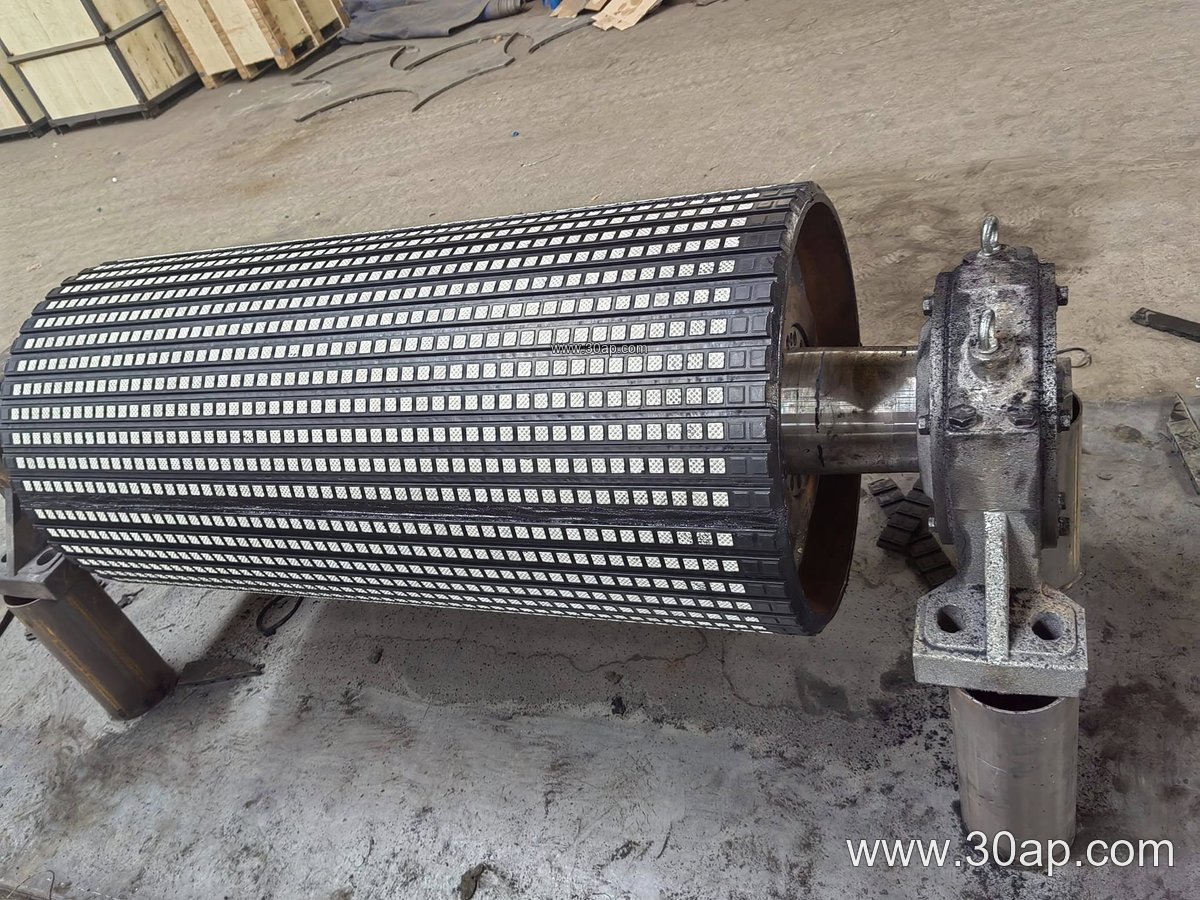
Lagging options include plain rubber, diamond grooved rubber, herringbone rubber, ceramic tiles, and hot-vulcanized or cold-bonded rubber sheets. Common lagging thicknesses are 8 mm, 10 mm, 12 mm, 15 mm, and 20 mm. The surface pattern affects grip and water shedding: diamond lagging performs well in wet conditions, while ceramic lagging suits high-abrasion service in iron ore or copper ore handling.
Typical Reference Dimensions
The table below shows common combinations, but these are reference values only. Final dimensions depend on conveyor design, belt tension, and load conditions.
- B400 belt – pulley face width approx. 500 mm, diameter range Ø200–Ø400
- B650 belt – pulley face width approx. 750 mm, diameter range Ø315–Ø630
- B800 belt – pulley face width approx. 950 mm, diameter range Ø400–Ø800
- B1000 belt – pulley face width approx. 1150 mm, diameter range Ø500–Ø1000
- B1200 belt – pulley face width approx. 1400 mm, diameter range Ø630–Ø1250
- B1400 belt – pulley face width approx. 1600 mm, diameter range Ø800–Ø1400
- B1600 belt – pulley face width approx. 1800 mm, diameter range Ø1000–Ø1600
- B1800 belt – pulley face width approx. 2000 mm, diameter range Ø1250–Ø1800
Shaft diameters commonly range from Ø50 to Ø200, with selection based on torque calculation. A B1200 × Ø1000 drive pulley might use a Ø160 shaft in a medium-duty application, while a heavy-duty mining conveyor with the same belt width could require a larger shaft.
Where It Is Used
Drive pulleys appear across many bulk material handling industries. In a sand and gravel plant, a drive pulley at the head end of a crusher conveyor belt discharges crushed stone onto a screen. In a coal mining operation, flame retardant and anti-static properties matter for underground safety, and the drive pulley works with a flame retardant conveyor belt to meet those conditions. Cement plants use drive pulleys on clinker and limestone conveyors, while power plants rely on them in coal handling systems.
Other common locations include port ship loaders, steel plant sinter lines, and fertilizer granulation circuits. In each case, the drive pulley must match the belt type, whether it is an EP fabric core belt, a steel cord belt, or a heat resistant belt for high-temperature materials.
Selection and Maintenance Tips
Buyers should consider several factors when specifying a drive pulley. First, confirm the belt width and the required face width, which is usually slightly wider than the belt. Second, determine the lagging type and thickness based on material abrasiveness and moisture. Third, verify the shaft diameter through a torque and load calculation, not by copying another conveyor’s dimensions.
Maintenance focuses on lagging wear, bearing condition, and shaft alignment. Worn lagging reduces friction and can cause belt slip, especially in wet or dusty conditions. Inspect the pulley surface regularly and replace lagging when grooves become shallow. Bearing lubrication and proper tension of the conveyor belt also extend pulley life.
For a reliable drive pulley, work with a supplier who can match the pulley to your conveyor’s actual duty, belt type, and environmental conditions. Whether the application is a quarry, a coal mine, or a cement plant, the drive pulley remains the key to efficient power transmission.