What a Heavy-Duty Steel Conveyor Bracket Does on the Line
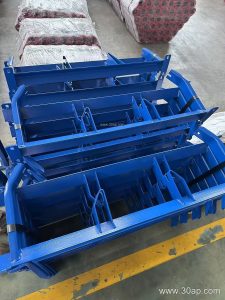
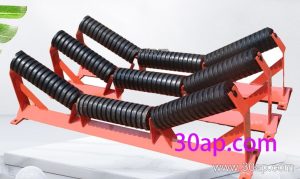
A heavy-duty steel conveyor bracket is the structural support that holds the idler roller in place and keeps the belt profile stable under load. On a quarry conveyor or a cement plant transfer house, the bracket carries the weight of the belt, the material, and the roller itself, so it has to resist vibration, dust, and constant impact. In practice, this component is often called a heavy-duty conveyor idler bracket or heavy-duty steel roller bracket, and both names point to the same fabricated steel support.
The bracket is not a passive part. Its geometry sets the trough angle, controls roller spacing, and determines how evenly the belt sits across its width. A well-built heavy-duty steel conveyor bracket keeps a 1200mm wide conveyor belt tracking straight and reduces edge wear, while a weak frame shows up quickly as belt misalignment and premature roller failure.
How the Bracket Is Fabricated
Most units are made from angle steel, channel steel, or folded steel plate, welded into a rigid crossbeam with mounting slots for the roller shaft. The steel grade and plate thickness are chosen according to the load case, and the weld quality matters as much as the material. Common workshop steps include cutting, drilling the mounting holes, jig welding, and a protective coating such as paint or galvanizing.
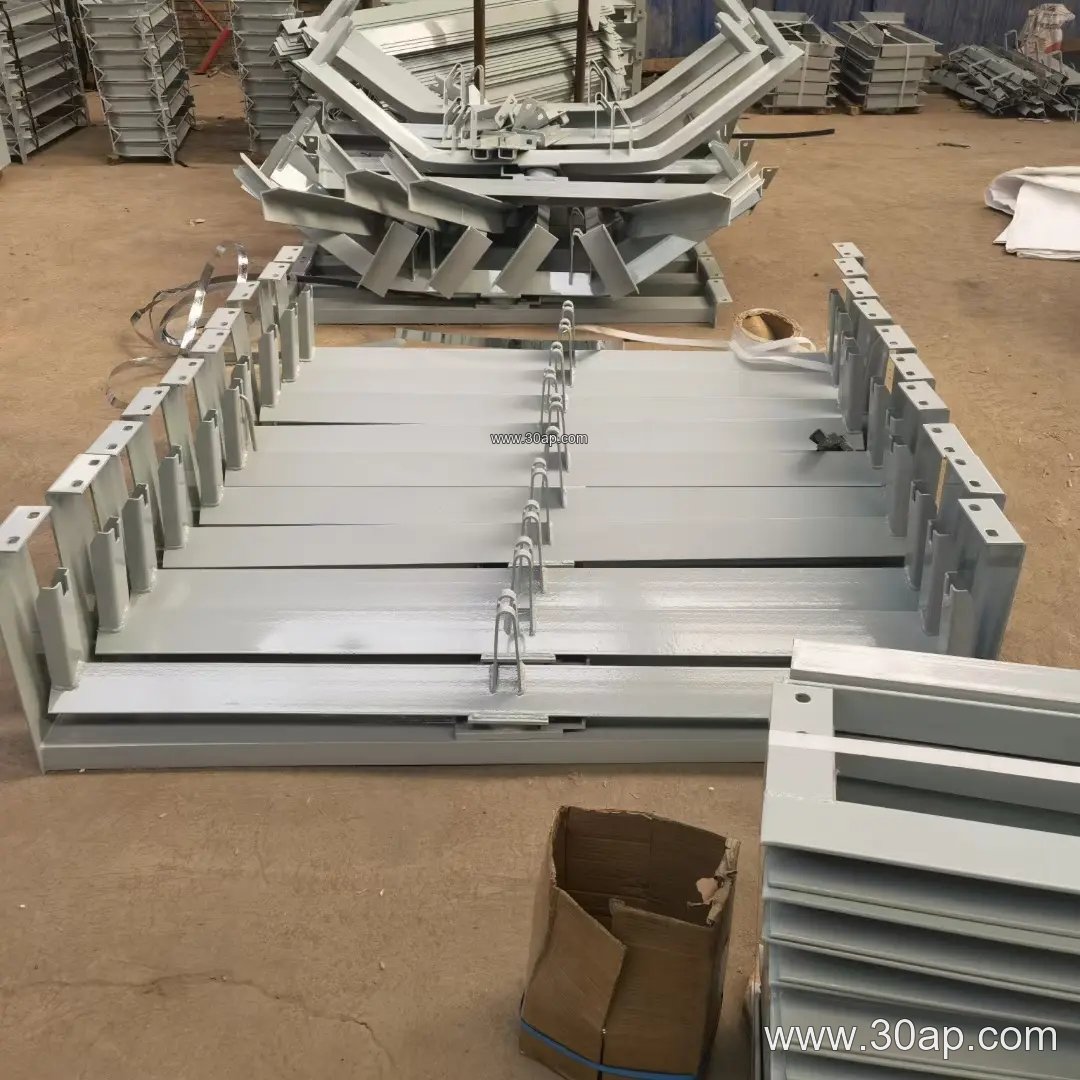
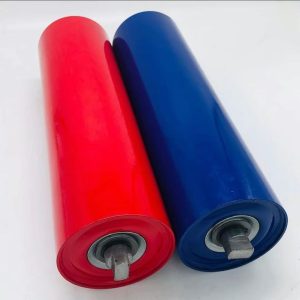
Because the mounting hole spacing and crossbeam length change with belt width and trough angle, there is no single fixed dimension. A bracket for a B650 line with a 30-degree trough is a different fabrication from one for a B1800 line at 45 degrees. Buyers should always confirm the roller diameter as well, since a bracket set up for Ø108 rollers will not accept Ø159 shafts without modification.
Common Types and Where They Sit
Heavy-duty steel conveyor brackets appear in several positions along a conveyor, and the position decides the type:
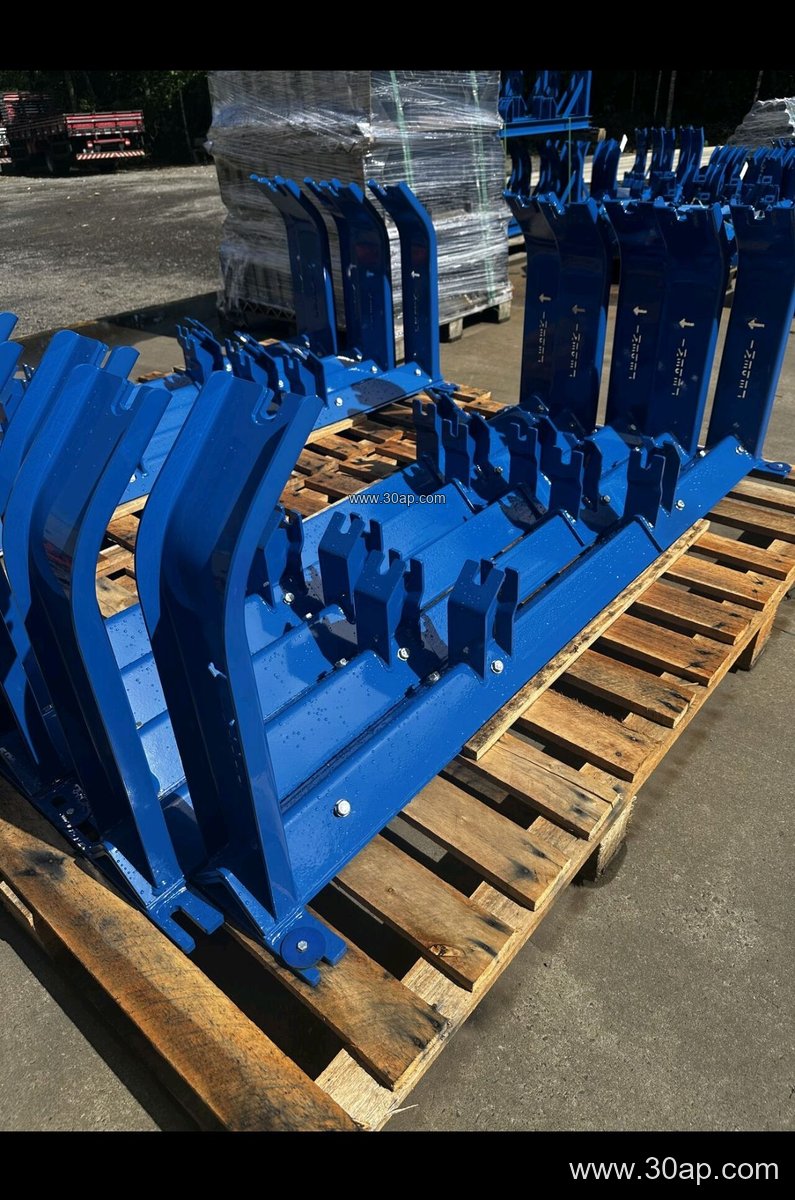
- Troughing brackets support the carrying side and set the trough angle.
- Impact brackets sit under the loading point and absorb material drop energy.
- Return brackets and V-return brackets support the empty belt.
- Transition brackets ease the belt from flat to troughed near the pulleys.
- Self-aligning and forward-leaning brackets help correct belt drift.
- Adjustable brackets allow the trough angle to be changed on site.
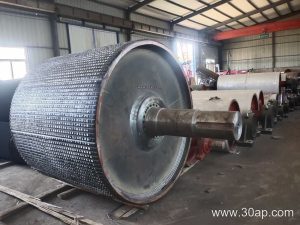
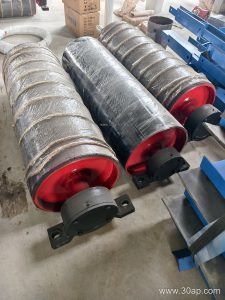
These are not interchangeable with the drive pulley, tail pulley, or bend pulley, which are separate rotating components at the ends and corners of the conveyor. A bracket supports the idler roller; a conveyor pulley drives or redirects the belt. Both belong to the same conveyor, but they are specified, installed, and maintained differently.
Typical Reference Dimensions
The table below shows common reference ranges. Treat them as design guidance, not as universal fixed combinations.
| Parameter | Common Range | Notes |
|---|---|---|
| Belt width | B500 to B2200 | B800, B1000, B1200, B1400, B1600 and B1800 are frequent in mining and aggregate service |
| Trough angle | 20°, 30°, 35°, 45° | Adjustable brackets cover several angles |
| Roller diameter | Ø89, Ø108, Ø133, Ø159, Ø194 | Match the bracket slot to the roller shaft |
| Material | Angle steel, channel steel, folded plate | Coating selected for the environment |
For example, a B800 line at 35 degrees with Ø108 rollers is a common arrangement, and a B1200 line at 45 degrees with Ø133 rollers is another. Neither implies that a given belt width can only run one angle or one roller size; the final choice follows the conveyor design, belt speed, and material characteristics.
Where These Brackets Earn Their Keep
In a limestone quarry or sand and gravel plant, dust and sharp rock fragments attack every support. A heavy-duty steel conveyor bracket with a robust crossbeam keeps the troughing idlers aligned so an abrasion resistant conveyor belt runs without edge damage. In a coal preparation plant or power station coal yard, flame retardant conveyor belt and anti-static conveyor belt grades are often used, and the bracket must be built to the same fire-safety expectations for the installation area.
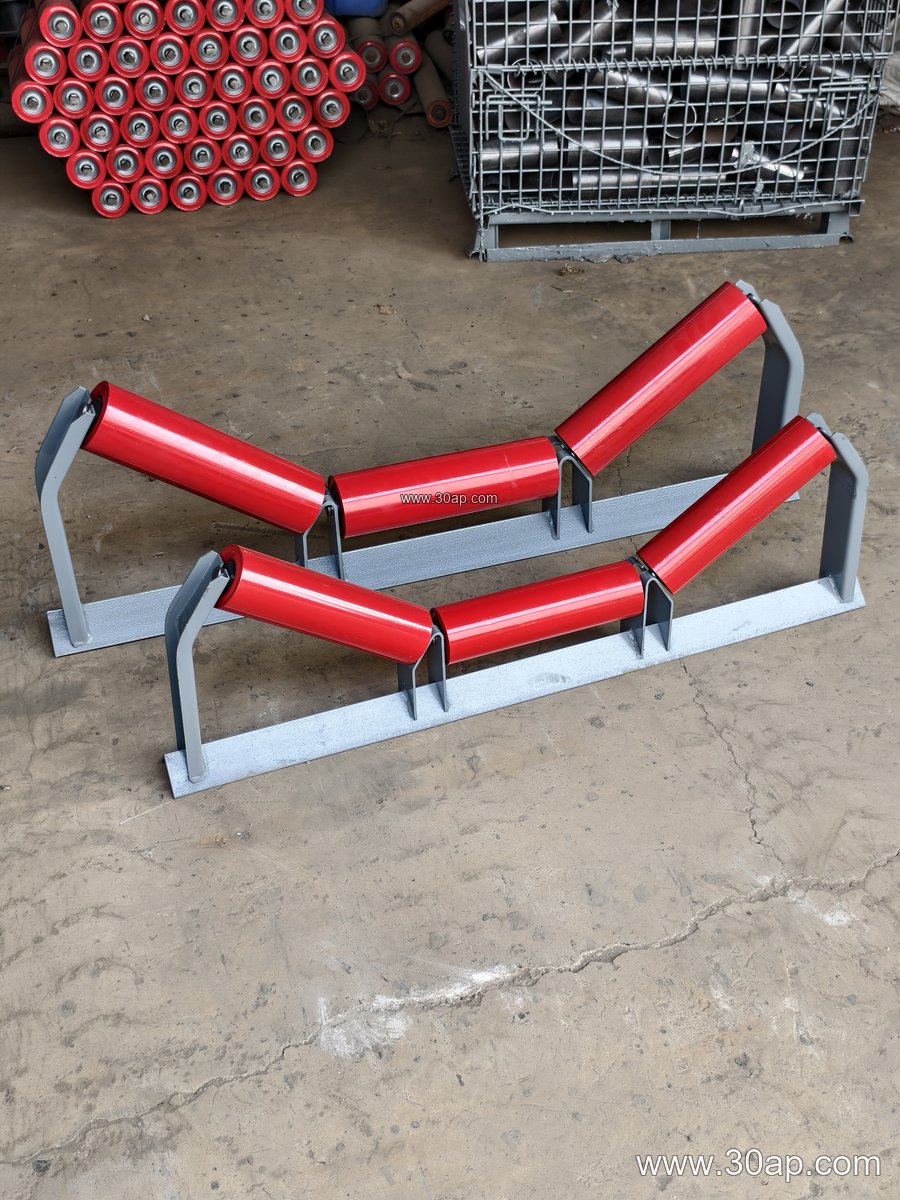
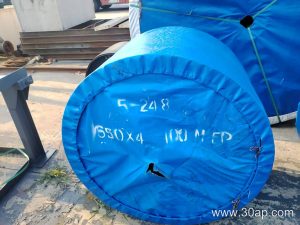
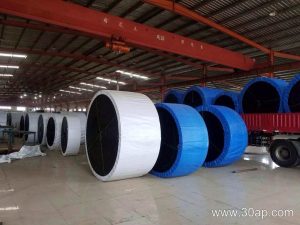
At a port terminal or a crushing and screening circuit, impact brackets under the transfer chute protect the belt from lump impact, while a heavy-duty conveyor bracket on the return side keeps the belt from sagging. In a steel plant sinter line or a cement kiln feed system, heat resistant conveyor belt may be running nearby, and the brackets closest to hot material need suitable clearance and coating. For long overland runs, steel cord conveyor belt or EP conveyor belt constructions add tension, and the bracket frames must handle the resulting loads without distortion.
What Buyers Should Check Before Ordering
Start with the belt width, trough angle, roller diameter, and mounting hole pattern, then confirm the steel section and coating. Ask whether the bracket is fixed or adjustable, and whether it is for the carrying side, return side, or loading point. Check that the roller shaft fits the slot and that the bracket height matches the existing conveyor stringer. On site, inspect welds, verify bolt torque after the first run-in period, and re-check alignment whenever a roller is replaced.
Whether the plant handles iron ore, copper ore, or fertilizer, the same principle holds: the heavy-duty steel conveyor bracket is a small part with a large effect on belt life, roller life, and uptime. Specify it with the same care as the conveyor pulley and the belt itself.