What the Head Pulley Does on a Conveyor
The belt conveyor head pulley sits at the discharge end of a conveyor and does two jobs at once. It drives the belt forward, and it sets the path where material leaves the system. Because it is the point where the conveyor belt turns and releases its load, this pulley is often called the drive pulley or the discharge pulley. The names overlap in practice, but all of them point to the same component at the head of the machine. A head pulley is not a tail pulley or a bend pulley, and the three should never be treated as interchangeable parts when planning a conveyor.
In a quarry, a cement plant, or a power plant coal yard, the head pulley is where the material is thrown into a chute, a stockpile, or a transfer point. The belt tension, the load, and the discharge trajectory all depend on this one drum.
How the Head Pulley Is Built
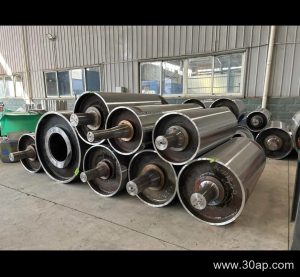
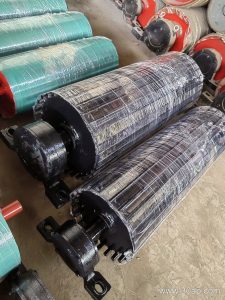
A typical unit combines a cylindrical shell, two end discs, a shaft, and bearing housings. The shell is usually steel, machined or rolled to a true circle, and the shaft is keyed or shrink-fitted to the end discs. The whole assembly is supported by conveyor brackets or a steel frame. Lagging is applied to the shell surface to improve grip and protect the belt.
Core components usually include:
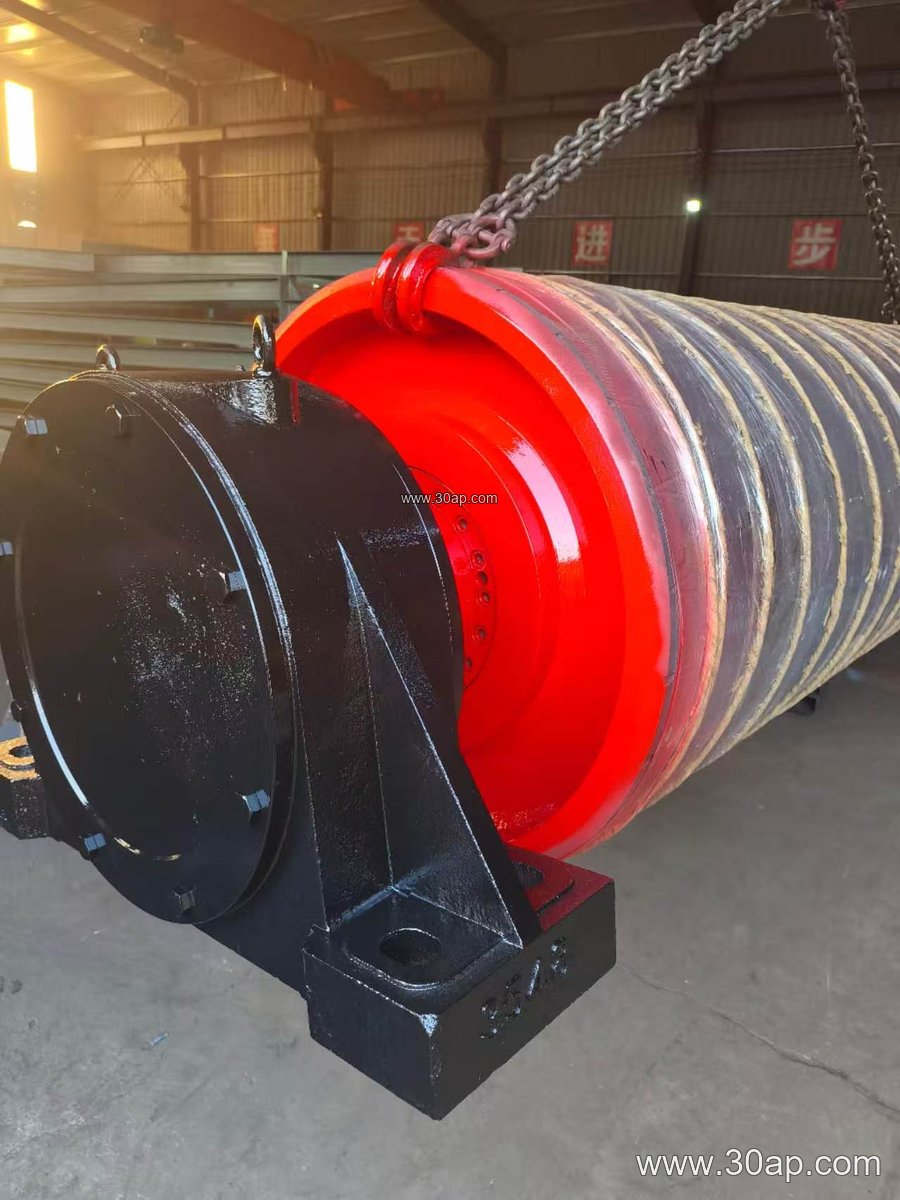
- Shell and end discs, welded or bolted
- Through shaft or stub shaft design
- Bearing housings with seals and lubrication points
- Lagging, either plain, rubber, or ceramic
- Hub locking elements or keyways
Surface options matter. A smooth face suits light duty, while diamond or herringbone rubber lagging improves traction in wet or dusty conditions. Ceramic lagging is used where slip and wear are both concerns. Lagging thickness is commonly 8, 10, 12, 15, or 20 mm, selected by duty rather than by habit.
Sizes, Shafts, and Face Width
Pulley diameter and face width are design choices. Face width is normally a little wider than the belt, for example B800 with about 950 mm face, B1000 with about 1150 mm, and B1200 with about 1400 mm. Diameter is chosen from belt tension, wrap angle, and the required belt life, so a B1200 head pulley may appear as B1200 × Ø1000, while a smaller B800 unit may use Ø500. No single diameter is tied to one belt width.
Shaft diameter follows torque and bearing load, not belt width alone. Common shaft sizes include Ø80, Ø100, Ø120, Ø140, and Ø160, but the final figure comes from the drive calculation. A conveyor pulley working with an EP Conveyor Belt or a Steel Cord Conveyor Belt carries different loads, and the shaft and bearings must reflect that.
Where It Fits in the Plant
The head pulley is used in primary crushing circuits at a limestone mine, in coal handling systems, and in aggregate lines feeding screens. It also appears in port bulk terminals and in tunnel spoil removal. In all of these, the belt must be tracked and tensioned correctly, and the idler roller set on the carry side should be aligned with the pulley so the belt enters the drum squarely.
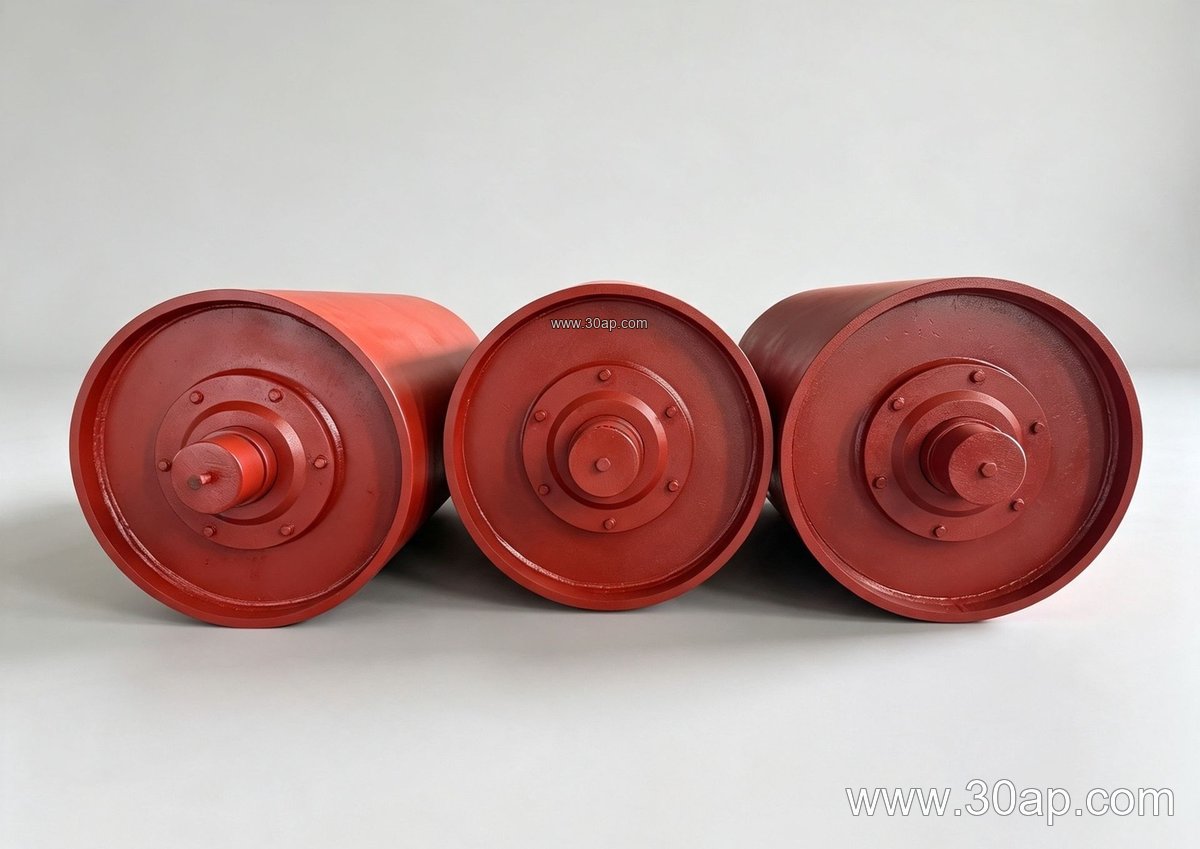
At a sand and gravel plant, a lagged head pulley on the main discharge conveyor gives reliable grip even when the belt is damp. At a copper ore concentrator, the same component must resist abrasion and keep the belt centered under heavy load. The head pulley is a small part of the conveyor, but it sets the pace for everything downstream.
What Buyers Should Check
Before ordering, confirm the belt width, the required diameter, the shaft size, and the lagging type. Ask whether the pulley is a drive pulley with a gearbox coupling or a plain discharge drum. Check the bearing type, the sealing arrangement, and the balancing class. For a Food Grade Conveyor Belt line, the pulley surface and cleaning method may need extra attention.
Maintenance is straightforward but easy to neglect. Inspect lagging wear, check bearing temperature, and confirm that the belt does not run off-center. A worn head pulley can cause mistracking, spillage, and premature belt damage. Replacing lagging on time is cheaper than replacing the belt.
For more on matching pulleys with conveyor belt and idler roller choices, visit www.example.com/conveyor-pulley and www.example.com/belt-conveyor-head-pulley. The right head pulley keeps the whole line running quietly and predictably.