What a Discharge Pulley Does
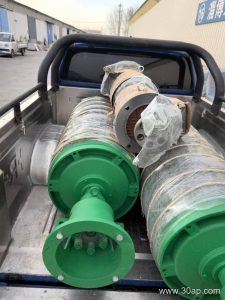
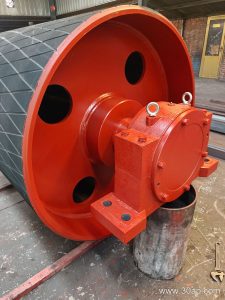
The discharge pulley is the drum at the head end of a conveyor where the belt unloads its cargo. As the conveyor belt wraps around this drum and turns back, material is thrown clear into a chute, stockpile, or transfer point. In many plants the same component is simply called a head pulley, and both names describe the same product — the drum that drives or guides the belt at the delivery end.
Because discharge is the moment when the belt separates from the drum, this pulley sits at the busiest point of the line. Its diameter, lagging, and shaft design all affect how cleanly material leaves the belt and how long the belt itself lasts.
Construction and Surface Options
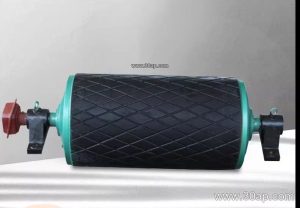
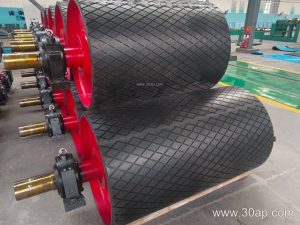
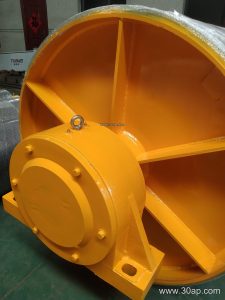
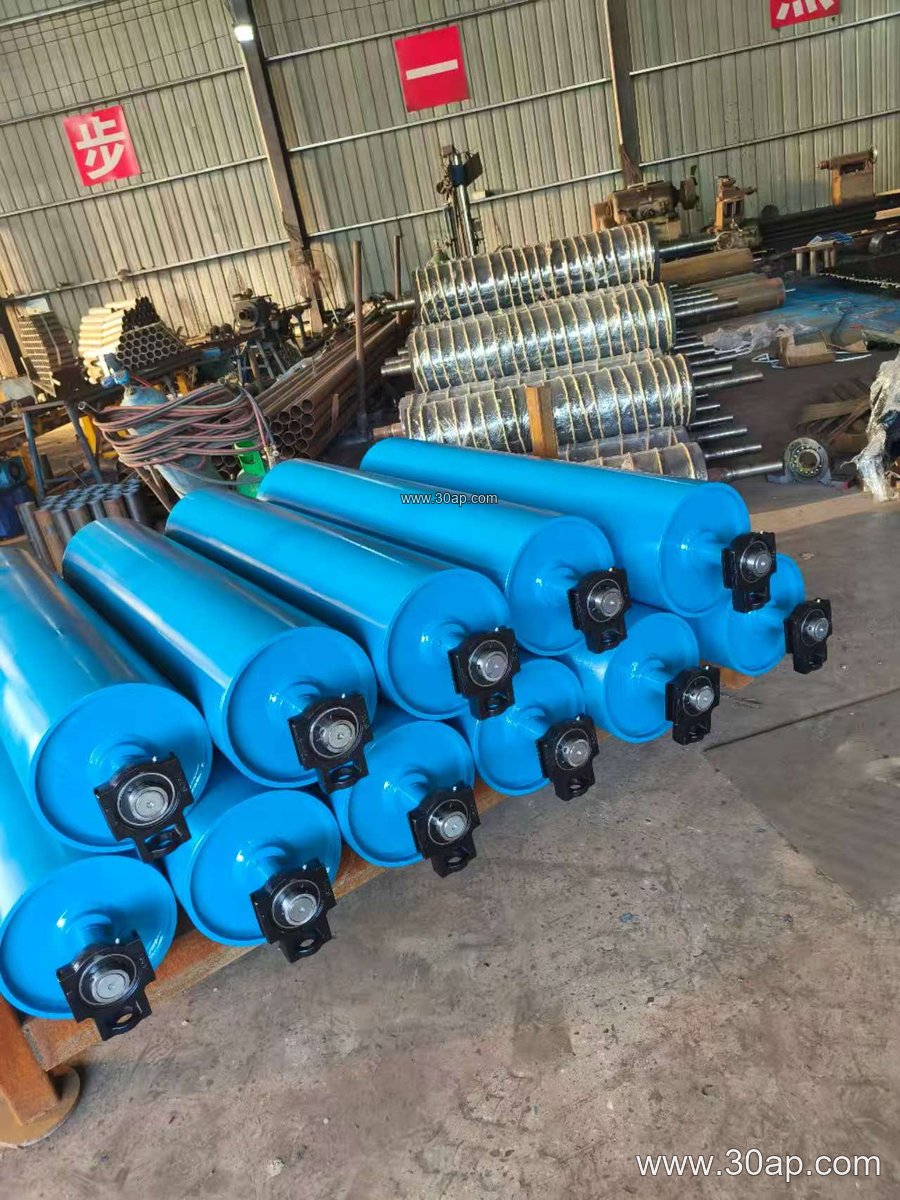
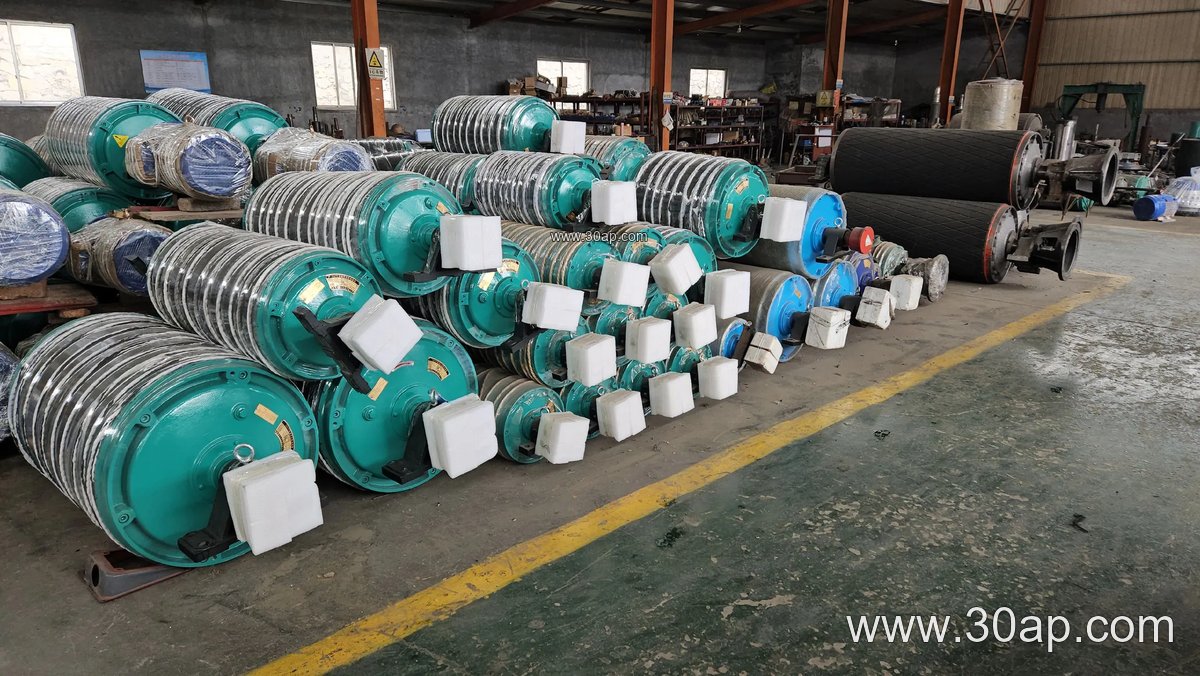
A typical discharge pulley is built from a steel shell, end discs, a shaft, and bearing housings mounted in conveyor brackets on the frame. The shell may be machined smooth or covered with rubber lagging to improve grip and protect the belt.
- Plain surface — used where friction is not critical and material is dry.
- Diamond or herringbone lagging — helps shed water and fines while maintaining traction.
- Ceramic lagging — chosen for high-torque drives and wet, gritty conditions.
- Rubber lagging at 8 to 20 mm — a common range for wear protection.
The pulley face is normally wider than the belt. For example, a B800 belt usually runs on a drum with roughly 950 mm face width, and a B1200 line might use about 1400 mm. These are reference proportions, not fixed rules; the final figure depends on the conveyor design.
Where It Fits in the Plant
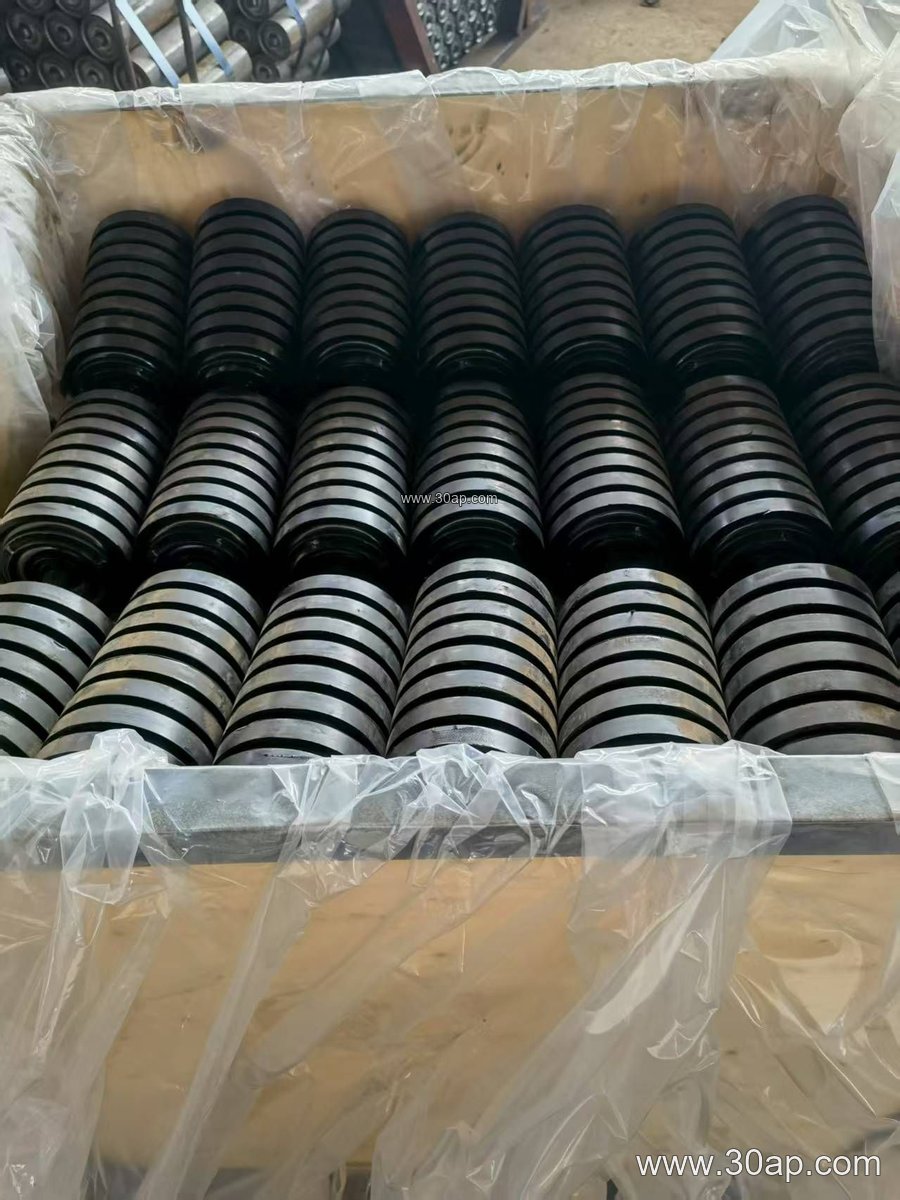
Discharge pulleys appear wherever a belt delivers material to the next stage. In a quarry or aggregate line, the head drum at the top of a stacker throws crushed stone onto a stockpile. In a coal handling system at a power plant, it feeds the crusher house or bunker. Cement plants use them at transfer towers between clinker and additive belts, while port terminals rely on them at ship loading points.
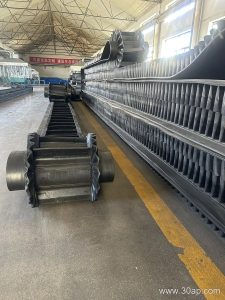
In all these settings the drum works together with the conveyor belt, idler roller, and supporting frame. A poorly matched discharge pulley can cause belt misalignment, spillage, and premature wear on the belt cover.
Matching Diameter, Width, and Shaft
Diameter is not chosen by belt width alone. A larger drum reduces bending stress in the belt, which matters for heavy-duty mining conveyor belts and high-tension steel cord conveyor belt constructions. Common combinations include B800 × Ø500 and B1200 × Ø1000, but a B1200 line may also use Ø800 or Ø1250 depending on belt tension and space.
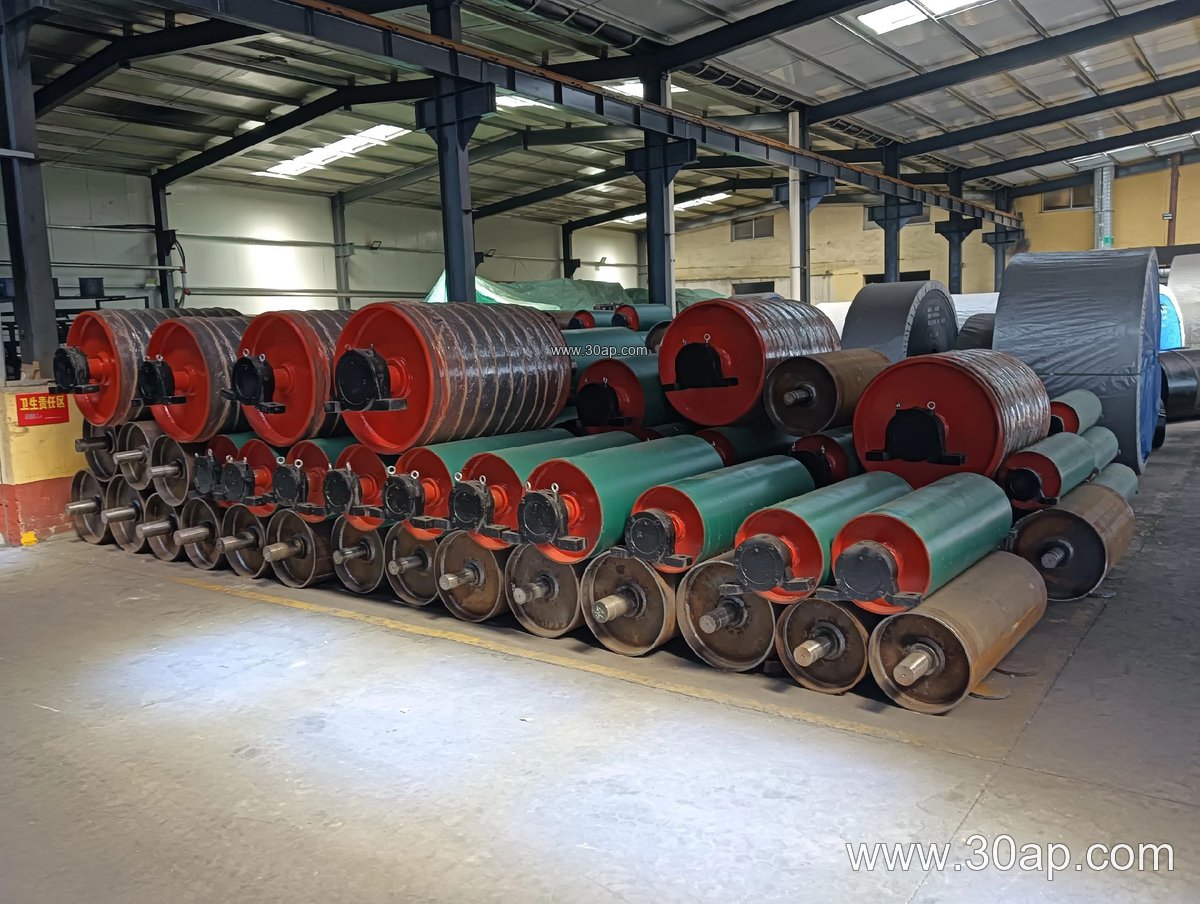
Shaft diameter is calculated from torque and radial load, not copied from the belt width. Typical shaft sizes range from Ø50 to Ø200, and the bearing selection follows the same load analysis.
| Belt Width | Typical Pulley Face | Example Diameter Range |
|---|---|---|
| B500 | about 600 mm | Ø250 to Ø400 |
| B800 | about 950 mm | Ø400 to Ø630 |
| B1200 | about 1400 mm | Ø630 to Ø1000 |
| B1600 | about 1800 mm | Ø800 to Ø1250 |
These figures are for orientation only. The correct size comes from the conveyor engineer’s tension and load calculations.
Buyer Checklist
Before ordering, confirm the belt width, the required diameter, the lagging type and thickness, and the shaft and bearing arrangement. Ask whether the drum will be welded or bolted to the frame, and check that the pulley face clears the belt path. For abrasive duties such as iron ore or copper ore, specify abrasion resistant lagging; for hot clinker, discuss heat-resistant compounds with the supplier.
Also consider maintenance access. A discharge pulley at the head end is often the hardest drum to reach, so removable chute sections and adequate inspection space pay off over the life of the conveyor.