What an Impact Idler Bracket Does at the Load Zone
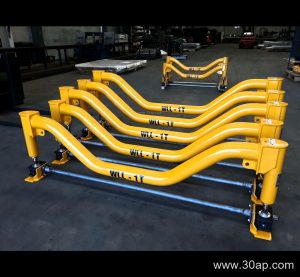
An impact idler bracket is the support frame that holds the impact idlers directly beneath the point where material drops onto a conveyor belt. In a quarry, a coal preparation plant, or a cement plant receiving crushed limestone, this is the spot where the belt takes its hardest hits. The bracket keeps the impact rollers at the correct height and trough angle so the belt can flex and absorb the energy of falling rock instead of being cut or bruised by it. It is a small component by weight, but it decides how long the belt and the idlers survive at the transfer chute.
The bracket is not a pulley. Drive pulleys, tail pulleys, and bend pulleys all perform different jobs at the ends of the conveyor, and none of them can be swapped for an idler support frame. Confusing these names leads to ordering errors, so keep the terms separate when preparing a specification.
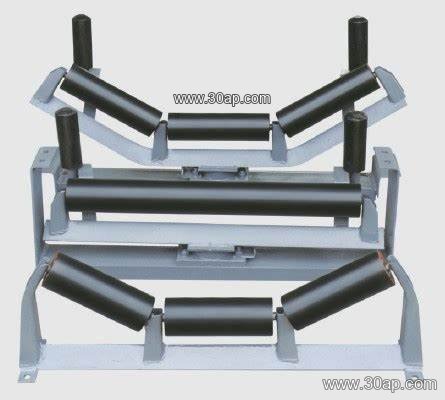
Construction and Mounting
Most impact idler brackets are fabricated from angle steel, channel steel, or folded steel plate. The frame usually carries two or more idler positions, and the load-side positions are set lower or fitted with rubber cushions so the impact rollers sit slightly below the normal carrying line. This arrangement lets the belt deflect on impact and then return to its running profile.
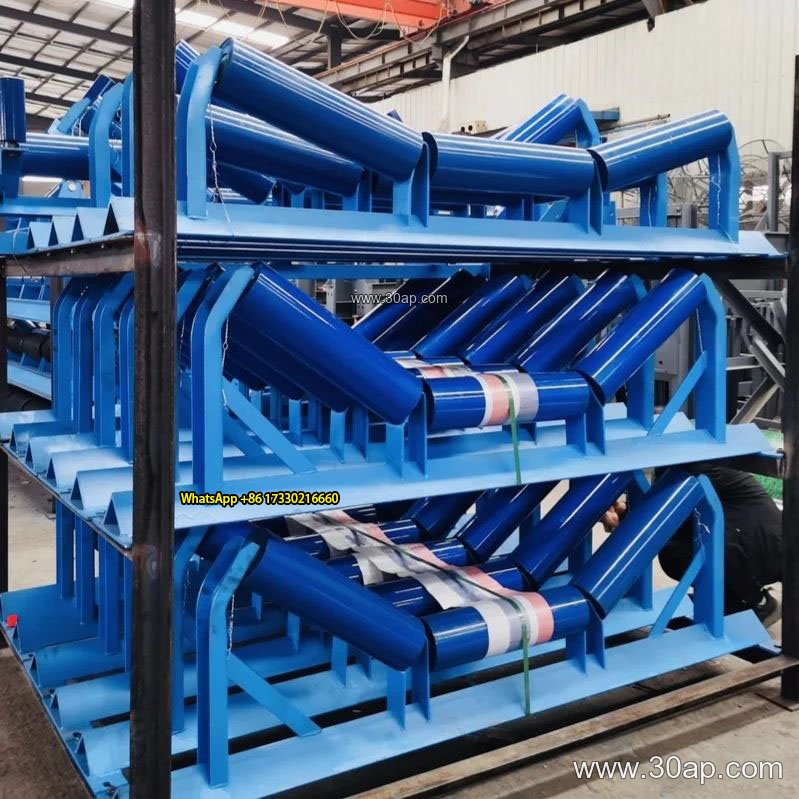
Mounting is normally through slotted holes in the conveyor stringer or on a cross beam. Hole spacing and beam length change with belt width and trough angle, so they are determined by design rather than fixed by a catalog number. A typical bracket set may look like this:
| Belt width | Trough angle | Idler diameter | Typical support frame |
|---|---|---|---|
| B650 | 30 degrees | Ø89 | Three-roll impact bracket |
| B800 | 35 degrees | Ø108 | Three-roll impact bracket |
| B1000 | 35 degrees | Ø133 | Three-roll impact bracket |
| B1200 | 45 degrees | Ø133 | Three-roll impact bracket |
| B1400 | 35 degrees | Ø159 | Three-roll impact bracket |
| B1600 | 45 degrees | Ø159 | Three-roll impact bracket |
These combinations are common references, not mandatory pairings. A wide belt can run at a shallower angle, and the roller diameter follows the load and belt speed rather than the belt width alone. Shaft diameter should be confirmed with the idler supplier.
Where It Fits in the Conveying Line
The bracket belongs at transfer points: the discharge from a crusher, the feed from a hopper, the junction between two conveyors in a sand and gravel line, or the loading point of a ship loader at a port terminal. In an iron ore or copper ore operation, the drop height and lump size make impact protection essential. In a power plant coal yard, the same frame protects the belt from coal lumps at the bunker feed.
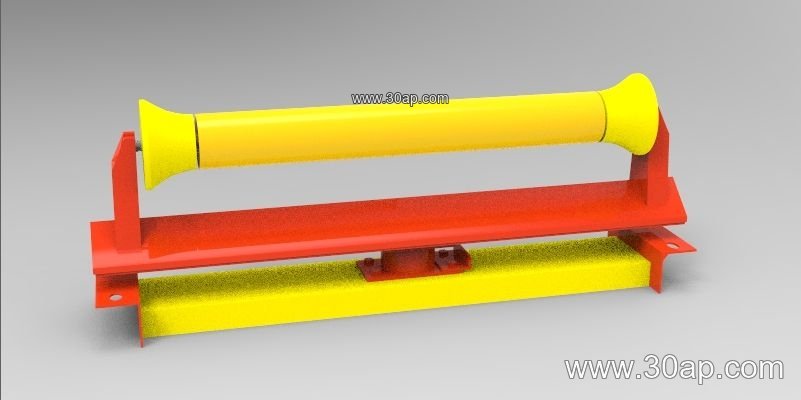
At these locations the bracket works together with the conveyor belt, the impact idler roller, and occasionally a conveyor pulley downstream. The belt grade matters as much as the frame. A heavy-duty mining conveyor belt or a high abrasion resistant conveyor belt will tolerate more direct impact than a light fabric belt, and a steel cord conveyor belt is often chosen where both strength and impact resistance are needed. The bracket simply gives the belt the controlled flexibility it needs to use that strength.
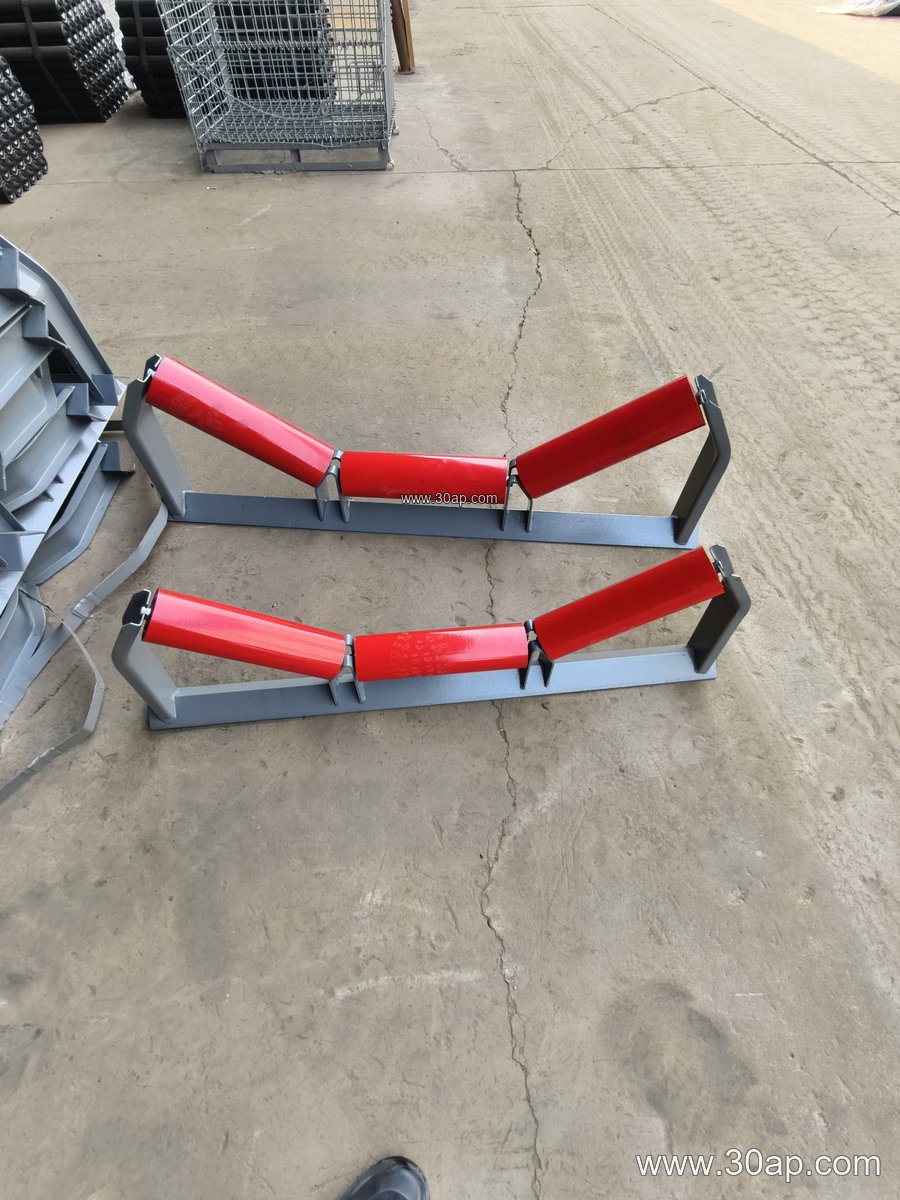
Fixed, Adjustable, and Transition Variants
Fixed impact brackets hold one trough angle, usually 30 or 35 degrees. Adjustable brackets allow the angle to be set between common values such as 20, 30, 35, and 45 degrees, which helps when a conveyor is being commissioned and the belt training is still being tuned. A transition bracket is used where the belt changes from flat to troughed, and it is a different component from the impact frame even though both are idler supports.
Forward-leaning brackets, often set at about 1.5 to 2 degrees, are a separate training aid and should not be treated as a substitute for impact support. Self-aligning brackets are another distinct type. Each has its own place along the conveyor.
Buyer Checklist
- Confirm belt width, trough angle, and idler diameter as a set, for example B1000, 35 degrees, Ø133.
- State the material, lump size, and drop height so the bracket and cushioning can be matched to the duty.
- Ask for mounting hole spacing and cross beam length based on your stringer layout, not a generic figure.
- Check that the frame material, whether angle steel or folded plate, suits the site conditions.
- Match the belt grade to the application, whether that is an EP conveyor belt, an NN conveyor belt, or a flame retardant conveyor belt for underground coal mining.
For buyers sourcing through bulk-material-conveyor-belt.com, the practical rule is simple: specify the bracket together with the idlers and the belt, and confirm the interface dimensions before the order is placed. A well-matched impact idler bracket at the load point reduces belt damage and keeps the whole conveying line running smoothly.