What a Conveyor Head Pulley Does
The conveyor head pulley is the drum mounted at the discharge end of a belt conveyor, where the belt turns around and releases its load into a chute, crusher, screen, or stockpile. Because it is driven by the gearbox or motor, this component is also widely called the drive pulley or drive drum. It does two jobs at once: it transmits the torque that moves the belt, and it sets the discharge point where material leaves the carrying run.
In a typical arrangement, the belt passes over the head pulley, then returns along the bottom run through return idler rollers and a take-up or bend pulley. The head pulley is therefore the anchor of the whole drive train, and its diameter, lagging, and shaft design influence belt tracking, traction, and belt life.
How the Head Pulley Is Built
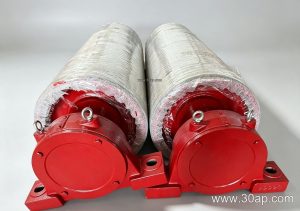
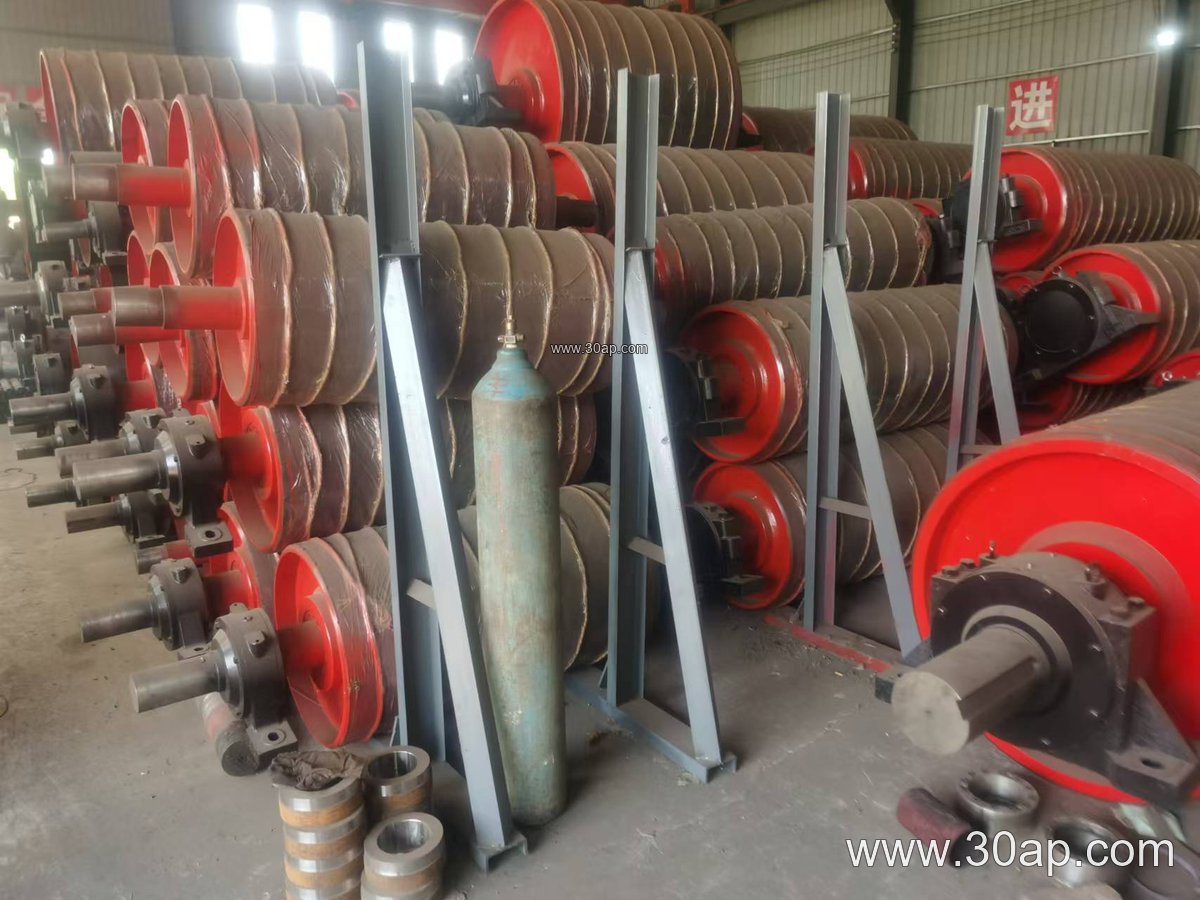
A conveyor pulley is usually assembled from a cylindrical shell, two end discs, a hub, and a through shaft, with bearing housings and a conveyor bracket or frame at each side. Shells are commonly rolled from steel plate and welded; larger units may be stress-relieved before machining. The shaft is keyed or shrink-fitted to the hubs, and the whole drum is dynamically balanced for smooth running at speed.
Surface treatment is a major choice. Plain (smooth) drums suit some light-duty or cleaning-sensitive duties, while lagged drums improve friction between the drum and the belt. Common lagging options include cold-bonded rubber, hot-vulcanized rubber, diamond-pattern lagging, herringbone lagging, and ceramic lagging. Lagging thickness is often 8, 10, 12, 15, or 20 mm, selected according to torque demand and wear conditions.
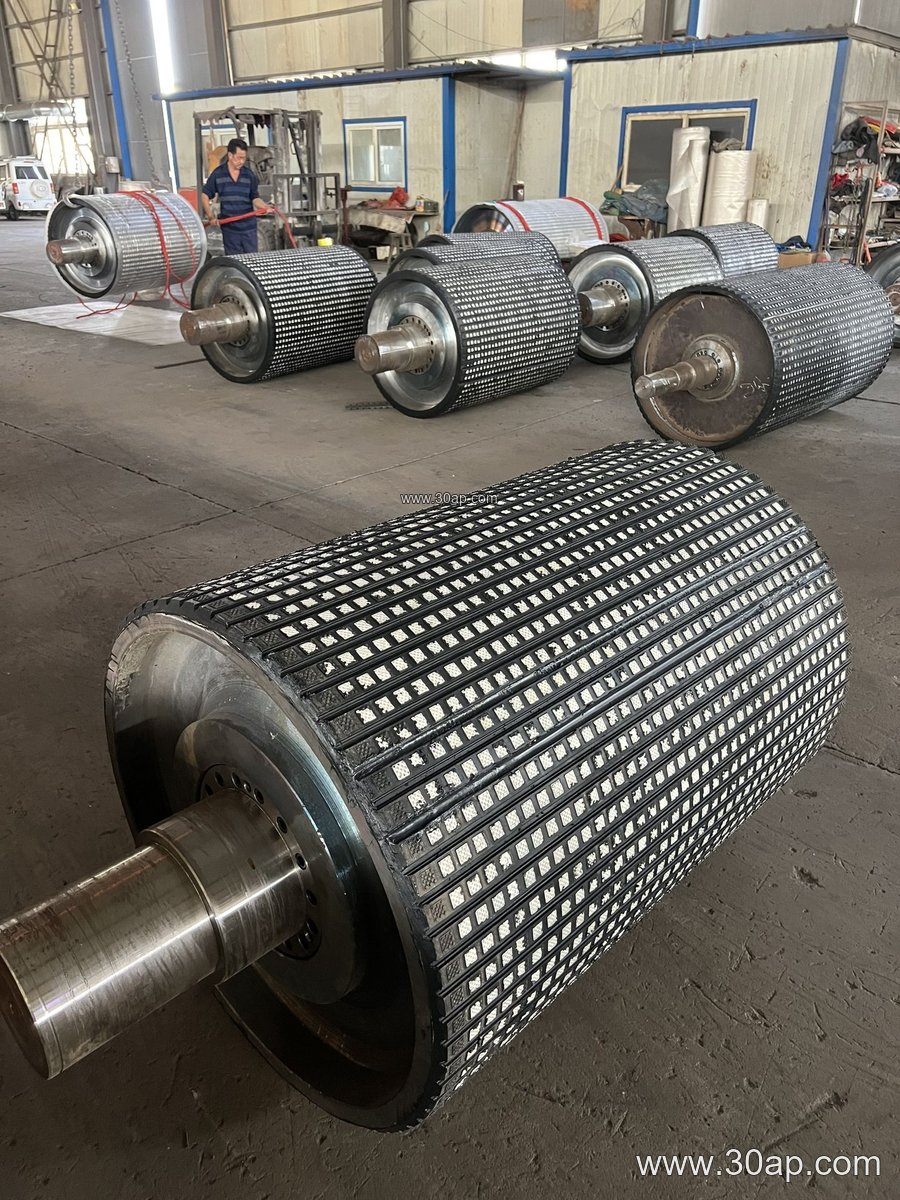
Reference dimensions
The figures below are typical reference values, not fixed rules. Final sizes are determined by the conveyor design, belt tension, and torque.
- Belt width: B400, B500, B650, B800, B1000, B1200, B1400, B1600, B1800, B2000
- Pulley diameter: Ø200, Ø250, Ø315, Ø320, Ø400, Ø500, Ø630, Ø800, Ø1000, Ø1250, Ø1400
- Face width is normally slightly wider than the belt, for example B800 with about 950 mm face, or B1200 with about 1400 mm face
- Shaft diameter: Ø50, Ø60, Ø70, Ø80, Ø90, Ø100, Ø120, Ø140, Ø160, Ø180, Ø200, sized by torque and load rather than belt width alone
Useful combinations such as B800 × Ø500, B1200 × Ø1000, or B1400 × Ø800 appear in real projects, but no single belt width is tied to only one drum diameter.
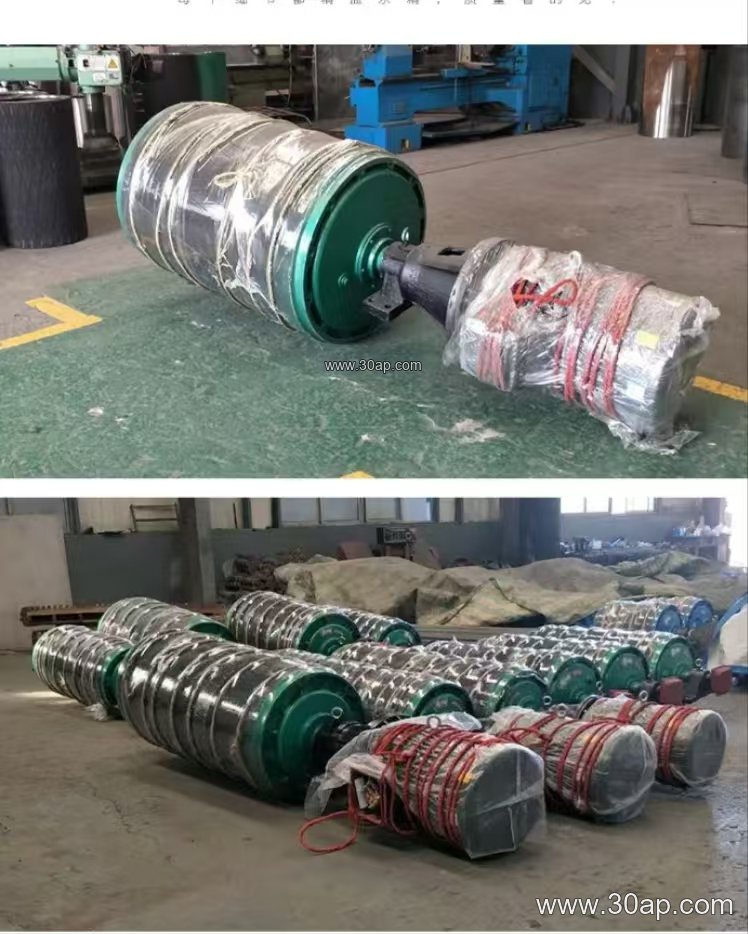
Where It Is Used
Head pulleys appear wherever bulk material must be transferred from one stage to the next. In a quarry or aggregate line, the head pulley at the end of a crusher conveyor discharges stone onto a screen. In a coal mining or underground coal mining operation, flame retardant and anti-static belting runs over heavy-duty drive drums that must cope with dust and moisture. Cement plants use head pulleys on clinker and raw-material belts, while power plant coal handling and port bulk terminals rely on large-diameter drums for high-tonnage runs.
The belt itself may be an EP conveyor belt, an NN conveyor belt, a multi-ply fabric core conveyor belt, or a steel cord conveyor belt. A rubber conveyor belt with chevron or corrugated sidewall profiles, or a pipe conveyor belt, changes the load pattern but not the basic function of the head drum. Matching the pulley to the belt is the key point.
Selection and Maintenance Notes
Buyers should confirm the belt width, belt type and tension, required torque, shaft diameter, bearing type, lagging pattern and thickness, and the mounting position before ordering. A head pulley at the discharge end faces different loads from a tail or bend pulley, so the two should not be treated as interchangeable. Checking lagging wear, bearing temperature, and shaft alignment at regular intervals helps prevent belt slippage and tracking problems. For more on matched components such as the conveyor belt, idler roller, and conveyor pulley, review the full conveyor line together rather than the drum in isolation.