What a Steel Idler Does on a Conveyor
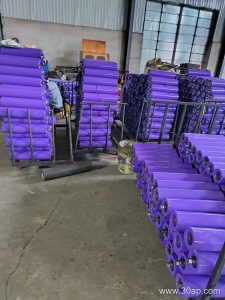
A steel idler is the rotating support that carries the conveyor belt along its route. In a typical troughing arrangement, three idler rollers form a cradle that shapes the belt into a trough, keeping bulk material centered from the loading point to the discharge. The same product is often called a steel idler roller, and the two names describe the same component: a steel tube body, bearing housings, a shaft, and a sealing arrangement. Because the idler turns continuously under load, its quality shows up in belt life, power draw, and the noise level along the line.
Steel idlers appear in quarry conveying, coal handling, cement plants, power station coal yards, and port loading systems. In a crushing and screening circuit, they support the belt directly after the crusher, where lumps and fines arrive together. In a wash plant, they keep the belt tracking through wet, abrasive conditions.
Construction Details That Matter
The body is usually a steel tube with machined ends. Bearing housings sit at each end, and the shaft passes through both. Seals are the quiet heroes: a labyrinth or contact seal keeps dust and water away from the bearing. Roller surface options include plain steel, rubber rings for impact absorption, nylon, and ceramic for special wear situations. The bearing number is chosen by load and speed rather than by tube diameter alone, so a Ø108 idler might use a 6205 or 6305 bearing depending on the design.
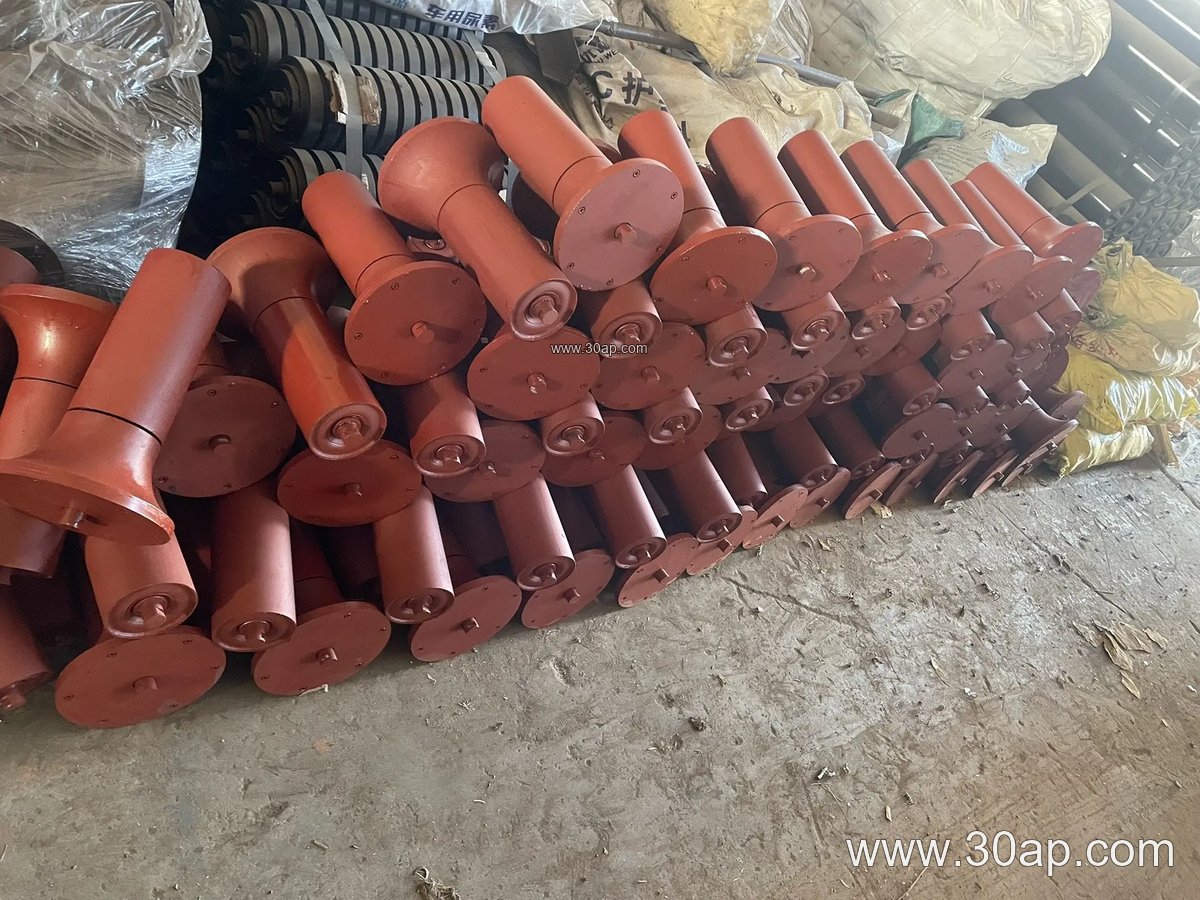
Common roller diameters include Ø63, Ø76, Ø89, Ø102, Ø108, Ø127, Ø133, Ø159, Ø178, and larger sizes for heavy-duty stations. Trough angles are usually 20, 30, 35, or 45 degrees, and a slight forward tilt of about 1.5 to 2 degrees is sometimes used on training idlers to help center the belt.
Matching Roller Length to Belt Width
Roller length follows belt width, trough angle, and the idler set form. The values below are common examples, not fixed pairings, and side rollers may differ from the center roller.
| Belt width | Typical roller length (three-roll troughing) |
|---|---|
| B500 | about 200 mm |
| B650 | about 250 mm |
| B800 | about 315 mm |
| B1000 | about 380 mm |
| B1200 | about 465 mm |
| B1400 | about 530 mm |
| B1600 | about 600 mm |
| B1800 | about 670 mm |
| B2000 | about 750 mm |
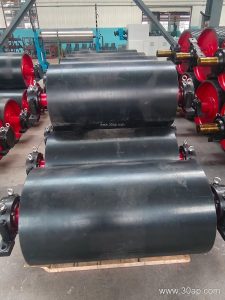
Belt width and pulley diameter are separate decisions. A given belt width does not lock the conveyor pulley to one size, and shaft diameter must be calculated from the actual load, not guessed from belt width.
Idler Types and Where They Sit
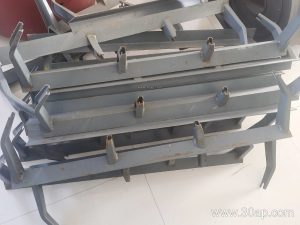
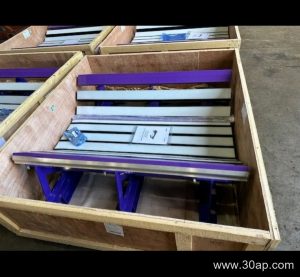
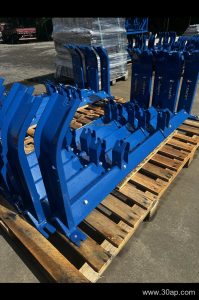
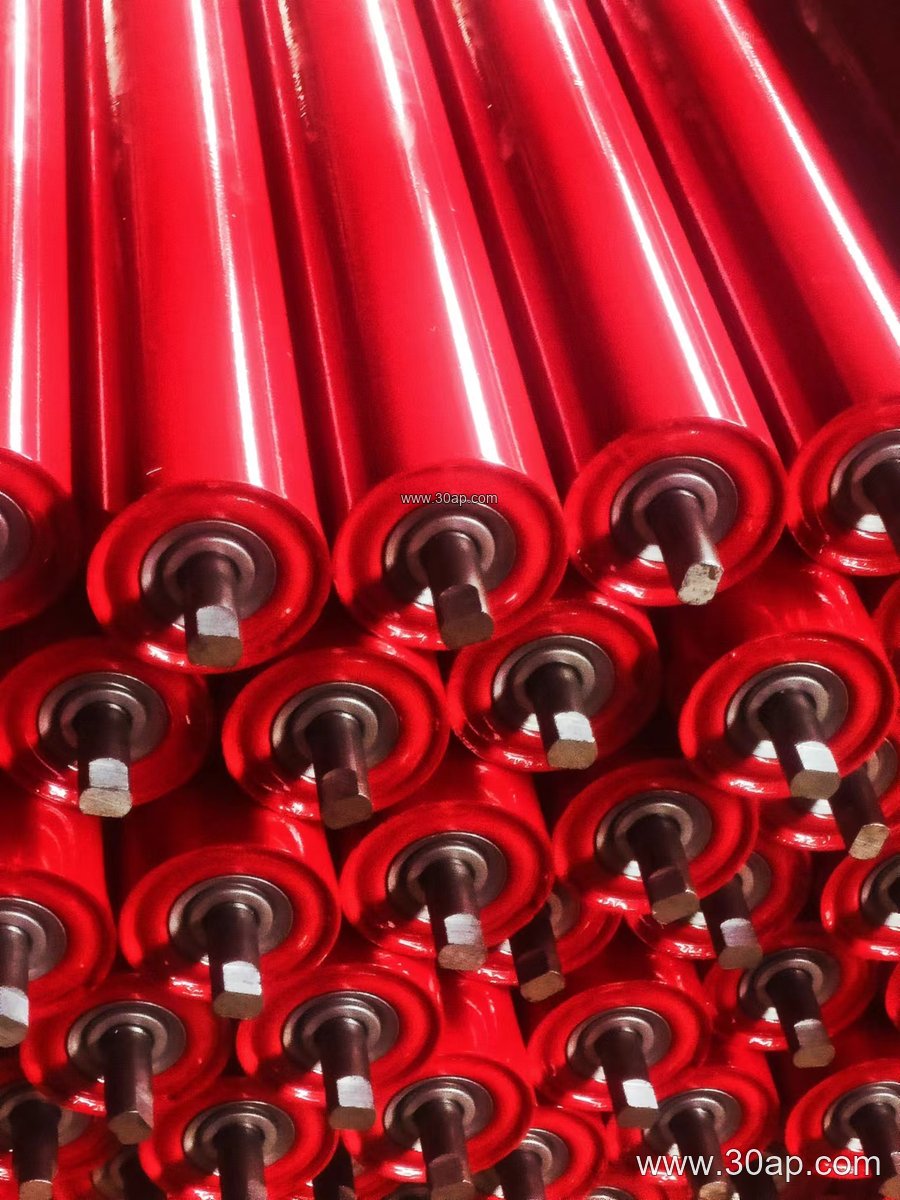
Troughing idlers carry the loaded strand. Impact idlers with rubber rings sit under the loading chute, where a Mining Conveyor Belt receives falling rock. Return idlers support the empty strand, and V-type return sets help self-clean sticky material. Training idlers correct misalignment, while spiral idlers shed fines on the return side. A conveyor bracket holds the idler set in place and sets the trough angle; the frame and bracket work together to keep the rolls square to the belt.
On a long overland line using a Steel Cord Conveyor Belt, idler spacing and roll quality influence belt tension and energy use. In a coal yard running a Flame Retardant Conveyor Belt, idler friction and alignment also affect heat buildup at the drive. A quarry line handling abrasive rock may pair a High Abrasion Resistant Conveyor Belt with well-sealed steel idlers to keep grit out of the bearings.
Buyer Checklist
- Confirm belt width, trough angle, and idler set form before ordering.
- State the duty: bulk density, lump size, moisture, and temperature.
- Ask about seal design and bearing fit, not just tube thickness.
- Check that roller length matches the frame and bracket, not only the belt.
- Plan a spare ratio for impact and return positions, where failures cluster.
A steel idler is a simple part, but it runs for thousands of hours. Matching diameter, length, bearing, and seal to the actual conveyor duty is the practical way to protect the belt and keep the line running.