What a Three-Roll Trough Idler Does on a Belt Conveyor
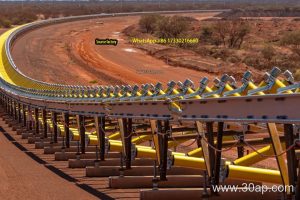
A three-roll trough idler is the carrying idler set that forms the conveyor belt into a trough so bulk material stays centered on the line. It is built from three idler rollers mounted on a common frame, with two side rolls angled upward and a center roll sitting flat or nearly flat. That geometry gives the belt a U-shaped cross section, which raises capacity and reduces spillage compared with a single flat roll. In a quarry, a coal preparation plant or a cement kiln feed line, this troughing idler set is usually the most numerous component under the belt.
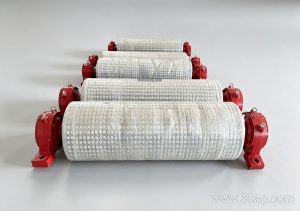
The same product also appears under the accurate equivalent name three-roll troughing idler. Both terms describe one assembly, not separate equipment. A conveyor pulley at the drive or tail end does a different job and is not a substitute for this idler set.
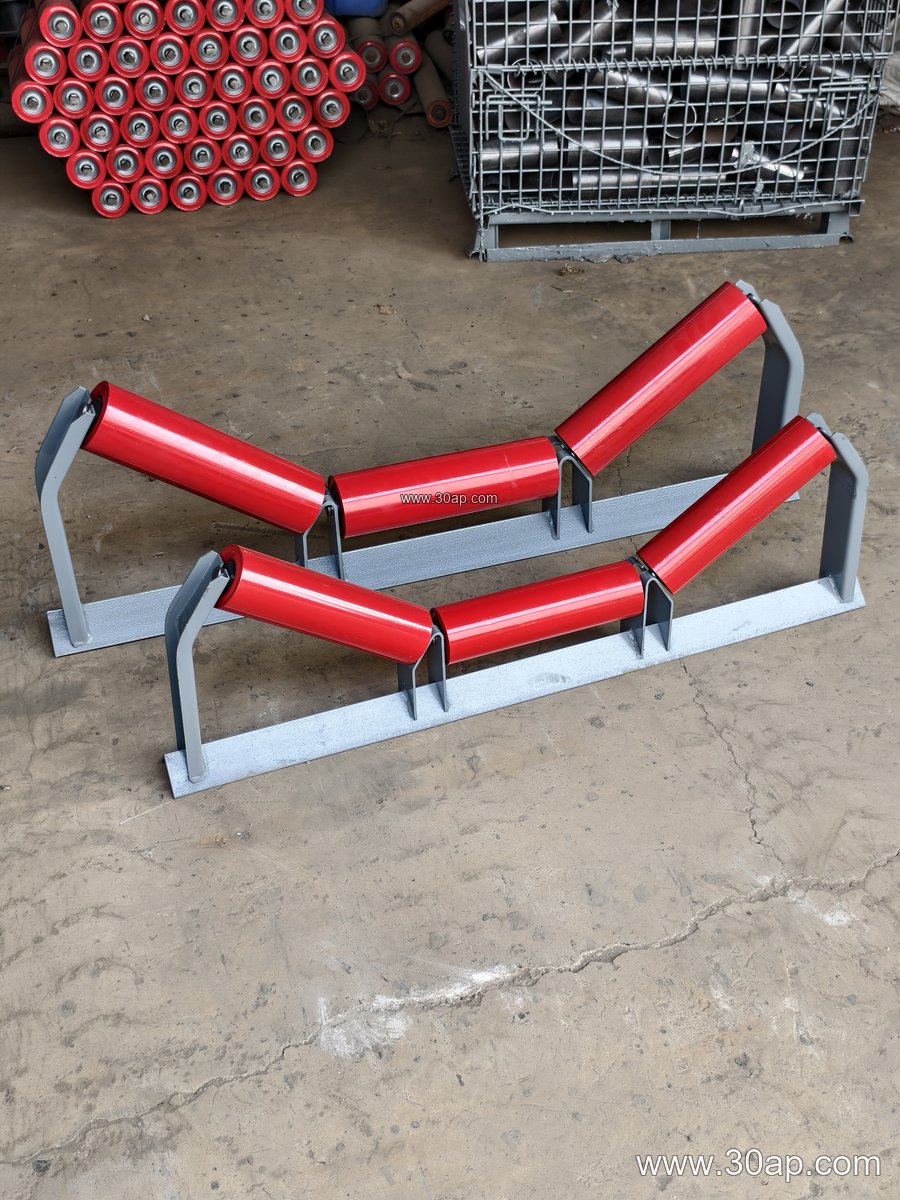
How the Assembly Is Built
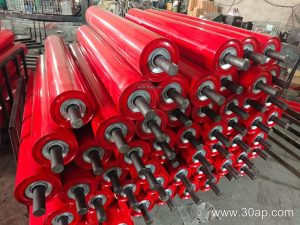
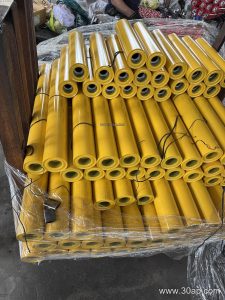
Each set normally consists of a steel tube shell, bearing housings at both ends, a shaft, and a bracket that locks the three rolls at the chosen trough angle. Roll surfaces are commonly plain steel, nylon, ceramic or rubber rings. Rubber rings are useful at load points where lump size is large. Seals and bearing choice matter more than most buyers expect, because dust and water ingress shorten service life long before the shell wears through.
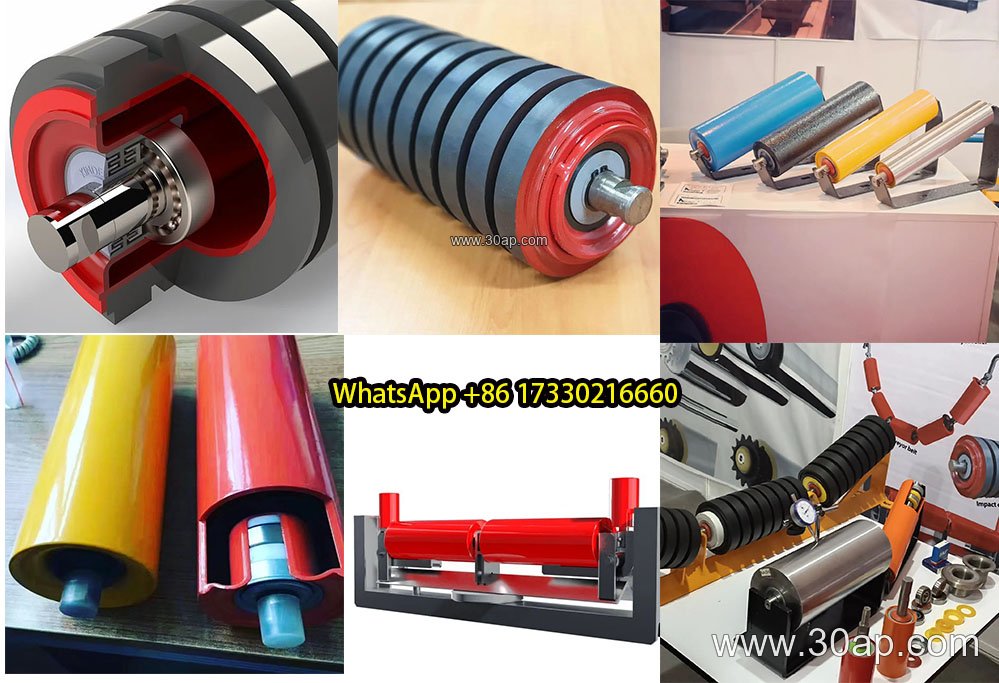
Common roll diameters include Ø89, Ø108, Ø127, Ø133 and Ø159 mm, with larger sizes such as Ø178 and Ø194 mm used on heavy-duty lines. Bearings are often 6205, 6305, 6306 or 6308, matched to the shaft and load rather than to belt width alone. A three-roll trough idler is available in 20, 30, 35 and 45 degree trough angles; 35 degrees is a frequent choice for general bulk handling.
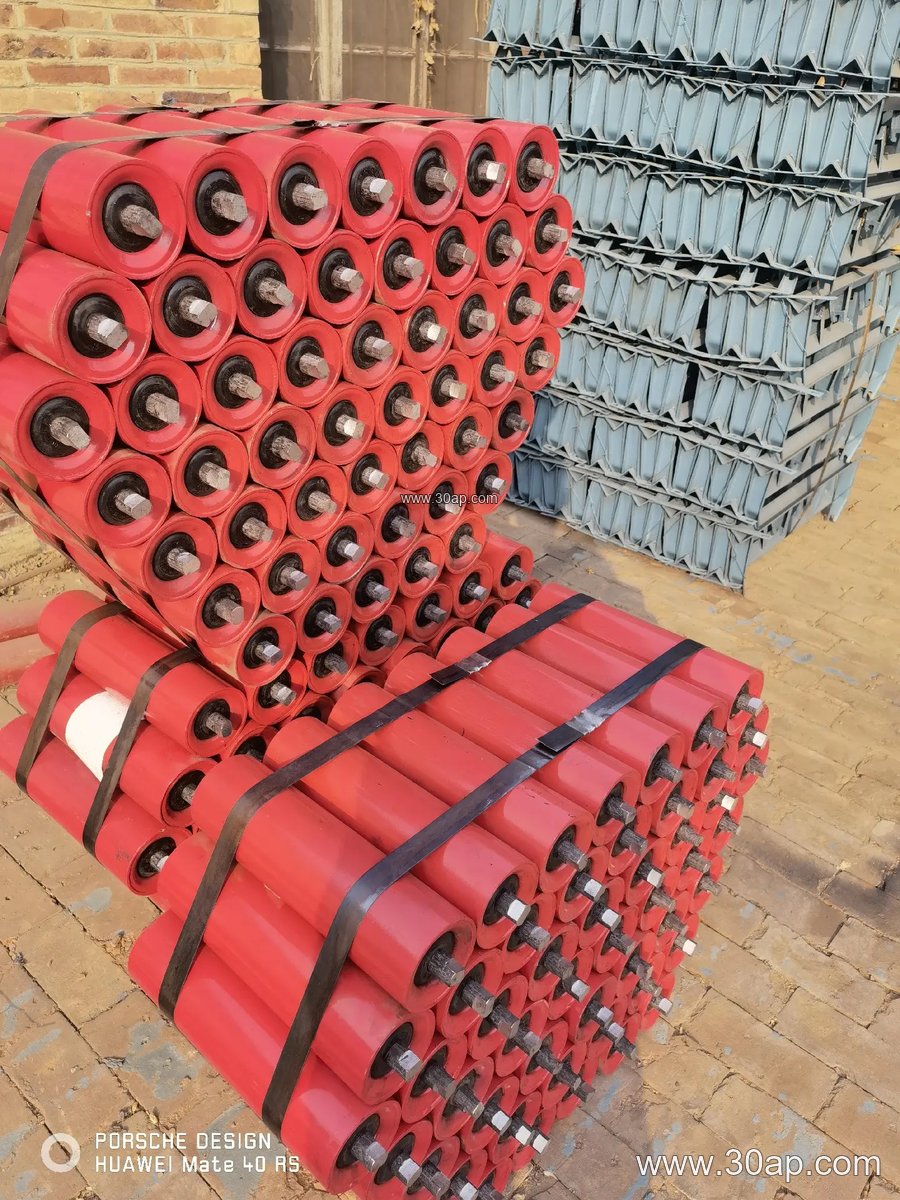
Typical Dimensions by Belt Width
The table below gives common reference values for three-roll troughing sets. Roll length changes with belt width, trough angle and frame design, and the side rolls may differ from the center roll. Treat these as design references, not fixed pairings.
| Belt width | Common roll length (reference) | Typical roll diameter range | Common trough angle |
|---|---|---|---|
| B500 | about 200 mm | Ø63 to Ø89 mm | 20 to 35 degrees |
| B650 | about 250 mm | Ø76 to Ø108 mm | 20 to 35 degrees |
| B800 | about 315 mm | Ø89 to Ø127 mm | 30 to 35 degrees |
| B1000 | about 380 mm | Ø108 to Ø133 mm | 30 to 35 degrees |
| B1200 | about 465 mm | Ø108 to Ø159 mm | 30 to 35 degrees |
| B1400 | about 530 mm | Ø127 to Ø159 mm | 35 degrees |
| B1600 | about 600 mm | Ø133 to Ø178 mm | 35 degrees |
| B1800 | about 670 mm | Ø133 to Ø194 mm | 35 to 45 degrees |
| B2000 | about 750 mm | Ø159 to Ø219 mm | 35 to 45 degrees |
Spacing along the conveyor is set by belt sag and material weight, usually between 1.0 m and 1.5 m on the carrying side. Impact zones need closer spacing or a transition to rubber-ring impact idlers. Transition idlers with smaller angles are often placed near the head and tail so the belt is not forced from flat to full trough in one step.
Where the Three-Roll Trough Idler Fits
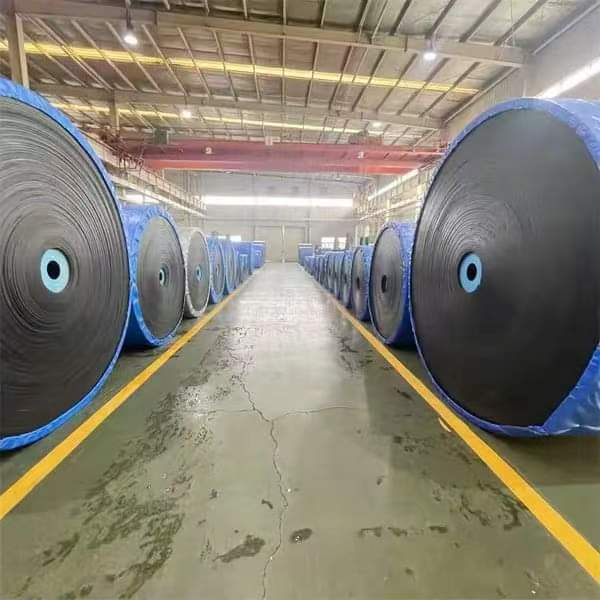
These sets suit continuous handling of ore, aggregate, clinker, coal and fertilizer. In an iron ore or copper ore operation they support a heavy-duty mining conveyor belt carrying sharp, dense material. In a cement plant they sit under clinker and raw meal lines, where heat resistant conveyor belt grades may be needed near the kiln. In a power plant coal yard, flame retardant conveyor belt and anti-static conveyor belt construction are common alongside troughing idlers. Sand and gravel plants often run them under an EP conveyor belt or a multi-ply fabric core conveyor belt on the primary crusher discharge.
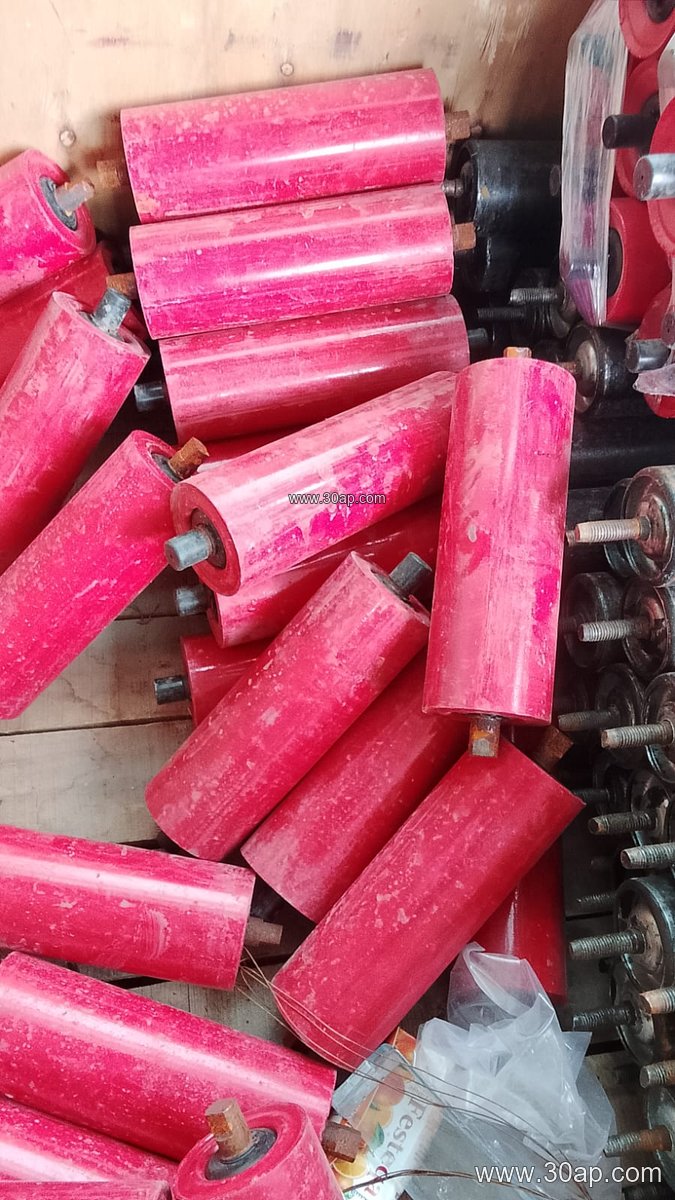
The idler works with the belt, not instead of it. A worn troughing set will mistrain even a good rubber conveyor belt, and a badly loaded belt will damage new idlers quickly. Checking alignment, seal condition and roll rotation at each shutdown is cheaper than replacing a full frame.
Buyer Checklist Before Ordering
- Confirm belt width and the actual trough angle required by the existing frame, not just the nominal conveyor rating.
- State the material: lump size, moisture, temperature and abrasiveness. This guides shell thickness, bearing class and whether rubber rings are needed.
- Ask for the shaft and bearing arrangement, and check that the bracket matches the conveyor bracket already installed.
- Specify the roll surface form. Plain steel suits clean duty; ceramic or rubber covers help in wet or high-impact service.
- Request drawings showing center roll and side roll lengths separately, since these can differ.
- Plan spare sets for impact points and for the transition zone, where idlers wear fastest.
For a reliable quotation, send the belt width, trough angle, roll diameter, bearing number and mounting dimensions together. That single package removes most of the guesswork and keeps the three-roll trough idler matched to the rest of the conveyor line.