What a Port Conveyor Belt Does at the Terminal
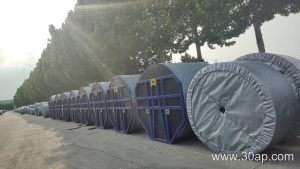
A port conveyor belt is the load-carrying element in the continuous handling chain that links ship unloaders, stackers, reclaimers and ship loaders. Unlike a short in-plant conveyor, the belt here often runs for hundreds of meters at high capacity, moving iron ore, coal, cement clinker, fertilizer, grain or containerized bulk cargo between quayside and yard. The same product is often described simply as a ship loading conveyor belt or a bulk material conveyor belt, and the duty cycle is what separates it from general industrial belting.
Because a terminal rarely stops for belt replacement, the specification has to match the real operating profile: peak tonnage per hour, abrasive cargo, salt-laden air, tropical sun or freezing winters, and the need to keep running through shift changes.
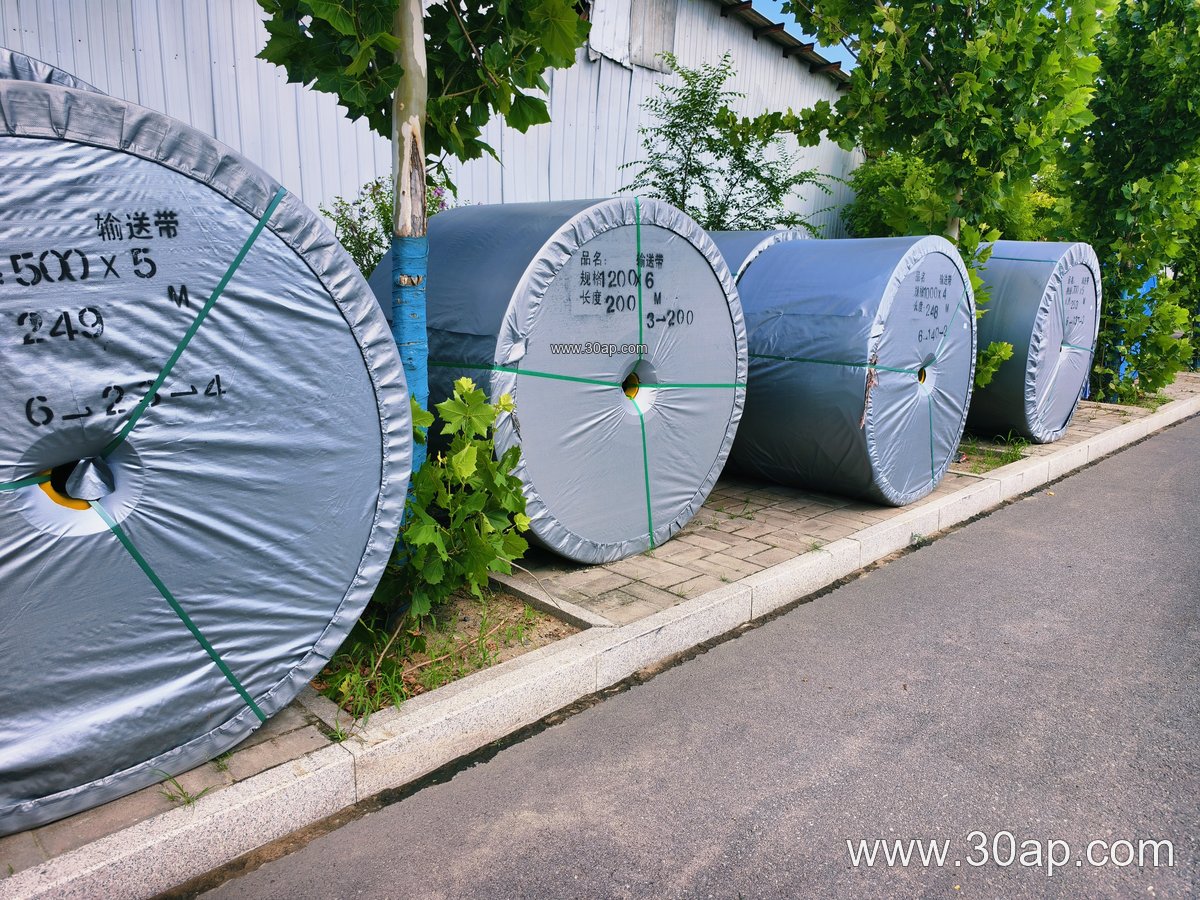
Construction of the Belt
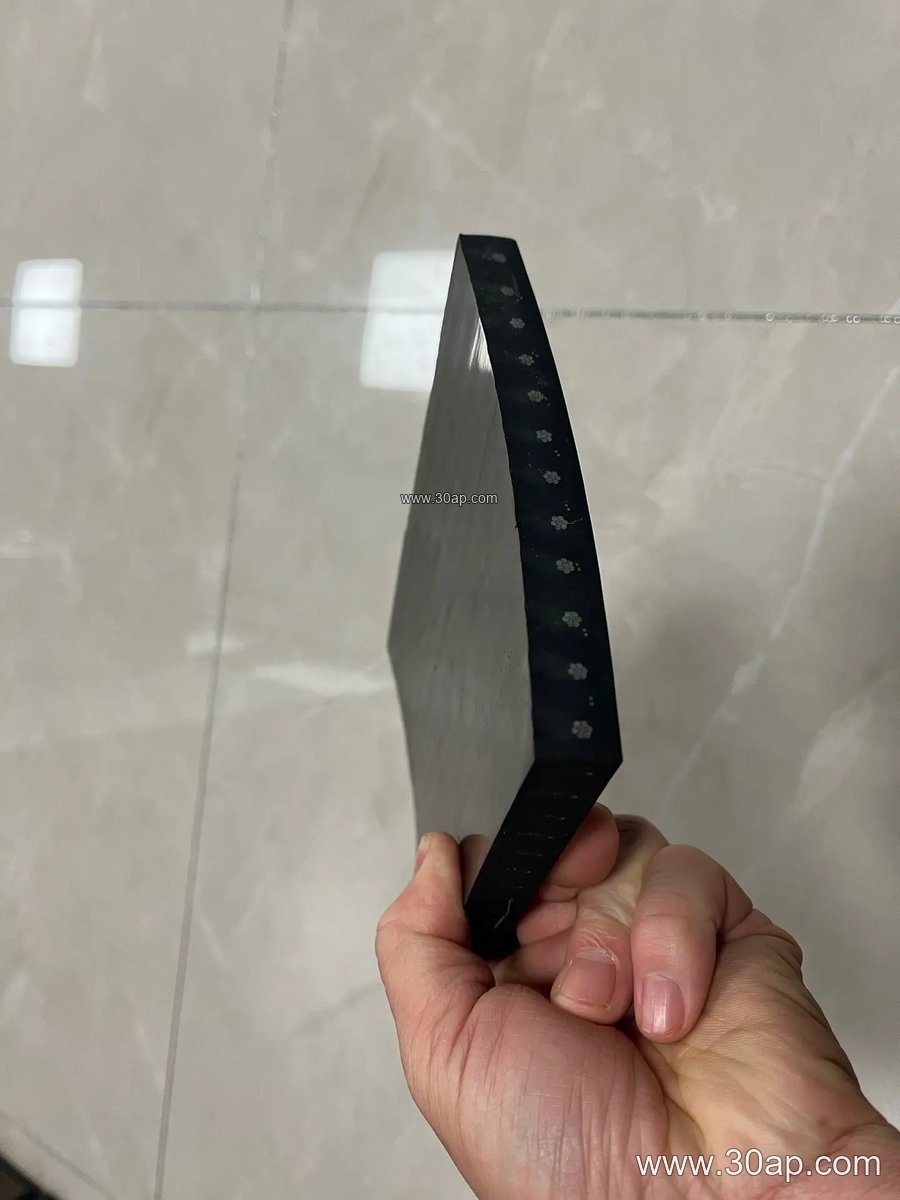
The carcass carries tension, the covers protect it, and the splice holds everything together. For long overland or jetty runs, a Steel Cord Conveyor Belt is common because it combines very high tensile strength with low stretch. Where flexibility and moderate tension suit the route, an EP Conveyor Belt (polyester-nylon fabric core) or an NN Conveyor Belt (nylon-nylon) is widely used, and a Multi-Ply Fabric Core Conveyor Belt gives predictable strength through several fabric layers. Surface and edge details matter too: a Chevron Conveyor Belt controls material on inclines, while a Corrugated Sidewall Conveyor Belt or Skirted Conveyor Belt keeps cargo on the line at transfer points and steep lifts.
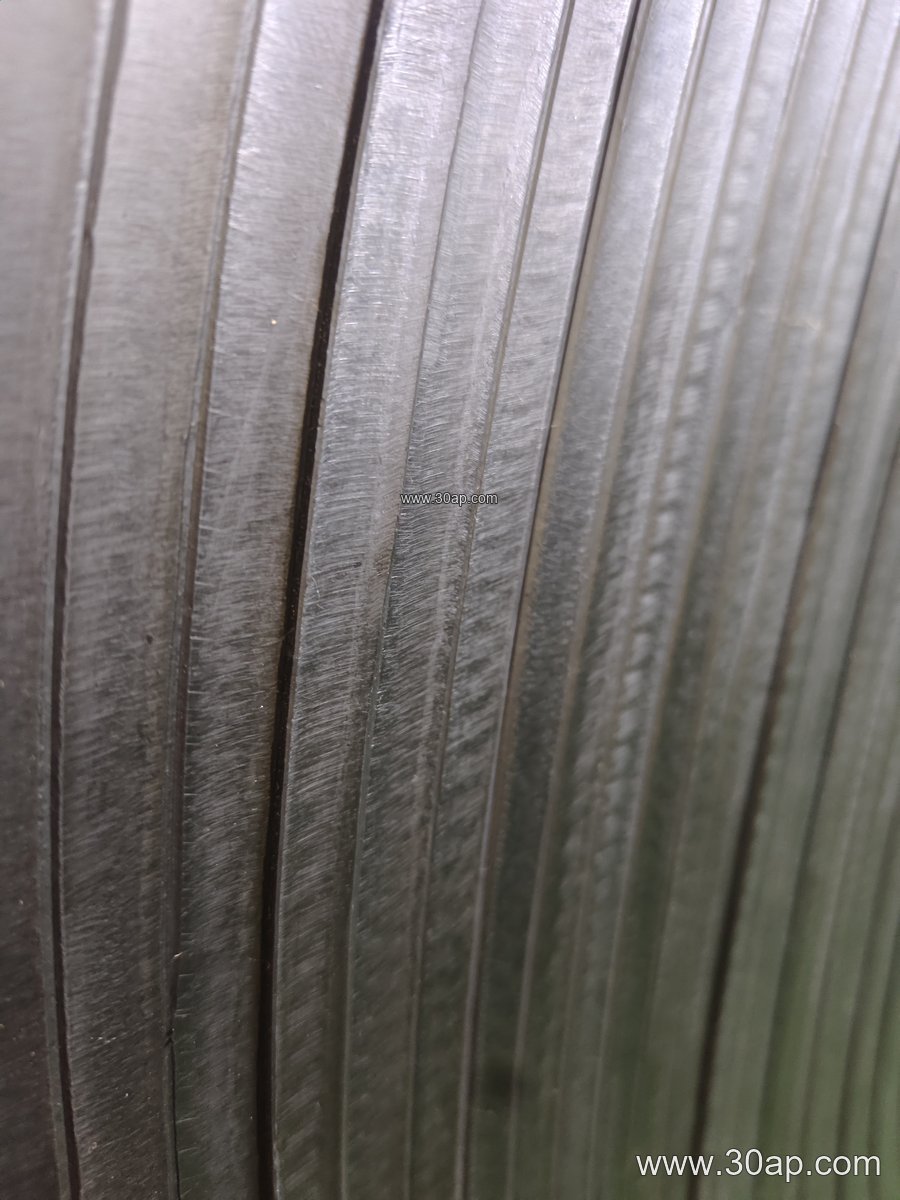
Cover compounds are chosen by cargo. An Abrasion Resistant Conveyor Belt handles ore and clinker, a Heat Resistant Conveyor Belt suits cement or sinter, an Oil Resistant Conveyor Belt is used for oily cargo and a Flame Retardant Conveyor Belt is specified where fire risk must be controlled. Anti-Static Conveyor Belt grades are relevant in dusty, explosive-risk zones, and Cold Resistant Conveyor Belt grades keep flexibility in winter ports.
Typical Specification Ranges
Values below are common reference ranges, not fixed combinations. Final selection follows the conveyor design, and different manufacturers differ.
Carcass and strength
- EP grades: EP200, EP315, EP400, EP500, EP630, EP800, EP1000, EP1250, EP1600, EP2000
- Steel cord grades: ST1000, ST1250, ST1600, ST2000, ST2500, ST3150
- Fabric plies: usually 2 to 6 layers depending on duty
Width and cover thickness
- Belt width: B500, B650, B800, B1000, B1200, B1400, B1600, B1800, B2000
- Cover combination examples: 3+1.5, 4+2, 5+2, 6+2, 8+3 mm
A 1200mm or 1400mm belt is common on main yard lines, while a 1800mm or 2000mm belt appears on high-capacity ship loading routes. Width, speed and pulley diameter are matched through the conveyor calculation; a given width does not dictate one pulley size.
Where It Fits in the Terminal
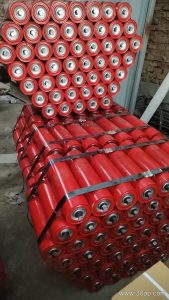
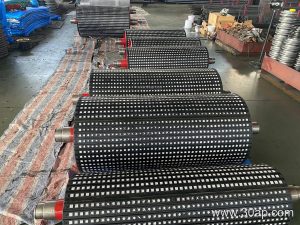
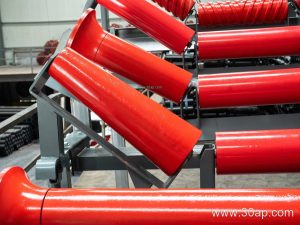
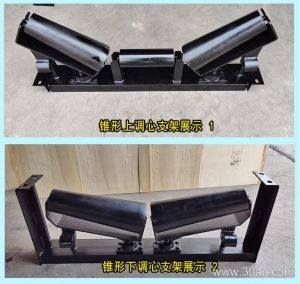
Port belts serve quay cranes, yard conveyors, train loading stations and stockyard systems. In an ore terminal, a Heavy-Duty Mining Conveyor Belt or High Abrasion Resistant Conveyor Belt is normal; in a coal terminal, a Coal Mining Conveyor Belt with flame-retardant properties is often specified. Cement and power plant terminals lean toward heat and abrasion resistance, while a fertilizer or grain berth may need chemical resistance or a Food Grade Conveyor Belt. The belt works with conveyor pulleys, idler rollers, conveyor brackets and transfer chutes, so alignment of the whole line affects belt life as much as the belt itself.
Buyer Checklist
- Confirm the design tension and choose between fabric core and steel cord accordingly.
- State the cargo, lump size, temperature and any oil, acid or fire exposure.
- Check cover thickness against impact and abrasion at loading points.
- Decide whether an Endless Conveyor Belt splice is required to reduce downtime.
- Review pulley and idler roller condition before commissioning a new belt.
- Ask for the manufacturer’s data sheet, since strength grades and cover gauges vary.
For terminal operators comparing options, the practical route is to define duty first, then match carcass, cover and splice. A belt that is correctly specified for the port’s cargo and climate will outlast a general-purpose belt, and that is the real measure of value on a berth that runs around the clock.