What a Tail Pulley Does on a Belt Conveyor
A tail pulley sits at the return end of a conveyor, opposite the drive. Its main job is to guide the conveyor belt back into the carrying run while maintaining wrap on the driving pulley. On many systems it also serves as the tensioning point, which is why the terms tail pulley and take-up pulley are sometimes used loosely. Strictly speaking, the tail pulley is a distinct position on the conveyor; it should not be confused with a bend pulley, which redirects the belt elsewhere, or with a drive pulley, which transmits torque.
Because it turns with the belt rather than driving it, the tail pulley is a idler-like component in functional terms. Still, it carries real load and must be built to match the belt tension, speed, and material environment. In a quarry or a cement plant, a failed tail pulley can stop the whole line, so the details of its construction matter.
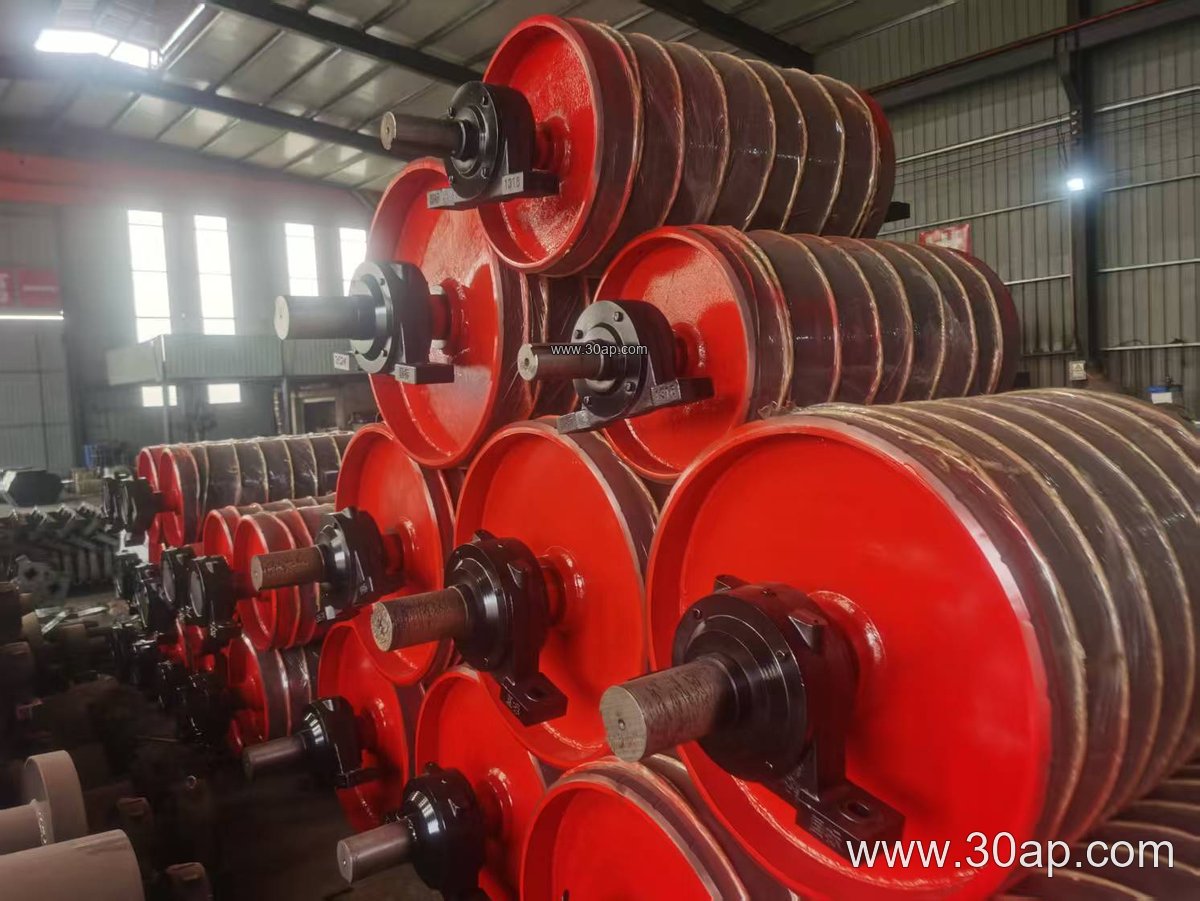
Construction and Surface Options
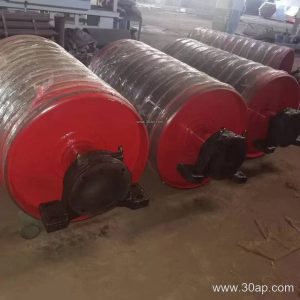
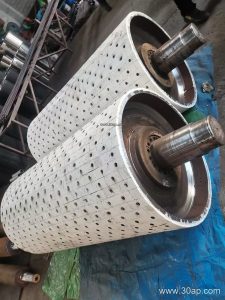
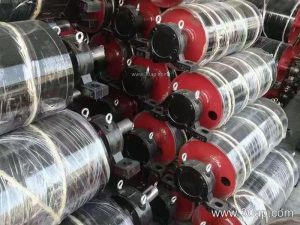
A typical tail pulley is a welded steel drum with a shaft, bearing housings, and end discs. The shell may be plain or lagged. Lagging protects the shell, improves traction in some positions, and helps shed fines. Common surface forms include plain, cold-bonded rubber, hot-vulcanized rubber, diamond lagging, ceramic lagging, and flat rubber. Lagging thickness is commonly 8, 10, 12, 15, or 20 mm depending on duty.
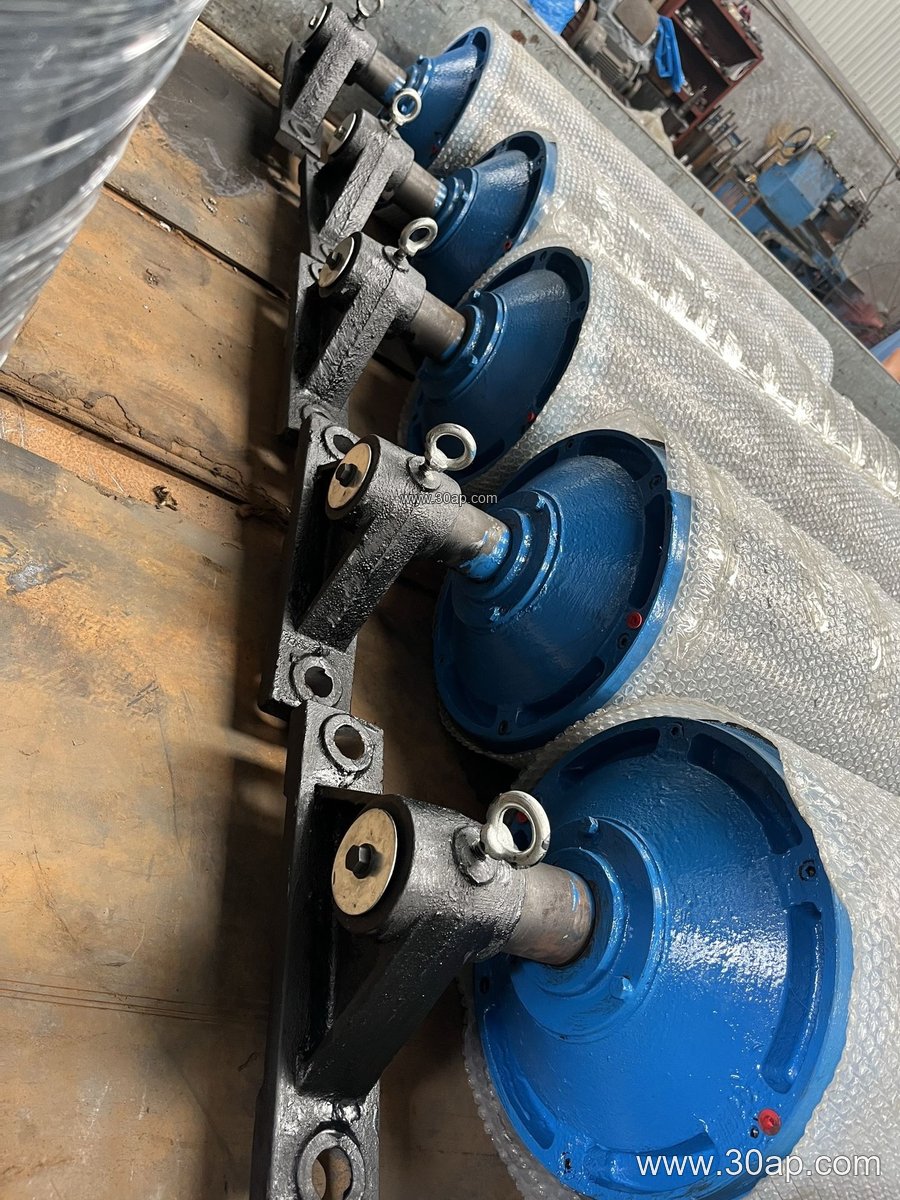
At the tail end, where the belt is often dirty and the load is lower than at the head, a plain or lightly lagged shell is frequently enough. In wet or sticky service, such as a wash plant or a fertilizer handling line, a smooth lagging that releases material is often preferred over a deep pattern. The exact choice is a design decision, not a fixed rule.
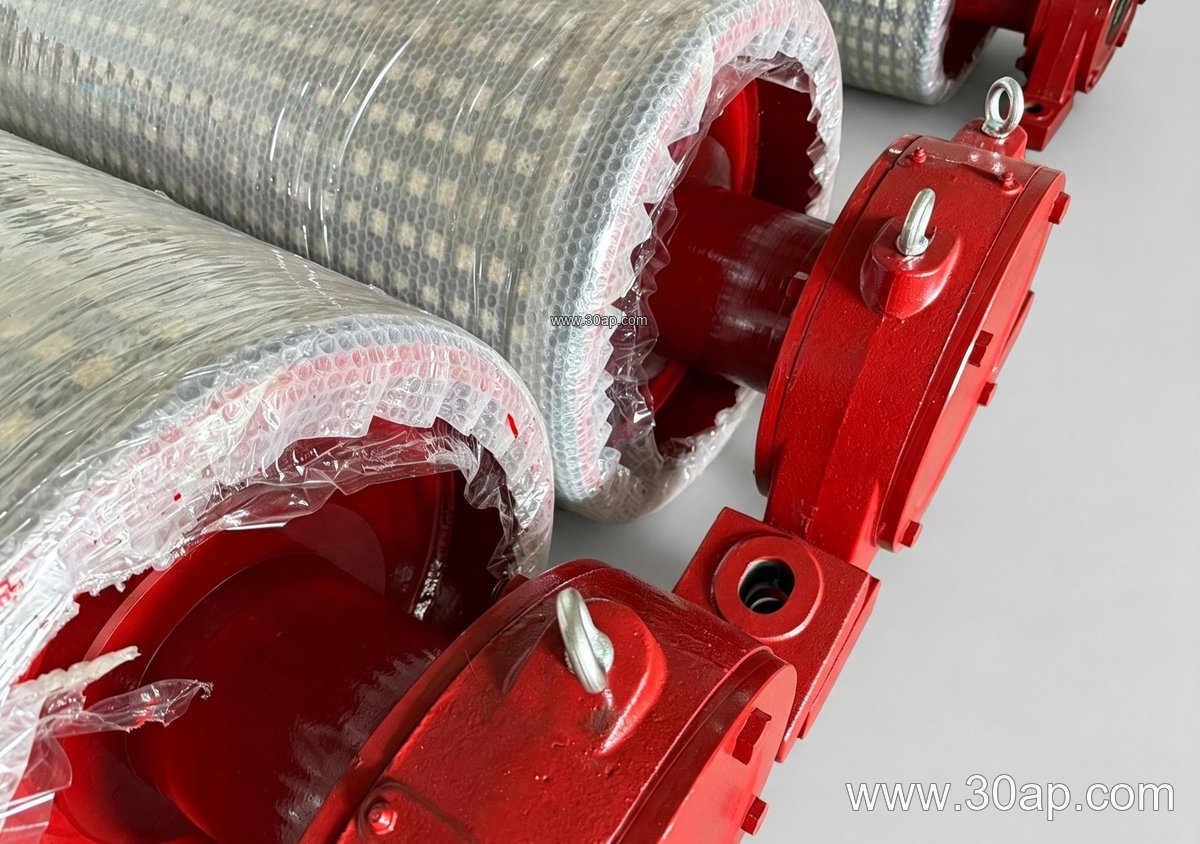
Sizing and Belt Width Relationship
Tail pulley diameter is selected from belt tension, shaft load, and the minimum bending radius the belt can tolerate, not from belt width alone. A wider belt does not automatically require a larger drum, though wider belts do carry more tension and usually need a heavier shaft and bearings. The table below shows common reference combinations; these are examples, not a supply list.
| Belt Width | Typical Pulley Face Width | Example Diameter |
|---|---|---|
| B400 | about 500 mm | Ø200 to Ø315 |
| B650 | about 750 mm | Ø315 to Ø500 |
| B800 | about 950 mm | Ø400 to Ø630 |
| B1000 | about 1150 mm | Ø500 to Ø800 |
| B1200 | about 1400 mm | Ø630 to Ø1000 |
| B1400 | about 1600 mm | Ø800 to Ø1250 |
| B1600 | about 1800 mm | Ø1000 to Ø1400 |
| B1800 | about 2000 mm | Ø1250 to Ø1600 |
Shaft diameter is determined by torque and radial load. Common shaft sizes run from Ø50 to Ø200, but a B800 pulley does not have a fixed shaft size; the bearing span, belt tension, and pulley mass all influence the result. A B1200 × Ø1000 tail pulley and a B800 × Ø500 unit can both be correct for their respective conveyors.
Where Tail Pulleys Are Used
These pulleys appear wherever a conveyor returns its belt. In a limestone mine, a heavy-duty tail pulley with a reinforced shell handles the return side of a primary crushing line. In a coal washing plant, a flame retardant conveyor belt runs over a tail pulley that must resist fines and moisture. In a port bulk terminal, wide belts such as 1800 mm or 2000 mm wide conveyor belt sections rely on large tail pulleys to keep tracking stable under high tension.
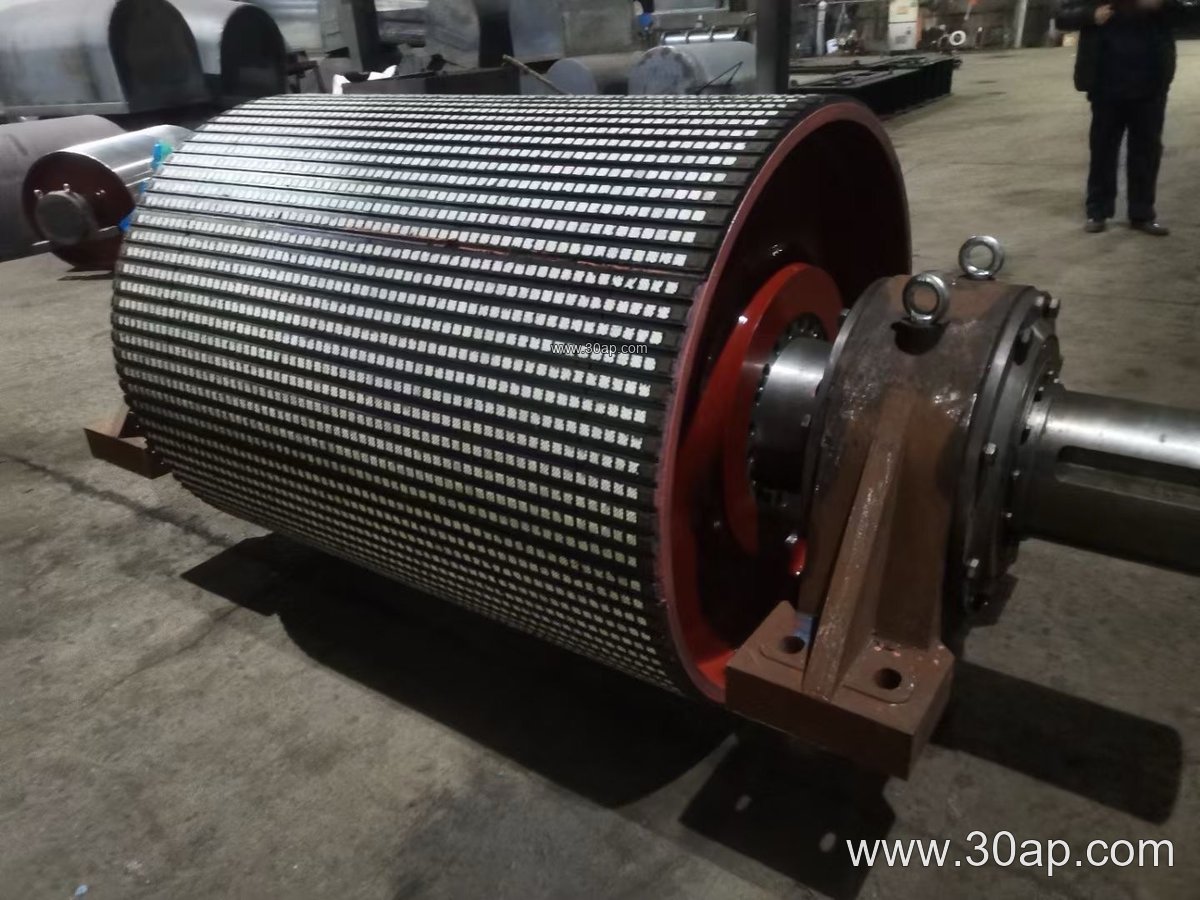
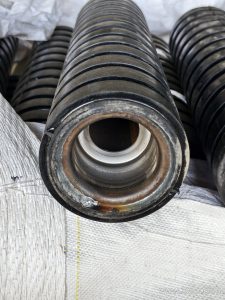
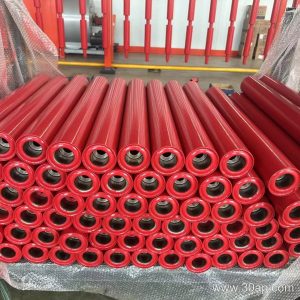
Tail pulleys also work alongside conveyor idler rollers and conveyor brackets to keep the belt aligned. A misaligned tail pulley can cause edge damage on an EP conveyor belt or a steel cord conveyor belt, so alignment at installation is as important as the component itself.
Buyer Checklist
- Confirm the pulley position: tail, take-up, or bend. They are not interchangeable.
- Specify belt width, belt type, and maximum tension so the shell and shaft can be sized.
- State the environment: wet, dusty, abrasive, or high temperature. This affects lagging and bearing seals.
- Check face width against belt width; the shell is normally wider than the belt.
- Ask for bearing type, shaft material, and balance class rather than assuming standard values.
- Plan for inspection of lagging wear and bearing condition during scheduled shutdowns.
On a quarry conveyor belt or a crusher conveyor belt, the tail pulley is a small part of the total cost but a large part of uptime. Matching it to the belt, the load, and the site conditions is the practical way to avoid premature failure.