What an EP Rubber Conveyor Belt Is
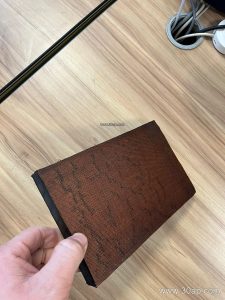
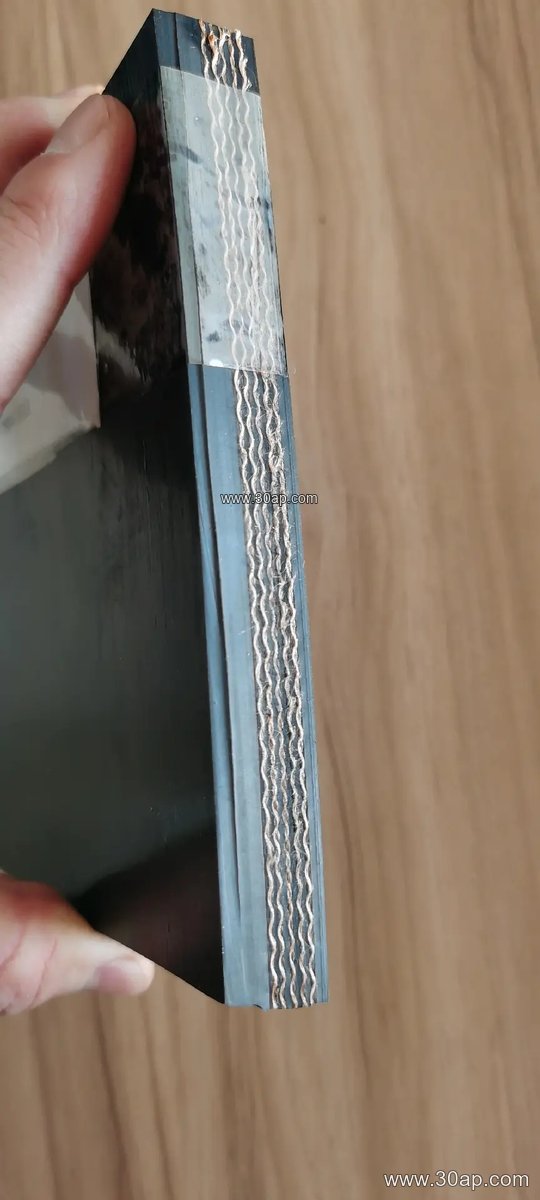
An EP rubber conveyor belt is a fabric-core belt built on polyester (E) warp and nylon (N) weft canvas, finished with rubber covers on both faces. The carcass gives the belt its tensile strength and troughability, while the covers protect the fabric from abrasion, moisture, heat or oils depending on the compound chosen. Because the polyester warp stretches very little under load, this belt holds its length well on long centre distances and keeps start-up elongation low, which is one reason it sees wide use in bulk handling.
The same product is often called an EP fabric core conveyor belt or simply an EP conveyor belt. All three names describe one construction; they are not different belt families.
How the Belt Is Built
The carcass is usually 2 to 6 plies of EP fabric, bonded with rubber skim between layers. Cover thickness is quoted as top plus bottom, for example 4+2 mm or 6+2 mm. A buyer reviewing an EP rubber conveyor belt will normally look at three numbers: the strength grade, the number of plies, and the cover gauge.
- Strength grades commonly offered run from EP200 upward through EP315, EP400, EP500, EP630, EP800, EP1000, EP1250, EP1600 and EP2000.
- Widths generally follow B500, B650, B800, B1000, B1200, B1400, B1600, B1800 and B2000.
- Cover combinations such as 3+1.5, 4+2, 5+2, 6+2 and 8+3 mm cover light to heavy duty service.
These figures are reference ranges, not universal rules. Actual ply count and cover gauge should follow the conveyor design and the material being carried.
Where It Fits in a Conveyor Line
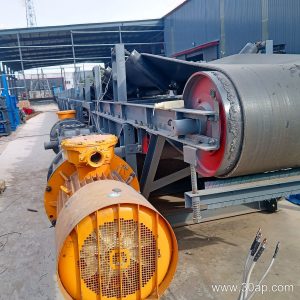
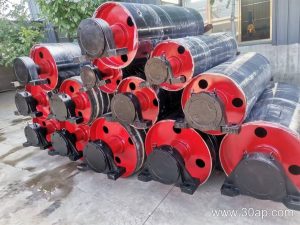
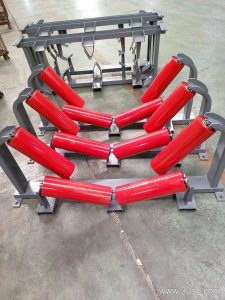
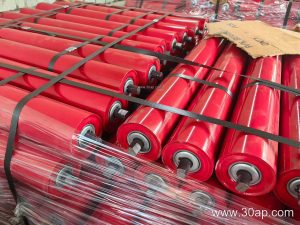
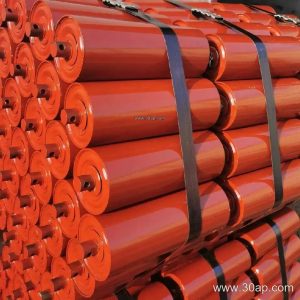
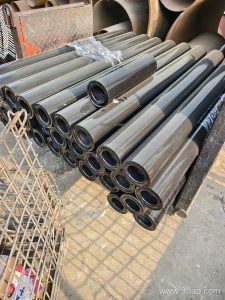
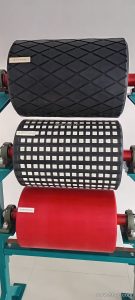
The belt runs over a conveyor pulley at the head and tail, supported between them by idler roller sets mounted on conveyor bracket frames. Drive, tail and bend pulleys each do a different job and are not interchangeable, so belt tension and pulley selection must be matched to the layout rather than guessed from belt width alone.
Typical duty points include:
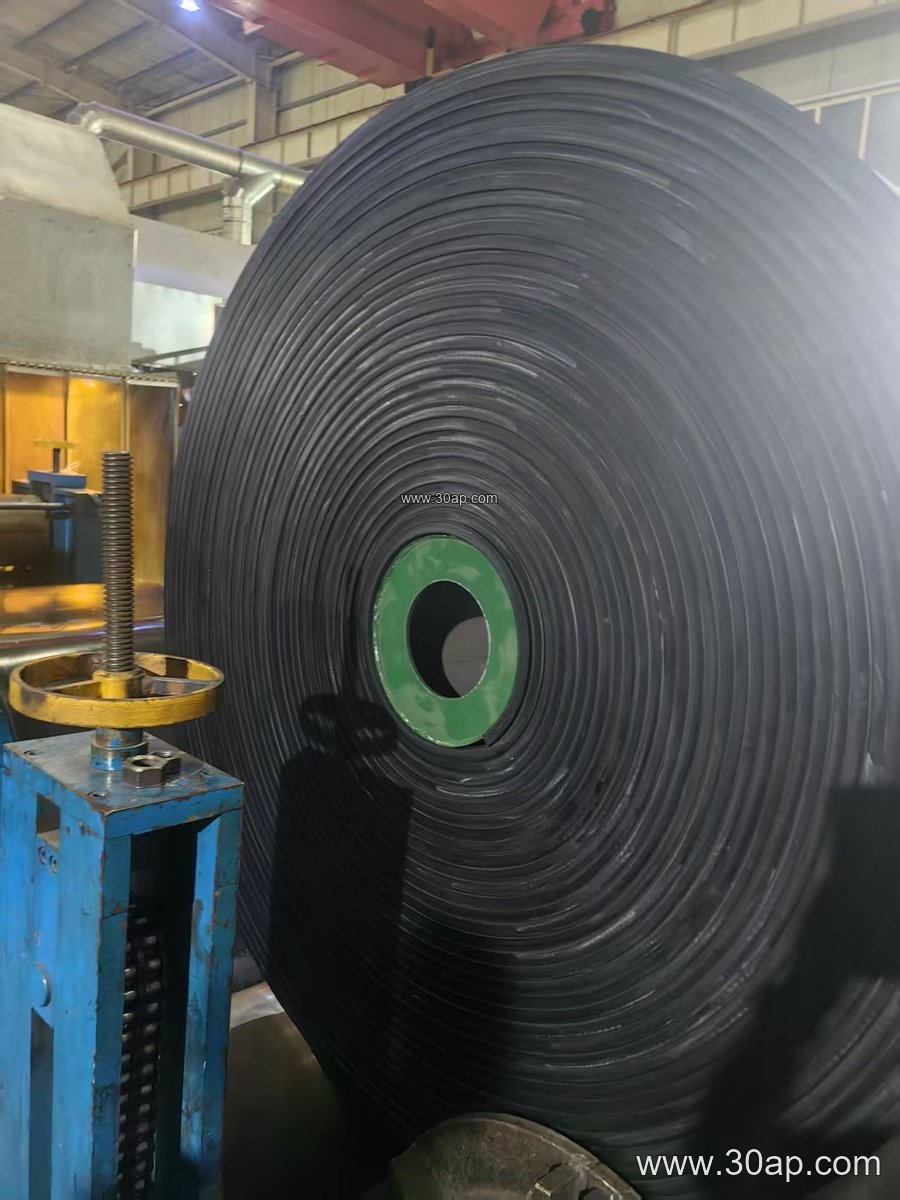
- Mining and quarry lines moving ore, rock and aggregate, where a high abrasion resistant conveyor belt grade is often specified.
- Coal handling and underground mining conveyor belt routes that call for flame retardant and anti-static properties.
- Cement plants, power plants and steel plants handling clinker, limestone, coal or slag at elevated temperature, where heat resistant conveyor belt compounds are used.
- Ports and ship loading systems working at high capacity over long distances.
- Crusher discharge and sand making plant circuits, where impact resistant covers help absorb lump shock.
For steep inclines, a chevron conveyor belt or corrugated sidewall conveyor belt may be considered; for enclosed routes, a pipe conveyor belt. These are separate designs and should be compared with the EP belt on the merits of the specific conveyor, not used as a drop-in substitute.
Choosing the Right Grade and Cover
Start with the duty. A heavy-duty mining conveyor belt carrying sharp, dry rock needs a thicker abrasion resistant cover, while a coal mining conveyor belt in a confined gallery usually needs flame retardant and anti-static approval for the site. Oil resistant, acid resistant, chemical resistant and cold resistant grades exist for the corresponding environments. Food grade belting is a separate compound family and should not be assumed from a standard EP specification.
Where very high tension or extreme impact is expected, a steel cord conveyor belt or a multi-ply fabric core belt with a higher grade may be evaluated against the EP option. An NN conveyor belt is another fabric-core choice and is sometimes compared with EP on elongation behaviour, but it remains a different carcass construction.
Buyer Checklist
- Confirm the required strength grade and ply count against the calculated belt tension.
- State the belt width in millimetres and check it against pulley face width and trough angle.
- Specify top and bottom cover thickness, and the rubber grade for abrasion, heat, oil or flame resistance.
- Ask whether the belt is supplied open or as an endless conveyor belt spliced on site.
- Confirm edge condition, splice method and any cover topping required for the application.
Matching an EP rubber conveyor belt to the conveyor, rather than to a catalogue page alone, keeps the belt, the pulleys and the idlers working as one system. For further specification details on EP conveyor belt grades and widths, review the technical data supplied with each order.