What a Belt Conveyor Bend Pulley Does
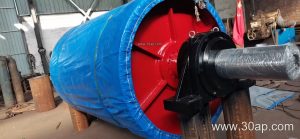
A belt conveyor bend pulley is a non-driven roller that changes the direction of the conveyor belt, usually to wrap more belt around the drive pulley or to route the belt around a take-up system. It does not transmit drive torque. That is the key difference from a drive pulley or head pulley, which grips the belt and pulls it forward, and from a tail pulley at the loading end. A bend pulley simply guides, so its design priorities are smooth rotation, correct wrap geometry and reliable bearing life rather than high friction transmission.
In many circuits, this roller is the one that quietly determines whether a tensioning system works. A take-up bend pulley changes the belt path so the take-up carriage can travel without interfering with other structures. A snub or wrap pulley increases the arc of contact on the drive pulley, which improves grip without changing belt tension. Confusing these roles with drive or tail pulleys leads to wrong orders, so buyers should always confirm the function first, then the dimensions.
Construction and Surface Options
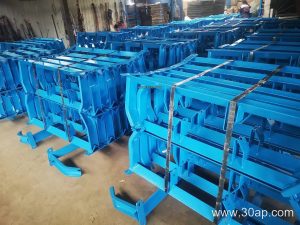
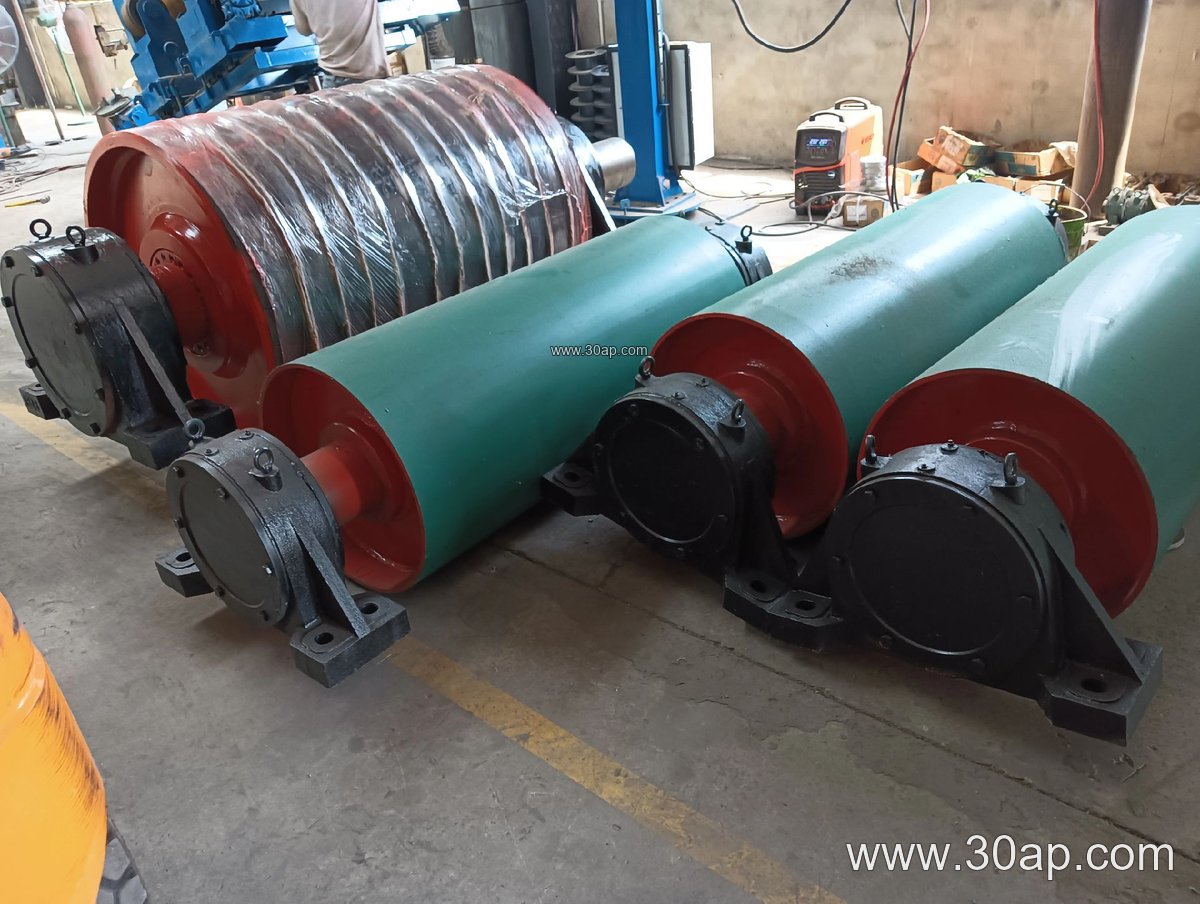
The typical unit is a steel cylinder with welded or forged end discs, a through shaft, and self-aligning bearing housings mounted on conveyor brackets. Diameters commonly range from Ø200 up to Ø800 for bend service, while larger sizes such as Ø1000 and above are usually reserved for drive or heavy-duty positions. Shell width normally exceeds belt width so the belt is fully supported, for example B800 with a shell of about 950 mm or B1200 with a shell of about 1400 mm.
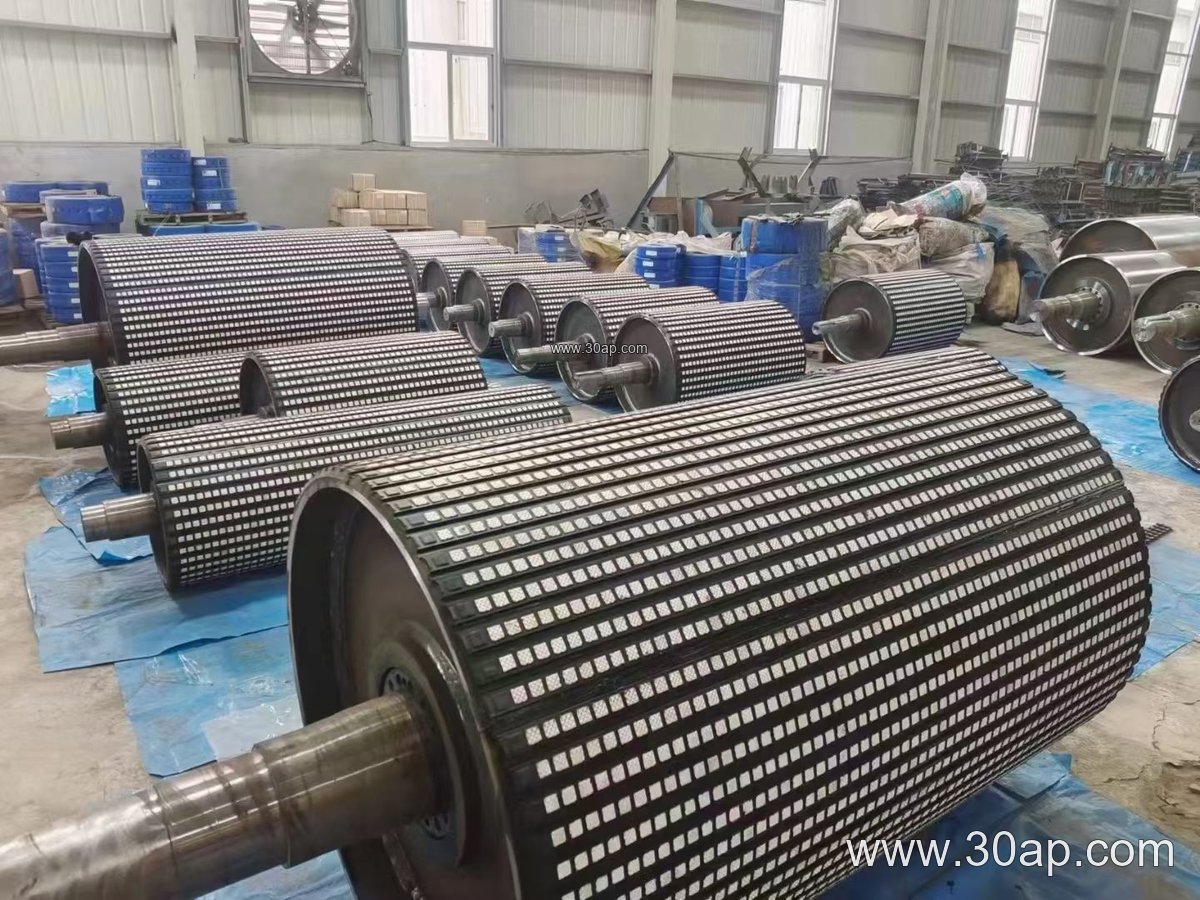
Surface finish matters. A plain shell is common where only light contact occurs. Rubber lagging, either cold-bonded or hot-vulcanized, improves grip and reduces belt slip on wrap pulleys. Diamond or herringbone patterns help shed water and fines. Ceramic lagging suits abrasive, wet conditions on heavy-duty mining conveyor belts. Plain rubber of 8 to 12 mm is often enough for a simple direction change, while 15 or 20 mm may be specified where wear is severe. None of these values is universal; they follow the duty and the belt tracking behaviour.
Matching the Roller to the Belt
The pulley and the conveyor belt work as a pair. A sharp bend on a thick, stiff rubber conveyor belt needs a larger diameter than the same route with a thinner EP conveyor belt. Steel cord conveyor belt is less tolerant of small-diameter bends, so designers usually keep the radius generous. Heat resistant conveyor belt and oil resistant conveyor belt also need attention to lagging compound, because standard rubber may harden or swell in service.
Belt tracking is another factor. A bend pulley that is slightly out of square with the frame will pull the belt to one side, and no amount of idler roller adjustment will fully correct it. Maintenance teams should check squareness, bearing play and lagging wear together.
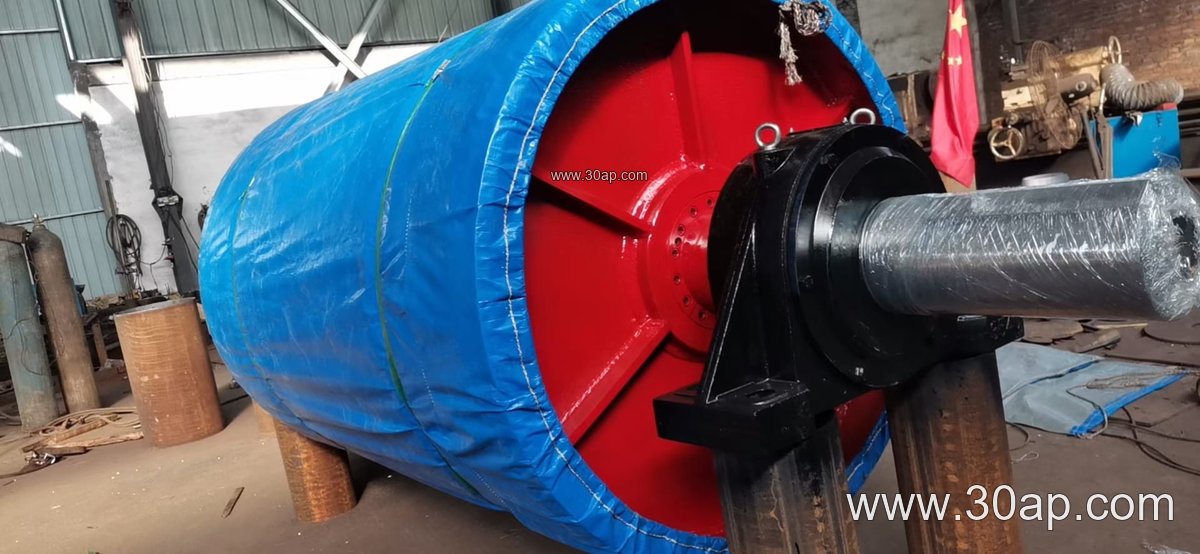
Where It Is Used
These pulleys appear in almost every bulk handling circuit. In a sand and aggregate plant they route the belt around a gravity take-up tower. In a coal preparation plant or power station coal yard, a bend pulley may sit inside a compact transfer house where space is tight. Cement plants use them on clinker and raw material conveyors, often alongside abrasion resistant conveyor belt. Port bulk terminals and iron ore yards use heavier versions on long overland lines.
For conveyor layout support, see the pulley and roller range at cnmis.com/conveyor-pulley and the belt options at cnmis.com/conveyor-belt.
Selection Data Buyers Should Prepare
A clear specification avoids most order errors. Useful reference values are shown below; actual sizes follow the conveyor design.
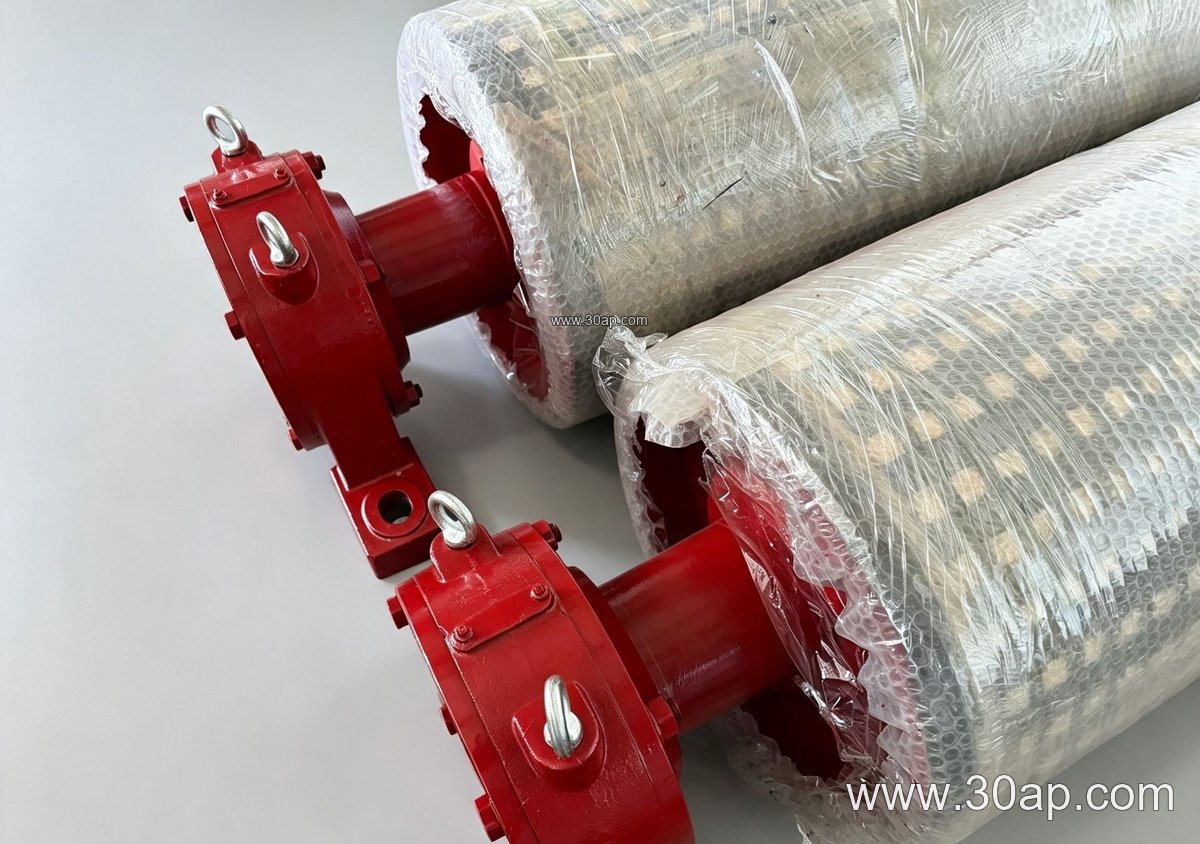
- Belt width: B400, B500, B650, B800, B1000, B1200, B1400, B1600
- Pulley diameter: Ø200, Ø250, Ø315, Ø400, Ø500, Ø630, Ø800
- Shaft diameter: Ø50, Ø60, Ø70, Ø80, Ø90, Ø100, Ø120, Ø140
- Lagging: plain, cold-bonded rubber, hot-vulcanized rubber, diamond, ceramic
- Lagging thickness: 8, 10, 12, 15, 20 mm
Shaft size is set by torque and bearing load, not by belt width alone, so never assume a fixed shaft for a given belt. Likewise, one belt width can suit several pulley diameters depending on wrap angle and belt stiffness.
Installation and Maintenance Notes
Align the pulley square to the conveyor centreline before tightening the brackets. Confirm that the bearing housings are free to self-align and that grease paths are accessible. During inspections, look for polished or cracked lagging, uneven wear on one side, and belt tracking drift that appears only under load. A worn bend pulley often shows up as belt edge fraying long before the bearing fails.
Keep spare lagging sheets and bearings matched to the original specification. For related components such as idler roller assemblies and conveyor bracket sets, check cnmis.com/conveyor-roller and cnmis.com/conveyor-bracket to keep the whole line consistent.