What a Ceramic Lagged Pulley Does on a Conveyor
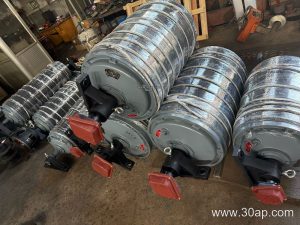
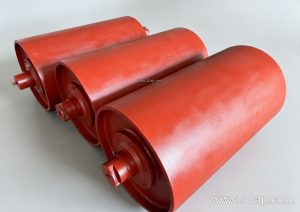
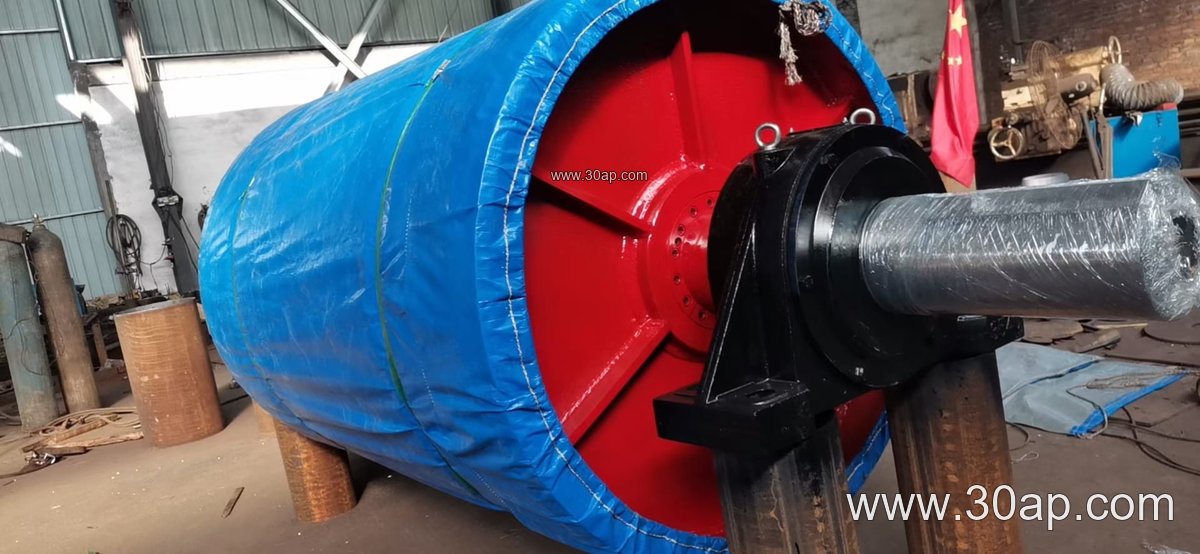
In a quarry, a copper mine, or a cement clinker line, the conveyor pulley is often the part that decides whether a belt keeps tracking straight under load. A wear-resistant ceramic lagged pulley is a conveyor pulley whose shell is covered with ceramic tiles set into a rubber or epoxy backing. The hard ceramic surface grips the belt while resisting the cutting and polishing action of abrasive dust, grit, and small rock particles.
This is not a new pulley type on its own; it is a surface treatment applied to a drive pulley, a bend pulley, or a tension pulley where slip and wear are a concern. The ceramic lagging is the wear layer, and the pulley underneath remains the load-carrying structure. For operations running abrasive material such as ore, sinter, or crushed stone, the ceramic lagging is often chosen where plain rubber lagging would wear smooth too quickly.
How the Ceramic Lagging Is Built
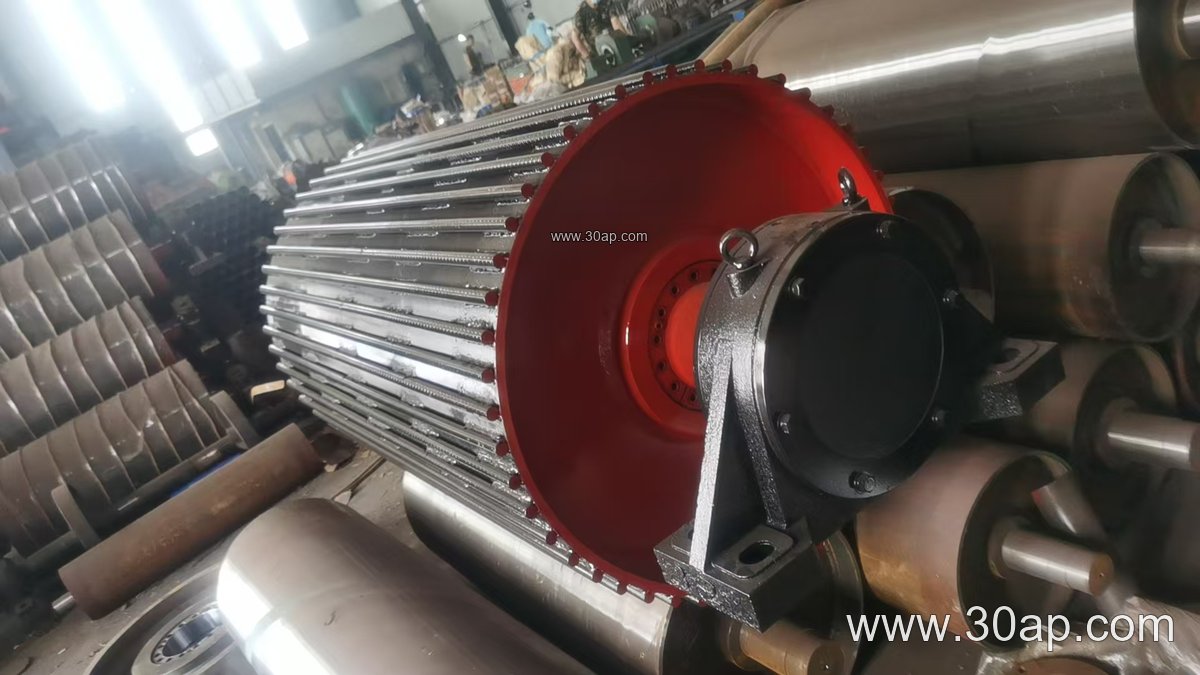
The shell is usually machined first, then covered with a bonding layer. Ceramic tiles, often small squares or rectangles with raised dimples or studs, are pressed into the bonding layer and left partly exposed. The exposed ceramic provides the contact surface, while the gaps between tiles give dust and water somewhere to escape. That combination is why a ceramic lagged pulley can hold grip on a wet or dusty belt in a wash plant or an underground coal mining conveyor.
Two build routes are common. In one, the tiles are bonded to the shell and the whole assembly is vulcanized in an autoclave. In the other, the ceramic lagging is supplied as a cold-bonded sheet and applied on site. Both routes exist, and neither is automatically better; the choice depends on workshop capability, pulley size, and how quickly the user needs the pulley back in service.
- Ceramic tile size and pattern affect grip and cleaning behavior.
- Bonding method affects how well the lagging survives impact and flexing.
- Lagging thickness usually falls in the range of 8 mm to 20 mm, depending on the application.
Where This Pulley Fits Best
The strongest case for ceramic lagging appears where abrasive fines and moisture meet high belt tension. A drive pulley on an overland conveyor carrying iron ore, a tail pulley on a stone crushing line, or a bend pulley at a transfer point in a power plant coal handling system are typical positions. In these places the belt is under load, the material is sharp, and a smooth rubber surface can glaze over or wear thin.
It is also used at tension pulleys and take-up positions where the belt must not slip during start-up. In a sand and gravel plant, a ceramic lagged bend pulley can help maintain belt speed when the return strand is dusty and damp. The same logic applies on a bulk material conveyor in a fertilizer plant or a grain silo, although the ceramic choice should be weighed against the risk of tile damage if the belt carries large lumps.
For comparison, a plain rubber lagged pulley may suit a light-duty conveyor with clean material, and a diamond-grooved rubber surface may be enough where water is the main problem. Ceramic lagging is the heavier-duty option, not the default for every position.
Sizes and Configuration Notes
Ceramic lagged pulleys are built to the same belt width and diameter ranges as other conveyor pulleys. Common belt widths include B500, B650, B800, B1000, B1200, B1400, B1600, and B1800, with shell widths usually a little wider than the belt. Diameters commonly run from Ø250 up to Ø1250 for this type of duty, and larger diameters are available for high-tension drives.
| Belt width | Typical shell width | Example diameter range |
|---|---|---|
| B500 | about 600 mm | Ø250 to Ø500 |
| B650 | about 750 mm | Ø315 to Ø630 |
| B800 | about 950 mm | Ø400 to Ø800 |
| B1000 | about 1150 mm | Ø500 to Ø1000 |
| B1200 | about 1400 mm | Ø630 to Ø1000 |
| B1400 | about 1600 mm | Ø800 to Ø1250 |
| B1600 | about 1800 mm | Ø800 to Ø1250 |
These are reference ranges, not fixed pairings. A B1200 belt may run on a Ø800 drive pulley or a Ø1000 bend pulley depending on belt tension, wrap angle, and drive layout. Shaft diameter is set by torque and bearing load, commonly in the Ø80 to Ø200 range for this class of pulley, and should never be guessed from belt width alone.
When specifying, confirm the pulley position (drive, tail, bend, or take-up), the belt type it will run with, and the lagging thickness. A conveyor carrying an abrasion resistant conveyor belt with a thick cover may need a different ceramic pattern than one running a thinner EP conveyor belt. Matching the pulley to the belt is as important as matching it to the material.
What Buyers Should Check Before Ordering
Ask for the ceramic tile specification, the bonding method, and the surface pattern. Confirm that the pulley will be balanced for the intended belt speed, and check that the lagging edges are sealed so water cannot creep under the tiles. On a coal mining conveyor, flame retardant and anti-static properties of the lagging compound may also matter, so raise that requirement early.
Finally, plan for inspection. Ceramic lagging is durable, but tiles can chip if the belt carries sharp, heavy lumps or if the pulley is struck during maintenance. A short visual check at each shutdown, together with a look at the conveyor bracket and idler roller alignment, keeps the pulley working as intended. For more on matching pulleys to belts, see conveyor pulley and abrasion resistant conveyor belt guidance.