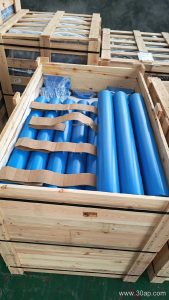
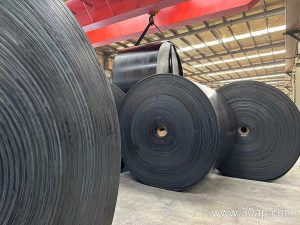
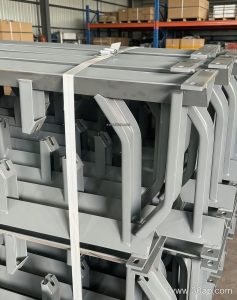
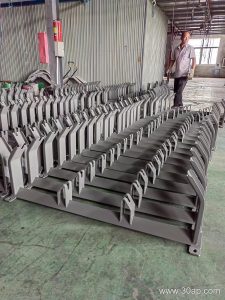
What a Conveyor Idler Bracket Does
A conveyor idler bracket is the structural part that holds idler rollers in the right position under a conveyor belt. The bracket does not carry the material itself. It sets the roller spacing, the trough angle and the height so that the loaded belt keeps a stable line without rubbing on the frame. On a long overland line, a transfer point or a short yard conveyor, these brackets are the link between the steel structure and the rotating parts. When a bracket is bent, loose or out of line, the belt starts to mistrack, the edges wear faster and the rollers suffer uneven load.
People often use the shorter name idler bracket, and in some workshops it is called a roller support bracket or conveyor bracket. All of them point to the same part: the mounting frame for carrying idlers and return idlers.
How the Bracket Is Built
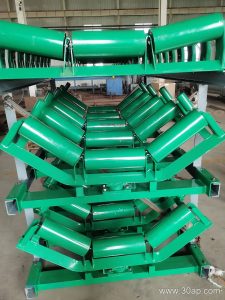
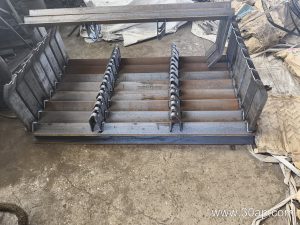
Most brackets are fabricated from angle steel, channel steel or folded steel plate. The two side arms hold the inclined rollers, while a horizontal base or cross beam holds the centre roller on a troughing set. Bolt slots are punched or drilled so the assembly can be lined up on site. The bracket connects to the conveyor frame with bolts, and the idler shaft sits in hooked slots or clamp plates in the bracket. Frames are usually painted or galvanized, but in a wet or dusty plant the paint coat matters as much as the steel thickness.
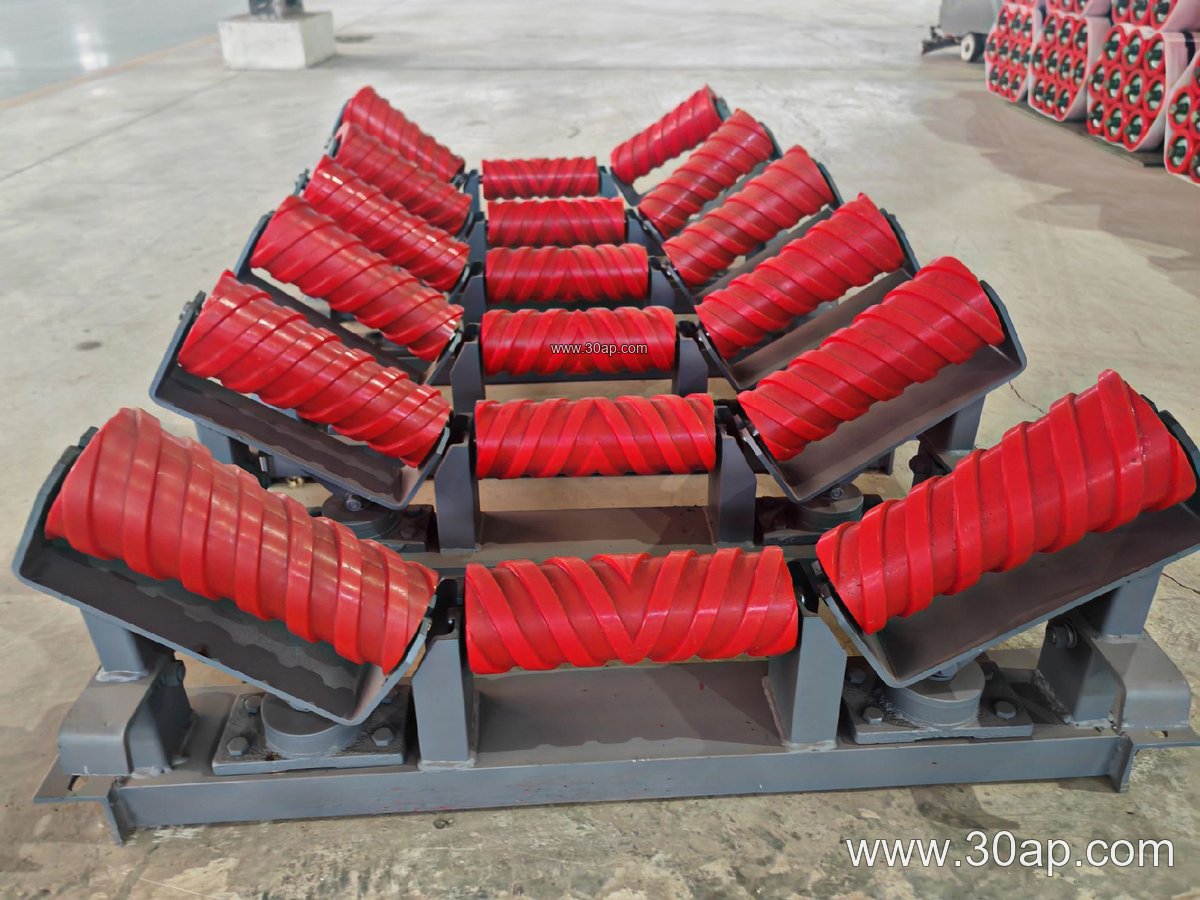
A sturdy bracket should keep its shape after the belt has been running for a long time. Thin plate that bends under load is a common source of trouble, because a bracket that flexes cannot keep the trough angle steady.
Bracket Types and Where They Sit
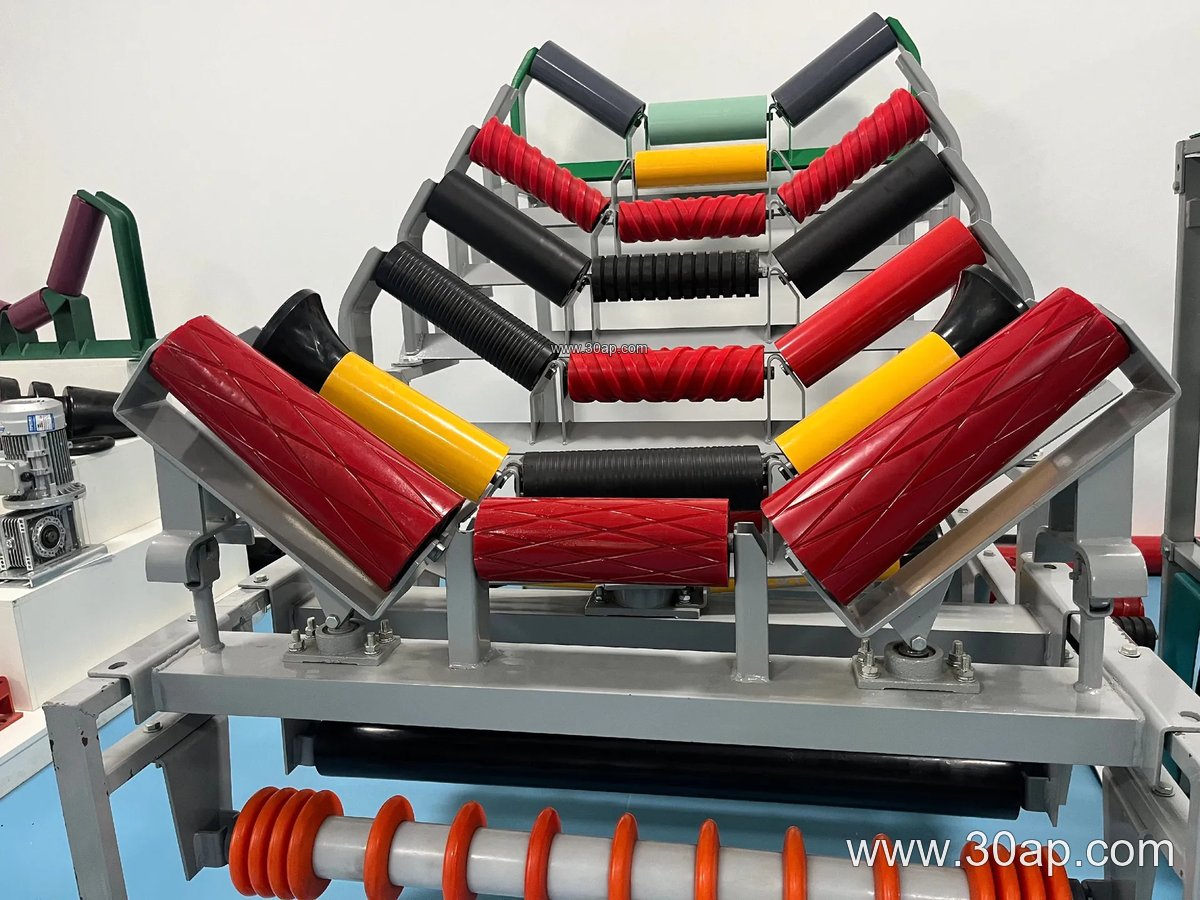
The position on the conveyor decides the type. On the carrying side you normally find troughing brackets, and on the return side flat or V-shaped return brackets. Transition brackets sit close to the pulleys, where the belt changes from flat to troughed. Impact brackets with cushion rollers are placed under the loading point. Self-aligning brackets are used where mistracking is a risk, and suspended or adjustable brackets help where the belt path is not straight.
| Bracket type | Typical location | Common belt width range |
|---|---|---|
| Troughing bracket | Carrying side, main run | B500 to B2200 |
| Transition bracket | Near drive and tail pulleys | B650 to B1800 |
| Return flat bracket | Return strand | B500 to B2000 |
| V-return bracket | Return strand, dusty lines | B800 to B1800 |
| Impact bracket | Below loading chute | B800 to B1600 |
These ranges are common references only. The final bracket size follows the frame design, the belt width and the roller diameter chosen for the duty.
Trough Angle and Roller Diameter
The trough angle is one of the main choices. 20 degrees suits some flat, light-duty belts, while 30 and 35 degrees are common on general bulk handling lines. 45 degrees is used where the belt needs a deeper trough to hold the load. Adjustable brackets can be set between these angles, which is useful when a plant handles more than one material.
The roller diameter should be matched to the belt speed and load rather than picked from one table. Ø89, Ø108, Ø133, Ø159 and Ø194 are common roller sizes. A combination such as B800, 35 degrees, Ø108 appears on many medium conveyors, and B1200, 45 degrees, Ø133 is seen on heavier lines, but neither is a fixed rule. For a mine or quarry line that feeds a crusher, a wider belt and larger roller may be needed; for a small dosing conveyor in a fertilizer plant, a lighter bracket is enough.
Choosing Brackets for the Duty
Start with the belt width and the frame layout. Check that the bracket slots accept the idler shaft end and that the cross beam length suits the frame. Look at the steel section, the weld quality and the coating if the site is wet or corrosive. For coal mining and underground coal mining work, flame retardant conveyor belt and anti-static conveyor belt are often specified together with the frame, so the bracket should not create sharp edges that damage the belt cover. In a cement plant or power plant coal yard, dust builds up quickly, and brackets that trap material can cause roller seizure.
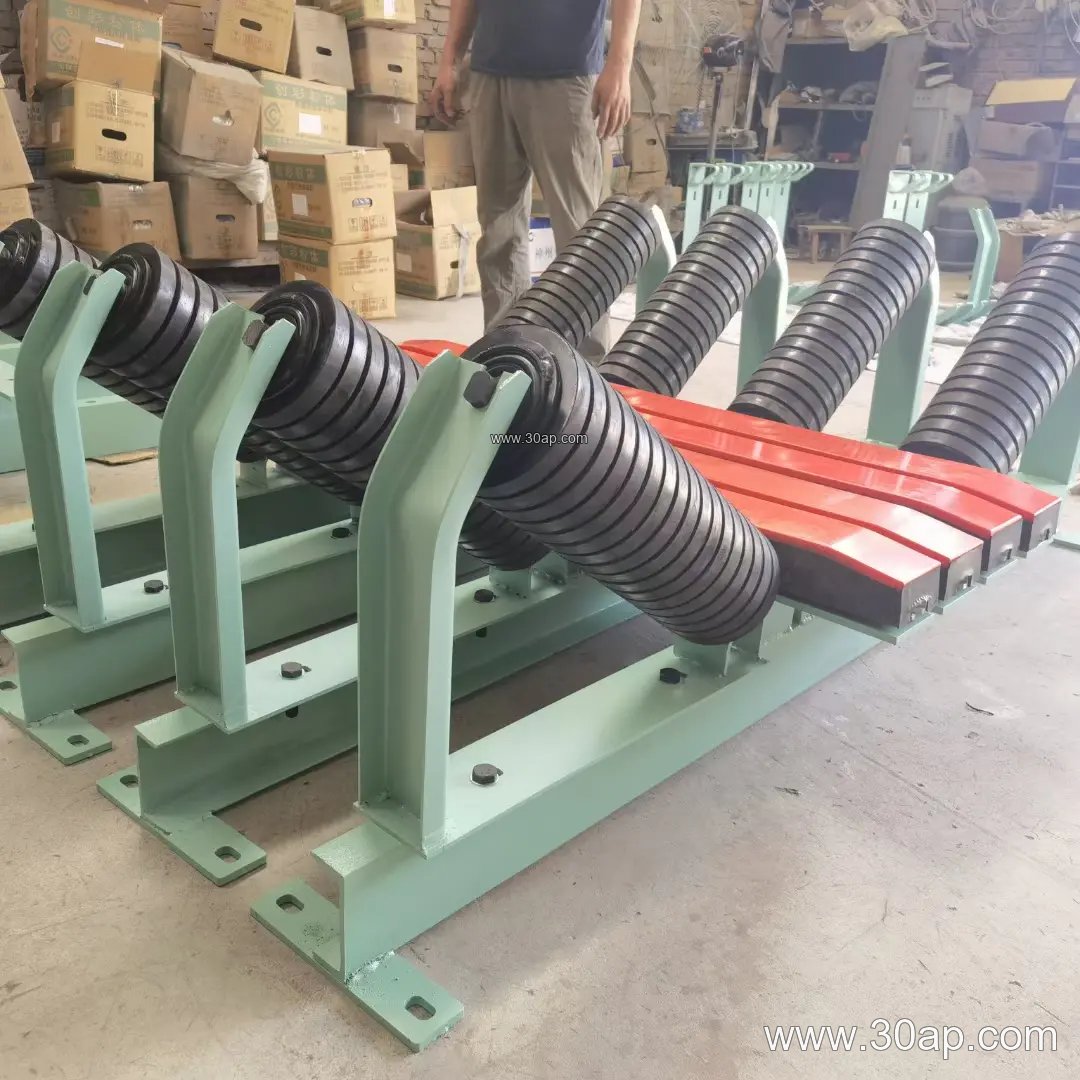
On heavy-duty mining conveyor belt lines, steel cord conveyor belt may run at high tension, and the bracket must hold its angle under that load. In a sand and gravel yard, an abrasion resistant conveyor belt is common, but the bracket still needs a straight line and firm bolts. Where a pipe conveyor belt or a corrugated sidewall conveyor belt is installed, bracket layout is usually set by the conveyor designer, so the bracket is not a free choice.
Buyers should ask for the bracket drawing, the steel grade, the surface treatment and the bolt hole spacing, and should confirm the roller diameter that will be used. Do not assume that one belt width has only one bracket or one pulley match. The bracket, idler roller and conveyor pulley work as a set, and the drive pulley, tail pulley and bend pulley each have their own position and load, so they should not be treated as interchangeable parts.
Installation and Maintenance Notes
Line up brackets with a string line before tightening the bolts. Check the trough angle after the first run and retighten any loose bolts. Replace bent brackets rather than hammering them straight, because a distorted bracket will keep the roller out of line. Keep the area around the bracket clean so material does not pack under the idler. A simple walk-round inspection of brackets, rollers and the belt edge catches most problems early.