What an Intermediate Bend Pulley Does
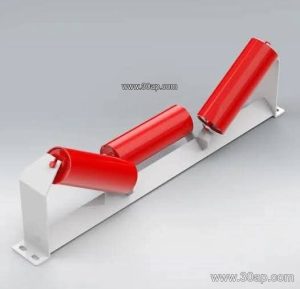
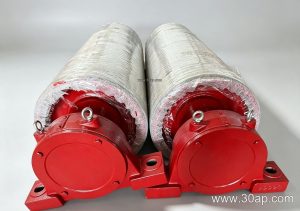
An intermediate bend pulley is a non-driven conveyor pulley placed between the head and tail of a conveyor to change the path of the conveyor belt. It is often used to increase the wrap angle on a drive pulley, to route the belt around an obstruction, or to guide the return strand in a long overland system. Unlike a drive pulley, it transmits no torque to the belt; unlike a tail pulley, it does not serve as the terminal return point. In many layouts the bend pulley works alongside the idler roller set and conveyor bracket assemblies to keep the belt tracking smoothly through the structure.
In a quarry conveyor line or a cement plant clinker transport route, an intermediate bend pulley may be installed to lift the return belt above a walkway or to redirect it toward a tensioning station. The same component can appear in a power plant coal handling system, where space is tight and the belt must make several turns before reaching the transfer tower.
Construction and Surface Options
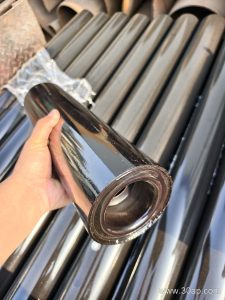
The pulley body is typically a welded steel drum with a machined face, mounted on a shaft with bearing housings at both ends. The shell thickness and shaft diameter are selected according to the belt tension and load, not simply by belt width. Common shaft diameters include Ø80, Ø100, Ø120, Ø140 and Ø160, but the final value is determined by torque and radial load calculations.
Surface treatment depends on the job. A plain face may be sufficient for light duty or where the belt is clean. Rubber lagging—applied by cold bonding or hot vulcanizing—improves friction and protects the shell from wear. Diamond or herringbone grooving can help shed water and fines in wet or dusty conditions. For abrasive service, ceramic lagging may be chosen. Lagging thickness is often 8, 10, 12, 15 or 20 mm, again according to design requirements.
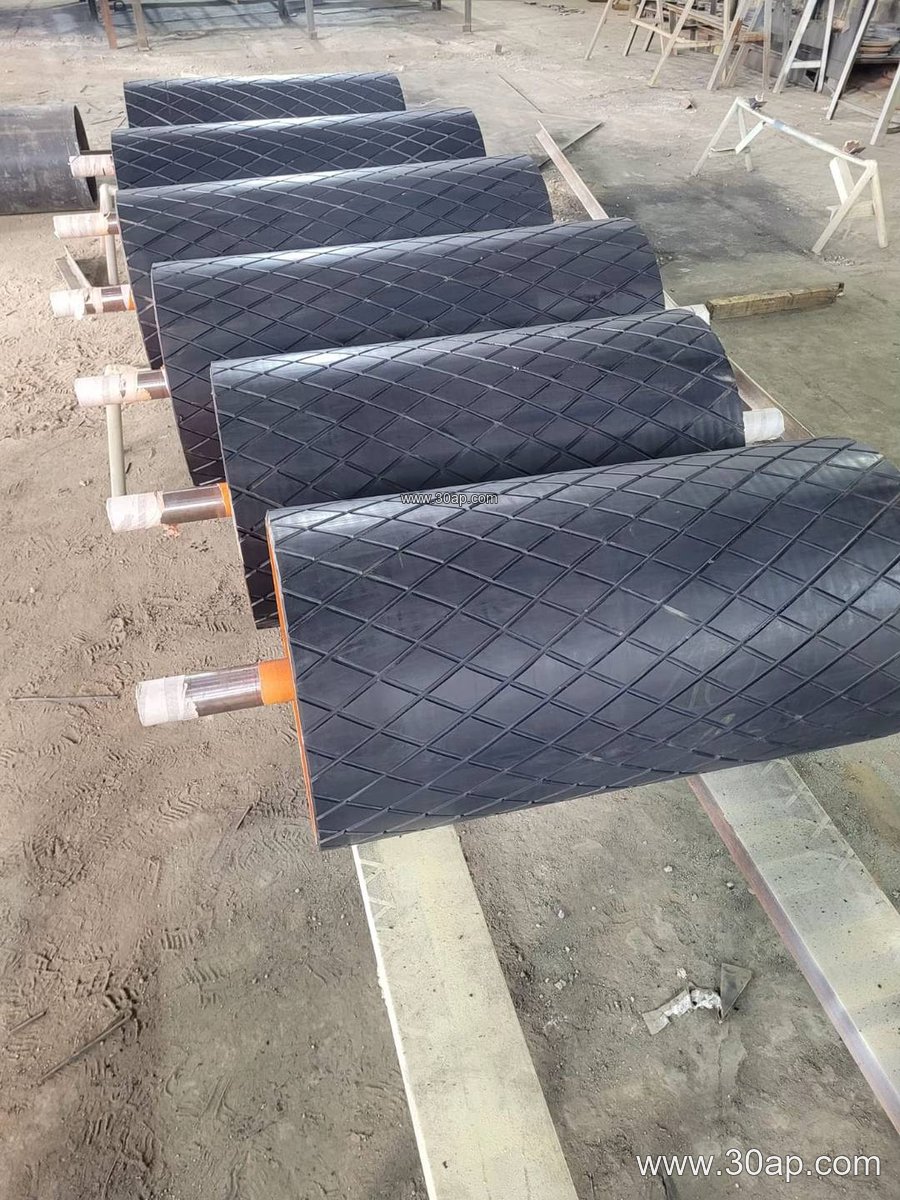
The pulley face width is usually wider than the belt. For example, a B800 belt might run on a pulley face of about 950 mm, while a B1200 belt might use a face of about 1400 mm. These are reference relationships, not fixed rules. A B1200 × Ø1000 intermediate bend pulley and a B800 × Ø500 unit are both plausible combinations, but the diameter should be confirmed against belt tension, wrap angle and available space.
Where It Fits in the Conveyor
Intermediate bend pulleys are common in:
- Overland and long-distance conveyors where the belt must follow terrain
- Port bulk handling systems with transfer points and ship loading routes
- Crushing and screening plants where space around the head is limited
- Underground mining conveyor drifts that require compact belt routing
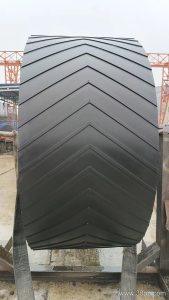
In these settings, the bend pulley often works with a conveyor belt that suits the material. A coal mining conveyor belt may be flame retardant, while an iron ore conveyor belt is usually selected for high abrasion resistance. The bend pulley itself must be compatible with the belt’s stiffness and tracking behavior.
Selection Notes for Buyers
When specifying an intermediate bend pulley, provide the belt width, the intended location, the belt tension, the wrap angle and the available space. State the required shaft diameter if it has already been calculated; otherwise ask the supplier to confirm it from the load data. Mention whether lagging is needed and which surface form suits the environment—plain, rubber lagged, grooved or ceramic. Also clarify the bearing type and sealing arrangement, especially for dusty or wet conditions.
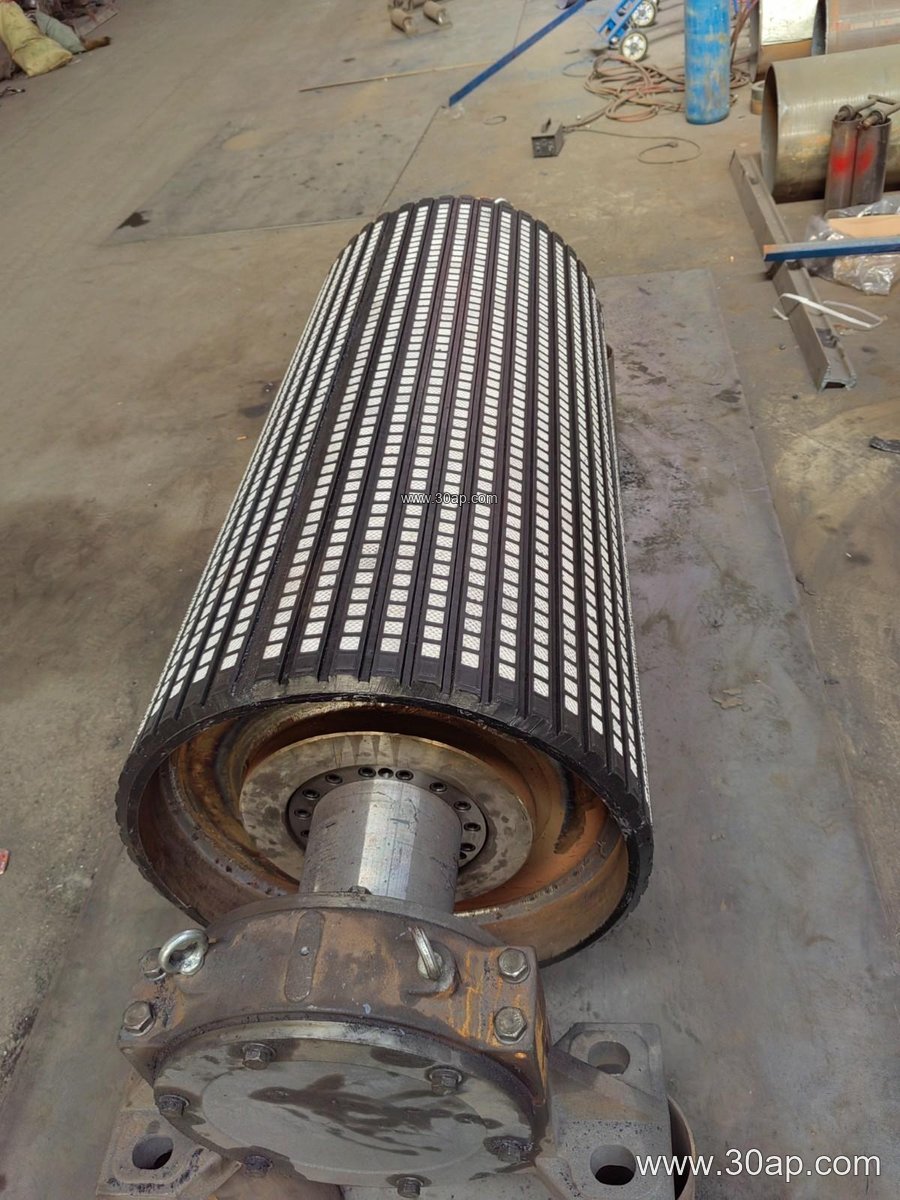
Do not assume that one belt width can only match one pulley diameter. A B650 belt may run on a Ø315 bend pulley in a light-duty line, but a similar width in a high-tension route may require a larger diameter. The same applies to the shaft: a Ø100 shaft may be adequate in one layout and insufficient in another. Always confirm the design values.
For conveyors carrying abrasive aggregate or heavy ore, the intermediate bend pulley should be checked for shell wear and lagging condition during maintenance. A worn lagging can cause belt slip or misalignment. Keeping the pulley aligned with the idler roller frames and the conveyor bracket structure helps extend belt life and reduce edge damage.
Working With the Belt
An intermediate bend pulley does not replace the drive pulley or the tail pulley; it is a routing component. Its performance depends on the belt’s flexibility and the overall tension distribution. In systems using a steel cord conveyor belt, the bend pulley diameter is usually larger to avoid excessive bending stress. Fabric core belts, such as EP or NN types, may tolerate smaller diameters, but the manufacturer’s recommendation should still be followed.
For a quarry conveyor belt or a bulk material conveyor belt, the bend pulley should be sized to keep the belt tracking stable through the turn. If the belt is likely to misalign, a slightly crowned face or a self-aligning idler roller nearby may help, but the pulley itself is normally cylindrical. Regular inspection of the lagging and bearings is the simplest way to avoid unplanned stops.