What a Fixed Conveyor Bracket Does
A fixed conveyor bracket is a stationary support that holds idler rollers in a set position under the belt line. Unlike an adjustable bracket, it has no slotted take-up or tilt feature, so the trough angle and roller spacing are locked in at the factory or at assembly. In a quarry, a cement plant, or a power plant coal yard, these brackets form the backbone of the carrying side and keep the conveyor belt tracking steadily along the frame.
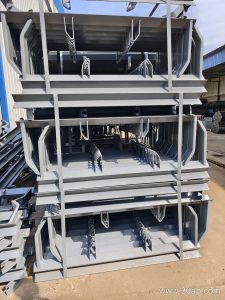
The bracket is usually a weldment or a folded part made from angle steel, channel steel, or bent steel plate. Its main job is to position the idler roller at the correct height and angle so the belt sits in a stable trough. Because it does not move, the design puts more emphasis on stiffness and hole accuracy than on field adjustment.
Construction and Common Forms
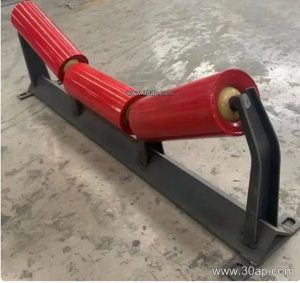
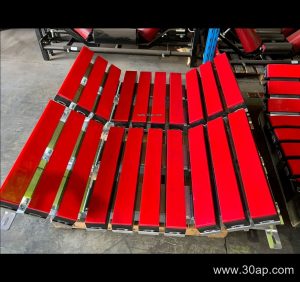
Most fixed brackets fall into a few familiar shapes. Trough brackets carry three rollers in a fixed V or U profile. Return brackets support the belt on the lower run, often as a flat or V-return set. Transition brackets sit near pulleys to guide the belt from flat to troughed. Impact brackets, mounted under loading points, carry heavier rollers and absorb falling material.
- Trough bracket for the carrying run
- Return and V-return bracket for the lower run
- Transition bracket close to the head or tail pulley
- Impact bracket under the chute or hopper
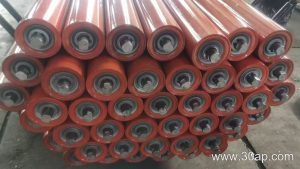
Material choice follows the duty. Light aggregate lines may use folded plate, while heavy ore and crusher duty often need channel steel frames with reinforced gussets. The bracket must match the idler roller end fittings, so the mounting hole pattern is agreed with the roller supplier before production.
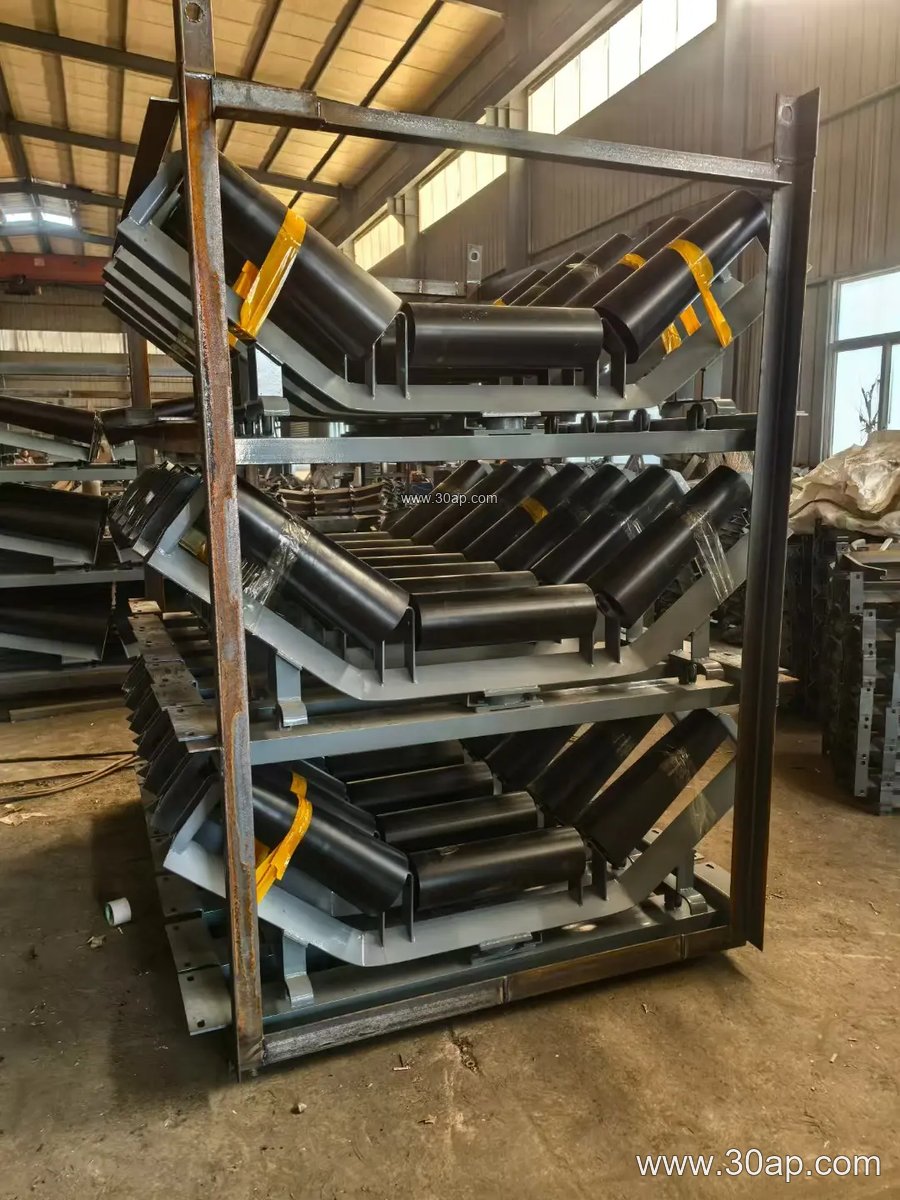
Matching Belt Width, Trough Angle, and Roller Diameter
Bracket geometry depends on belt width, trough angle, and roller diameter together. Common belt widths run from B500 and B650 up to B2000 and B2200, with B800, B1000, and B1200 being very common in aggregate and cement service. Trough angles are usually 20, 30, 35, or 45 degrees, and roller diameters commonly include Ø89, Ø108, Ø133, Ø159, and Ø194.
These values are reference points, not a fixed rule. A B800 belt may run at 30 or 35 degrees with Ø89 or Ø108 rollers depending on capacity and material. A B1200 line in a coal yard might use 35 or 45 degrees with Ø133 rollers. The mounting hole spacing and crossbeam length change with width and angle, so they are set by design rather than treated as a standard number.
| Belt width | Typical trough angle | Common roller diameter |
|---|---|---|
| B500 | 20 to 30 degrees | Ø89 |
| B650 | 30 degrees | Ø89 to Ø108 |
| B800 | 30 to 35 degrees | Ø108 |
| B1000 | 35 degrees | Ø108 to Ø133 |
| B1200 | 35 to 45 degrees | Ø133 |
| B1400 | 35 to 45 degrees | Ø133 to Ø159 |
| B1600 | 35 to 45 degrees | Ø159 |
| B1800 to B2000 | 35 to 45 degrees | Ø159 to Ø194 |
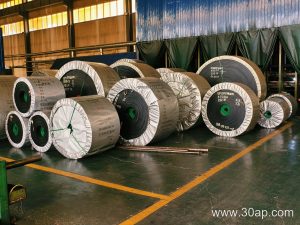
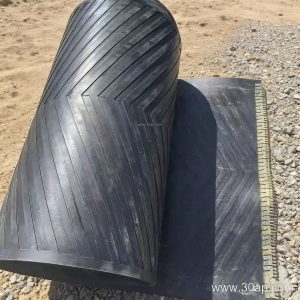
Where a line carries an EP conveyor belt or a steel cord conveyor belt at high tension, the bracket and frame must be stiff enough to hold the trough without spreading. On a chevron conveyor belt or a corrugated sidewall conveyor belt, the bracket also has to leave clearance for the raised profile.
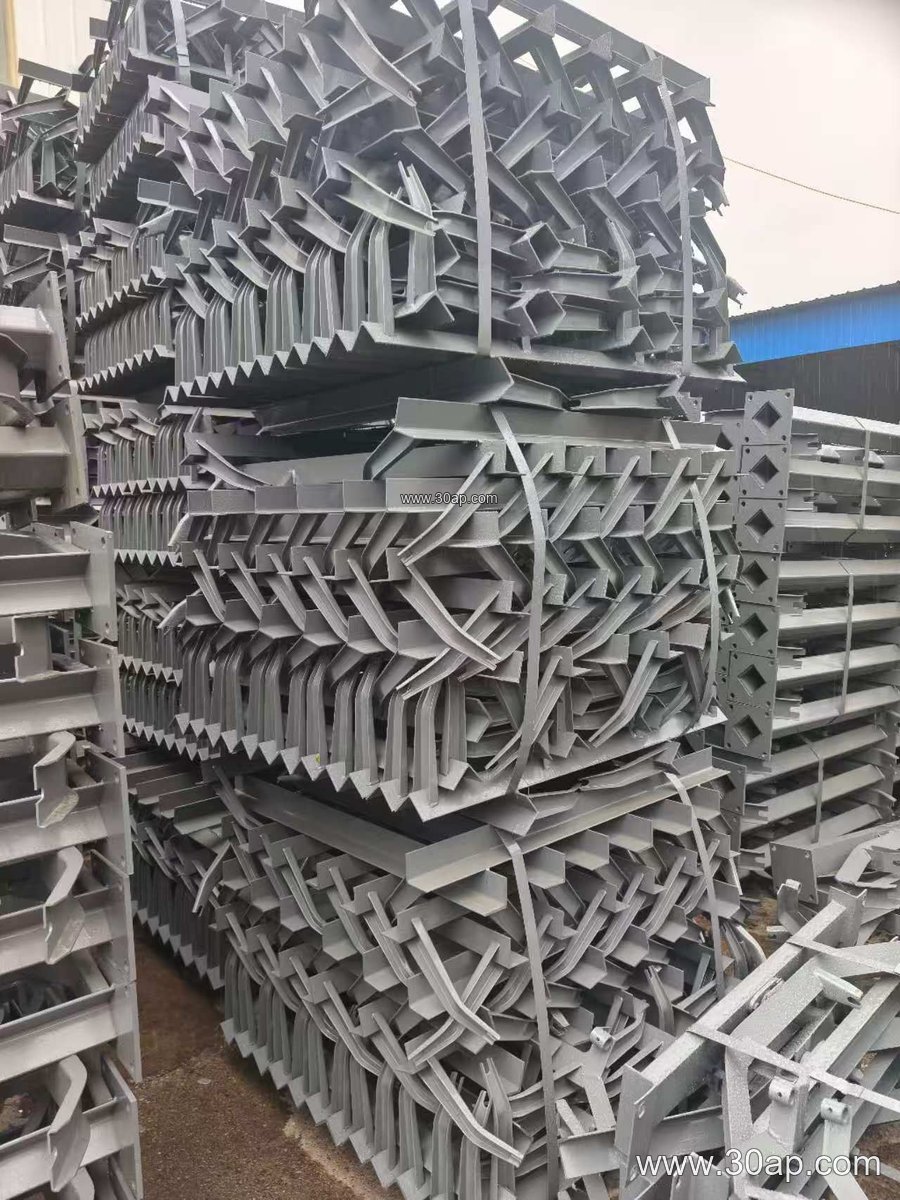
Where Fixed Brackets Are Used
Fixed brackets suit long, steady runs where the belt path does not need frequent correction. A limestone quarry discharge line, a sand and gravel washing plant, or a cement plant clinker transport are typical. In a coal handling system feeding a power plant boiler, fixed trough brackets support the carrying run while a separate self-aligning bracket handles any drift.
They also appear in iron ore and copper ore handling, in crushing and screening circuits, and in port ship loading conveyors. In each case the bracket works with the conveyor pulley alignment and the idler roller set to keep the belt centered. If the belt tends to wander, a trained fitter checks the frame and pulley first, because a fixed bracket cannot correct tracking on its own.
What Buyers Should Confirm
Before ordering, confirm the belt width, trough angle, roller diameter, and the roller end fitting. State the material and duty, since a heavy-duty mining conveyor belt or an abrasion resistant conveyor belt on a crusher line loads the bracket differently from a light food grade conveyor belt. Ask for the mounting hole drawing, check the steel thickness, and confirm the finish, especially for a coal mining conveyor belt in a flame retardant conveyor belt application where dust and moisture are present.
Also decide whether an adjustable bracket is needed near the tail pulley or loading zone. A fixed bracket is simpler and stiffer, but it offers no field correction. Mixing the two types along one conveyor is normal, as long as the roller height stays consistent. For more on matching brackets with rollers and belts, see the product pages at primaryconveyorbelt.com and check conveyor bracket options before finalizing the frame layout.