What an Iron Ore Conveyor Idler Does on the Line
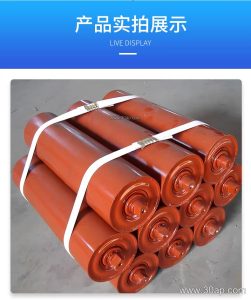
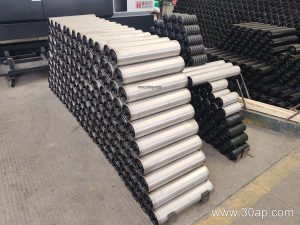
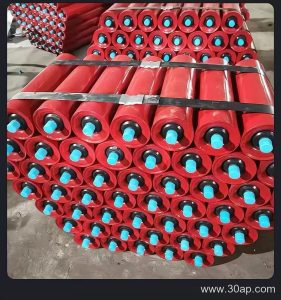
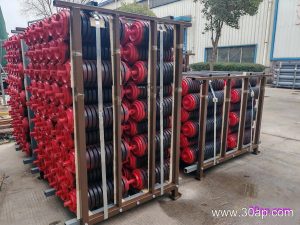
An iron ore conveyor idler is the rotating roller assembly that supports the loaded belt along its carrying run and the empty belt on its return. In a pit, a sinter plant or a port stockyard, the belt is only as reliable as the rollers beneath it. Each idler carries a share of the ore load, keeps the belt tracking in a stable trough and limits sag between support frames. Because iron ore is dense and often sharp-edged, these rollers are usually built heavier than general-purpose units used on lighter bulk materials.
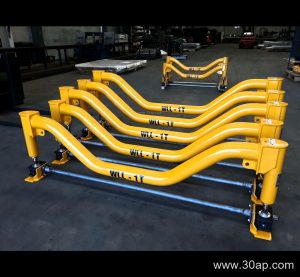
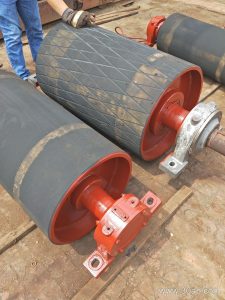
The same component is often called a conveyor roller or carrying roller. On a typical iron ore conveyor, the troughing set is a three-roll arrangement, while the return side may use a single flat roll or a V-shaped pair. Drives, tail pulleys and bend pulleys do a different job and are not substitutes for idlers.
Construction and Material Choices
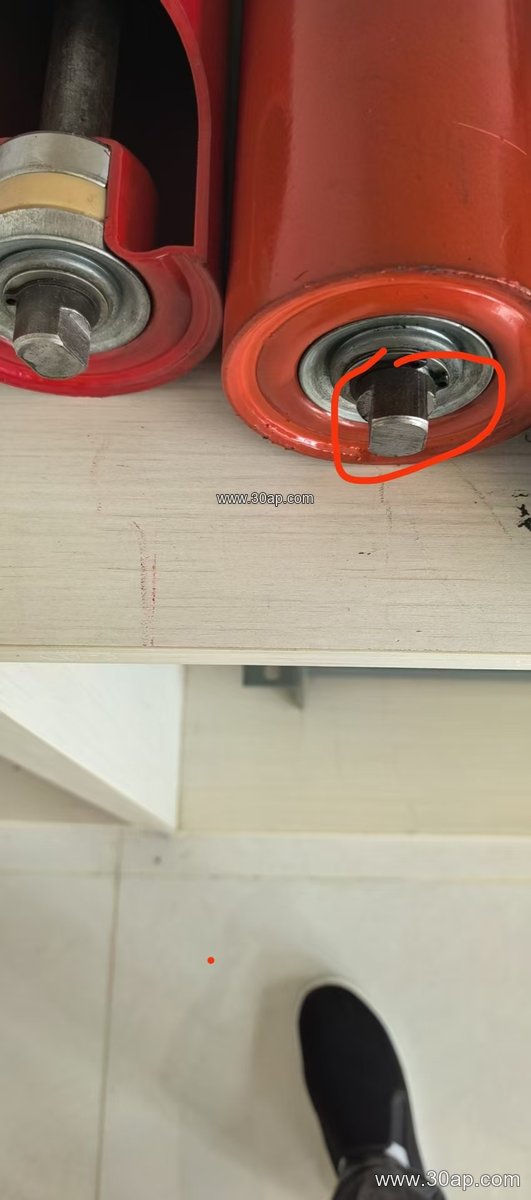
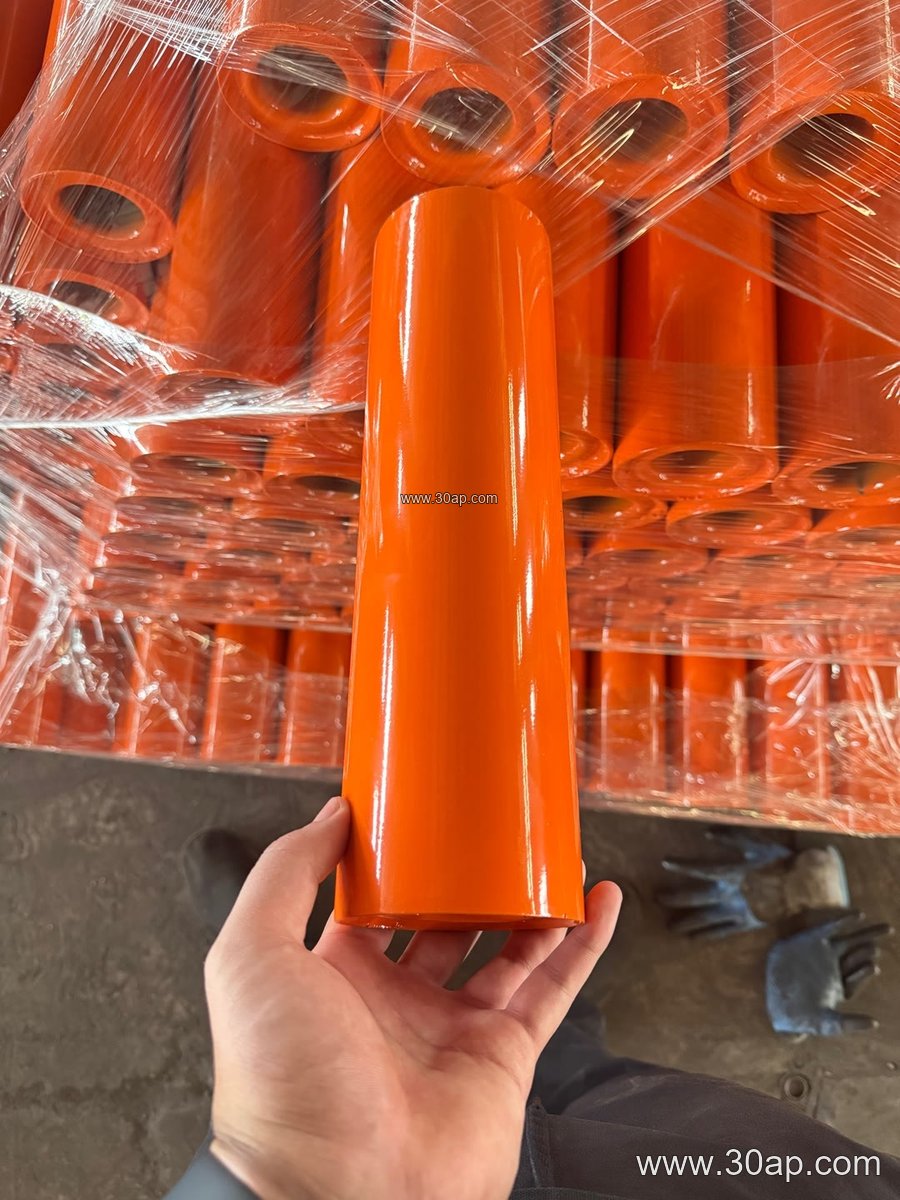
Most iron ore conveyor idlers follow a simple but rugged pattern: a steel tube shell, pressed bearing housings at each end, sealed ball bearings and a fixed shaft. The shell may be plain steel, nylon-coated, ceramic-lined or fitted with rubber rings where impact is severe.
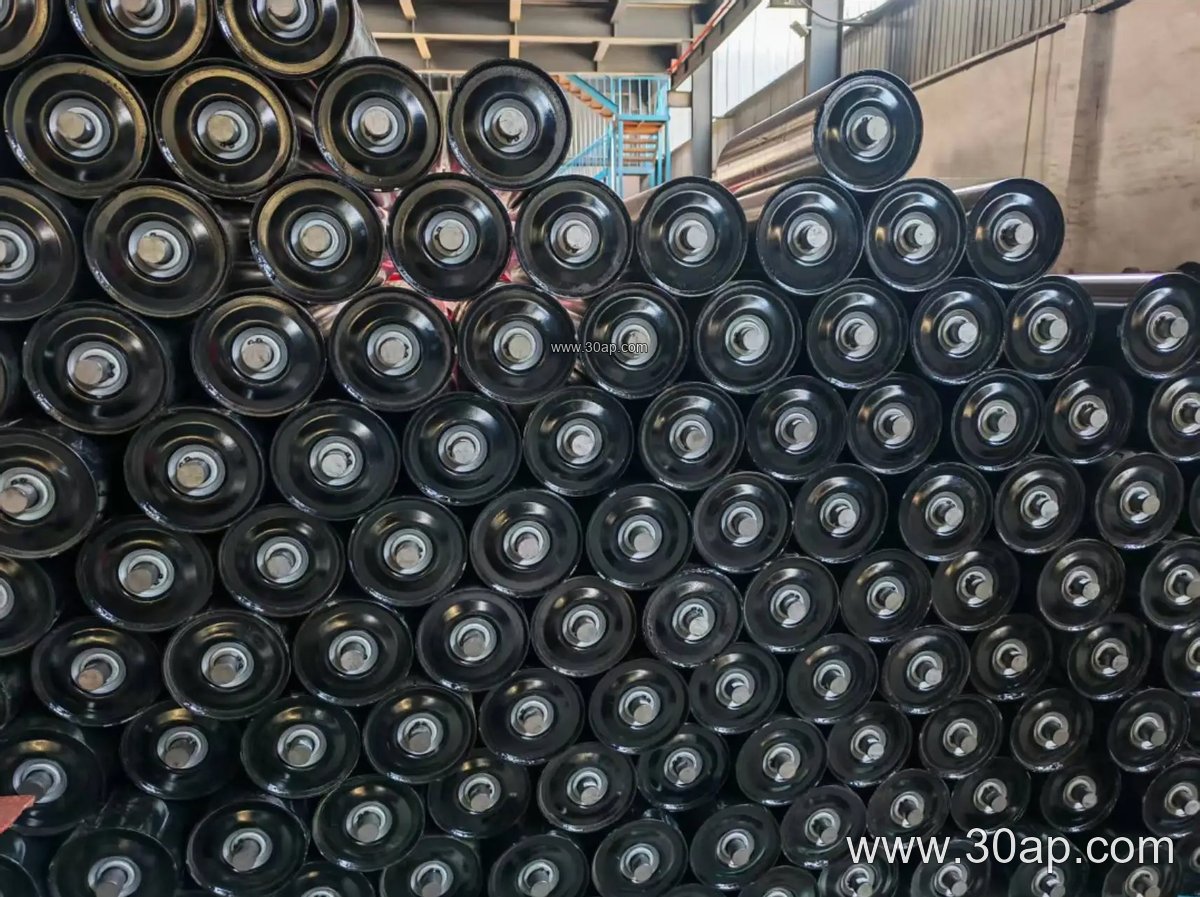
- Shell: welded steel tube, machined for balance; thicker walls suit high-load positions.
- Bearing: deep-groove ball bearings such as 6205, 6305, 6308 or 6310 are common, selected by load and speed rather than by belt width alone.
- Seal: labyrinth or contact seals keep fine ore dust and water out; seal quality often decides service life.
- Shaft: fixed ends sit in the conveyor bracket or frame, so shaft diameter follows the bracket design.
Common roller diameters include Ø89, Ø108, Ø127, Ø133, Ø159 and Ø178 mm. Larger diameters are usually chosen for high belt speeds or heavy lump loads. Roll length is set by belt width, trough angle and the number of rolls in the set. For example, a three-roll troughing set on a 1200 mm belt commonly uses rolls around 465 mm long, but side rolls and centre rolls can differ, and final dimensions should be confirmed against the frame drawing.
Where These Rollers Work
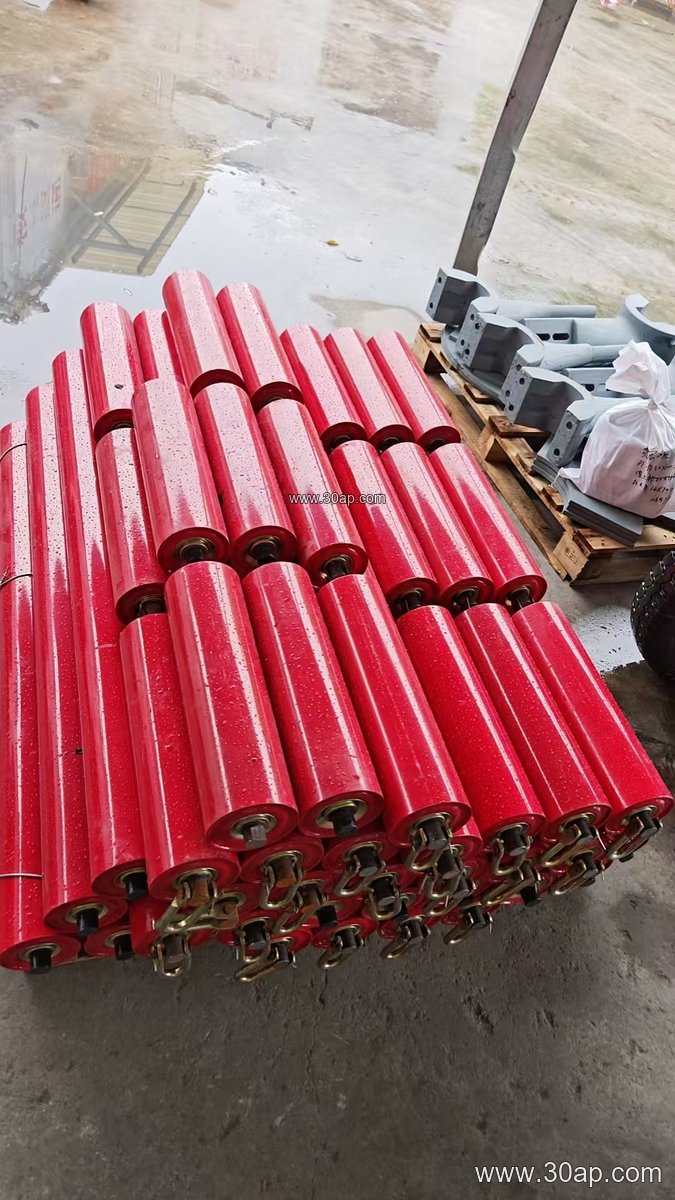
Iron ore duties vary widely across a plant. At the crusher discharge, rubber-ring impact idlers absorb the drop of lump ore. Along the main haulage incline, three-roll troughing sets at 35 or 45 degrees keep a heavy Iron Ore Conveyor Belt centred. On the return run, V-type rollers help shed sticky fines. Transfer points and stockyard conveyors often pair rollers with an abrasion resistant conveyor belt so the belt and the idlers share the wear burden.
Similar roller designs appear in a limestone quarry, a coal washing plant, a cement kiln line, a power station coal yard and a steel plant sinter building. The duty cycle, dust level and belt speed change, but the support principle stays the same.
Sizes and Reference Data
The table below gives typical reference ranges only. They are not fixed matches, and final selection depends on load, speed and frame design.
| Item | Common reference values |
|---|---|
| Roller diameter | Ø63, Ø76, Ø89, Ø102, Ø108, Ø127, Ø133, Ø159, Ø178, Ø194, Ø219 mm |
| Belt width | B400 to B2400 mm |
| Trough angle | 20, 30, 35, 45 degrees |
| Roll surface | Steel tube, nylon, ceramic, rubber ring |
| Bearing | 6204, 6205, 6305, 6306, 6308, 6310 |
| Set form | Single roll, two-roll, three-roll troughing |
Typical roll lengths for three-roll troughing sets run from about 200 mm on B500 up to about 750 mm on B2000. These are examples, not universal rules, and a wide belt does not dictate one pulley or shaft size.
Buyer Checklist
- Match roller diameter and bearing class to belt speed and load, not to belt width alone.
- Check seal design for dusty ore and wet washing areas.
- Confirm shaft ends and mounting dimensions against the existing conveyor bracket.
- Use impact or rubber-ring rollers at transfer points and standard troughing sets on the main run.
- Ask for balance and runout data on high-speed lines.
Good idler selection is a system decision. Pair the rollers with the right belt construction, whether that is a heavy-duty mining conveyor belt, an EP fabric core belt or a steel cord belt, and keep spare rollers on site for fast replacement.