What a Rubber Ring Impact Idler Does
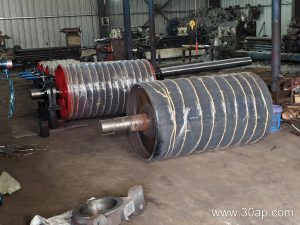
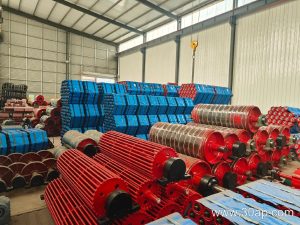
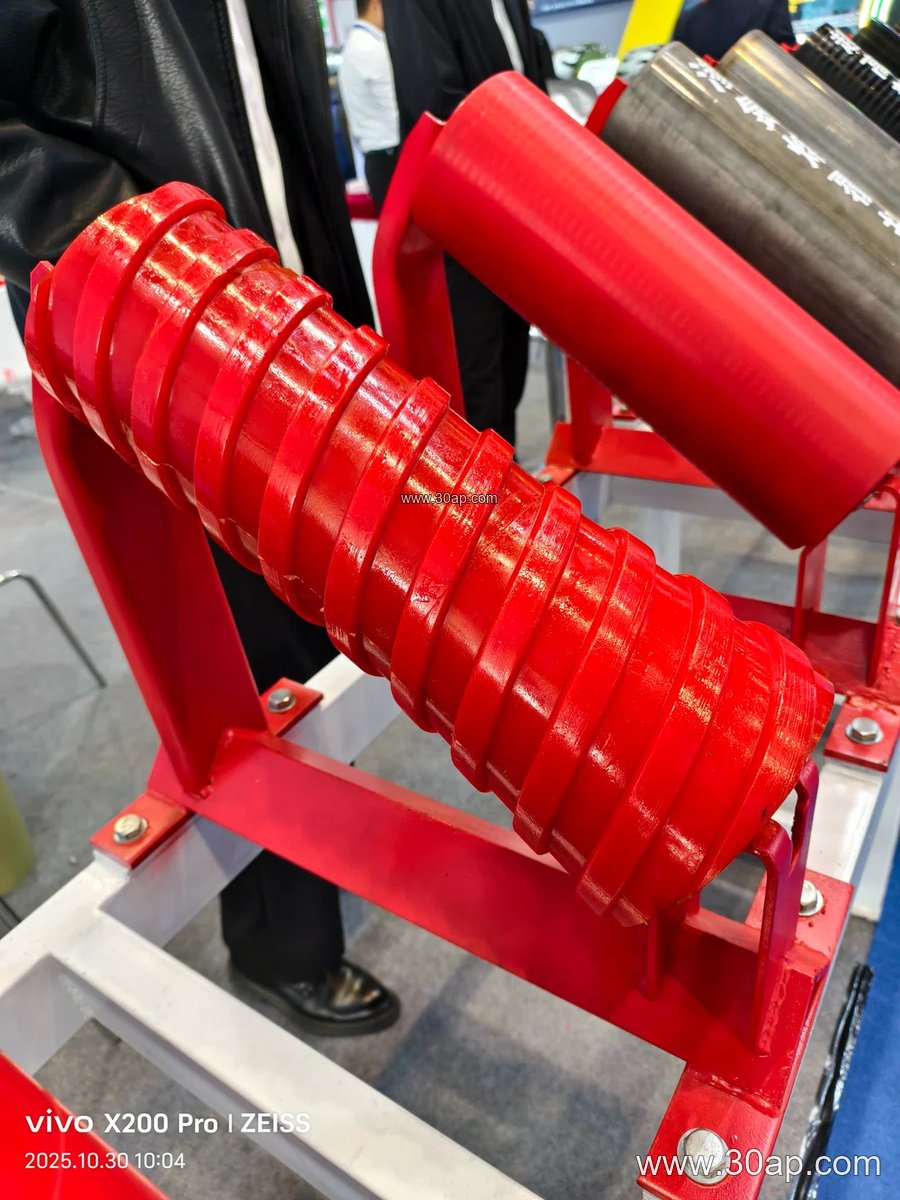
A rubber ring impact idler is a buffer-type carrying roller used at conveyor loading points where mined or quarried material drops onto the belt. Instead of a plain steel shell, the roller body carries a series of resilient rubber rings that absorb the energy of falling lumps. This protects the conveyor belt, the idler frame and the surrounding structure from repeated shock loads.
The same product is also called a rubber disc impact roller or rubber-ring buffer idler. These names describe the same component; they are not separate product families. Drive pulleys, tail pulleys and bend pulleys are different assemblies entirely and are never substitutes for a buffer idler.
How the Roller Is Built
A typical unit combines a steel shaft, bearing housings with sealed bearings, and a stack of rubber rings or discs pressed onto the shell. The rings are spaced so that fines can fall away rather than pack between them. Common bearing sizes include 6204, 6205, 6305, 6306, 6308 and 6310, matched to the shaft and load rating by the manufacturer.
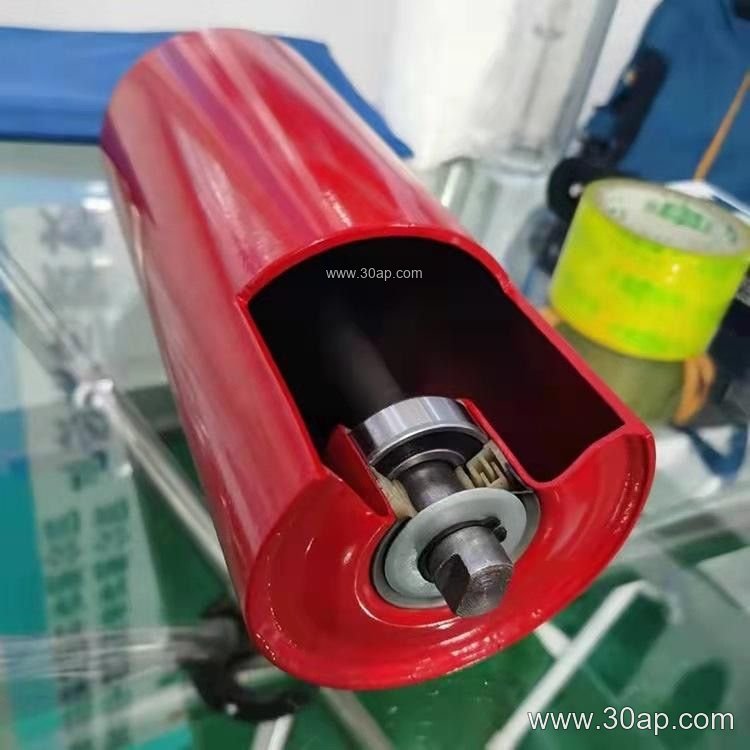
- Rubber rings in natural or synthetic rubber compounds, sometimes with fabric reinforcement
- Sealed, grease-retained bearing housings for dusty conditions
- Steel end caps and a shaft sized to the bracket and frame
- Ring spacing selected so material does not bridge between discs
Ring hardness and thickness vary by supplier. A softer ring deforms more under impact; a harder one resists abrasion but transmits more shock. Buyers should ask for the rubber compound data rather than assume a single specification applies everywhere.
Where It Fits on the Conveyor
The buffer idler normally sits directly beneath the loading chute, skirted transition zone or transfer point. In a typical three-roll troughing set, the center roll may be replaced by a rubber ring impact idler while the side rolls stay standard, or all three positions can use buffer rolls. In a stone crushing line feeding a crusher conveyor belt, or a coal mining conveyor belt receiving run-of-mine coal, this is the highest-wear location on the carrying side.
Buffer rolls are most useful where fall height, lump size or tonnage creates repeated shock. They are less relevant on clean, low-impact runs, where a standard steel or nylon idler roller is adequate and cheaper to replace.
Matching Diameter and Belt Width
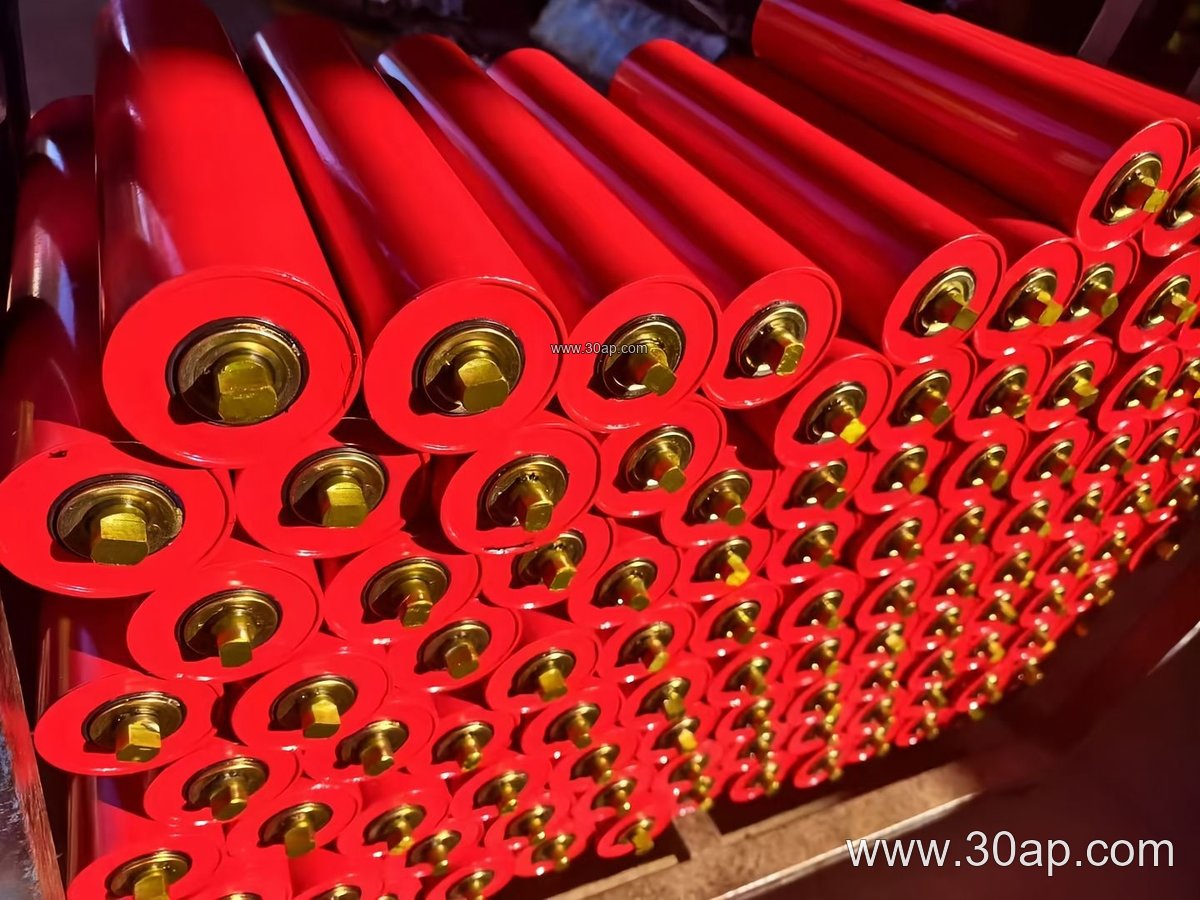
Roller diameter and belt width are related through the frame design, not through a fixed rule. A 500 mm conveyor belt might use Ø89 or Ø102 buffer rolls; wider belts such as 1200 mm or 1400 mm usually call for Ø133, Ø159 or larger shafts and bearings to carry the load. The table below shows typical reference values, not mandatory combinations.
| Belt width (common) | Typical buffer roller diameter | Typical troughing set |
|---|---|---|
| B500 to B800 | Ø89, Ø102, Ø108 | Three-roll, 20 to 35 degree trough |
| B1000 to B1400 | Ø127, Ø133, Ø159 | Three-roll, 30 to 35 degree trough |
| B1600 to B2000 | Ø159, Ø178, Ø194 | Three-roll or two-roll, heavy frame |
| B2200 to B2400 | Ø194, Ø219 | Engineered set per application |
Trough angles of 20, 30, 35 and 45 degrees are all in use. A steeper trough centers the load better but increases side pressure on the rings. Roll length follows belt width, trough angle and set configuration; for a three-roll set, common roll lengths range from about 200 mm at B500 to roughly 750 mm at B2000. Side rolls and center rolls can differ, so the drawing, not a single number, should govern the order.
What Buyers Should Check
Ask for the shaft diameter, bearing size, ring count and ring hardness together, because a quoted roller diameter alone says little about load capacity. Confirm the mounting dimensions against the existing conveyor bracket and frame. In dusty cement plant or quarry service, sealed bearings and good ring spacing matter more than a small price difference.
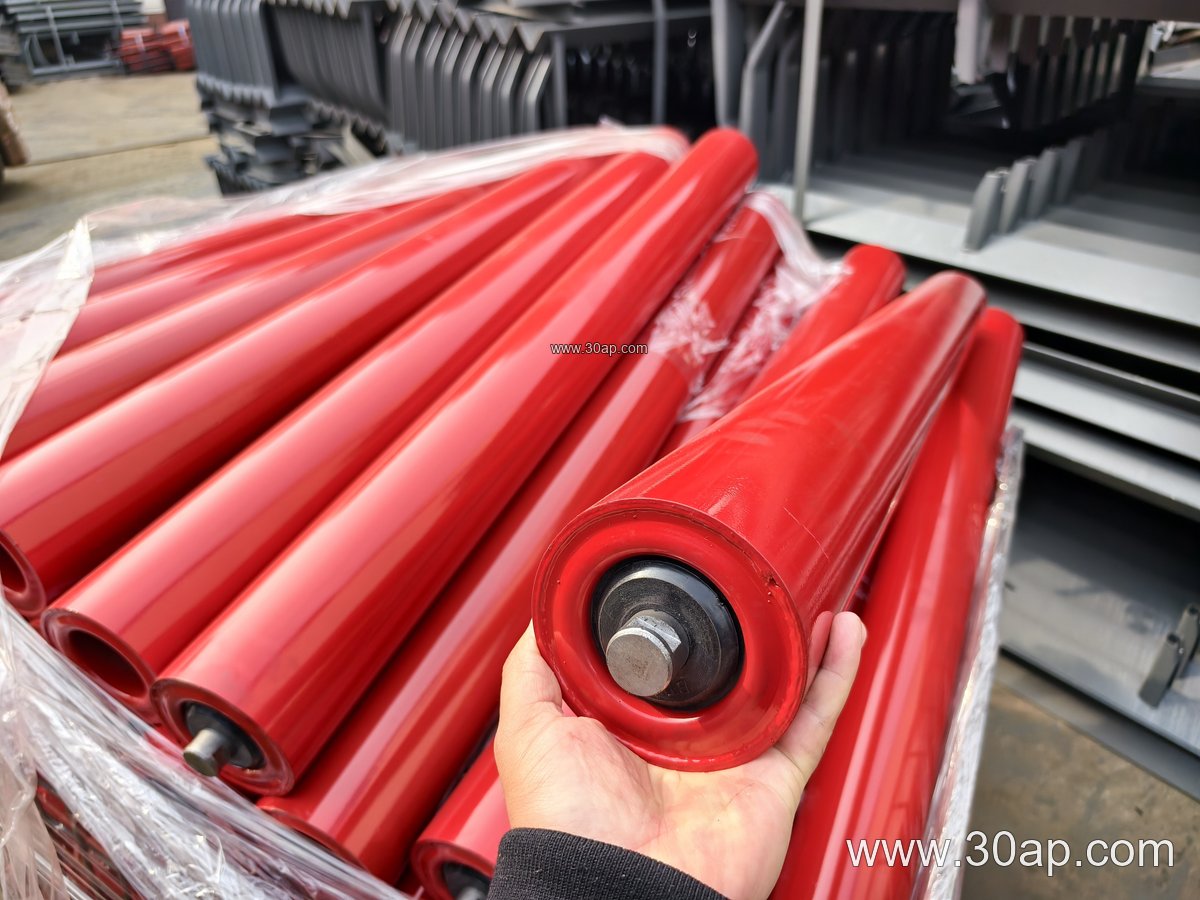
Impact idlers work alongside other components: the conveyor belt itself, the conveyor pulley at the discharge end, and the conveyor bracket that holds each set. Where the belt is a heavy-duty mining conveyor belt or an abrasion resistant conveyor belt carrying sharp rock, buffer rolls reduce belt damage at the load zone. In coal handling, a flame retardant conveyor belt is often paired with fire-resistant rubber rings for added safety.
Maintenance Notes
Inspect rings for cuts, chunking and flattening, and check that they still rotate freely. Seized bearings cause flat spots on the rings and can wear through the belt cover. Replace the complete roller rather than single rings when the shaft or bearing housing is worn. Keep the loading chute centered so material does not strike one side of the idler only.
For a full conveyor package, buyers often source the rubber ring impact idler together with the belt and pulleys from the same supplier so that dimensions, trough angles and frame interfaces match from the start.