What a Heavy-Duty Trough Idler Does on a Conveyor
A heavy-duty trough idler is the carrying-side roller set that shapes a conveyor belt into a trough so bulk material stays centered during transport. On a quarry conveyor belt or a coal mining conveyor belt, this component supports the loaded strand, absorbs vibration, and keeps the belt tracking through long spans and high tonnage. The trough idler is distinct from the drive pulley, tail pulley, and bend pulley, which transmit power and change belt direction; the idler only supports and guides. Buyers should treat the trough idler as a wear part with its own load rating, sealing class, and roll geometry.
Construction Details That Matter
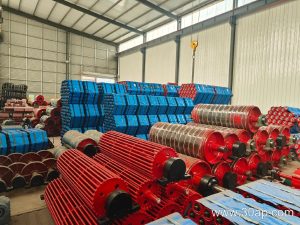
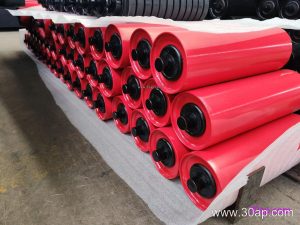
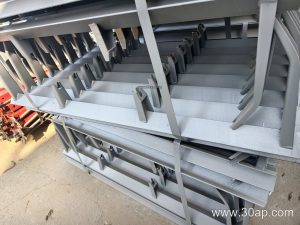
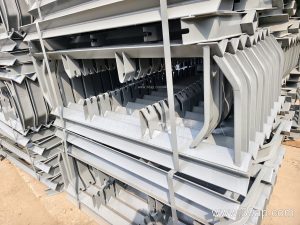
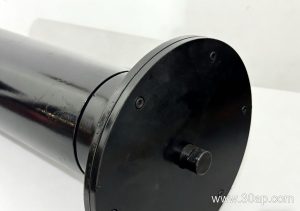
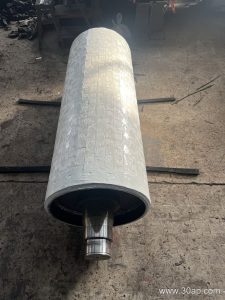
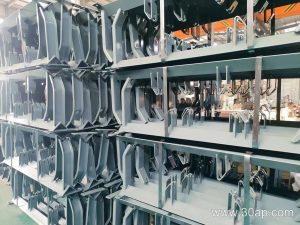
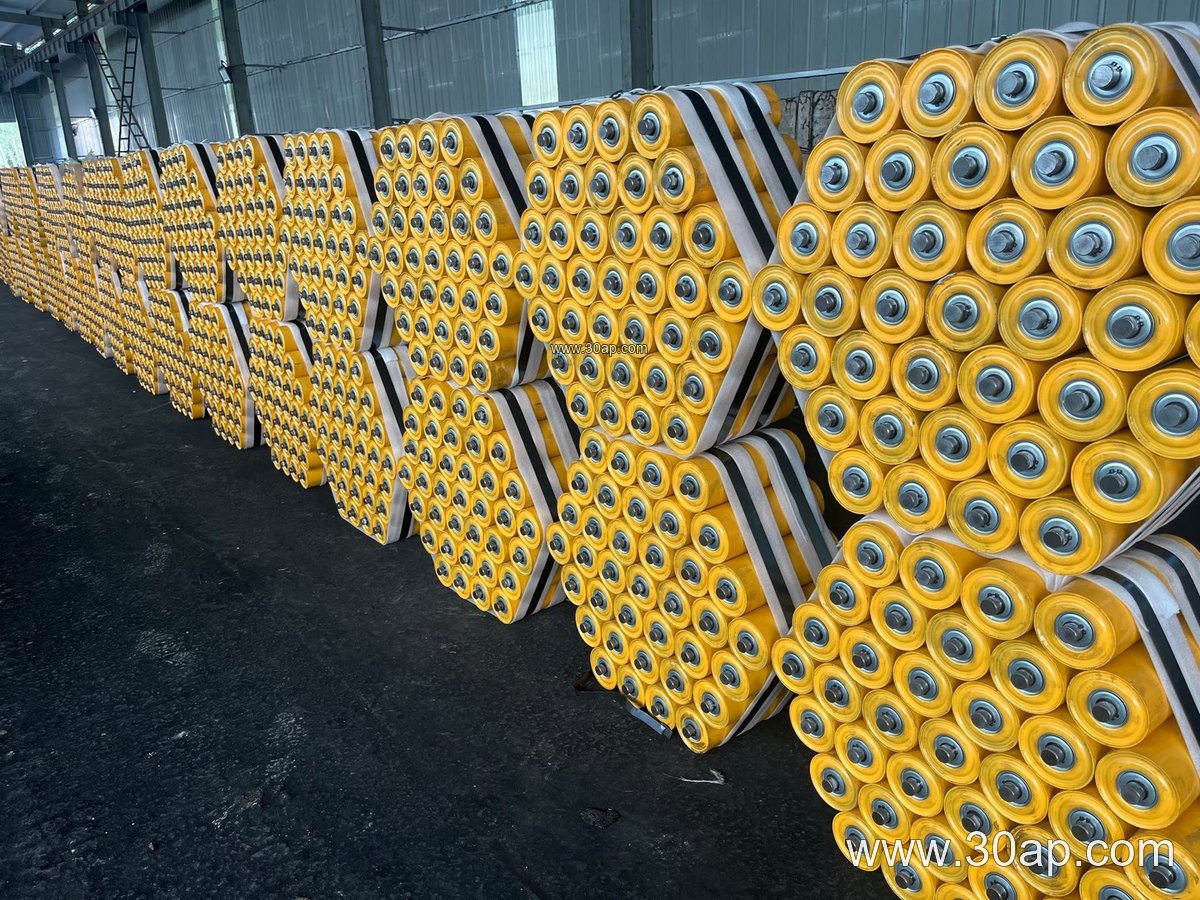
A heavy-duty trough idler usually consists of three rolls mounted in a steel frame, with the side rolls angled to form a trough. The roll shell may be steel tube, nylon, ceramic, or rubber-covered, and the shaft runs through sealed bearings. Common bearing numbers include 6204, 6205, 6305, 6306, 6308, and 6310, but the bearing is matched to the roll diameter and load, not chosen from belt width alone. Roll diameters commonly range from Ø63 to Ø219, with Ø89, Ø108, Ø127, Ø133, Ø159, and Ø178 seen in heavy-duty service. Trough angles are usually 20, 30, 35, or 45 degrees, and a small forward tilt of about 1.5 to 2 degrees is sometimes used for training.
Roll Length and Belt Width Relationship
Roll length follows belt width, trough angle, and roll arrangement. In three-roll trough sets, common center roll lengths are roughly 200 mm for B500, 250 mm for B650, 315 mm for B800, 380 mm for B1000, 465 mm for B1200, 530 mm for B1400, 600 mm for B1600, 670 mm for B1800, and 750 mm for B2000. These are examples, not fixed pairings; side rolls can differ from the center roll. A 1200mm wide conveyor belt does not automatically dictate one shaft diameter, and one belt width does not limit the system to a single pulley diameter.
Where Heavy-Duty Trough Idlers Are Used
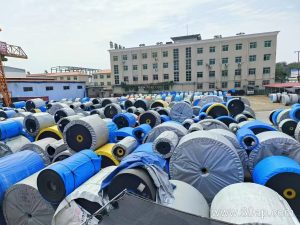
These idlers appear in limestone mines feeding crushers, in coal preparation plants where dust and fines are constant, and in cement plant raw-material conveying. They also suit power plant coal handling, port ship loading, and aggregate lines moving abrasive rock. In these settings, a heavy-duty mining conveyor belt may run alongside an EP conveyor belt or steel cord conveyor belt, and the trough idler must match the belt load and speed. The same plant may use a heat resistant conveyor belt near kilns or a flame retardant conveyor belt underground, so the idler seal and roll material should suit the environment.
Selection and Maintenance Notes
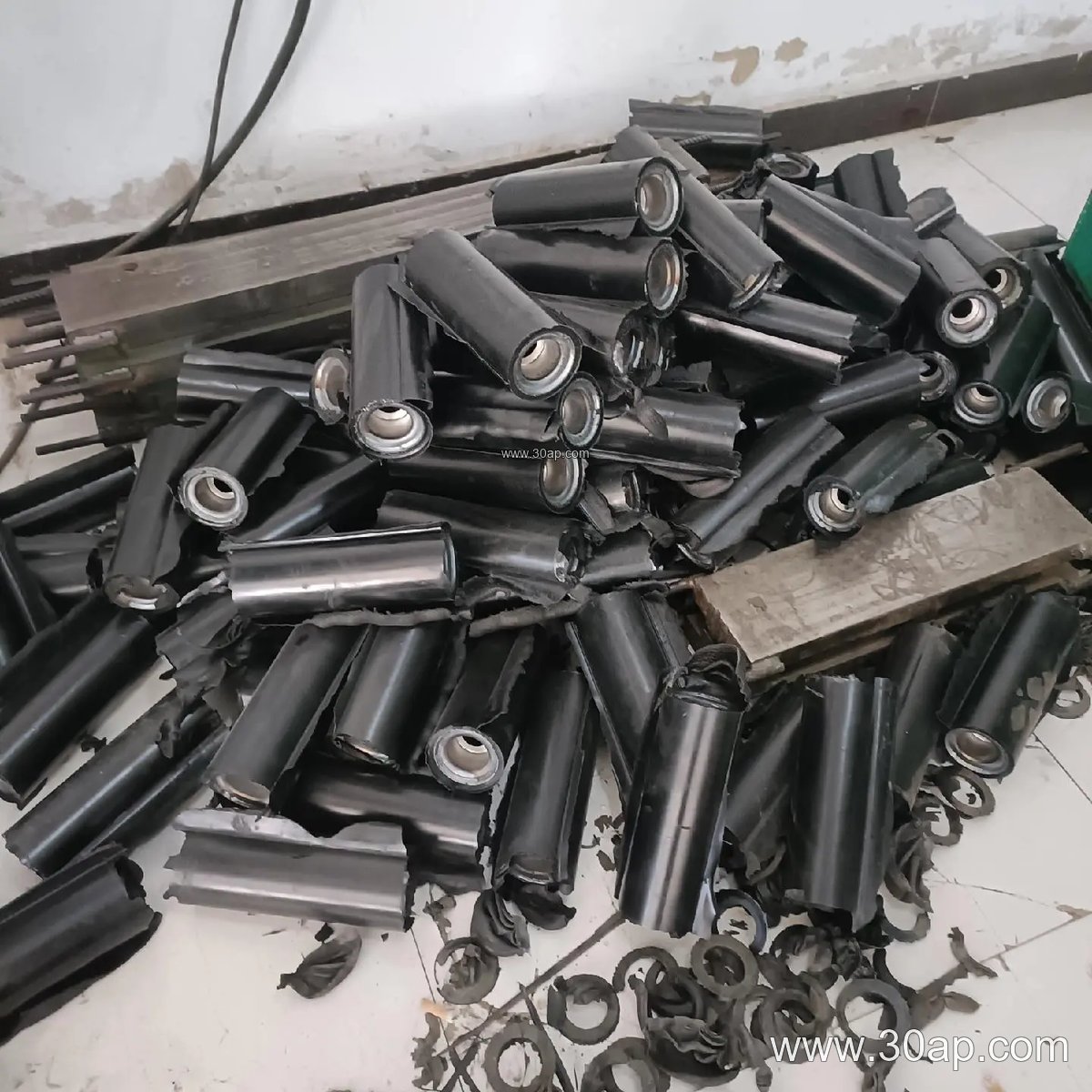
Selection starts with belt width, capacity, material density, and trough angle. A three-roll trough set is common for wide belts, while two-roll or single-roll designs appear in narrower or special layouts. Check the roll diameter against the belt speed and load, and confirm bearing protection against dust and water. Maintenance should include checking for seized rolls, worn shells, and frame misalignment. A worn trough idler can cause belt edge damage and spillage, so replacement should use the same roll length and trough angle unless the conveyor is redesigned.
Common Reference Ranges
| Parameter | Typical Range |
|---|---|
| Roll diameter | Ø63 to Ø219 mm |
| Belt width | B400 to B2400 |
| Trough angle | 20, 30, 35, 45 degrees |
| Bearing | 6204, 6205, 6305, 6306, 6308, 6310 |
| Roll surface | Steel, nylon, ceramic, rubber ring |
For more on matching idlers with conveyor belt and conveyor pulley components, review the layout drawings and confirm dimensions before ordering. The heavy-duty trough idler is a small part of the total conveyor, but it controls belt life and material containment in the toughest sections.