What a Guide Idler Bracket Does on a Conveyor
A guide idler bracket is the mounting component that holds a guide idler in a fixed position relative to the conveyor frame, so the idler can contact the belt edge or belt surface and help keep the belt running true. In practice, the bracket ties the idler to the structure, sets its angle and height, and keeps the roller from drifting under load. On a quarry conveyor belt or a cement plant transfer line, a small misalignment at this point can lead to edge wear, material spillage, and shortened belt life, which is why the bracket deserves attention rather than being treated as a minor fitting.
The same part is also called a guide roller bracket or belt guide idler support, depending on the supplier and region. These names refer to the same product: a bracket that positions a guide idler for belt guidance. It is not a drive pulley bracket, nor a tail pulley bracket, and it should not be confused with a bend pulley support. Those components carry different loads and are designed around different frames.
Construction and Mounting Position
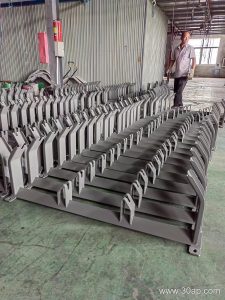
Most guide idler brackets are fabricated from angle steel, channel steel, or folded steel plate. The choice depends on the frame style and the load expected from the guide idler. A typical bracket has a base plate or clamp section that bolts to the conveyor stringer, plus an upright or angled arm that carries the idler shaft. Slotted holes are common so maintenance crews can adjust the idler position during alignment.
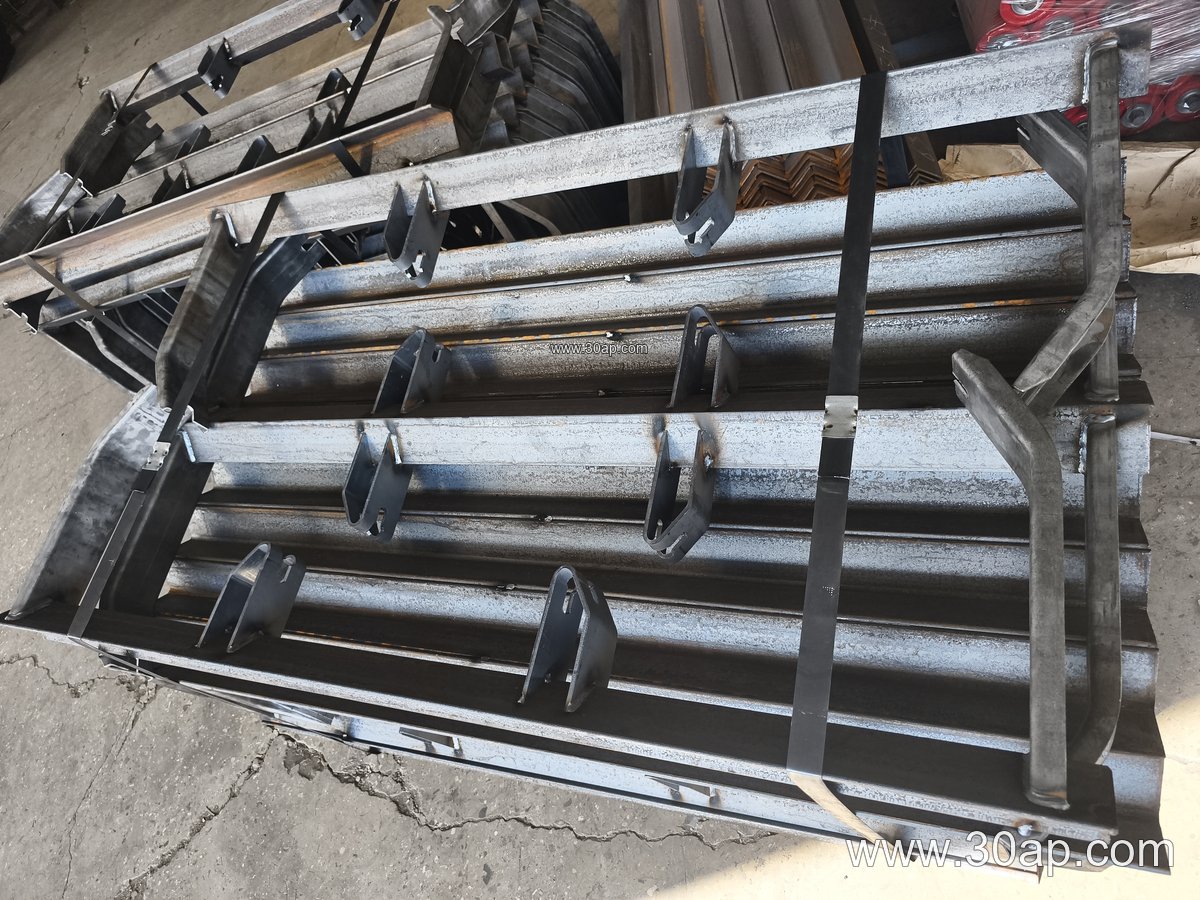
Mounting position is usually along the carrying side, close to the point where belt tracking tends to drift, such as before a transfer chute or after a curve. The bracket must be square to the frame and tight against the structure; a loose guide idler bracket can rotate slightly and lose its guiding effect. Where the frame is heavy-duty, the bracket may be welded to a cross beam, while lighter frames often use bolted connections for easier replacement.
How It Works With the Belt and Idler Roller
The guide idler bracket holds the idler roller at a small angle to the belt travel direction. When the belt begins to move sideways, the idler applies a correcting force at the edge. This is a passive system, so the bracket geometry and the idler position matter more than any active control. On a long overland conveyor carrying iron ore or coal, a correctly set guide bracket can reduce the frequency of belt training adjustments elsewhere on the line.
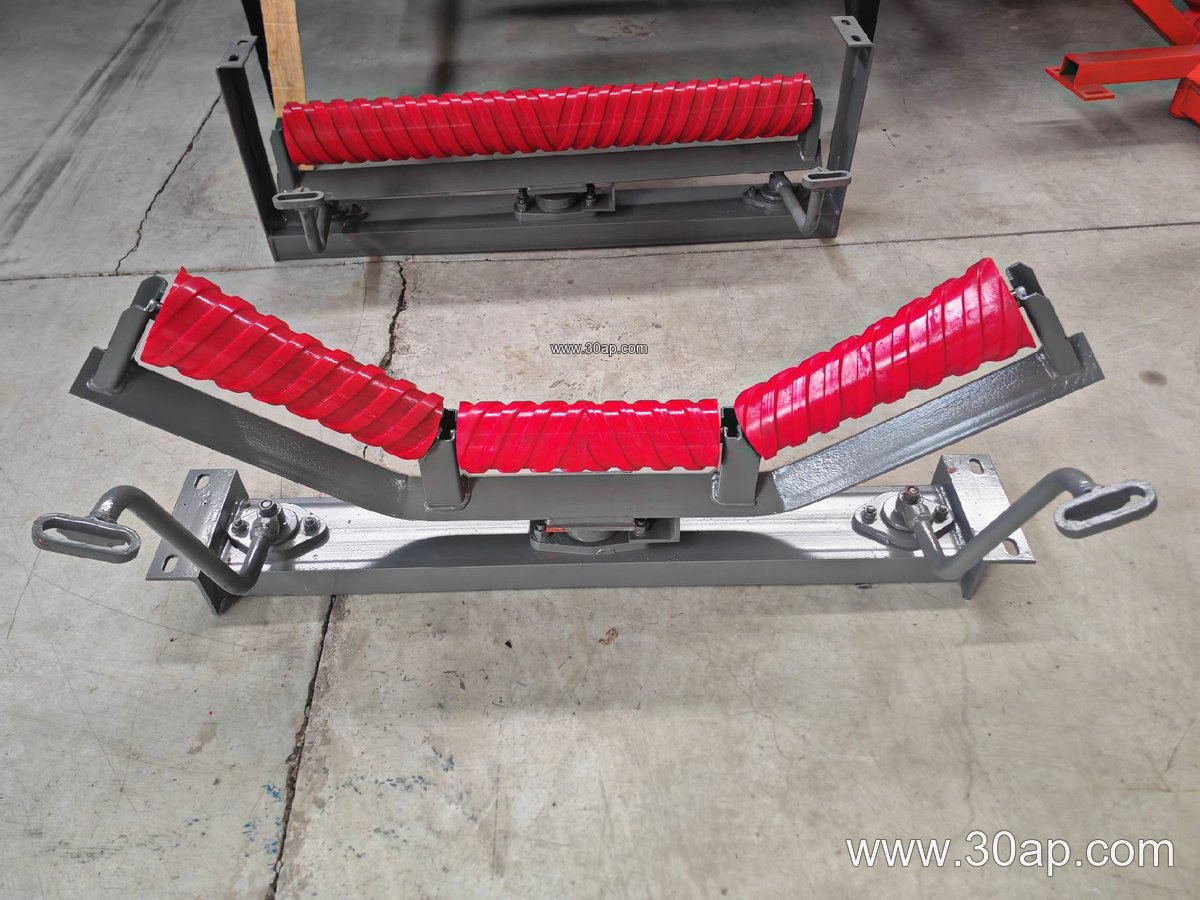
The bracket also affects the interaction between the conveyor belt and the idler. If the bracket is mounted too high or too low, the idler may press unevenly, causing local wear on a rubber conveyor belt or an EP conveyor belt. For abrasive duties such as a crusher conveyor belt handling rock, the bracket should be rigid enough to resist vibration and keep the guide idler steady.
Common Configurations and Reference Dimensions
Guide idler brackets are often supplied to suit the belt width and frame layout. The table below gives reference combinations that appear in general conveyor design work. These are examples, not fixed rules, and the final bracket dimensions are determined by the conveyor design, idler type, and frame arrangement.
| Belt Width | Typical Guide Idler Diameter | Mounting Note |
|---|---|---|
| B500 | Ø89 | Light frame, bolted bracket |
| B650 | Ø89 or Ø108 | Slotted holes for adjustment |
| B800 | Ø108 | Common on quarry and aggregate lines |
| B1000 | Ø108 or Ø133 | Heavier stringer section |
| B1200 | Ø133 | Often paired with troughing idlers |
| B1400 | Ø133 or Ø159 | Reinforced bracket arm |
| B1600 | Ø159 | Mining and port applications |
| B1800 | Ø159 or Ø194 | Heavy-duty frame |
| B2000 | Ø194 | Large bulk handling conveyors |
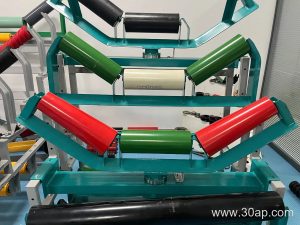
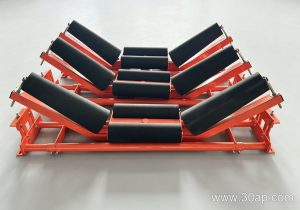
For comparison, a troughing idler bracket carries the full belt load across three rollers, while a guide idler bracket usually supports a single guide roller at the belt edge. The two are related but not interchangeable. A return bracket or V-return bracket serves the lower run, and a buffer idler bracket is used at load points. Each bracket type has its own role in the conveyor frame.
Where Buyers Should Pay Attention
When selecting a guide idler bracket, confirm the belt width, the guide idler diameter, and the frame hole spacing. Ask for the bracket material and finish, since a galvanized or painted bracket lasts longer in wet or dusty conditions. In a coal mining conveyor belt system, flame retardant conveyor belt and anti-static conveyor belt requirements may also influence the choice of accessories, so the bracket should be compatible with the overall safety approach.
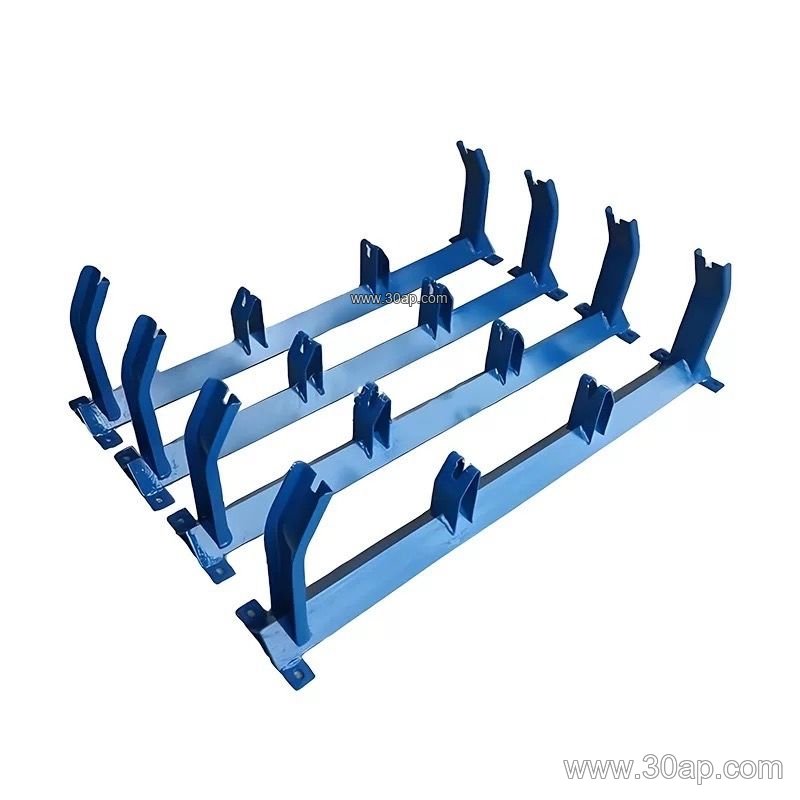
Check that the bracket allows enough adjustment for belt training and that it does not interfere with the conveyor pulley or nearby structure. Spare parts should match the original mounting pattern to avoid field drilling. For harsh sites such as a sinter plant or a limestone quarry, a heavier bracket section is often worth the small extra cost. Buyers can also ask suppliers how the bracket is matched to the idler roller and whether the same pattern fits multiple belt widths.
Maintenance and Practical Notes
Inspect guide idler brackets during routine belt checks. Look for loose bolts, bent arms, and corrosion at the base. A bracket that has shifted will usually show uneven belt edge wear or a polished contact mark on one side of the idler. Re-tighten or replace the bracket before the guide idler starts to skew.
Keep the bracket clean so material buildup does not push the idler out of position. On dusty lines handling cement or fine aggregate, a quick clean during shutdown prevents small problems from becoming belt tracking issues. Used together with well-chosen idler rollers and a suitable conveyor belt, a properly installed guide idler bracket contributes to stable operation and longer service intervals.