What a Trough Idler Bracket Does on a Conveyor
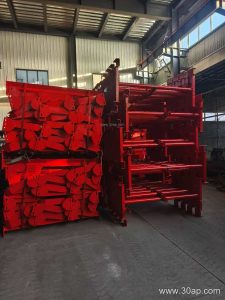
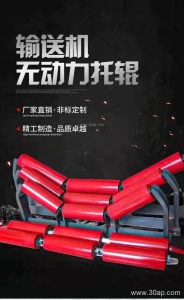
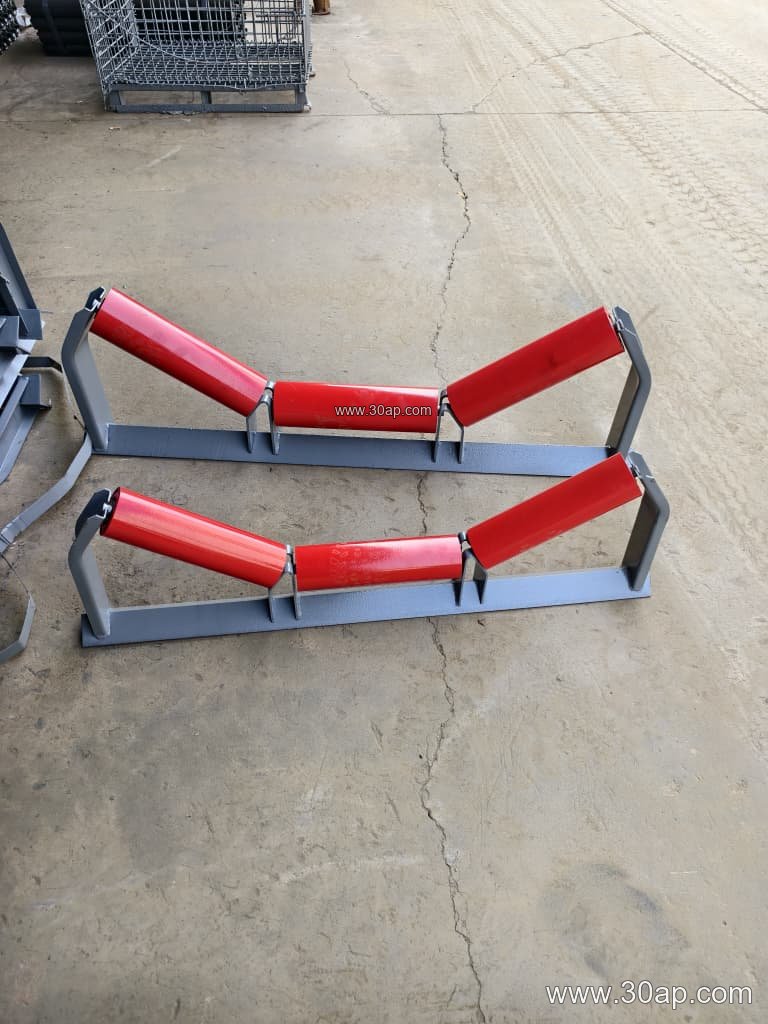
A trough idler bracket is the steel frame that holds the angled carrying idlers in a troughed conveyor. It sits between the main conveyor stringers and the idler roller assembly, keeping the three rolls in the correct V or U shape so the conveyor belt forms a stable trough. Without a properly built bracket, the idlers lose alignment, the belt wanders, and spillage increases. In quarry, cement, and power plant coal handling lines, this small structural part often decides how smoothly the whole transfer point runs.
The bracket is also called a troughing idler bracket or troughing frame. These are accurate names for the same product. It should not be confused with a return bracket or a transition bracket, which serve different positions on the conveyor structure.
Construction and Common Materials
Most trough idler brackets are fabricated from angle steel, channel steel, or folded steel plate. The design usually includes a cross beam, mounting slots, and welded or bolted idler seats. The surface may be painted or galvanized depending on the environment. In dusty or wet conditions, buyers often ask for thicker steel and better coating to resist corrosion.
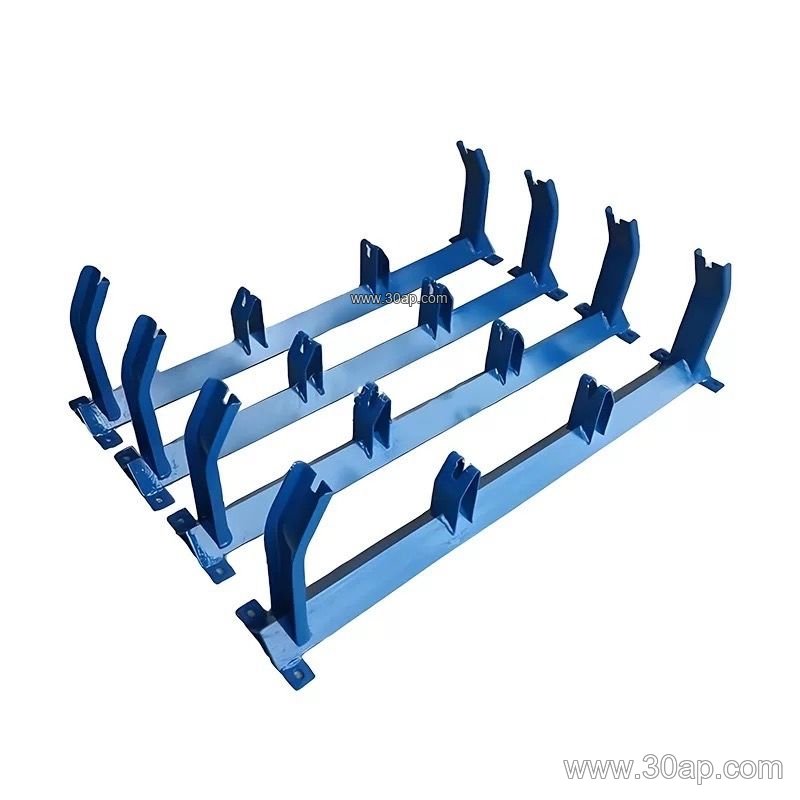
The bracket must match the idler roller diameter and the belt width. Common belt widths include B500, B650, B800, B1000, B1200, B1400, B1600, B1800, and B2000. Idler roller diameters are typically Ø89, Ø108, Ø133, Ø159, and Ø194. Trough angles are commonly 20, 30, 35, or 45 degrees. A typical combination might be B800, 35 degrees, Ø108, while a wider B1200 line might use 45 degrees with Ø133. These are reference examples, not fixed rules.
| Item | Common Range | Notes |
|---|---|---|
| Belt width | B500 to B2000 | Hole spacing and beam length change with width |
| Trough angle | 20°, 30°, 35°, 45° | Adjustable brackets cover several angles |
| Idler diameter | Ø89 to Ø194 | Match the roller seat and frame height |
| Material | Angle steel, channel steel, folded plate | Thickness selected by load and environment |
Where Trough Idler Brackets Are Used
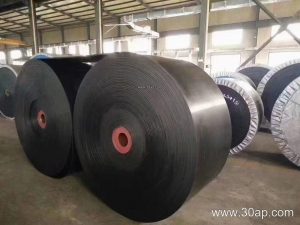
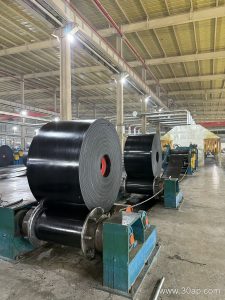
These brackets appear wherever a conveyor belt carries bulk material. In a limestone quarry or stone crushing line, they support the conveyor belt under heavy rock loads. In a coal washing plant or underground mining conveyor, flame retardant and anti-static belt grades are common, and the bracket must hold idlers firmly to reduce friction and heat. Cement plants use them on clinker and raw meal lines, while power plant coal yards rely on them for continuous fuel delivery.
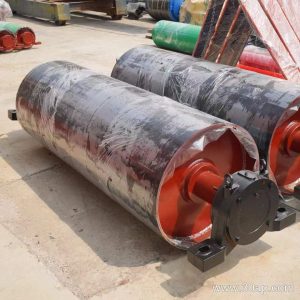
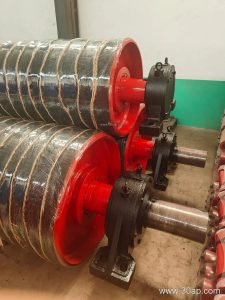
They work together with the conveyor pulley, conveyor bracket, and idler roller. The drive pulley, tail pulley, and bend pulley each have their own support structures and are not interchangeable with a troughing bracket. A transition bracket may be used near a pulley to change the belt from flat to troughed, but it is a different subtype with a different job.
Fixed and Adjustable Types
Fixed trough brackets hold a set trough angle. Adjustable brackets allow the angle to be changed between common positions such as 20, 30, 35, and 45 degrees. Adjustable designs are useful during commissioning or when material characteristics change. Forward-leaning brackets, often around 1.5 to 2 degrees, can help with belt training. Impact brackets with rubber cushions are chosen at loading points to absorb shock from large lumps.
Selection depends on belt width, idler diameter, trough angle, and the load at each station. Do not assume one belt width can only match one pulley diameter or one idler size. Installation hole spacing and cross beam length are determined by the conveyor design, not by a single universal number.
Buyer Checklist
- Confirm belt width, such as B650, B1000, or B1400.
- Confirm idler roller diameter and seat type.
- State the required trough angle and whether adjustment is needed.
- Specify material thickness and surface treatment for the site.
- Check compatibility with the conveyor stringer and pulley layout.
- For mining or coal work, consider flame retardant and anti-static belt grades alongside the bracket specification.
A well-matched trough idler bracket keeps the belt centered, extends idler life, and reduces maintenance downtime. Whether the line handles ore, aggregate, cement, or coal, the bracket should be treated as a structural component, not a generic accessory. Buyers who check dimensions and environment before ordering avoid costly fitting problems later.