What a Conveyor Frame Does on a Bulk Handling Line
A conveyor frame is the structural backbone that holds every idler roller in position along a belt conveyor. It carries the weight of the conveyor belt, the material load, and the rotating idlers, and it keeps the belt profile stable from the tail pulley to the drive pulley. In a quarry, a coal preparation plant, or a cement plant, the frame is the part that decides whether the belt tracks straight or wanders. Buyers often focus on the belt or the pulleys, but the frame is where alignment is actually created.
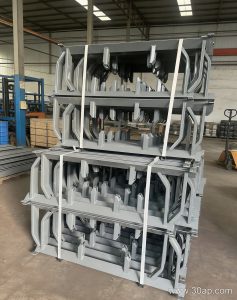
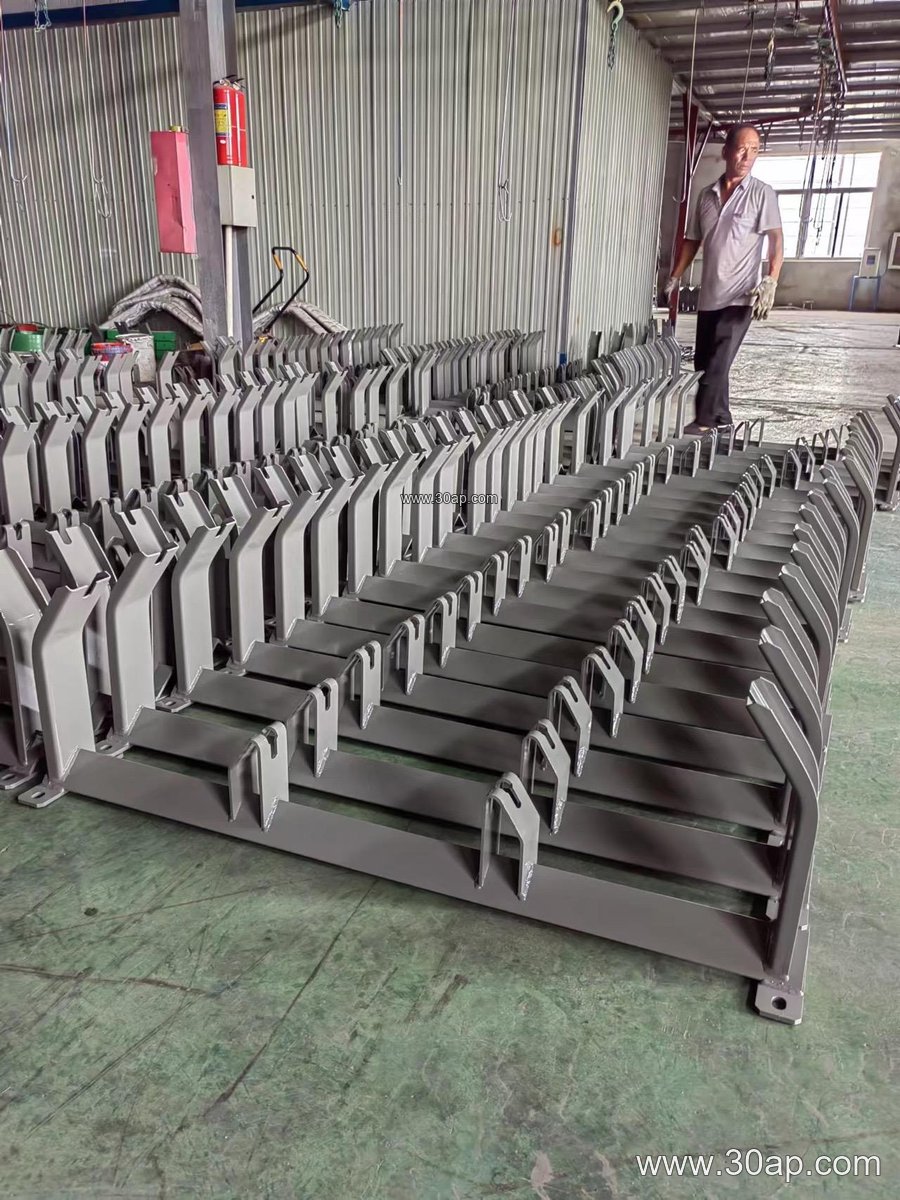
The frame is not one piece. It is a system of support stations: carry frames under the loaded strand, return frames under the empty strand, impact frames at the loading point, and self-aligning frames where tracking correction is needed.
How the Frame Is Built
Most frames are fabricated from angle steel, channel steel, or folded steel plate. The cross beam spans the belt width, and the end brackets carry the idler shafts. The bracket angle sets the trough angle of the carry idlers, which shapes the belt into a trough so bulk material stays centered.
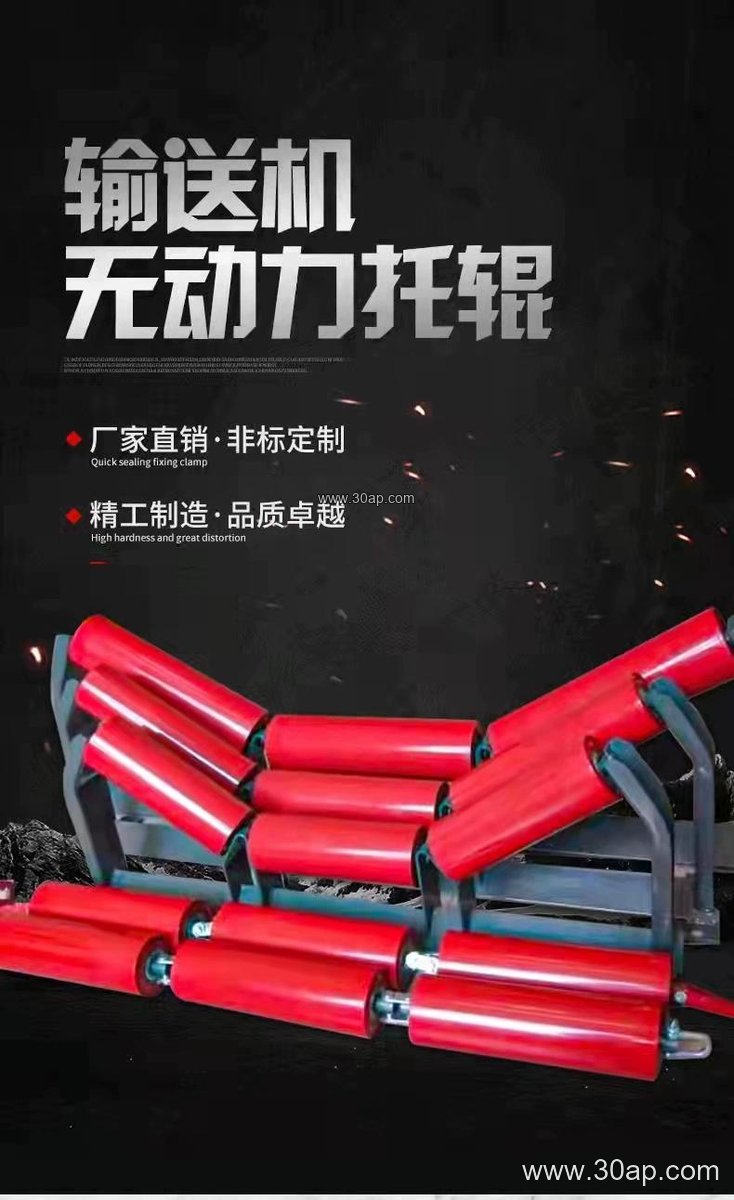
Trough angles are commonly 20, 30, 35, or 45 degrees. Adjustable frames allow the same bracket to be set at several of these angles, while fixed frames are welded or bolted at one angle. Forward-tilted brackets, usually about 1.5 to 2 degrees, help the belt self-center on the carry side. On the return side, a V-type return frame or a flat return frame supports the belt after discharge.
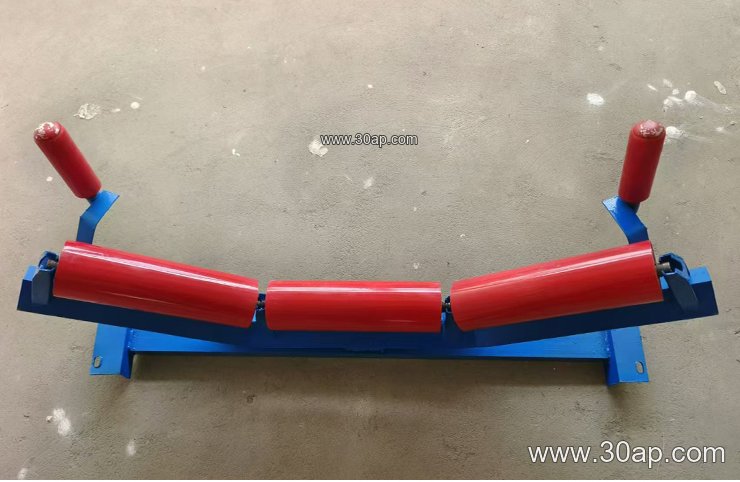
Typical frame reference data
| Item | Common range |
|---|---|
| Belt width | B500, B650, B800, B1000, B1200, B1400, B1600, B1800, B2000, B2200 |
| Trough angle | 20°, 30°, 35°, 45° |
| Idler diameter | Ø89, Ø108, Ø133, Ø159, Ø194 |
| Material | Angle steel, channel steel, folded plate |
These are reference values, not fixed pairings. A frame at B800 is often built at 35 degrees with Ø108 idlers, and a B1200 frame may run at 45 degrees with Ø133 idlers, but the final combination depends on belt speed, load, and the conveyor design. Hole spacing and cross beam length change with belt width and trough angle, so they should be confirmed against the drawing rather than assumed.
Matching the Frame to the Belt and Idlers
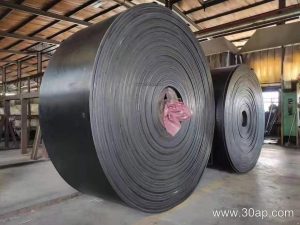
The frame, the conveyor belt, and the idler roller have to work as one unit. A heavy-duty mining conveyor belt carrying iron ore or copper ore needs closely spaced impact frames at the transfer point, because falling rock punishes both the belt cover and the idler bearings. A fabric core conveyor belt on a shorter aggregate line can use lighter frames with wider spacing.
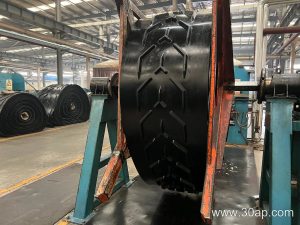
Where the belt is a chevron conveyor belt or a corrugated sidewall belt, the frame must leave clearance for the cleats or sidewalls, and the return idlers must be positioned so the profiles pass without contact. On a pipe conveyor belt, the frame supports special idler panels that form the belt into a tube, so the panel geometry matters more than the trough angle.
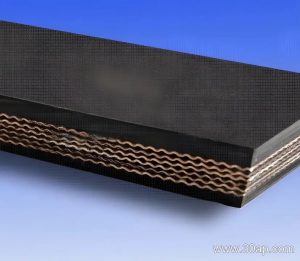
Belt tension also plays a part. A steel cord conveyor belt or a high strength conveyor belt carries higher tension, and the frame at the drive and tail must resist the pull without deflection. In coal mining and underground coal mining, flame retardant conveyor belt and anti-static conveyor belt are common, and the frame is often built for quick section removal so the line can be extended as the face advances. For abrasive loads such as coke or sinter in a steel plant, an abrasion resistant conveyor belt paired with well-aligned frames reduces edge wear.
Where Frames Are Used
Frame stations appear in almost every bulk handling circuit. In a limestone quarry or a stone crushing line, carry frames run along the incline while buffer frames sit under the crusher discharge. In a power plant coal yard, the frames support the belt through transfer towers and tripper cars. In a sand and gravel plant, V-return frames keep the return strand from sagging between supports. Port ship loading conveyors use long, straight frame runs where tracking stability matters over hundreds of meters.
Buyer Checklist
- Confirm belt width and the trough angle required at each station.
- State the idler diameter and the shaft end type the brackets must accept.
- Identify impact, transition, and self-aligning positions separately from standard carry frames.
- Ask for the mounting hole spacing and cross beam length on the drawing.
- Check the surface treatment and the steel section used for the load class.
- Confirm whether frames are fixed or adjustable before ordering spares.
Whether the project is a small B650 aggregate line or a B1800 iron ore trunk conveyor, the conveyor frame is the element that turns a loose collection of rollers into a straight, stable belt path. Get the frame right, and the belt, the conveyor pulley, and every idler roller will last longer.