What the Impact Idler Bracket Does
At the transfer point of a belt conveyor, material falls from a chute or a crusher outlet and lands hard on the belt. The impact idler bracket is the support structure that carries the impact idlers directly under this landing zone. Its job is to hold the rollers at the correct trough angle, absorb the shock of falling lumps, and keep the belt line steady so the conveyor belt does not sag or get pinched between rollers.
This bracket is a support frame, not a roller and not a pulley. It works together with impact idlers, the conveyor belt, and the main conveyor bracket system, but it has its own task: protecting the belt at the point of maximum load. In a quarry conveyor, a coal mining conveyor, or a cement plant feed line, the loading zone is where most belt damage begins, so the design of this bracket matters more than its simple appearance suggests.
How It Is Built
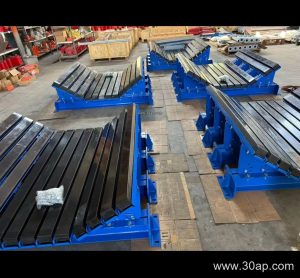
Most impact idler brackets are fabricated from angle steel, channel steel, or bent steel plate. The frame is welded or bolted into a rigid cradle that holds two or three idler positions, sometimes with rubber or spring cushions between the idler frame and the main structure. The cushioning allows the bracket to flex slightly when a large lump lands, which reduces peak force on the belt.
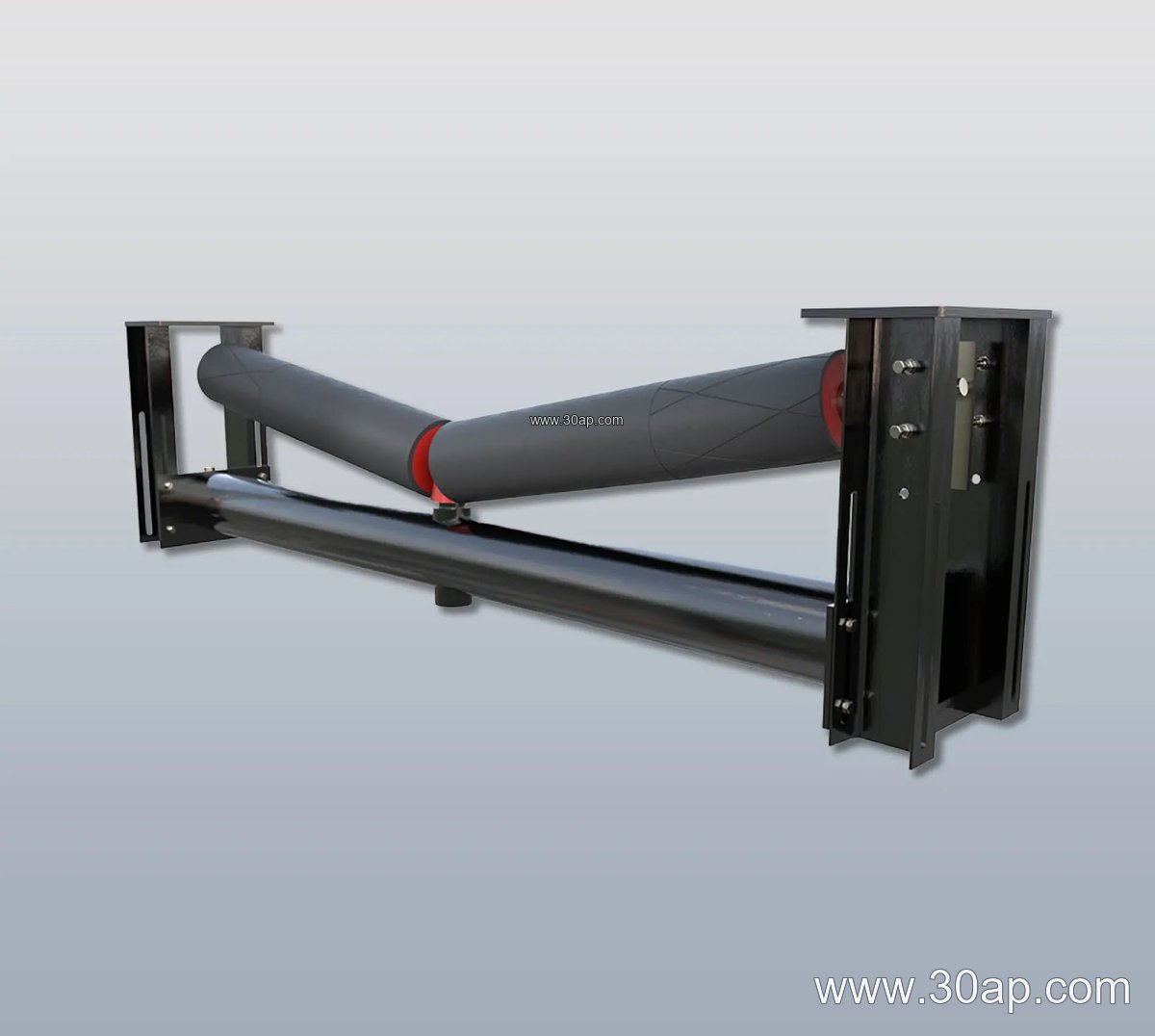
Common build details include:
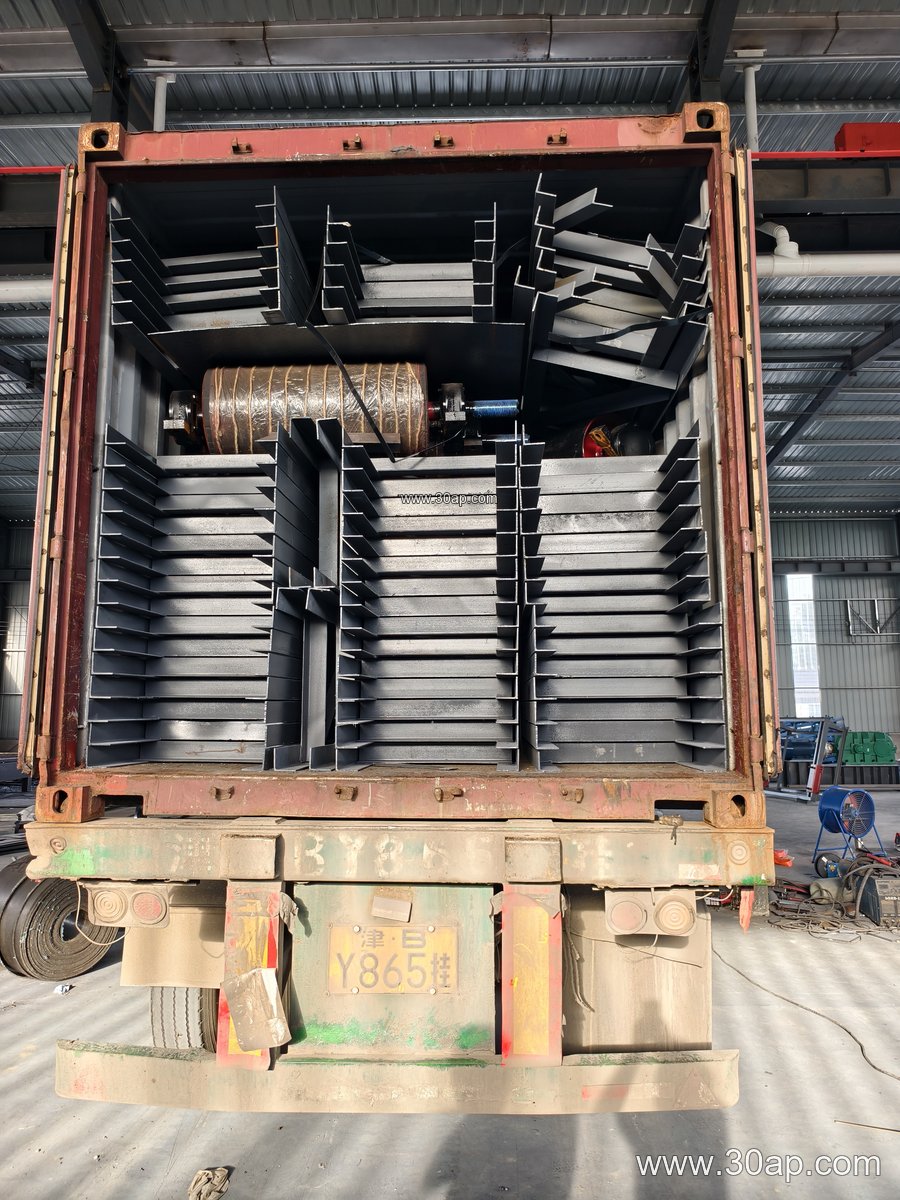
- Welded channel or angle frame with drilled mounting holes
- Cushioned or rigid idler seats, depending on the duty level
- Fixed or adjustable trough angle settings
- Mounting feet that match the conveyor stringer spacing
The hole spacing and crossbeam length are not fixed numbers. They follow the belt width, the trough angle, and the frame design of the conveyor, so a buyer should always confirm the mounting dimensions against the existing structure rather than assuming a standard.
Where It Fits on the Conveyor
The bracket sits in the upper carrying run, usually just below the loading chute. In a stone crushing line, it is placed where the crusher discharge drops onto the belt. In a power plant coal handling system, it appears under the transfer tower. In a limestone mine or a sintering plant, it protects the belt at every point where material changes direction or falls from height.
It should not be confused with other support types. A troughing bracket carries normal carrying idlers along the steady run; a return bracket supports the belt on the return side; a V-return bracket holds return rollers in a V shape. The impact bracket is specifically the cushioned support at the load point, and it is usually used in a short section of several frames rather than along the whole conveyor.
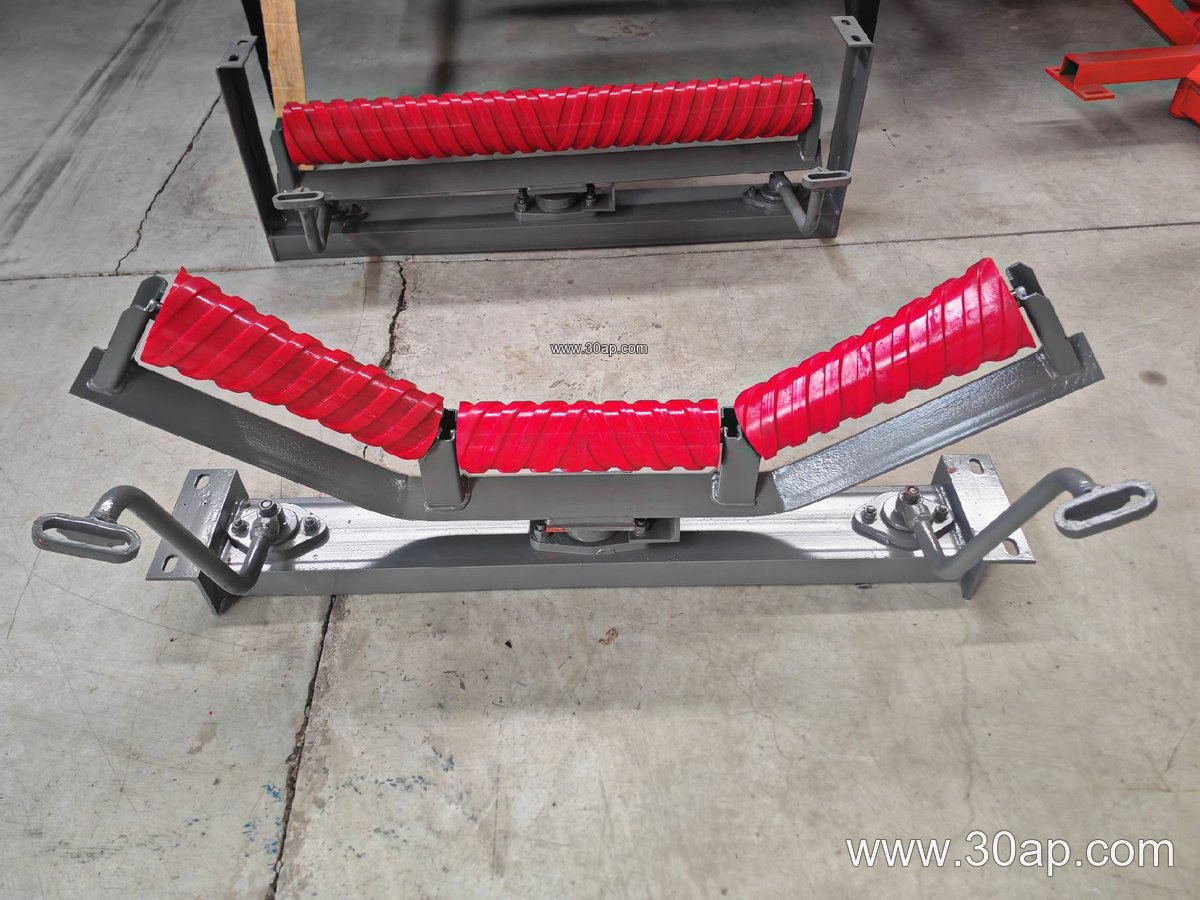
Matching Belt Width, Trough Angle, and Roller Diameter
Selection starts with the belt width, then the trough angle, then the idler diameter. Typical belt widths include B500, B650, B800, B1000, B1200, B1400, B1600, B1800, B2000, B2200. Common trough angles are 20, 30, 35, and 45 degrees, and adjustable brackets can be set between these angles. Roller diameters usually range from Ø89 to Ø194.
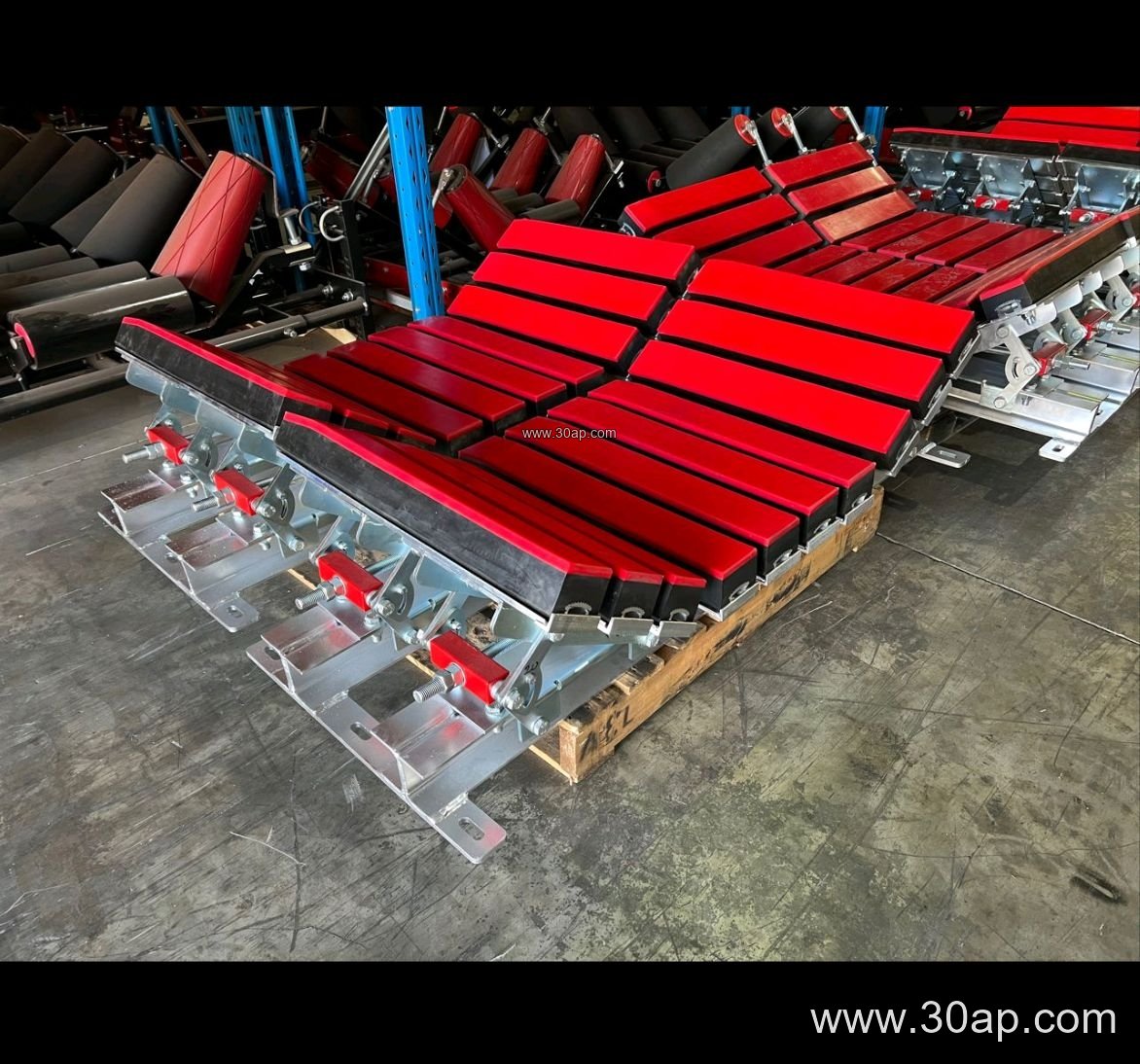
A few reference combinations are shown below. These are examples, not fixed rules, and the final choice depends on belt speed, lump size, and the conveyor design.
| Belt Width | Trough Angle | Typical Idler Diameter | Typical Use |
|---|---|---|---|
| B650 | 30 degrees | Ø89 | Small aggregate line |
| B800 | 35 degrees | Ø108 | Sand and gravel plant |
| B1000 | 35 degrees | Ø133 | Cement plant feed |
| B1200 | 45 degrees | Ø133 | Coal handling transfer point |
| B1400 | 35 degrees | Ø159 | Iron ore conveyor |
| B1600 | 45 degrees | Ø159 | Heavy bulk material line |
| B1800 | 35 degrees | Ø194 | Large port or mine conveyor |
One belt width can work with more than one trough angle and more than one roller diameter. The bracket must match the idler frame it carries, and the frame must match the belt. Do not assume that a given width locks in a single angle or a single roller size.
Fixed or Adjustable
Fixed impact brackets hold the idlers at one set angle. They are simple, rigid, and common where the conveyor design is already settled. Adjustable brackets allow the trough angle to be changed on site, which helps when a line is upgraded or when material behavior changes. Adjustable versions are also useful during commissioning, when the operator wants to fine-tune belt contact at the loading point.
Some designs also include a slight forward tilt of about 1.5 to 2 degrees to help center the belt, but this is a feature of the idler arrangement rather than a universal requirement. The buyer should confirm whether the bracket is meant for standard impact idlers, forward-tilted idlers, or a self-aligning set.
What a Buyer Should Check
- Belt width and the actual stringer spacing on the conveyor
- Trough angle required at the loading zone
- Idler diameter and the idler frame type the bracket will hold
- Mounting hole pattern and crossbeam length
- Whether cushioning is needed for large lump size
- Material of construction and surface treatment for the site environment
The bracket is a small part of the conveyor, but it sits in the hardest working position. A correctly matched impact idler bracket protects the conveyor belt, reduces roller breakage, and keeps the loading zone running smoothly in mines, quarries, cement plants, power stations, and port terminals.