What a Belt Conveyor Ceramic Lagged Pulley Does
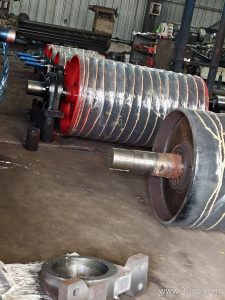
A belt conveyor ceramic lagged pulley is a conveyor pulley whose shell is covered with ceramic tiles set in a rubber or polymer backing. The ceramic surface raises the coefficient of friction between the shell and the conveyor belt, which reduces slip at the drive pulley and helps keep the belt centered on tail and bend positions. In a quarry, a limestone mine, or a cement plant clinker line, that extra grip often decides whether a heavily loaded belt starts cleanly on a wet or dusty day.
Ceramic lagging is one of several surface options, alongside plain finish, cast rubber, cold-bonded rubber, hot-vulcanized rubber, diamond and herringbone patterns, and flat rubber sheet. It is chosen when ordinary rubber lagging wears too fast or loses grip under water, slurry, or fine abrasive dust. On a belt conveyor that carries wet sand or washed aggregate, a ceramic lagged pulley can outlast a plain rubber surface and keep torque transmission more consistent.
Construction and Surface Details
The pulley body is usually a welded steel shell with end discs and a shaft, machined for balance and concentricity. Ceramic tiles, often small squares or rectangles with raised studs, are bonded to a rubber layer that is itself attached to the shell. Common lagging thicknesses are 8, 10, 12, 15, and 20 mm, with the tile pattern selected for the duty. The tile edges provide positive grip, while the rubber base absorbs shock and allows some flex around the shell.
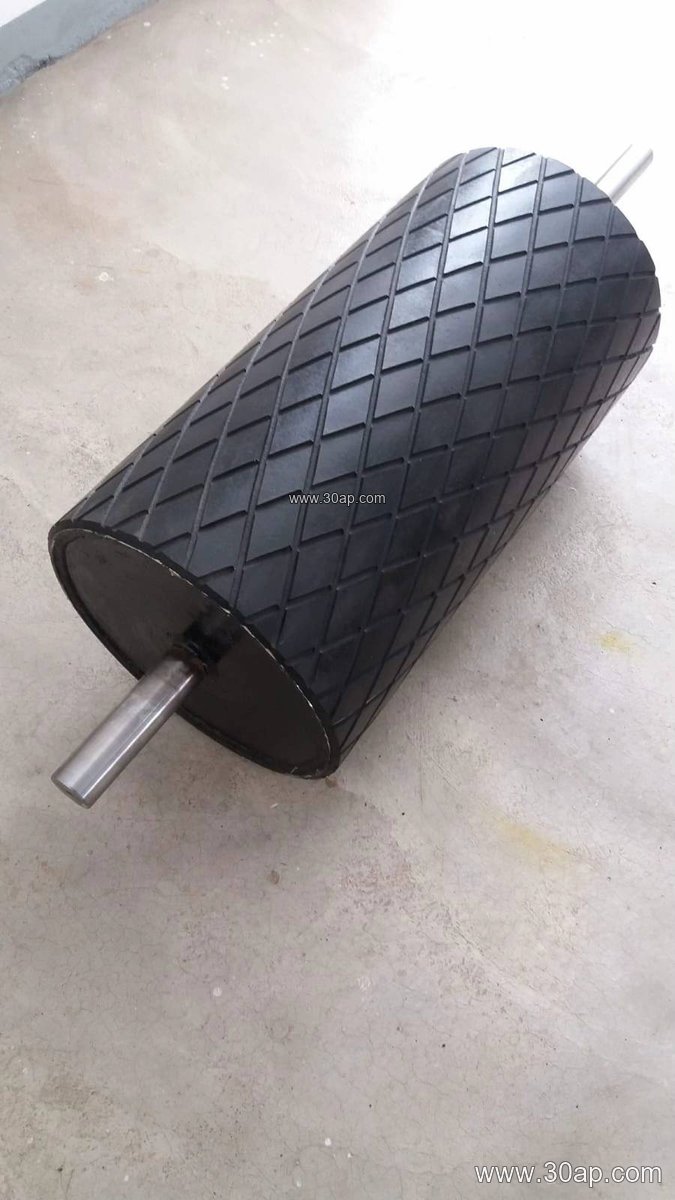
Surface form matters. A diamond or herringbone rubber pattern helps shed water; a ceramic tile layout favors grip and wear life. Buyers should confirm tile size, bond quality, and whether the lagging is vulcanized or cold-bonded, since these choices affect service life in a coal handling plant or a power plant coal yard.
Where It Fits on the Conveyor
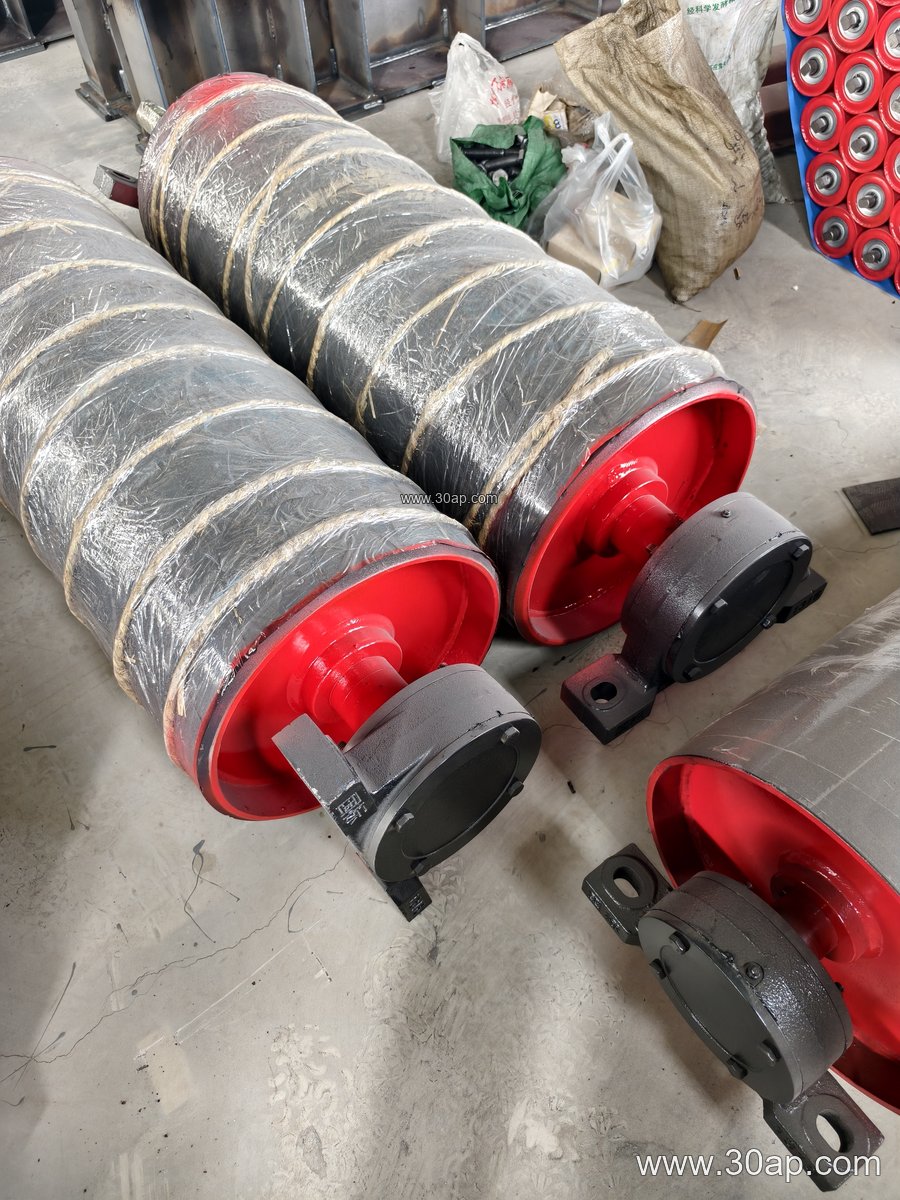
The same product family serves different positions, and each position has its own demands. A drive or head pulley needs maximum traction and often carries the highest torque. A tail pulley and a bend or take-up pulley may use ceramic lagging to resist wear from abrasive material and to keep the belt tracking. These are not interchangeable roles, so the spec should name the position clearly. A snub or pressure pulley may use a lighter surface, while an electric pulley integrates the motor inside the shell.
In a crushing and screening circuit, a belt conveyor ceramic lagged pulley on the head end pairs well with an abrasion resistant conveyor belt and sturdy idler roller sets. In an underground coal mine, flame retardant conveyor belt and anti-static conveyor belt requirements usually extend to the pulley lagging and the conveyor bracket assemblies. A steel cord conveyor belt on a long overland run may call for a larger diameter pulley to limit belt bending stress, while a fabric core conveyor belt such as an EP conveyor belt or NN conveyor belt on a shorter aggregate line may use a more compact size.
Common Size References
Dimensions are matched to belt width, torque, and belt construction rather than to a single fixed rule. The table below gives typical reference combinations, not mandatory matches.
| Belt width | Typical pulley face width | Example diameter | Common lagging thickness |
|---|---|---|---|
| B500 | about 600 mm | Ø250 to Ø400 | 8 to 12 mm |
| B650 | about 750 mm | Ø315 to Ø500 | 8 to 15 mm |
| B800 | about 950 mm | Ø400 to Ø630 | 10 to 15 mm |
| B1000 | about 1150 mm | Ø500 to Ø800 | 10 to 20 mm |
| B1200 | about 1400 mm | Ø630 to Ø1000 | 12 to 20 mm |
| B1400 | about 1600 mm | Ø800 to Ø1250 | 12 to 20 mm |
| B1600 | about 1800 mm | Ø1000 to Ø1400 | 15 to 20 mm |
| B1800 | about 2000 mm | Ø1250 to Ø1600 | 15 to 20 mm |
Shaft diameters are commonly Ø50 to Ø200 mm depending on torque and load, and they should be calculated from the actual duty rather than copied from the belt width. A B1200 × Ø1000 drive pulley and a B800 × Ø500 tail pulley are both plausible, but they serve different purposes.
Buyer Checklist
- State the pulley position: drive, head, tail, take-up, bend, snub, or pressure.
- Confirm belt type and tension, whether EP conveyor belt, steel cord conveyor belt, or a heat resistant conveyor belt for a kiln area.
- Check the environment: wet washing, coal dust, oil exposure, or high temperature.
- Ask for the lagging thickness, tile pattern, and bonding method in writing.
- Match shaft size to calculated torque, not to a nominal belt width alone.
- Confirm face width, diameter, and conveyor bracket interface before ordering.
A well-specified belt conveyor ceramic lagged pulley reduces belt slip, extends lagging life, and keeps a bulk material conveyor belt running through abrasive and wet conditions, whether the site is a sand and gravel plant, a fertilizer warehouse, or a port shiploading line.