What a Single Drive Pulley Does
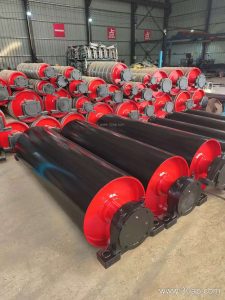
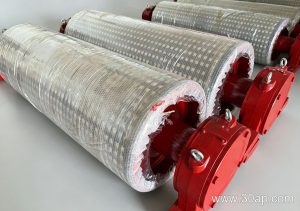
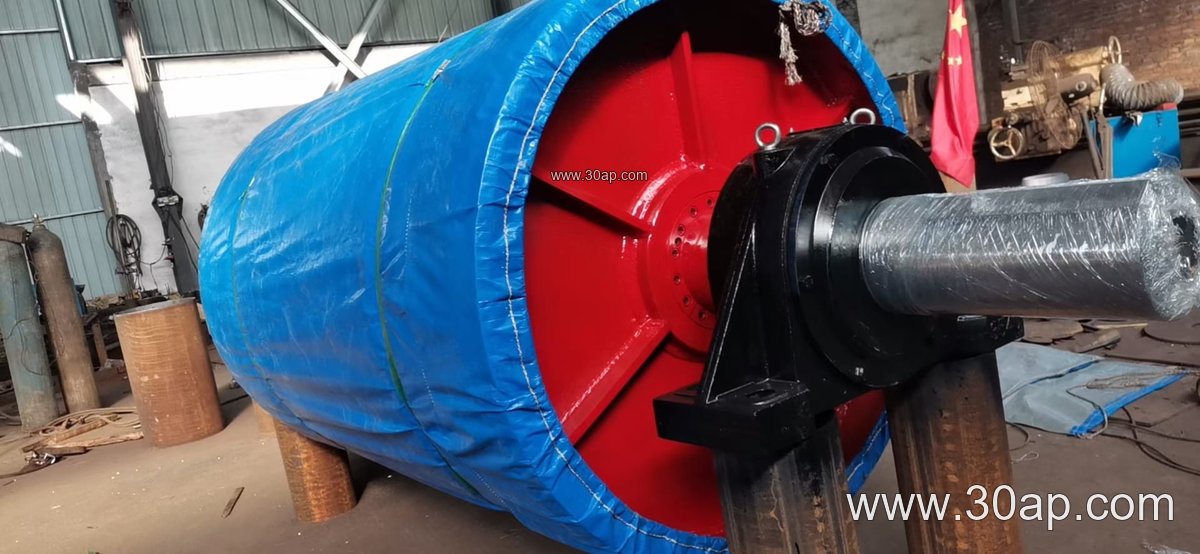
A single drive pulley is the head-end drum that transmits motor torque to the conveyor belt. In a quarry or a coal washery, it is the one pulley that pulls the loaded belt and discharges material at the transfer point. Unlike a tail pulley or a bend pulley, which only guide or tension the belt, the drive pulley carries the main tractive effort. A single-drive arrangement means one pulley is coupled to the gearbox and motor, rather than splitting power across two drive drums. That makes it a common choice for medium-capacity lines where the conveyor profile is straightforward and maintenance access is limited.
The same component is often called a conveyor drive drum or head drive pulley; both terms refer to the same single-drive head pulley, not to a tail or bend pulley.
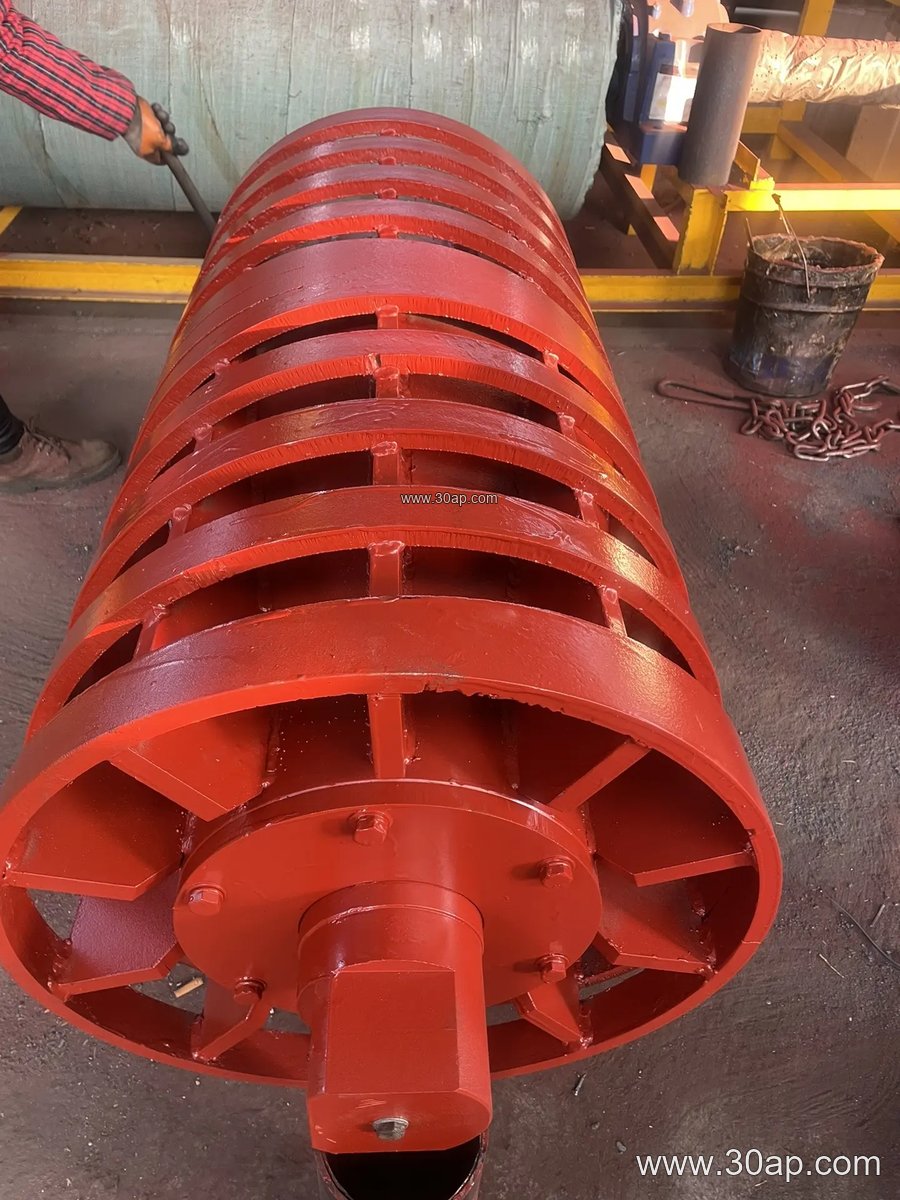
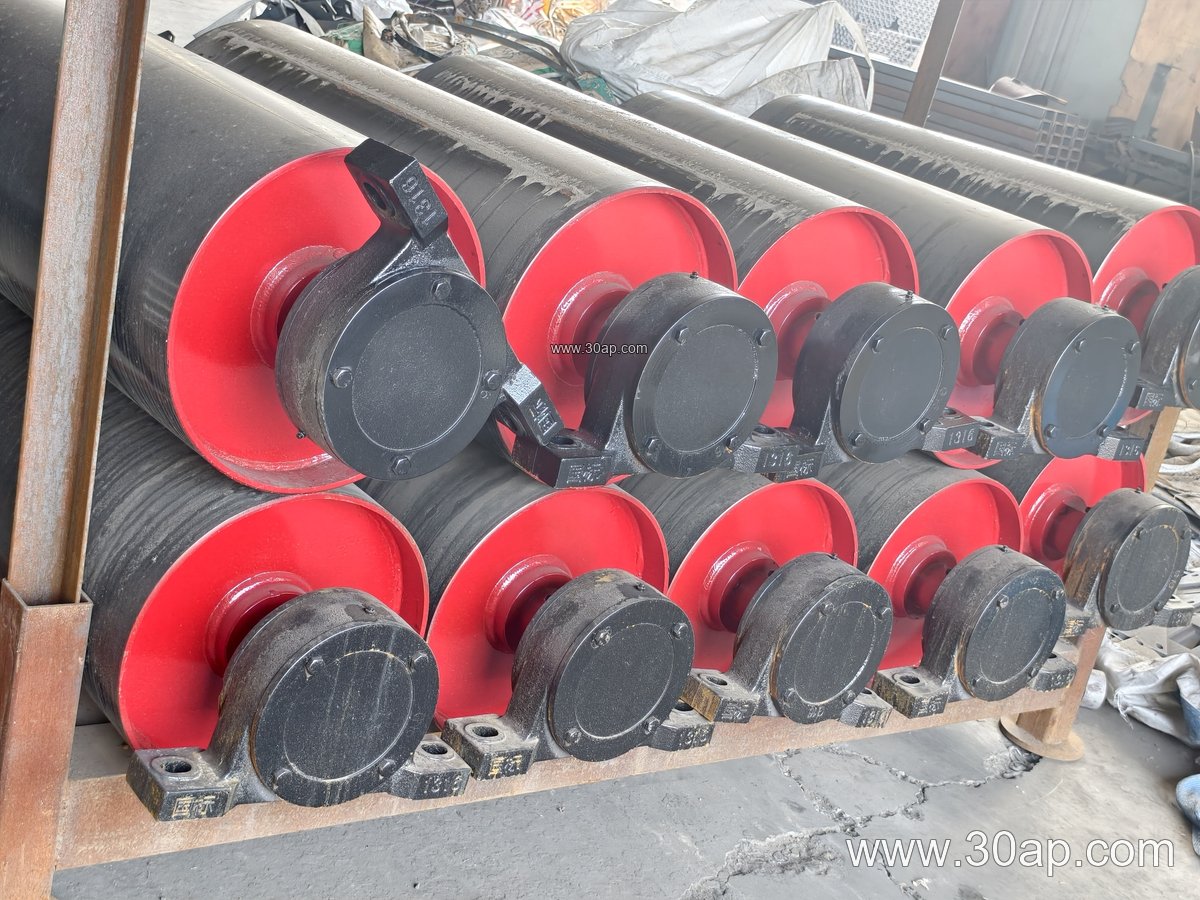
Construction and Surface Options
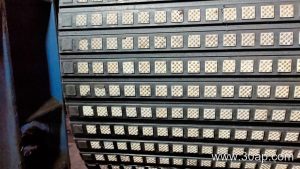
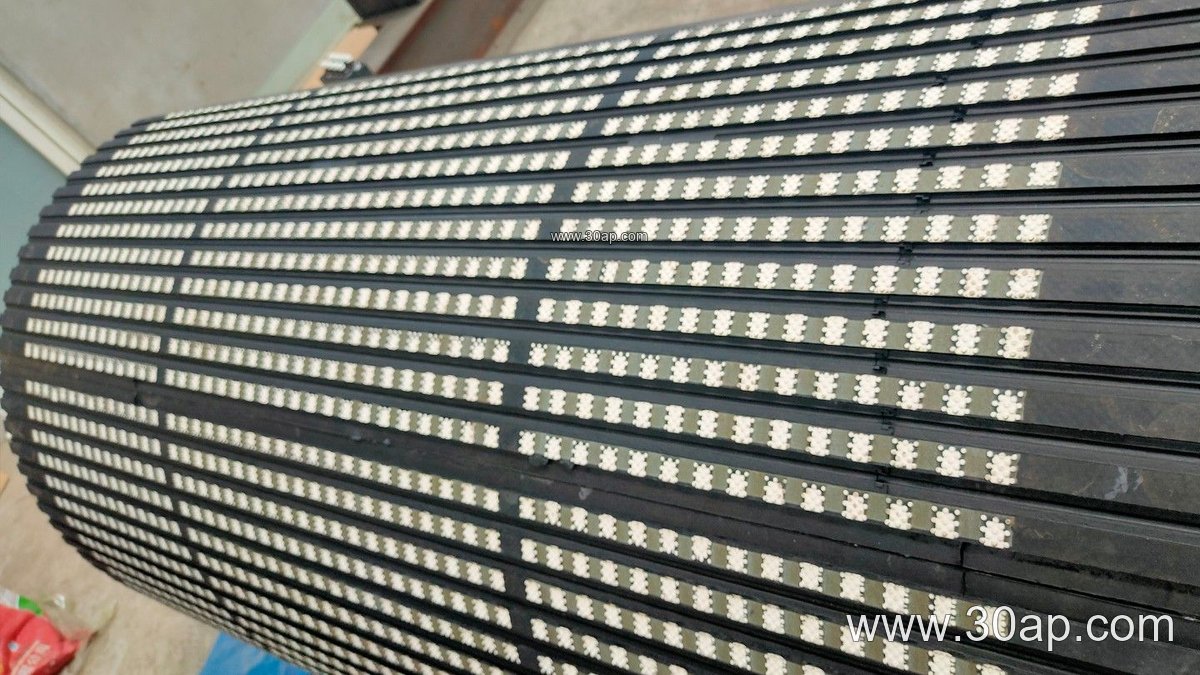
Most single drive pulleys are welded steel shells with machined end discs and a through shaft. The shell diameter and face width are matched to the belt and to the torque demand. Surface treatment matters as much as shell thickness: a plain finish suits light-duty work, while rubber lagging improves grip on wet or dusty belts. Common lagging types include cold-bonded rubber, hot-vulcanized rubber, diamond-pattern lagging and ceramic lagging. Lagging thickness is usually 8, 10, 12, 15 or 20 mm, selected according to belt speed and load.
Shaft diameter is not chosen from belt width alone. It follows the calculated torque and bending load, so a B800 pulley may run a Ø80 shaft in one conveyor and a larger shaft in another. Typical shaft sizes range from Ø50 to Ø200, with the final value set by the drive design.
Common Size Combinations
The table below shows representative pairings of belt width, pulley diameter and face width. These are reference examples, not fixed rules; a given belt width can work with more than one drum diameter.
| Belt width | Typical pulley diameter | Face width (approx.) |
|---|---|---|
| B400 | Ø200 – Ø320 | 500 mm |
| B500 | Ø250 – Ø400 | 600 mm |
| B650 | Ø315 – Ø500 | 750 mm |
| B800 | Ø400 – Ø630 | 950 mm |
| B1000 | Ø500 – Ø800 | 1150 mm |
| B1200 | Ø630 – Ø1000 | 1400 mm |
| B1400 | Ø800 – Ø1250 | 1600 mm |
| B1600 | Ø1000 – Ø1400 | 1800 mm |
| B1800 | Ø1250 – Ø1600 | 2000 mm |
| B2000 | Ø1400 – Ø1800 | 2200 mm |
Face width is normally wider than the belt to allow for misalignment. The shell diameter should be large enough to limit belt bending stress, especially with high-tension fabric or steel-cord belts.
Where It Fits in the Plant
In a coal washery, a single drive pulley often sits at the discharge end of a raw-coal belt, working with conveyor idlers and a conveyor bracket set that keeps the drum aligned. In a limestone quarry or a crushing and screening line, the same type of drum may be installed on a primary feed conveyor. It is less common on very long or steep conveyors where two drive pulleys share the load, but it remains a practical solution for many plant and yard conveyors.
Buyer Checklist
- Confirm the belt width, belt speed and maximum tension before choosing the drum diameter.
- Specify the lagging type and thickness for the actual material—wet, abrasive or oily.
- Provide the calculated shaft load so the shaft diameter is sized correctly, not guessed from belt width.
- Check that the pulley face width and the conveyor bracket spacing match the existing structure.
- Ask for the balancing grade and bearing type if the pulley will run at higher speed.
A single drive pulley is a focused component: get the diameter, lagging and shaft sizing right, and it will work reliably with the conveyor belt, idler rollers and supporting frame for the life of the installation.