What a Single Drive Pulley Does
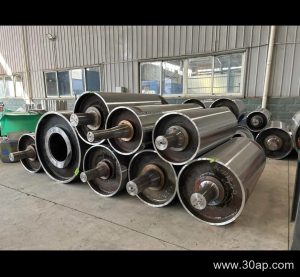
A single drive pulley is the one drum on a conveyor that is directly coupled to the gearbox or motor and transmits the pull that moves the belt. In many small and medium conveying lines, only one such drum is needed at the head end; longer or heavily loaded systems may use two drive drums, but the single drive pulley remains the most common arrangement for a wide range of bulk handling duties. It is a powered drum, not a tail drum, not a bend pulley and not a take-up drum, although those parts work together with it in the same frame.
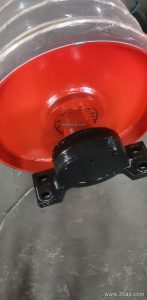
The drum is normally built as a welded steel shell with end discs, a hub and a shaft, and the shaft is supported in bearing housings fixed to the conveyor bracket. The shell face can be plain, rubber lagged, diamond grooved or ceramic lagged, depending on the grip required between the drum and the conveyor belt.
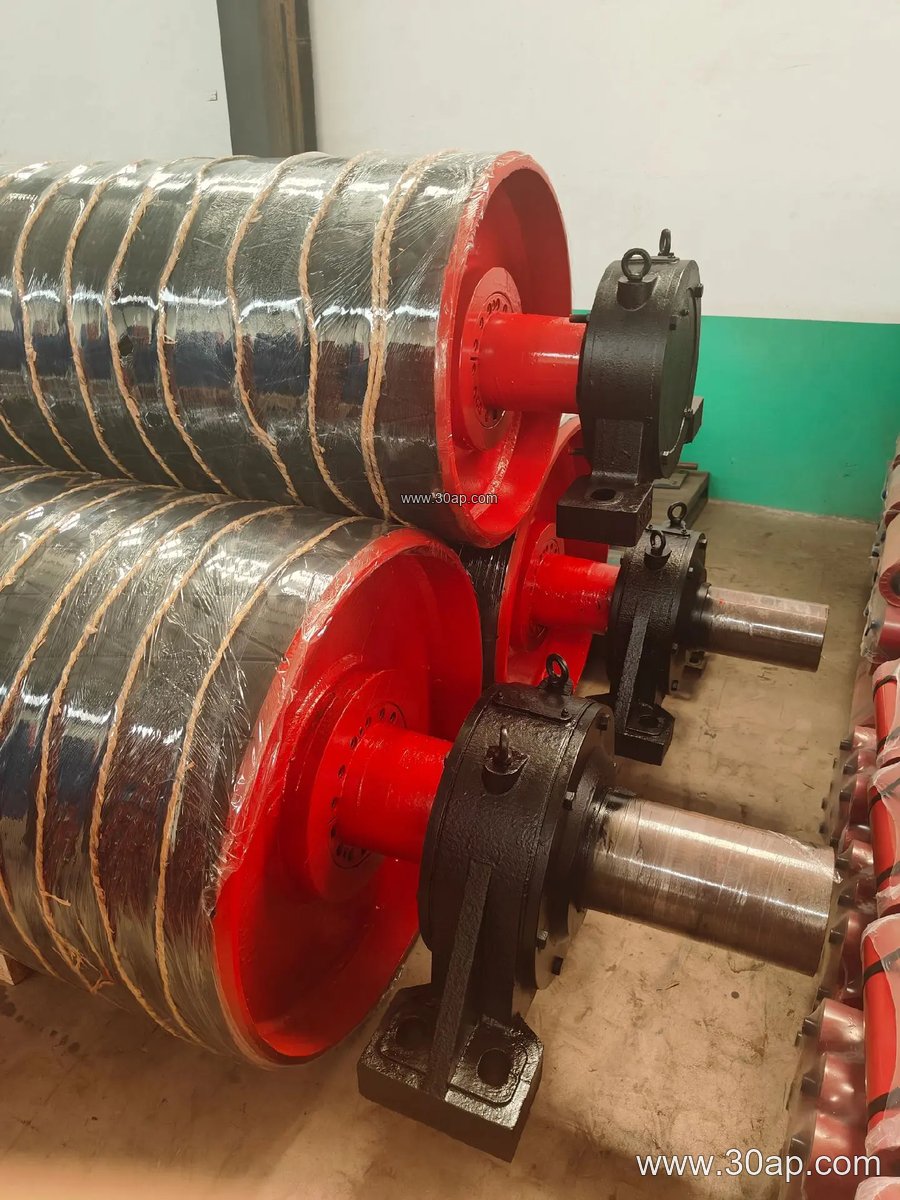
Construction Details and Surface Options
The shell diameter, face width, shaft size and lagging are selected from the belt tension, belt speed, wrap angle and the mass of material being carried. Face width is usually a little wider than the belt; the table below gives common reference values, not fixed rules.
| Belt width | Typical pulley face width | Example diameter range |
|---|---|---|
| B500 | about 600 mm | Ø250 to Ø400 |
| B650 | about 750 mm | Ø315 to Ø500 |
| B800 | about 950 mm | Ø400 to Ø630 |
| B1000 | about 1150 mm | Ø500 to Ø800 |
| B1200 | about 1400 mm | Ø630 to Ø1000 |
| B1400 | about 1600 mm | Ø800 to Ø1250 |
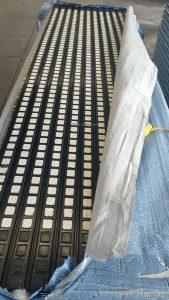
Lagging thickness commonly runs 8, 10, 12, 15 or 20 mm. Plain face is used where slip is not a concern; diamond or herringbone rubber improves grip in wet or dusty conditions; ceramic lagging is chosen for high abrasion service such as iron ore or copper ore handling. Shaft diameters are often Ø80, Ø100, Ø120, Ø140, Ø160 or larger, but the final size is set by torque and bearing load, not by belt width alone.
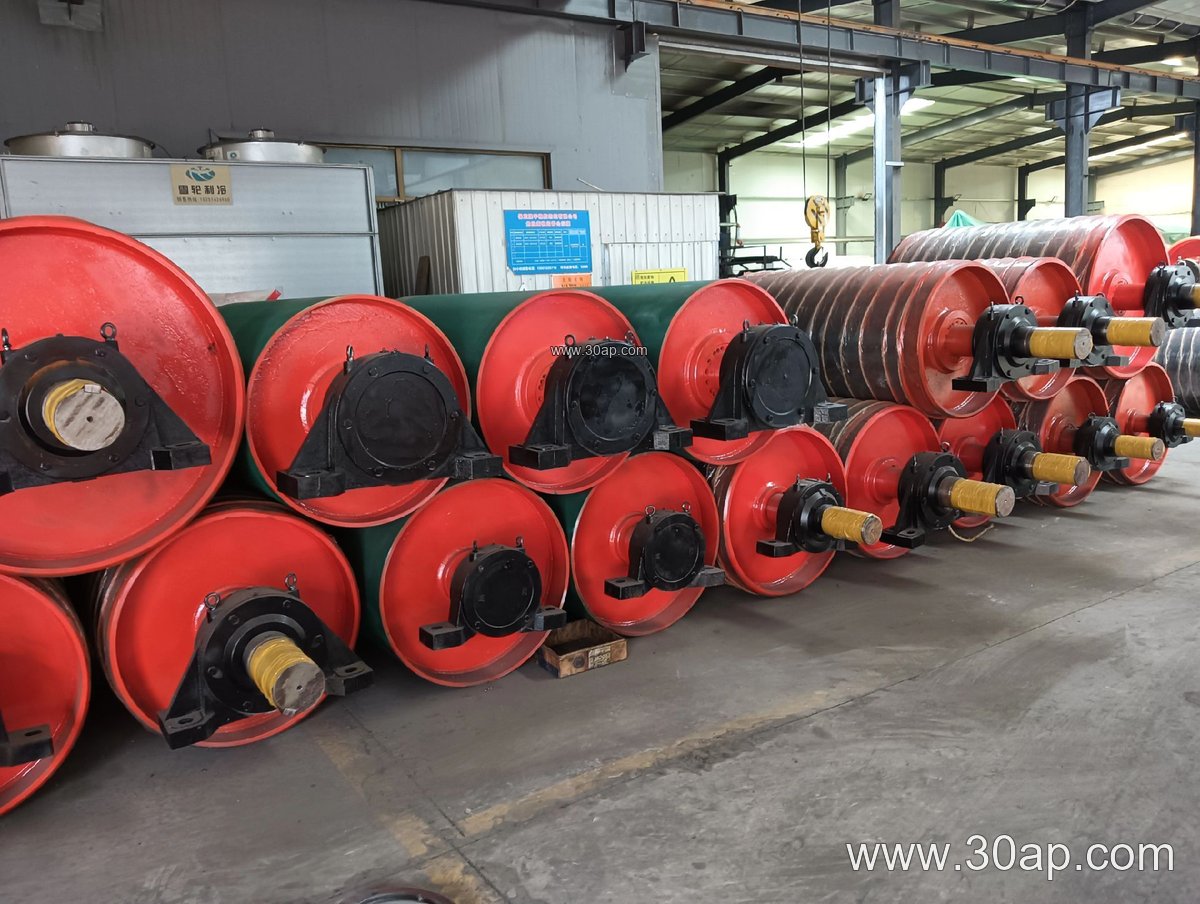
Where It Fits in the Plant
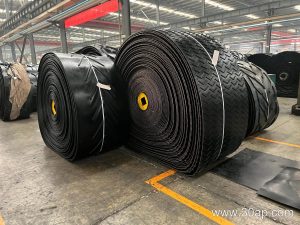
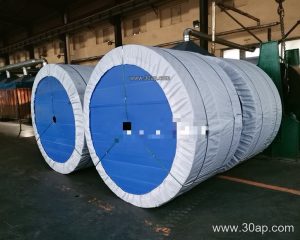
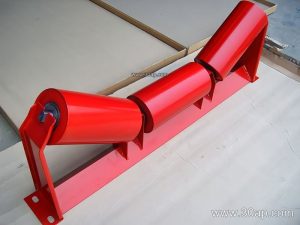
You will find a single drive pulley at the discharge end of a quarry conveyor, on the head frame of a coal mining conveyor, in a cement plant clinker line, on a power plant coal feeding belt, and in port ship loading systems. In each case the drum pulls the loaded belt and the return side is supported by idler rollers. A conveyor pulley of this type is often paired with an abrasion resistant conveyor belt in stone crushing plants, or with a flame retardant conveyor belt in underground coal mining conveyors where fire safety matters.
The same drum can be supplied with a rubber lagging for a mining conveyor belt carrying wet aggregate, or with a smooth face for a light-duty food grade conveyor belt. Matching the lagging to the belt cover and the environment is more useful than choosing by size alone.
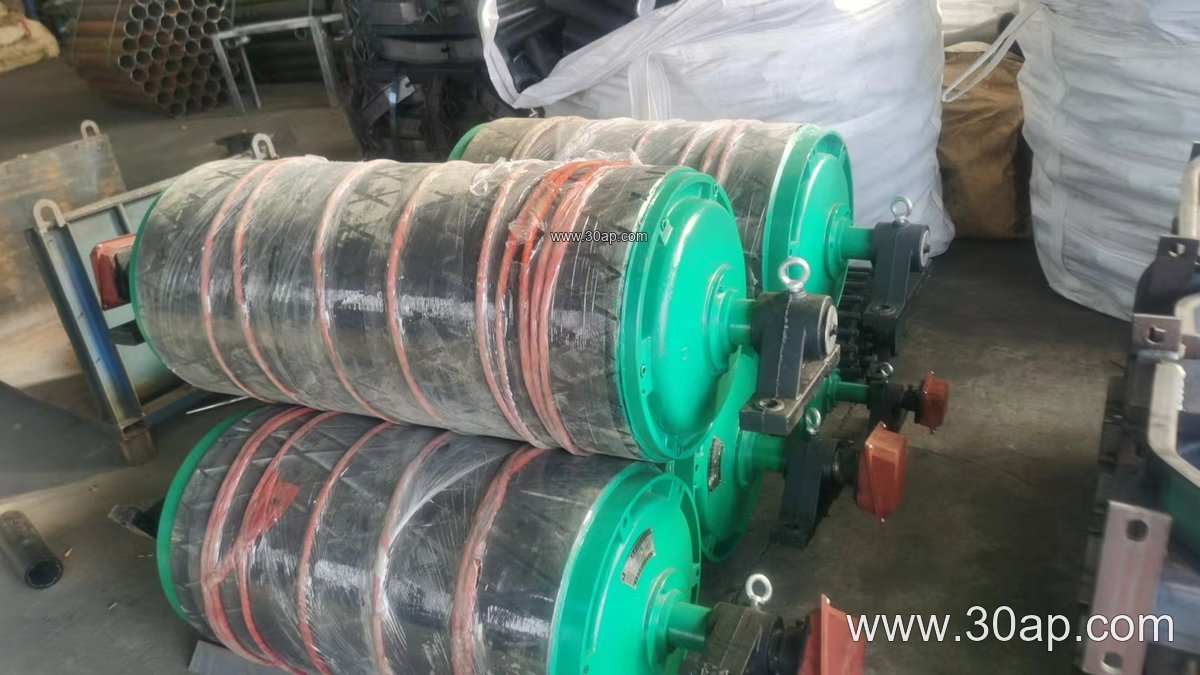
Selection Points for Buyers
- Confirm the actual belt width and the belt type, for example an EP conveyor belt, a steel cord conveyor belt or a multi-ply fabric core conveyor belt, because cover hardness and tension affect the required grip.
- State the wrap angle and the expected belt tension so the drum shell and shaft can be checked for bending and fatigue.
- Decide the lagging: plain, rubber, diamond, herringbone or ceramic, and the thickness.
- Check the bearing type, the locking assembly and the interface with the conveyor bracket and gearbox.
- For dusty or corrosive sites, ask about sealing and surface protection of the shaft and hubs.
When the drive is at the head end, the same shaft may also carry the take-up arrangement or a bend pulley nearby to increase wrap. On a long overland line, a second drive drum may be added, but that is a different configuration from the single drum discussed here.
Maintenance and Belt Interaction
Regular checks of lagging wear, bolt tightness and bearing temperature prevent most drive-end problems. Misalignment between the drum and the belt causes edge wear and tracking faults; a worn lagging surface reduces friction and can lead to slip under load. Keep the drum face clean and inspect the conveyor belt for edge damage where it enters the pulley. In a sand and gravel line, or in a fertilizer plant, dust build-up on the shell should be removed during scheduled stops.
For replacement planning, record the drum diameter, face width, shaft diameter, lagging type and bearing size. These details let a supplier match a new single drive pulley to the existing frame without modifying the conveyor bracket or the gearbox coupling.