What Pulley Custom Machining Covers
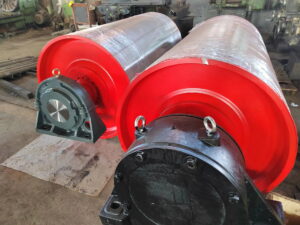
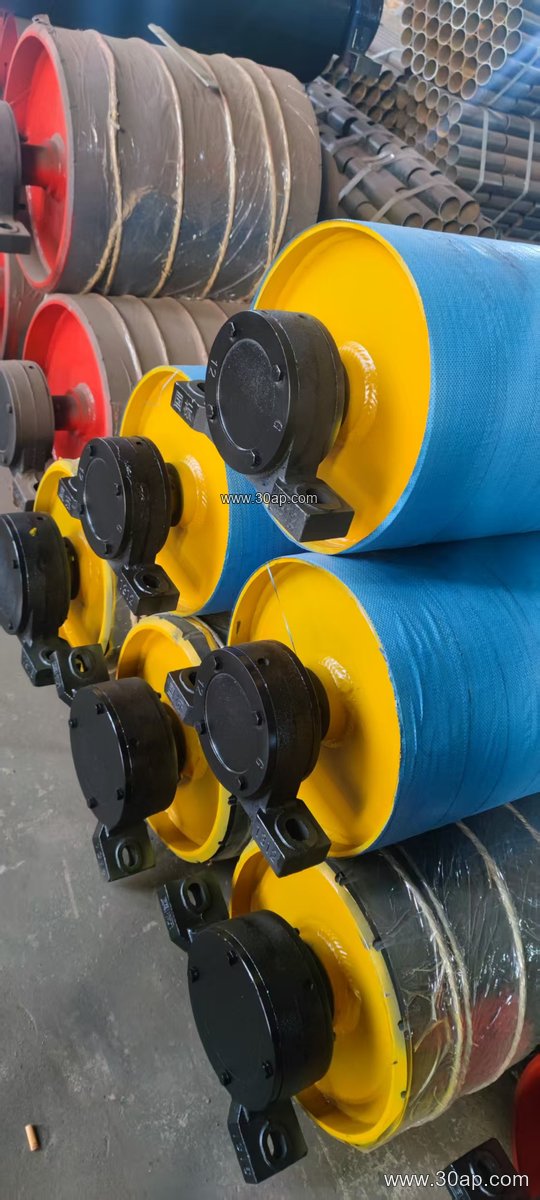
Pulley custom machining is the engineering and manufacturing step that turns a general conveyor pulley design into a finished component matched to one specific conveyor line. Instead of ordering a stock drum, the buyer supplies the belt width, expected load, shaft connection details and surface requirements, and the machine shop produces the shell, hubs, shaft and lagging to suit. The result is a made-to-order conveyor pulley, often simply called a custom drum pulley, that fits the frame, the conveyor bracket and the surrounding structure without field modification.
This work matters most where standard sizes do not line up with the rest of the conveyor. A quarry conveyor belt running at a fixed center distance, a cement plant transfer point with limited clearance, or a coal handling line with an unusual shaft coupling all create small mismatches that custom machining resolves.
How a Custom Pulley Is Built
The process usually starts with the duty: belt tension, wrap angle, belt speed and the material carried. From there the shop selects shell diameter and face width, then machines the shaft, hubs and end discs to match. Common steps include:
- Rolling and welding the shell, then machining the outside diameter true to the shaft axis
- Boring and keying the hub to the shaft diameter agreed with the customer
- Facing the shell ends so the belt trains correctly
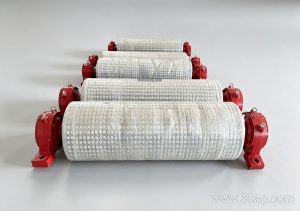
- Applying lagging — plain, cast rubber, cold-bonded rubber, hot-vulcanized rubber, diamond groove, herringbone, ceramic or flat sheet — in thicknesses such as 8, 10, 12, 15 or 20 mm
- Balancing and final inspection before dispatch
Because the shaft diameter follows torque and bearing load rather than belt width alone, a shop may machine a Ø120 shaft for one B800 pulley and a Ø160 shaft for another B800 pulley on a heavier duty. The belt width sets the shell face, not the shaft.
Common Sizes and Combinations
The table below shows typical reference ranges used in custom machining discussions. These are examples, not fixed supply promises, and the final values are confirmed per order.
| Parameter | Typical reference values |
|---|---|
| Belt width (B) | B400, B500, B650, B800, B1000, B1200, B1400, B1600, B1800 |
| Pulley diameter (Ø) | Ø200, Ø250, Ø315, Ø400, Ø500, Ø630, Ø800, Ø1000, Ø1250 |
| Shell face width | Usually slightly wider than belt, e.g. about 500 mm for B400, about 950 mm for B800, about 1400 mm for B1200 |
| Shaft diameter | Ø50 to Ø200 depending on torque and load |
| Lagging thickness | 8, 10, 12, 15, 20 mm |
Useful combinations such as B800 × Ø500, B1200 × Ø1000 or B1400 × Ø800 are common starting points, but each line should be checked against belt tension and available space.
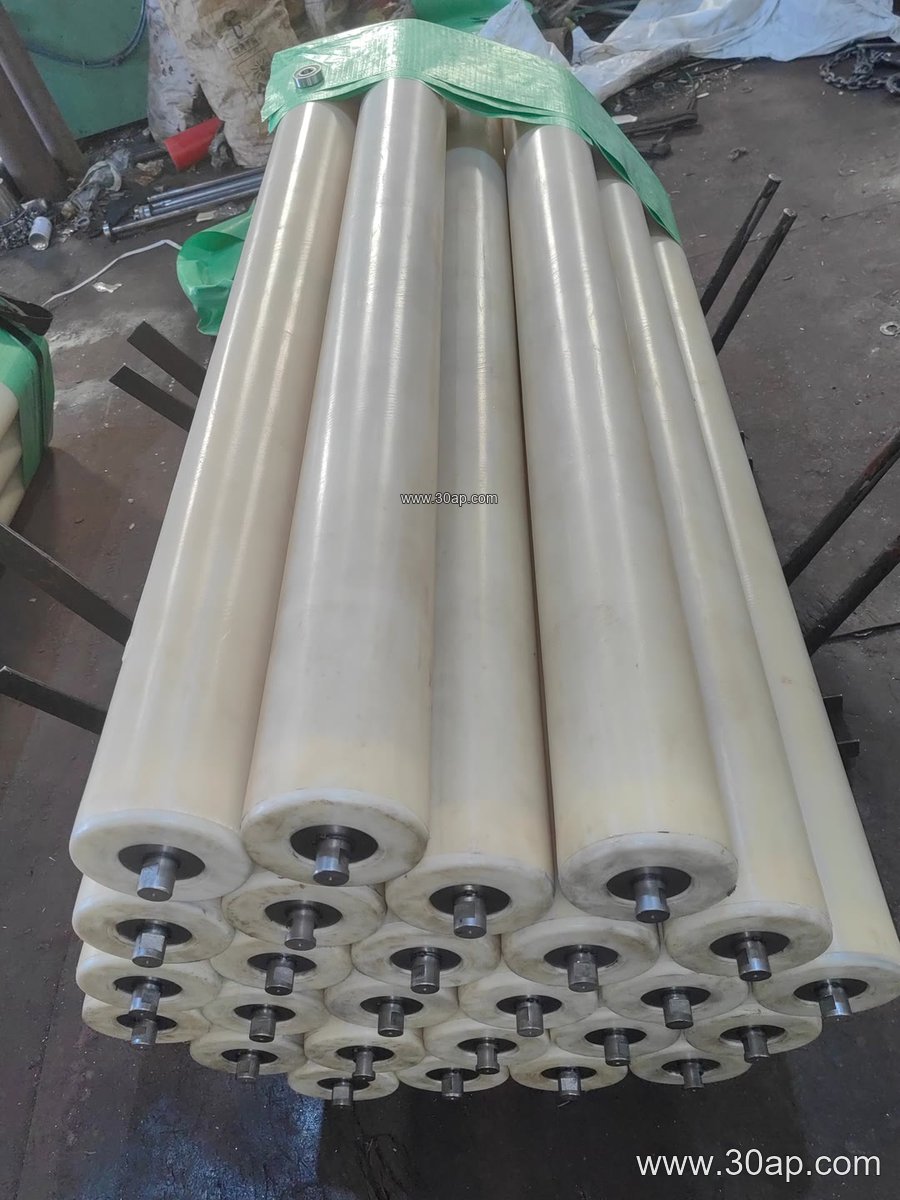
Where It Fits in the Plant
Custom-machined pulleys appear wherever the belt path needs a precise turning point. In a limestone quarry, a head pulley may need a specific face width to match a 1200mm wide abrasion resistant conveyor belt. In a coal preparation plant, a tail pulley with ceramic lagging may be requested to reduce slip on a wet, fine-coal return. In a power plant coal yard, a bend pulley machined to a tight diameter tolerance keeps the belt aligned through a transfer tower.
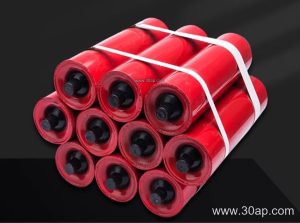
Each position has its own logic. A drive pulley transmits torque and usually carries thicker lagging, while a tail pulley guides the belt and may use a plain or lightly lagged surface. A bend pulley changes direction without driving, and a tension pulley takes up slack. These are separate roles and should not be treated as interchangeable when specifying a custom pulley. The same applies to an idler roller, which supports the belt but is not a pulley, and to a conveyor bracket, which is a mounting part rather than a rotating component.
What a Buyer Should Prepare
Before requesting quotes, collect the belt width, belt type (for example an EP conveyor belt, a steel cord conveyor belt or a flame retardant conveyor belt), the pulley position, the shaft diameter and coupling style, and any lagging preference. A sketch of the conveyor bracket and the available clearance helps the shop avoid surprises. Confirm whether the pulley must be balanced, whether a keyway or taper lock is required, and whether the surface should be plain or covered.
Ask for the machining tolerances on diameter, face width and runout, and check that the shaft material and hub weld details are stated. For dusty or wet service, discuss lagging and seal protection early. A well-prepared specification reduces rework and keeps the conveyor pulley, belt and idler roller working as one system.